|
Agrimonia gryposepala Wallr. Common agrimony, tall hairy agrimony, hooked agrimony, tall hairy grooveburr
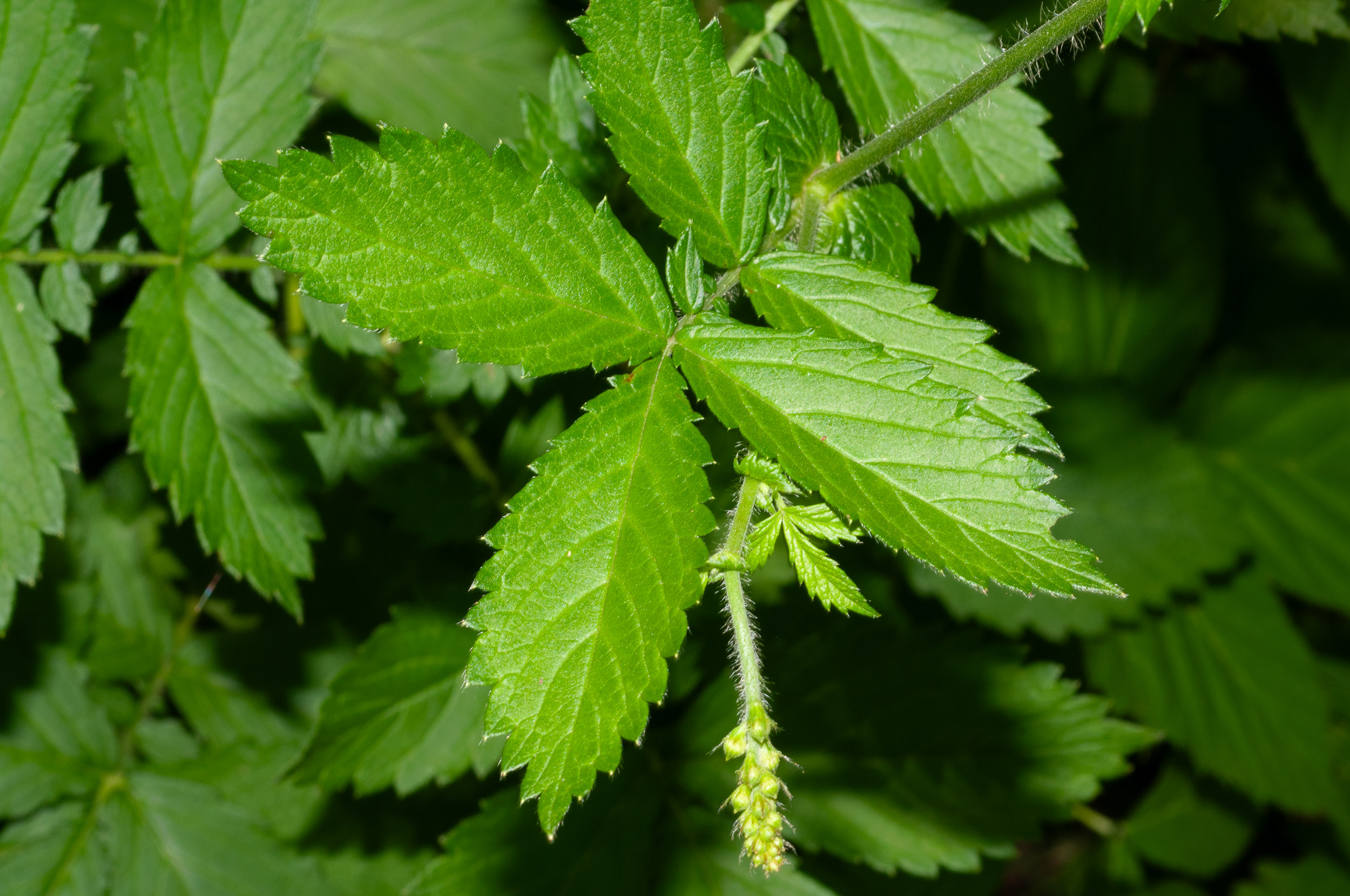
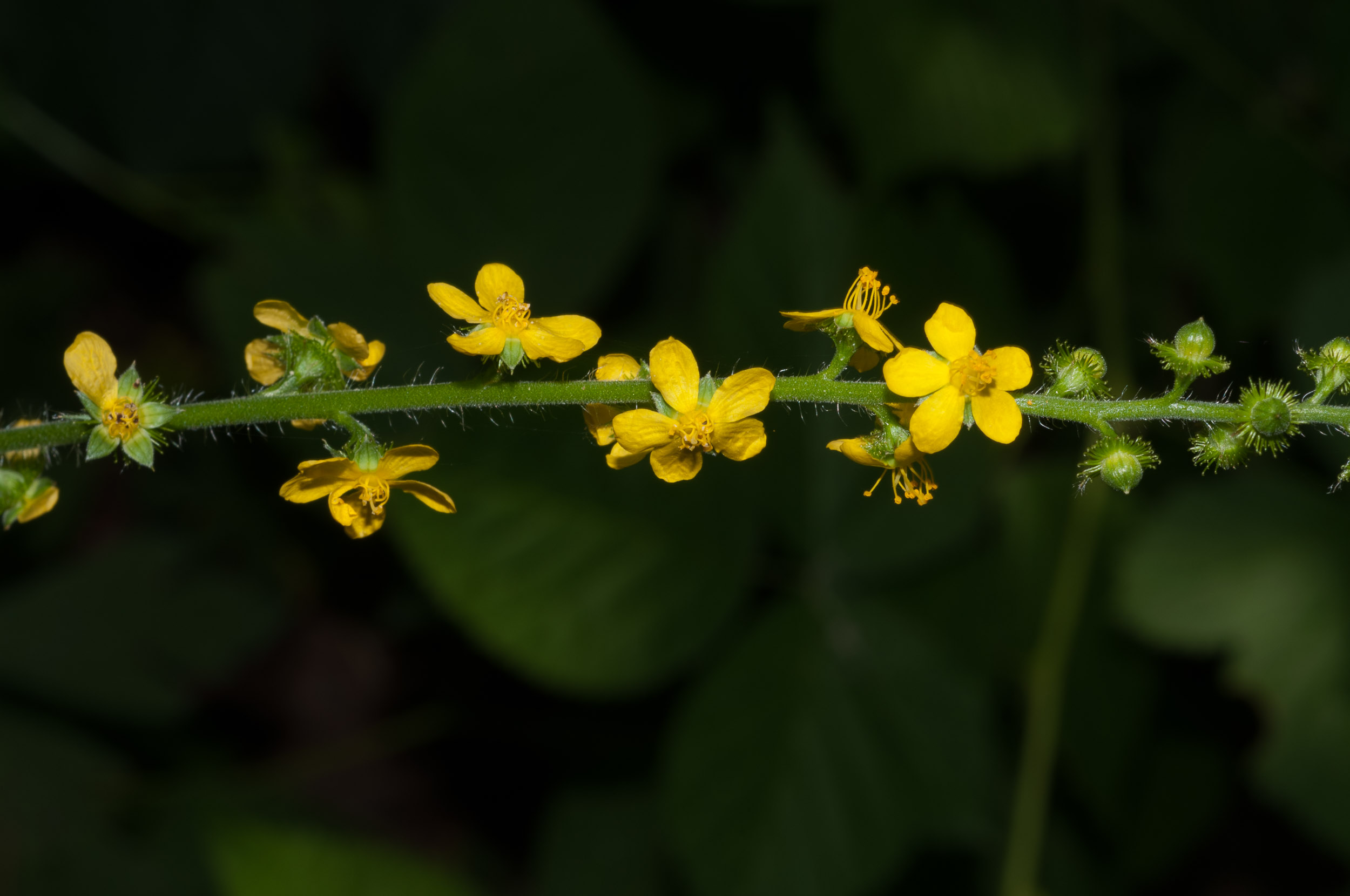
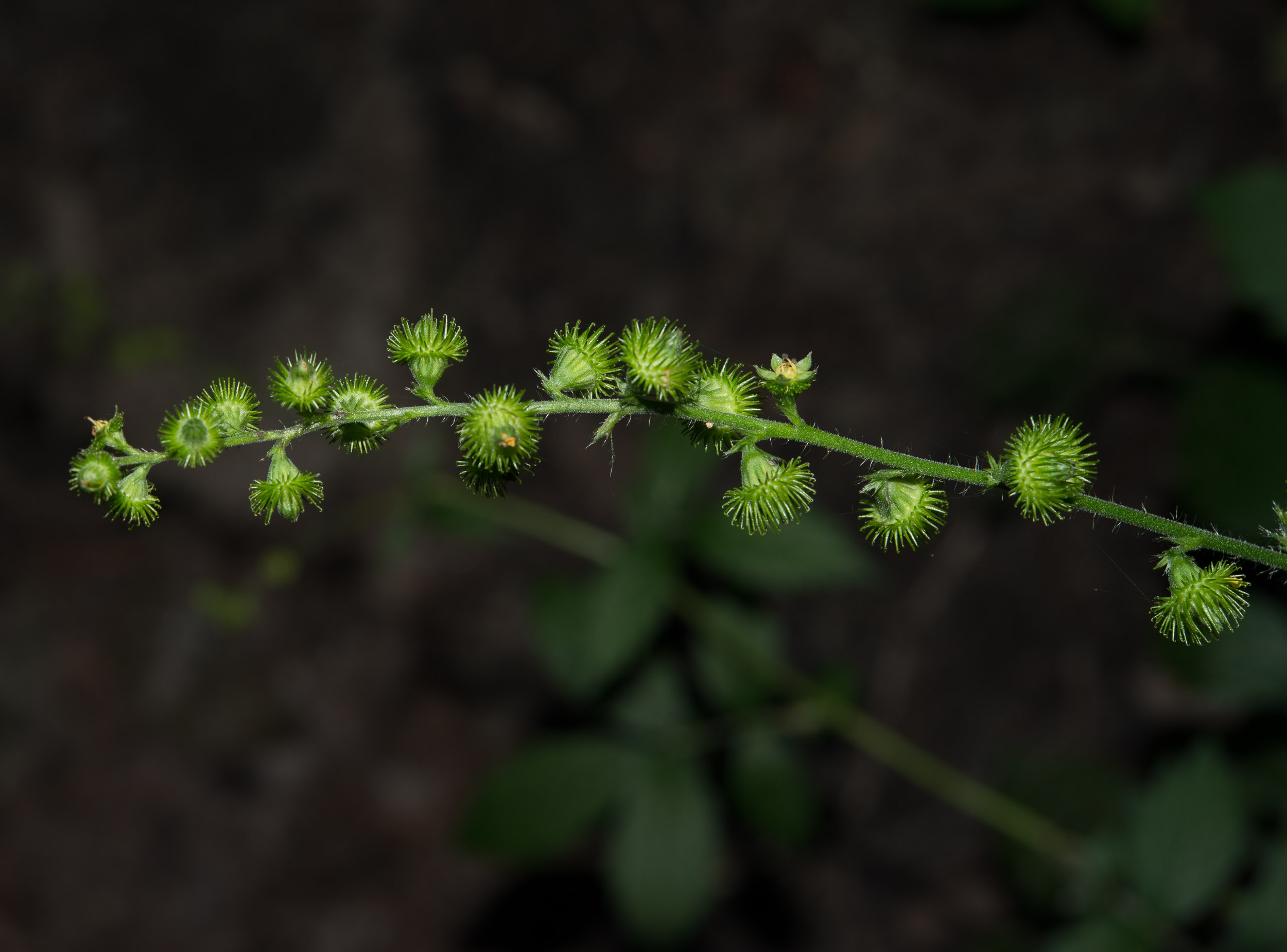
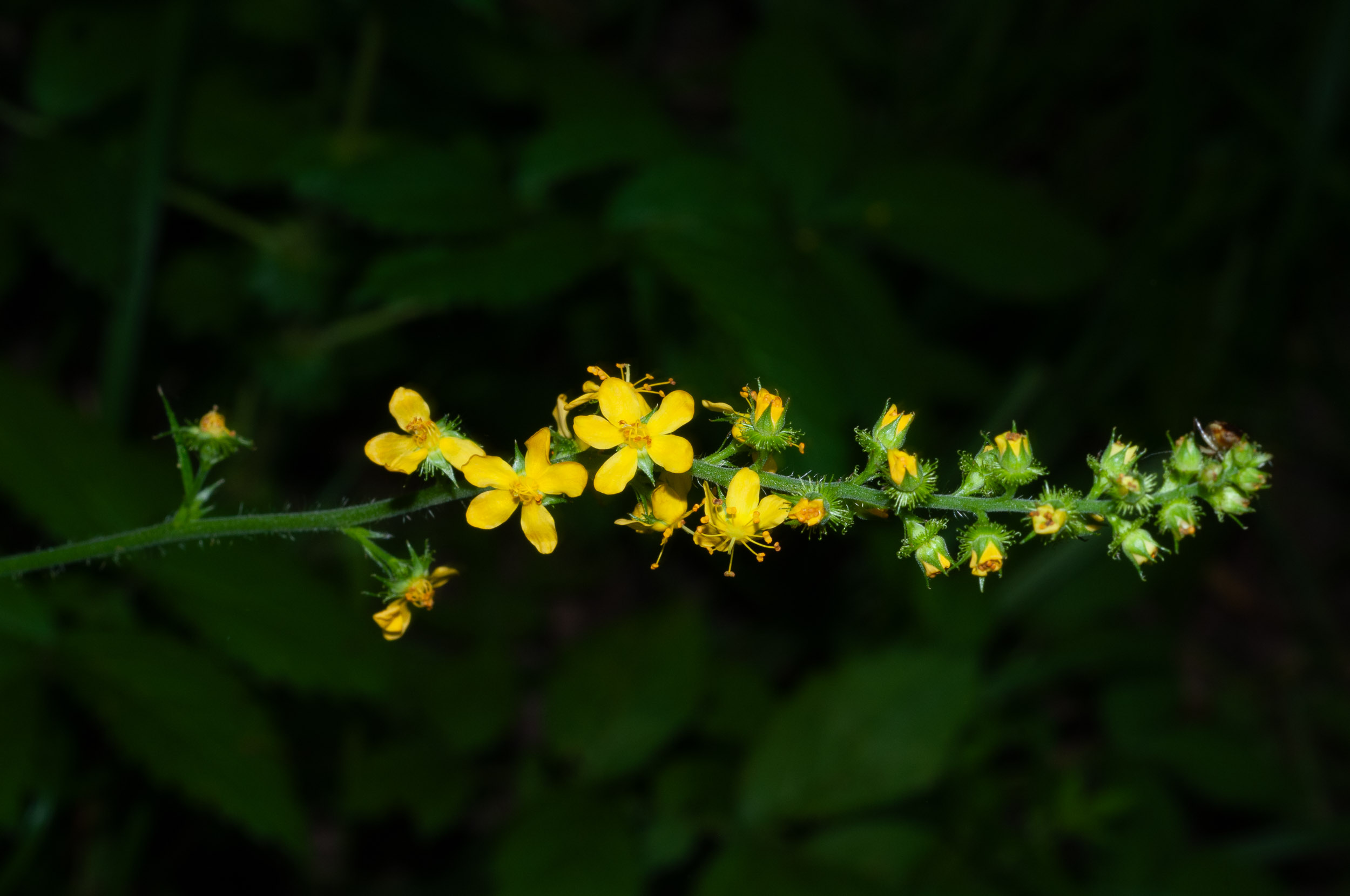
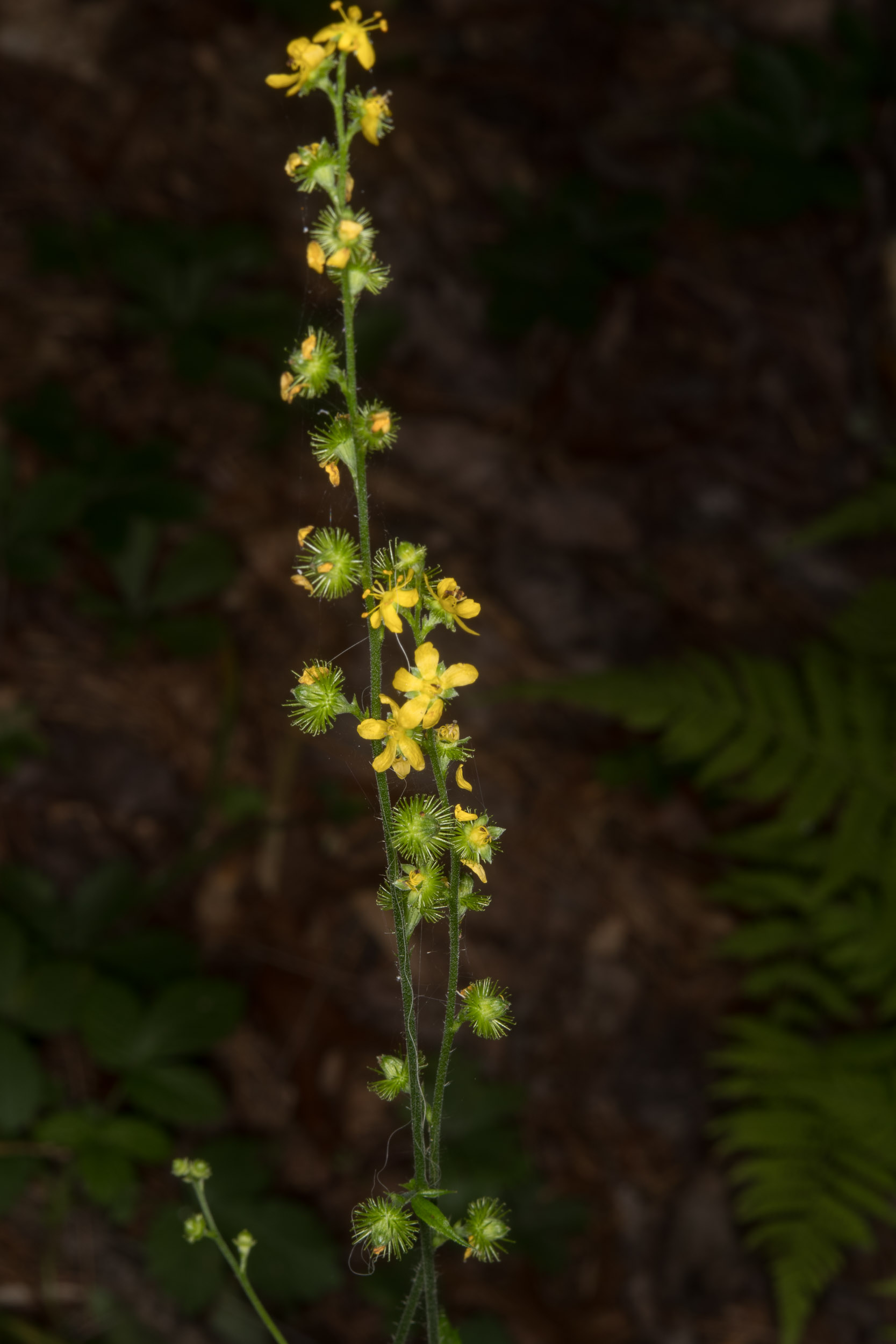
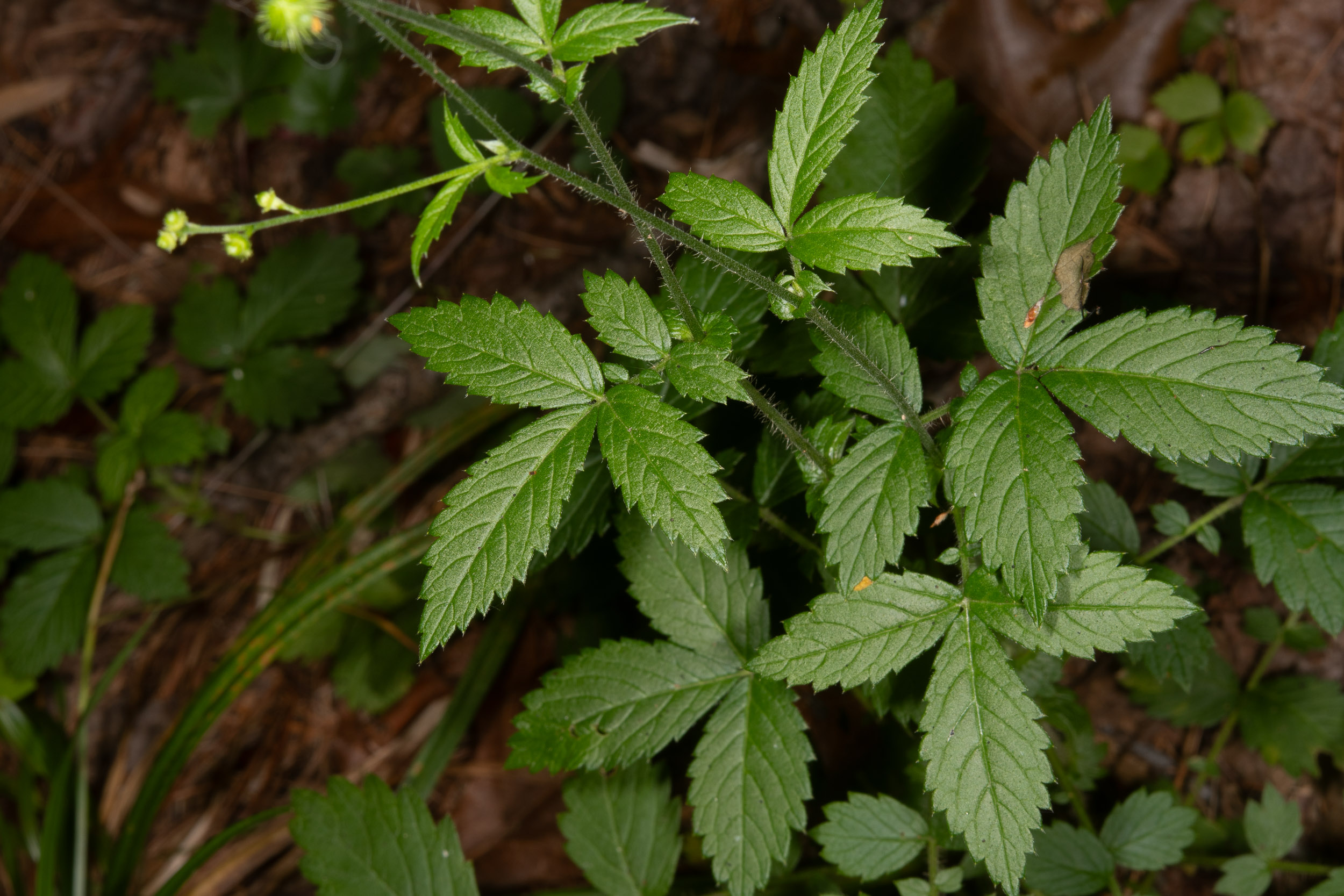
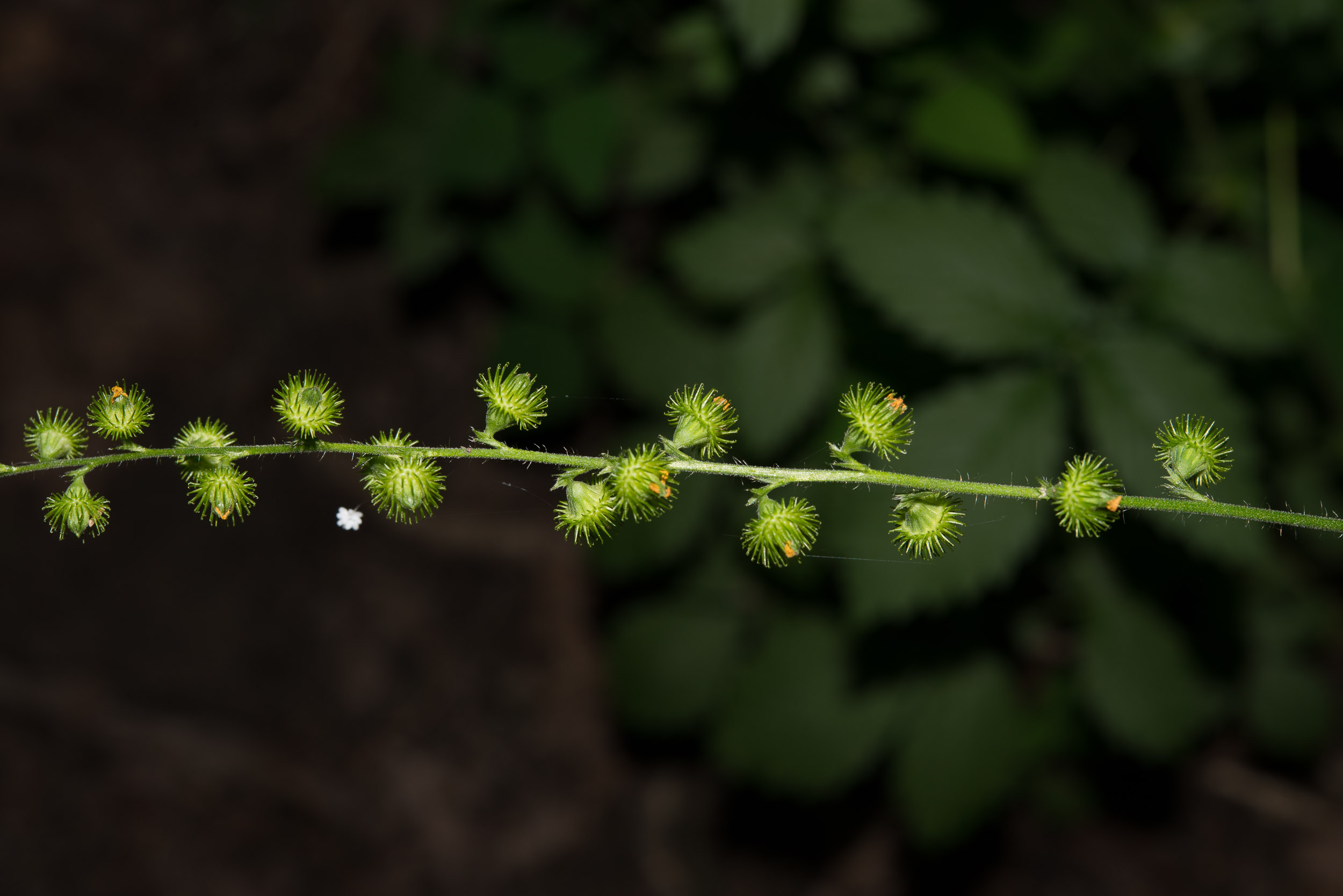
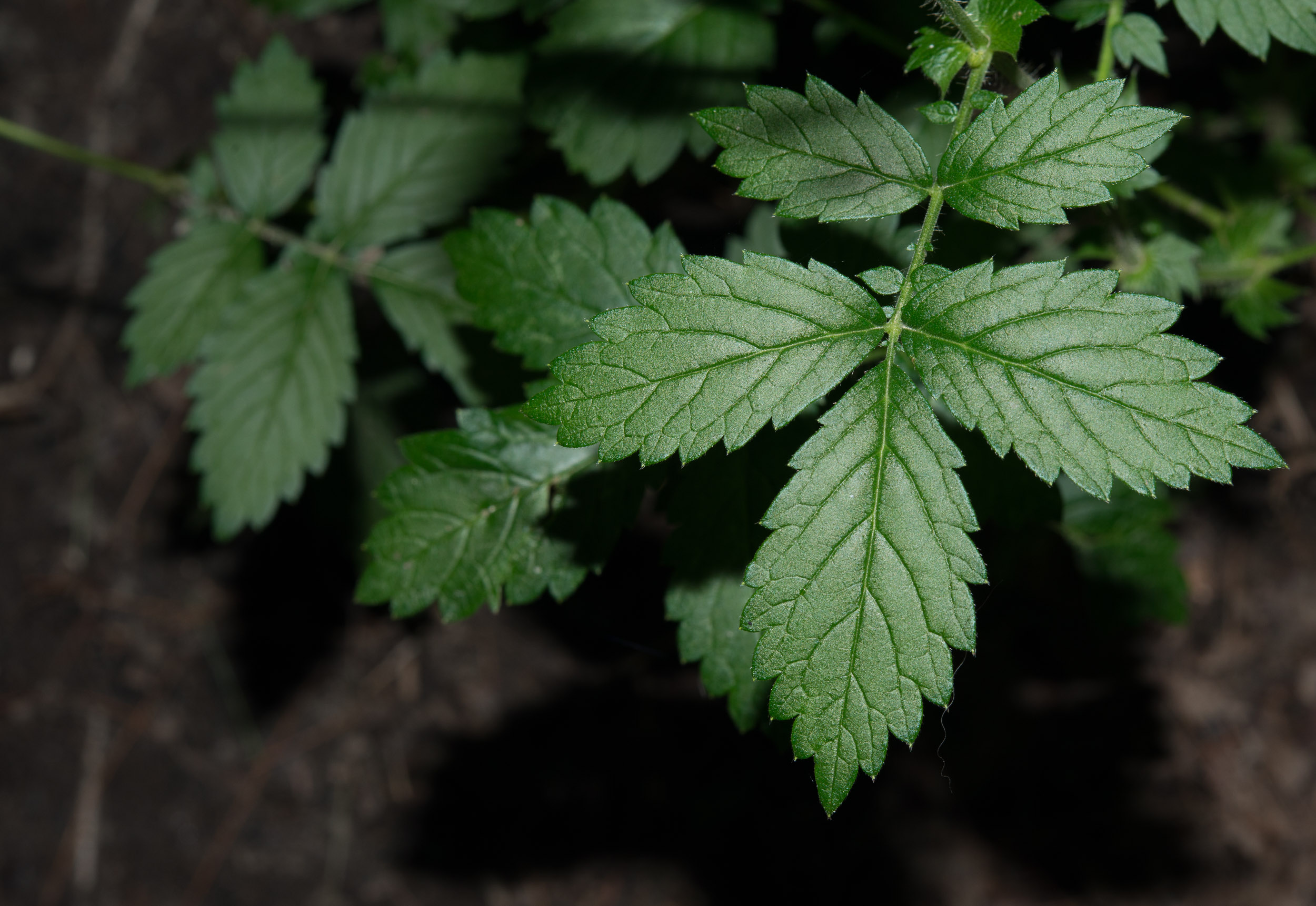
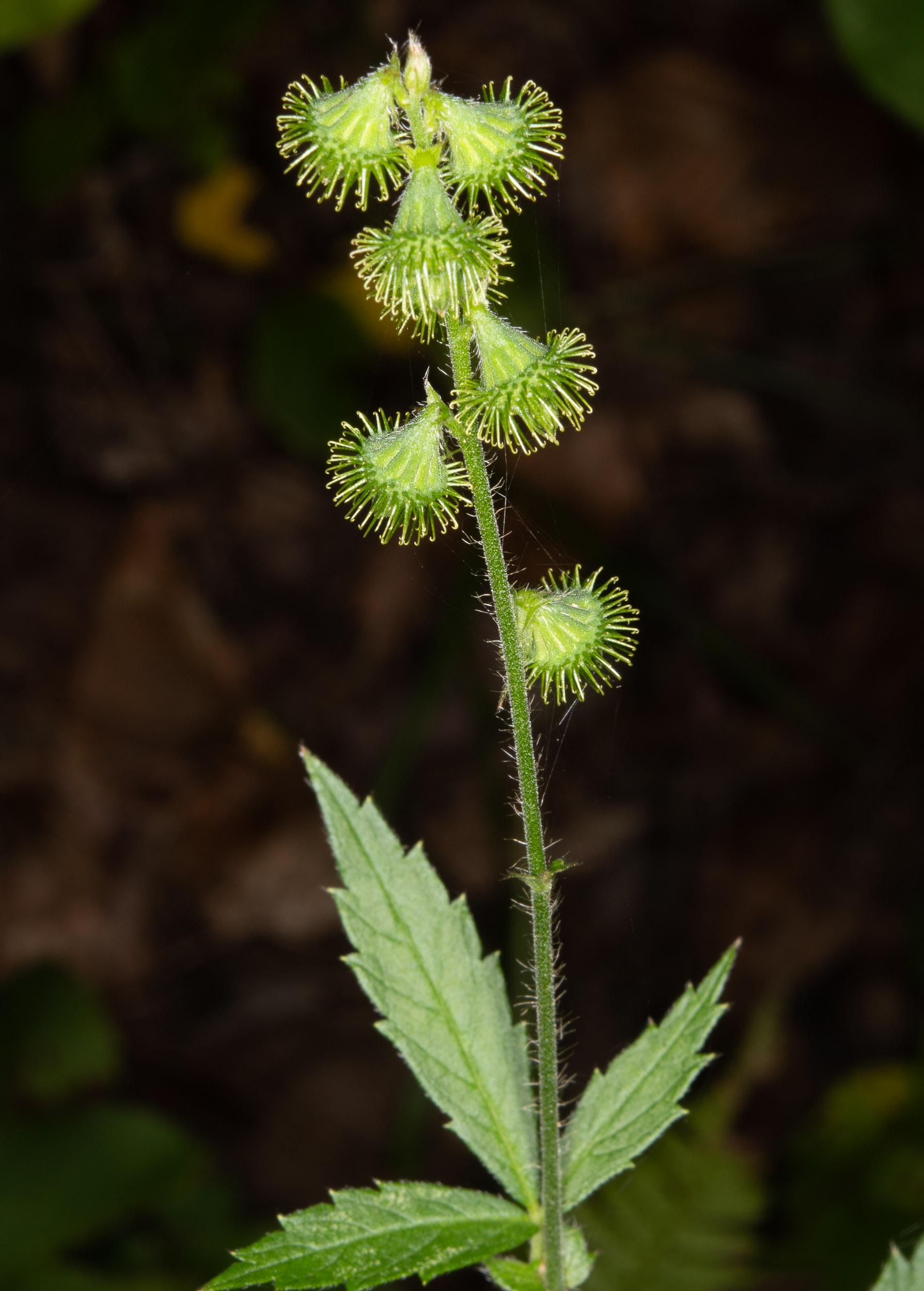
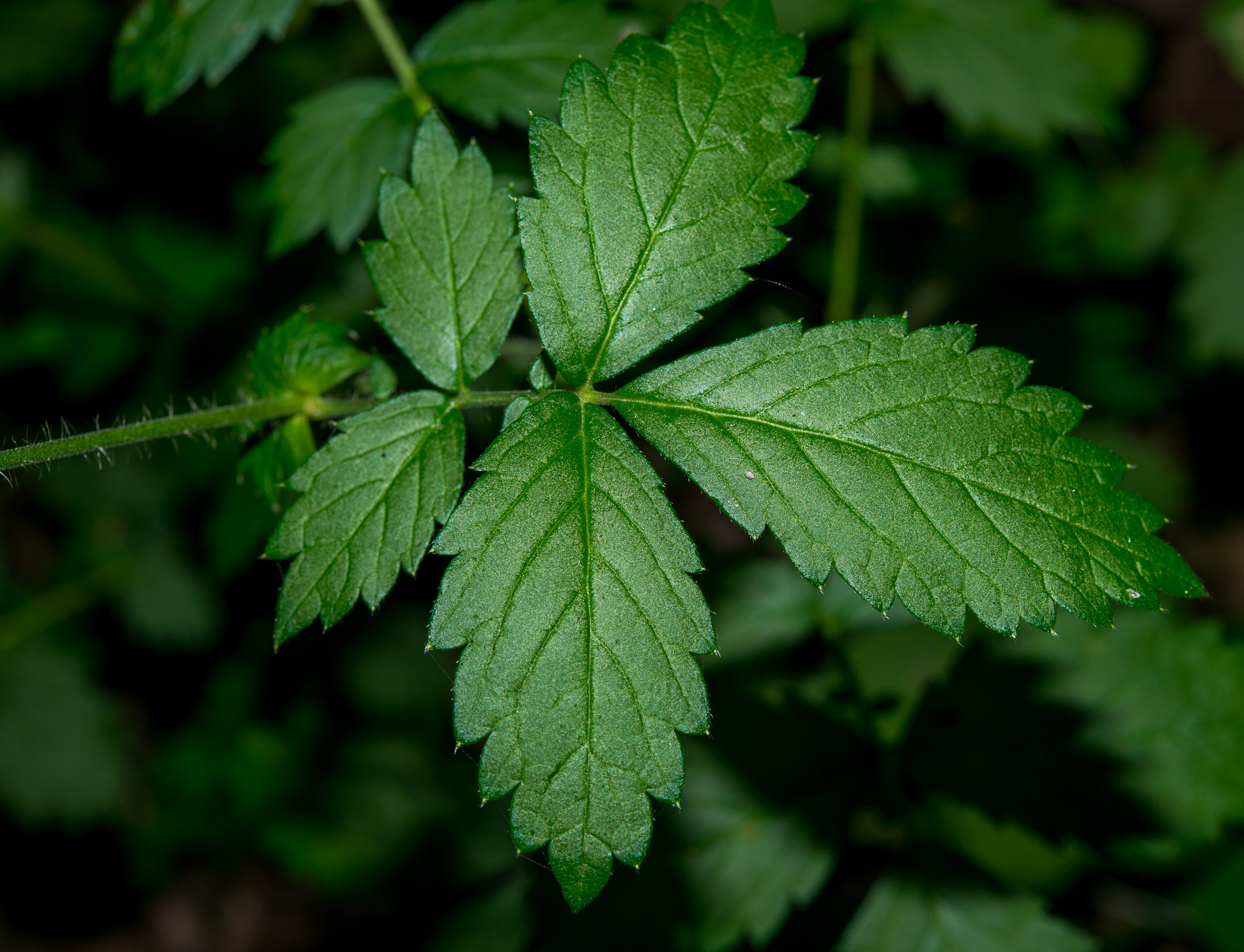
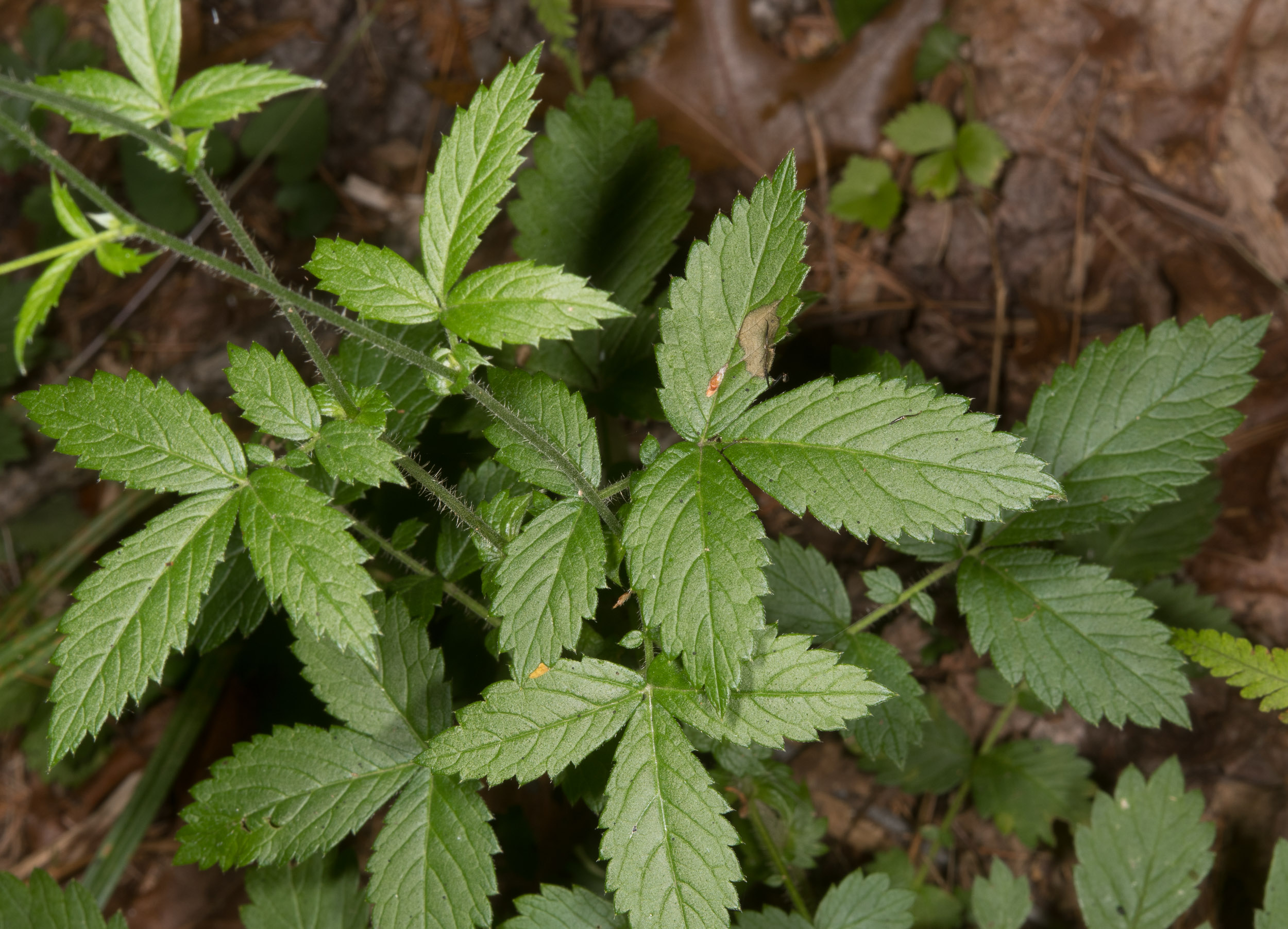
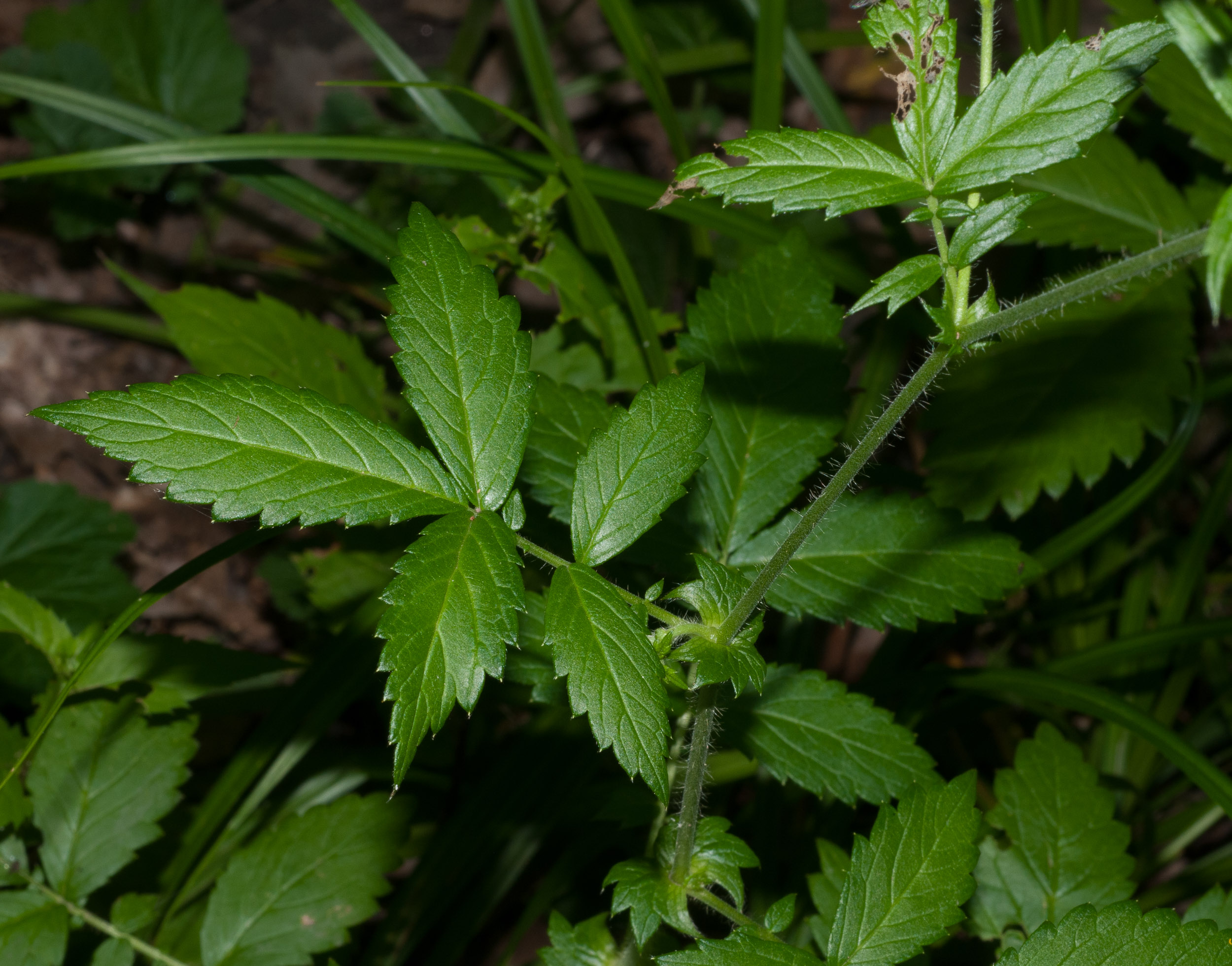
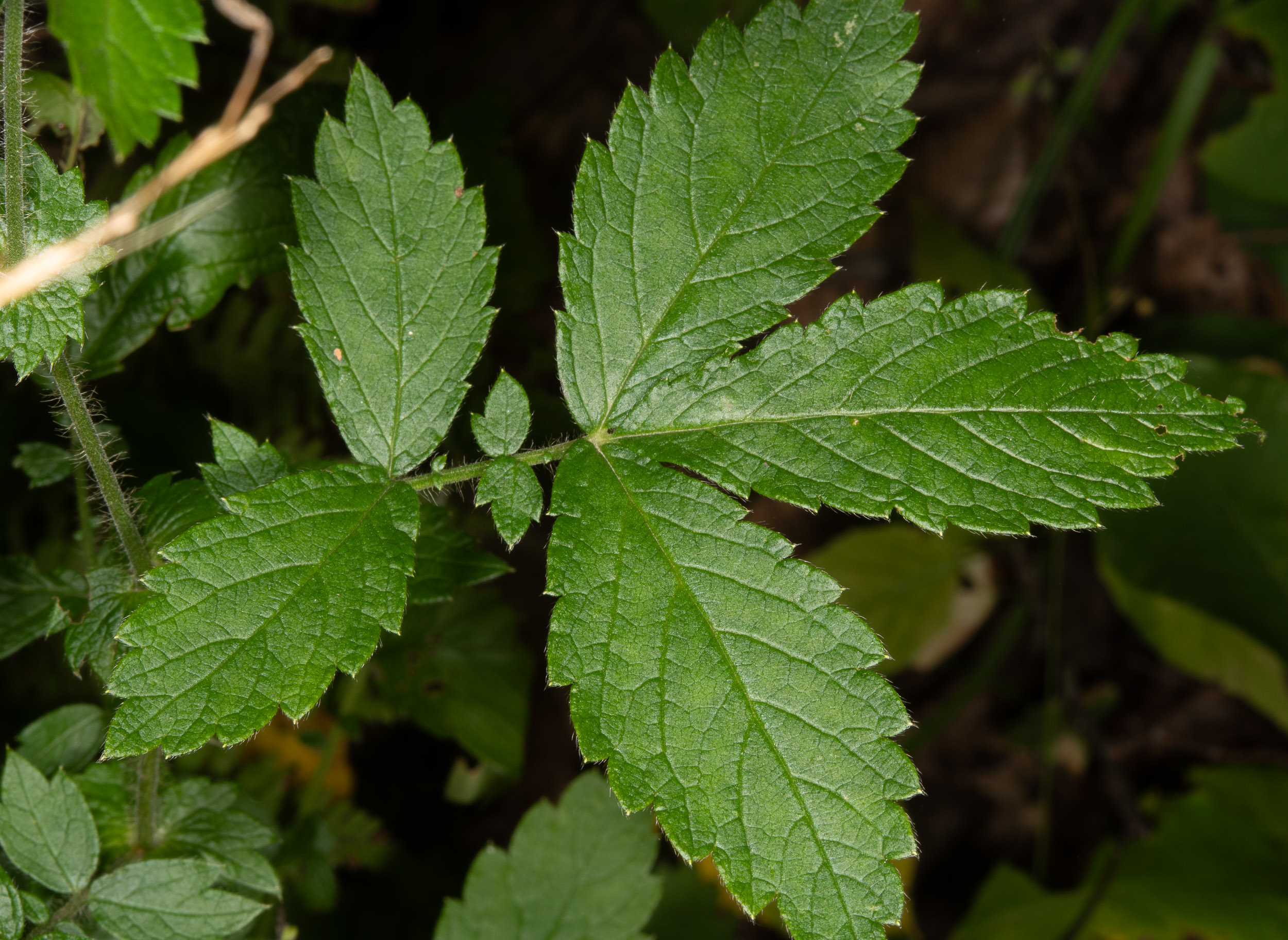
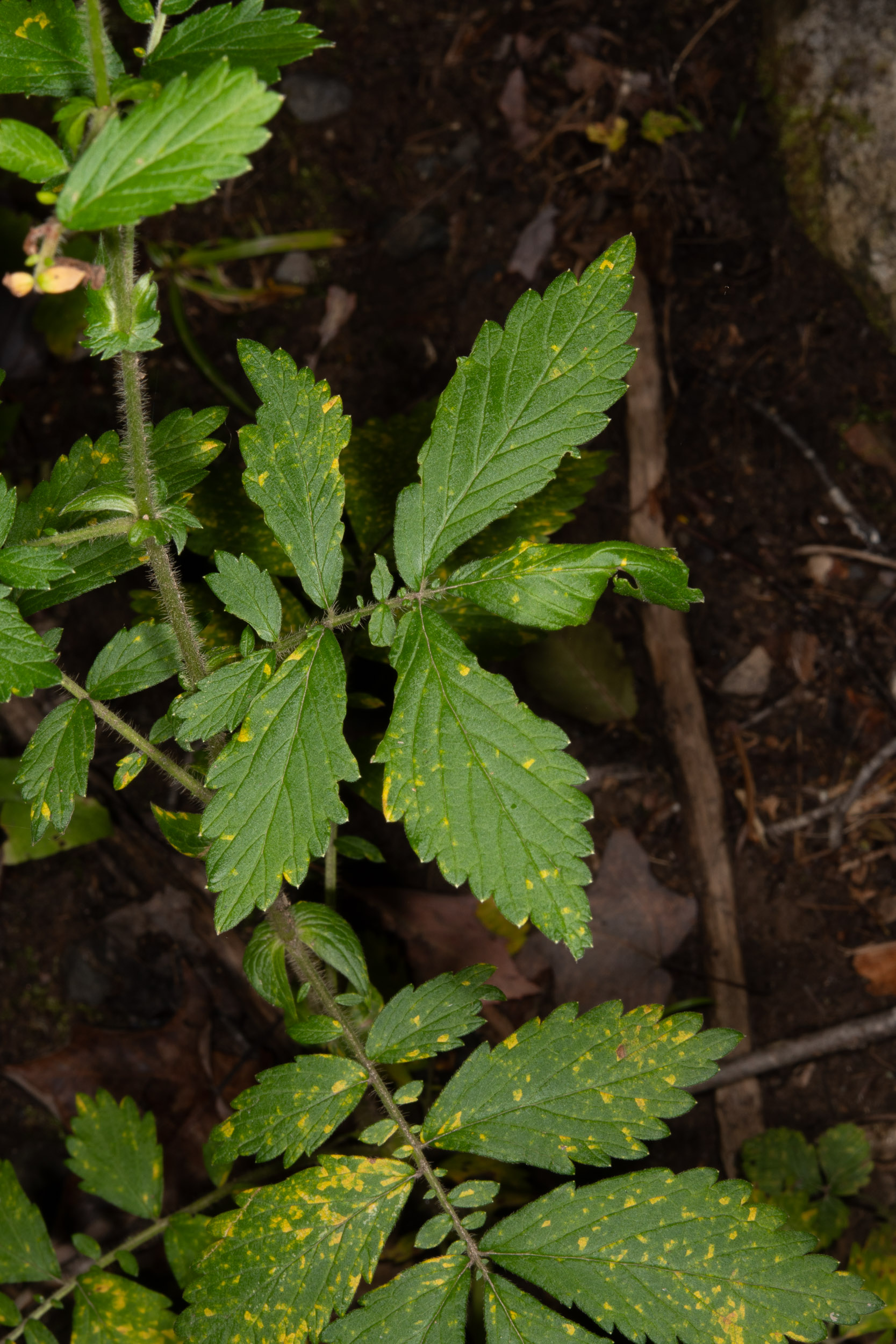
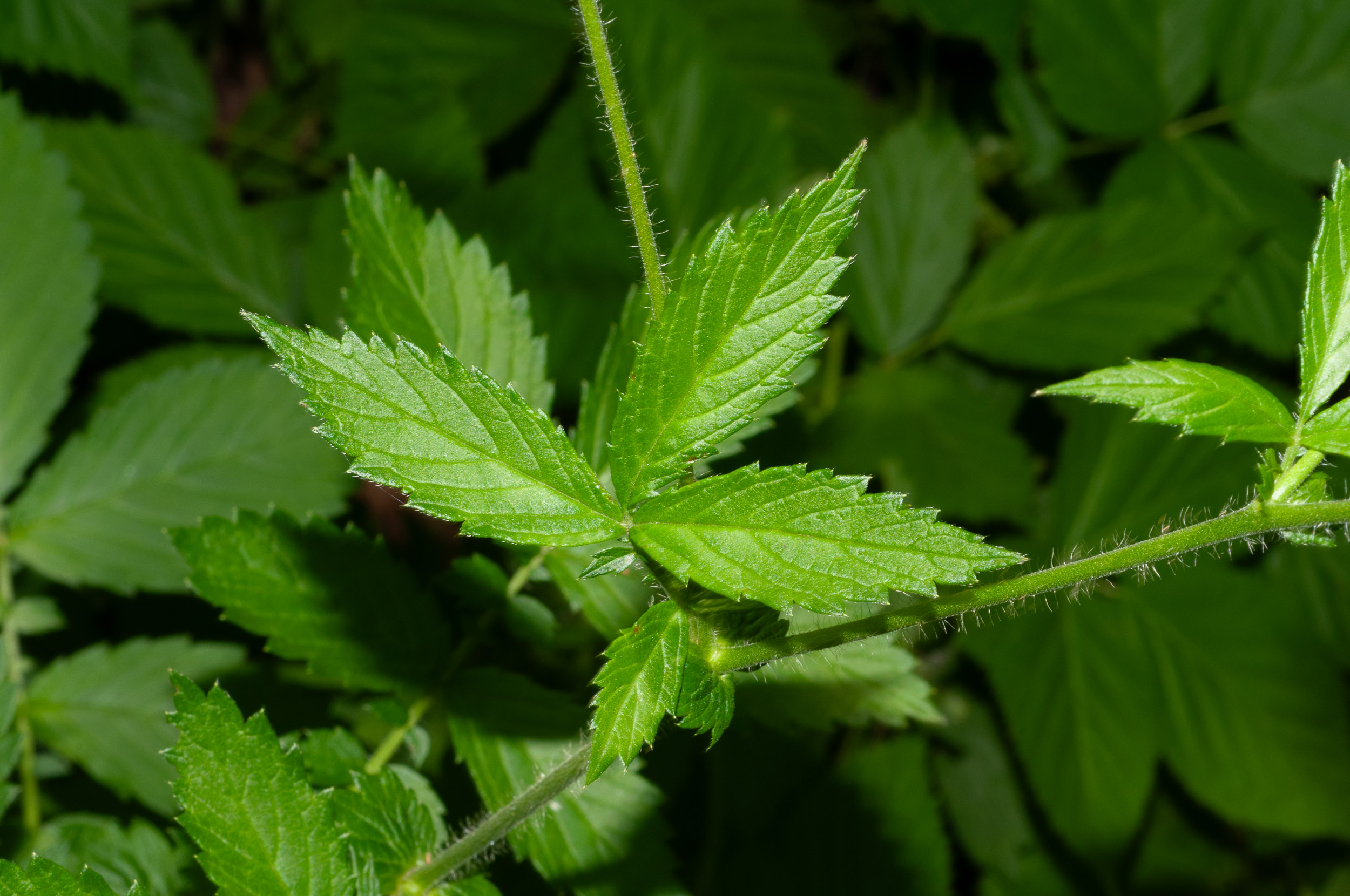
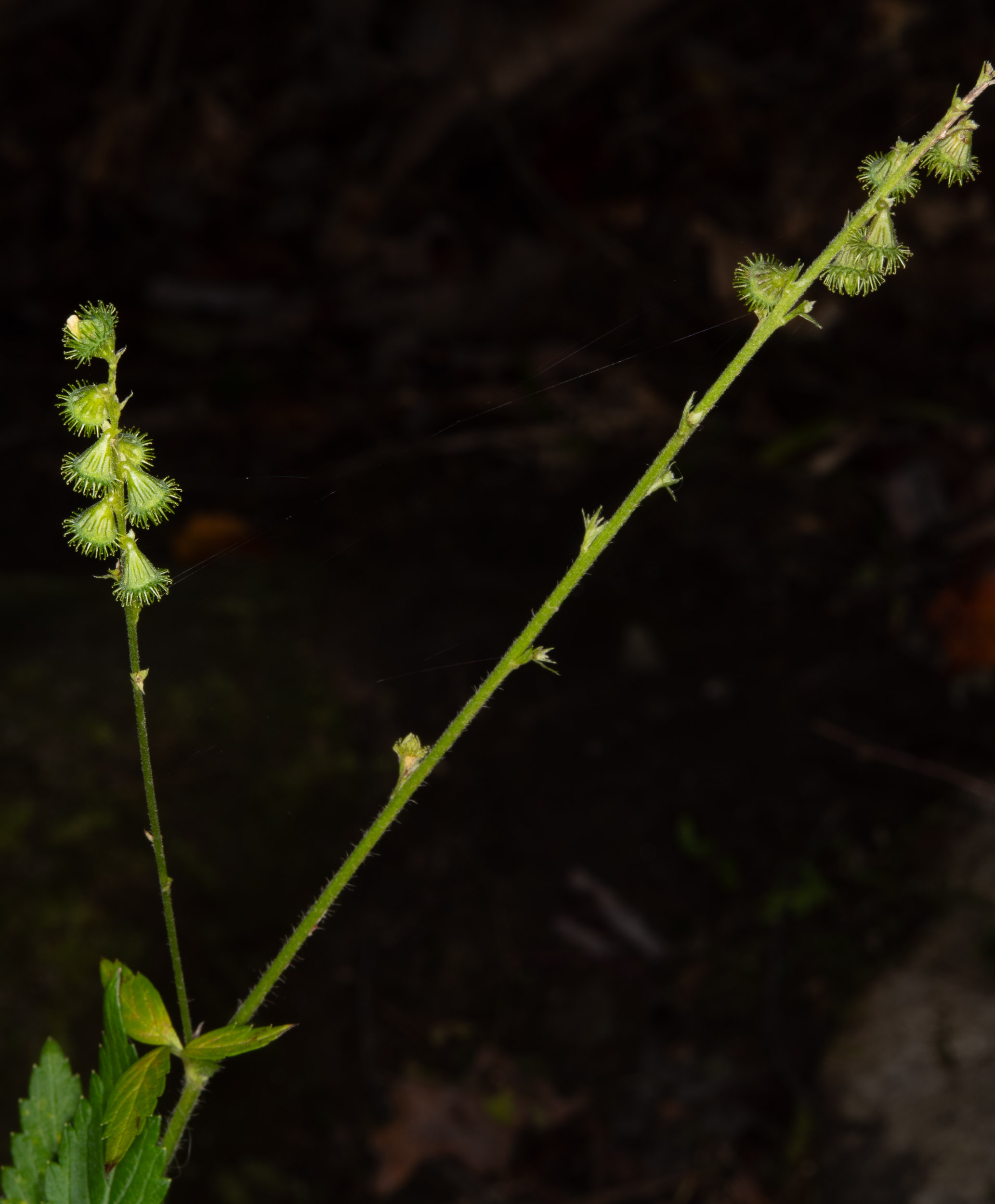
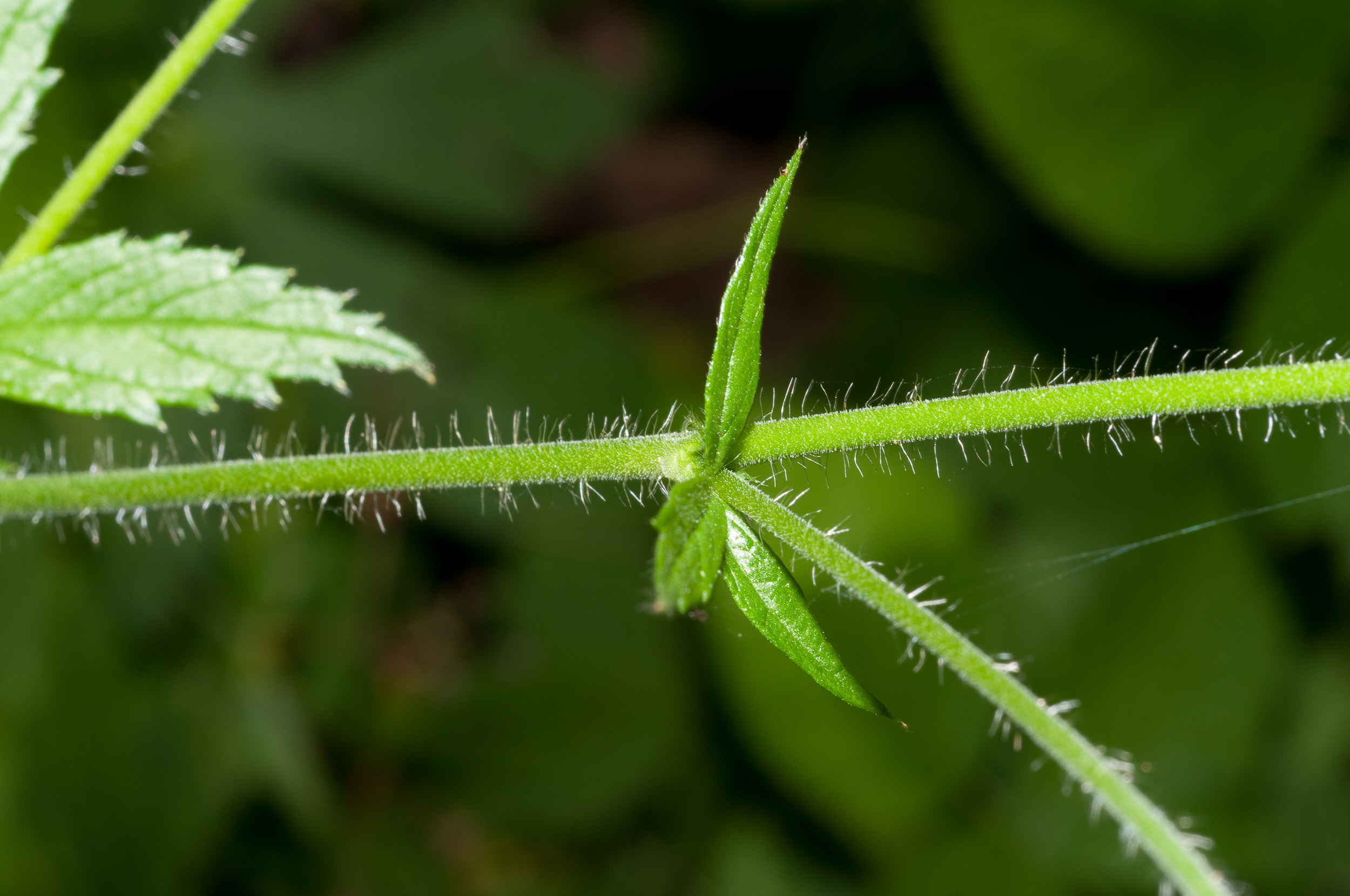
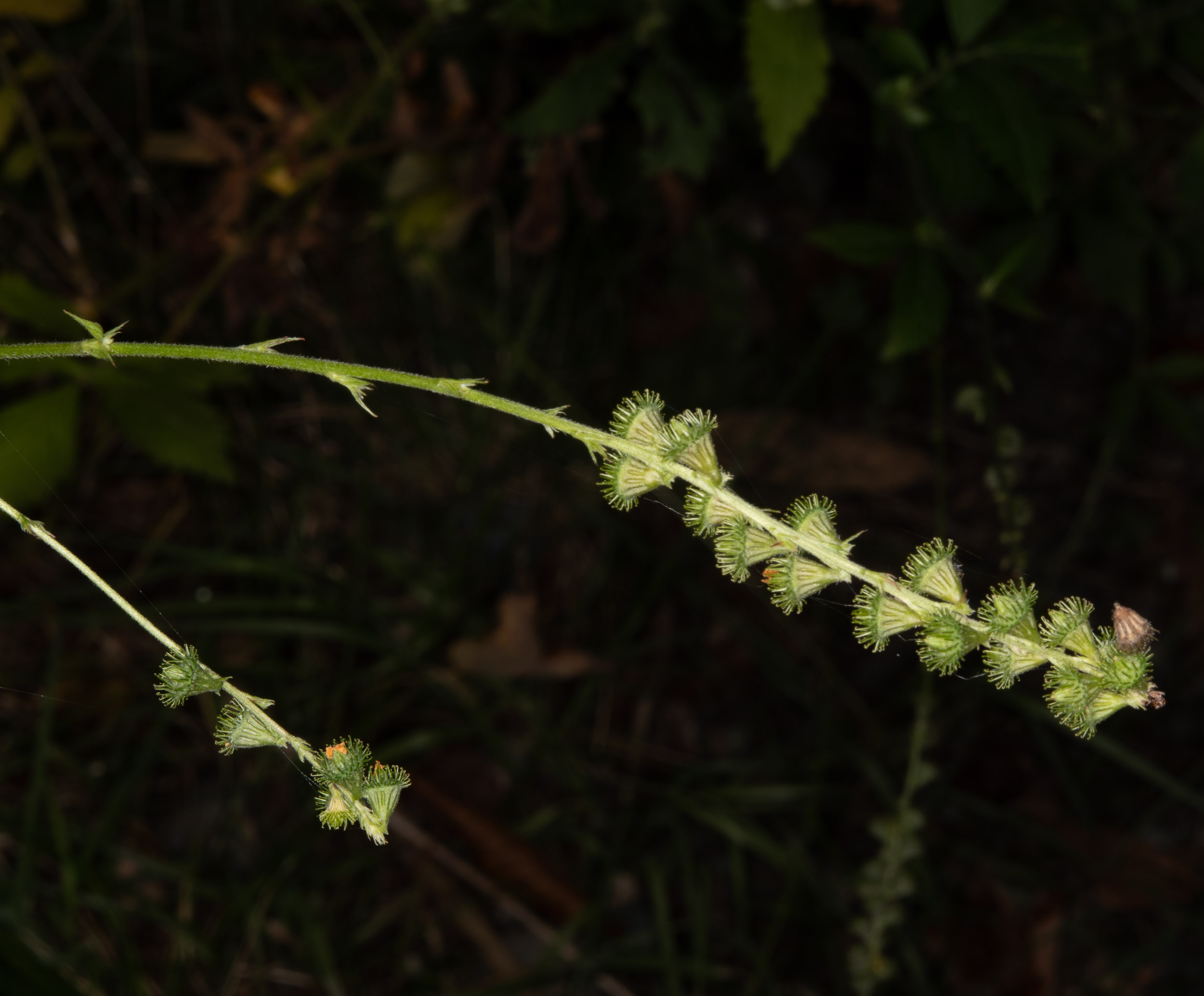
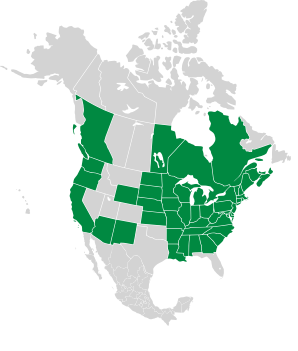
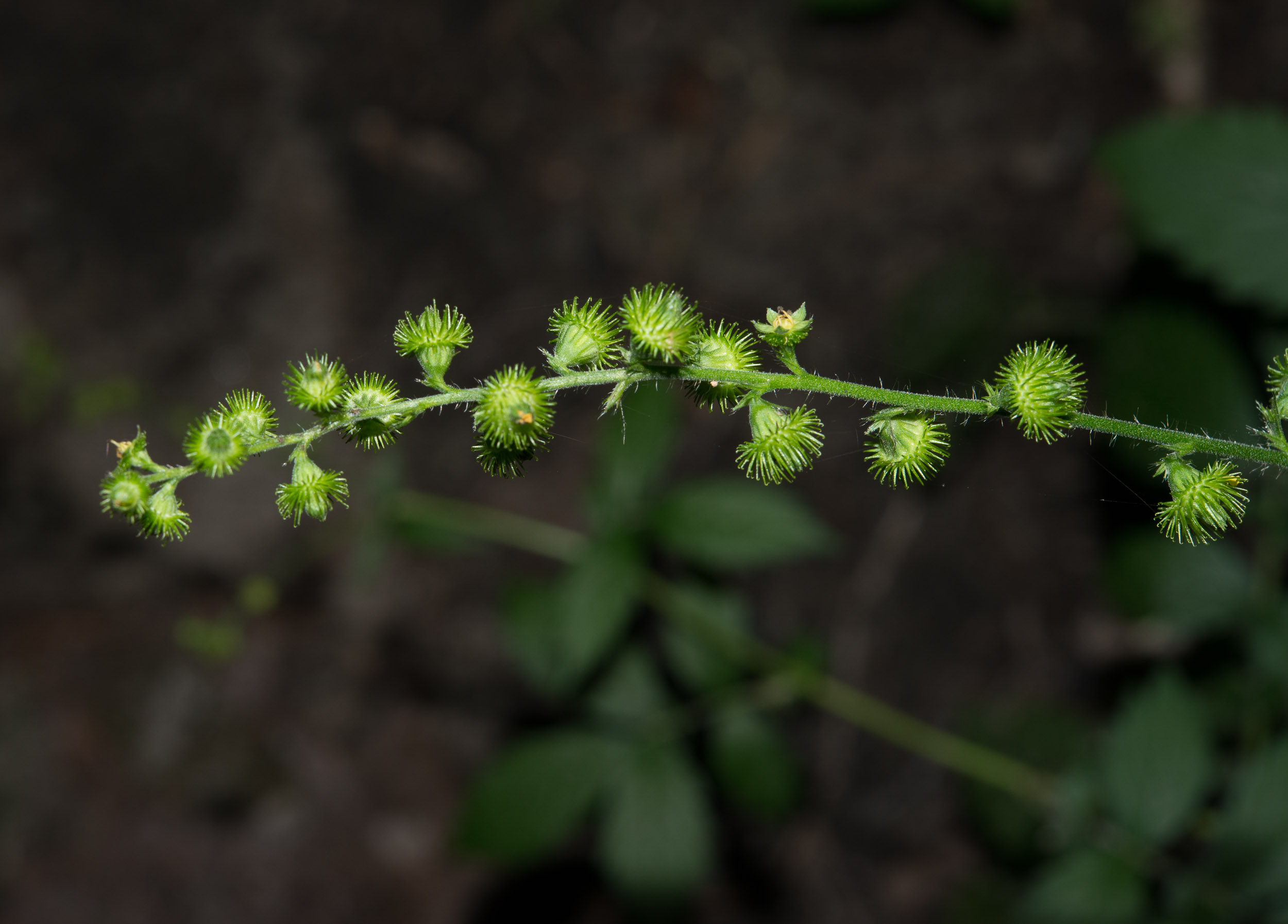
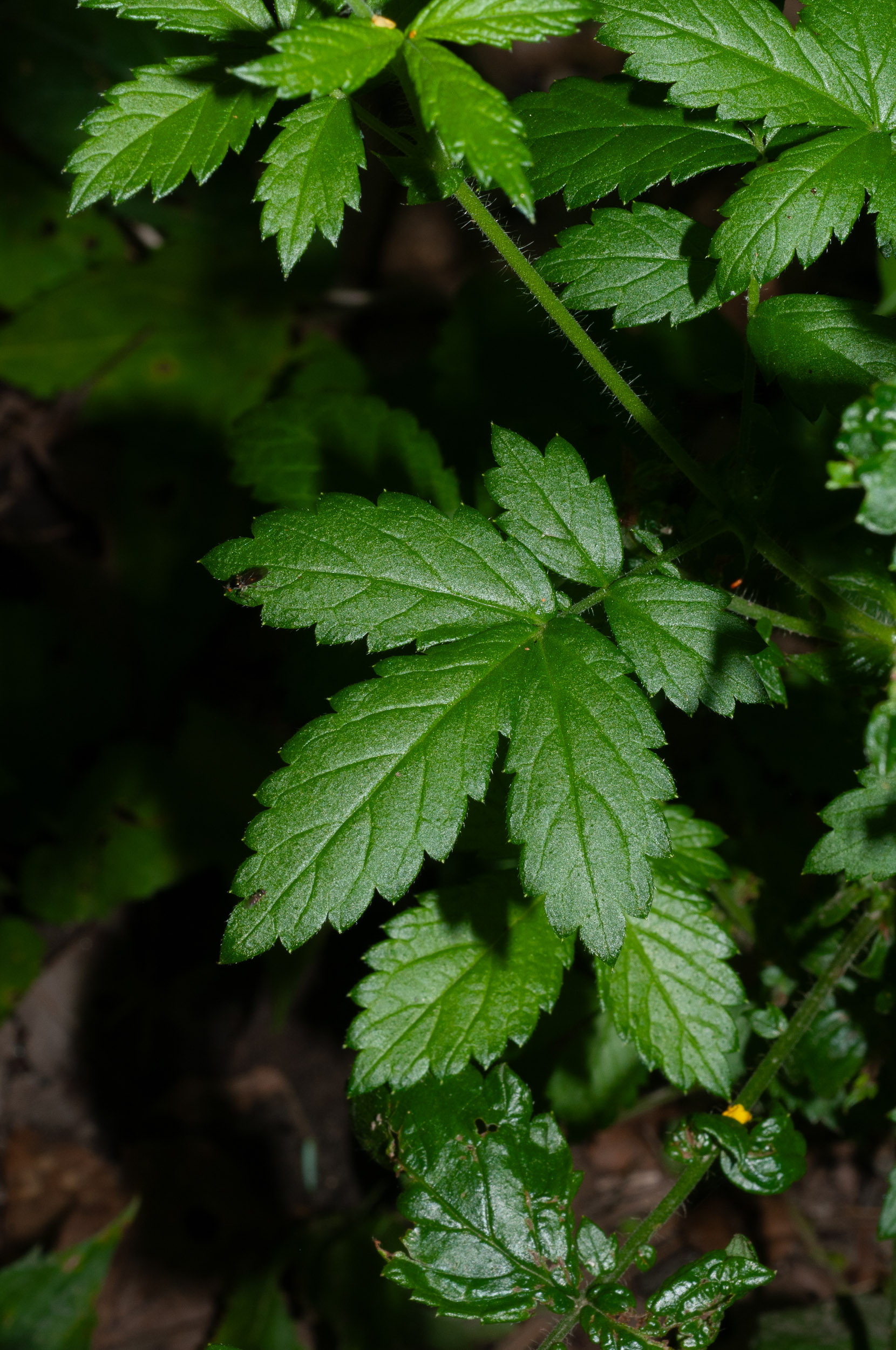
Common agrimony is one of several species of agrimony that are native to North America. Agrimonia may derive from the Greek argema, an eye disease that agrimony was believed to cure; gryposepala means "Velcro fruit." Okay, not exactly: grypo means "curved or hooked," and sepala means "sepal." It refers to the burr-like fruit. Identification: Common agrimony is 1-6′ (30-182 cm) in height. Stems have spreading hairs (that is, they stick out from the stem, while in A. striata, they are pressed against the stem). Leaves are grouped into pairs of opposing leaflets, varying unevenly in size along the stem. A third leaf appears at the end of most stems. Leaflets are roughly oval in shape and coarsely toothed; their undersides are mostly hairless except for a few hairs along the major leaf vein. Yellow flowers appear along a narrow raceme, often tilted or even horizontal, during June-August. Individual flowers are ¼-½″ (8.4-12 mm) around, with five petals. Hairs appear along the flower stalk, but they are thinly spaced. Turban-shaped bristly fruits up to ½″ (1.3 cm) in size hook like burrs onto passing animals and naturalists. Online References:
The U.S. Geological Survey's Northern Prairie Wildlife Research Center The University of Wisconsin's Robert W. Freckmann Herbarium References:
7/25/2013 · Beaver Brook Assn Conservation Lands, Rte. 130, Hollis, New Hampshire · ≈ 8 × 5″ (19 × 12 cm)
7/11/2012 · Jeff Smith Trail, Pepperell, Massachusetts · ≈ 4½ × 7″ (11 × 17 cm)
7/17/2010 · Mackworth Island, Falmouth, Maine · ≈ 7 × 4½″ (17 × 11 cm)
7/17/2010 · Mackworth Island, Falmouth, Maine · ≈ 5 × 3½″ (13 × 9.2 cm)
9/22/2023 · Moxie Falls, Moxie Gore, Maine · ≈ 8 × 5″ (20 × 13 cm)
7/25/2013 · Beaver Brook Assn Conservation Lands, Rte. 130, Hollis, New Hampshire · ≈ 8 × 5″ (19 × 12 cm)
7/11/2012 · Jeff Smith Trail, Pepperell, Massachusetts · ≈ 6 × 4″ (15 × 10 cm)
7/23/2017 · Pine Grove Furnace State Park, Pennsylvania · ≈ 4 × 6″ (11 × 16 cm)
7/23/2017 · Pine Grove Furnace State Park, Pennsylvania · ≈ 8 × 5″ (20 × 13 cm)
7/25/2013 · Beaver Brook Assn Conservation Lands, Rte. 130, Hollis, New Hampshire · ≈ 8 × 5″ (19 × 12 cm)
Agrimonia gryposepala description by Thomas H. Kent, last updated 26 Sep 2023.
© FloraFinder.org. All rights reserved. |
7/25/2013 · Beaver Brook Assn Conservation Lands, Rte. 130, Hollis, New Hampshire · ≈ 9 × 6″ (23 × 16 cm)
7/17/2010 · Mackworth Island, Falmouth, Maine · ≈ 5 × 3½″ (13 × 9.2 cm)
9/5/2020 · Hedgehog Mountain, Freeport, Maine · ≈ 3½ × 5″ (9.2 × 13 cm)
7/25/2013 · Beaver Brook Assn Conservation Lands, Rte. 130, Hollis, New Hampshire · ≈ 8 × 5″ (19 × 12 cm)
7/23/2017 · Pine Grove Furnace State Park, Pennsylvania · ≈ 8 × 5″ (20 × 13 cm)
7/11/2012 · Jeff Smith Trail, Pepperell, Massachusetts · ≈ 9 × 6″ (23 × 15 cm)
9/5/2020 · Hedgehog Mountain, Freeport, Maine · ≈ 6 × 4″ (16 × 11 cm)
9/22/2023 · Moxie Falls, Moxie Gore, Maine · ≈ 6 × 10″ (16 × 24 cm)
7/17/2010 · Mackworth Island, Falmouth, Maine · ≈ 8 × 5″ (19 × 13 cm)
9/22/2023 · Moxie Falls, Moxie Gore, Maine · ≈ 4½ × 7″ (12 × 18 cm)
7/17/2010 · Mackworth Island, Falmouth, Maine · ≈ 4½ × 3″ (11 × 7.9 cm)
9/22/2023 · Moxie Falls, Moxie Gore, Maine · ≈ 8 × 5″ (20 × 13 cm) Range:
|

 ID is uncertain