Miscellaneous Plants Bibliography
|
|
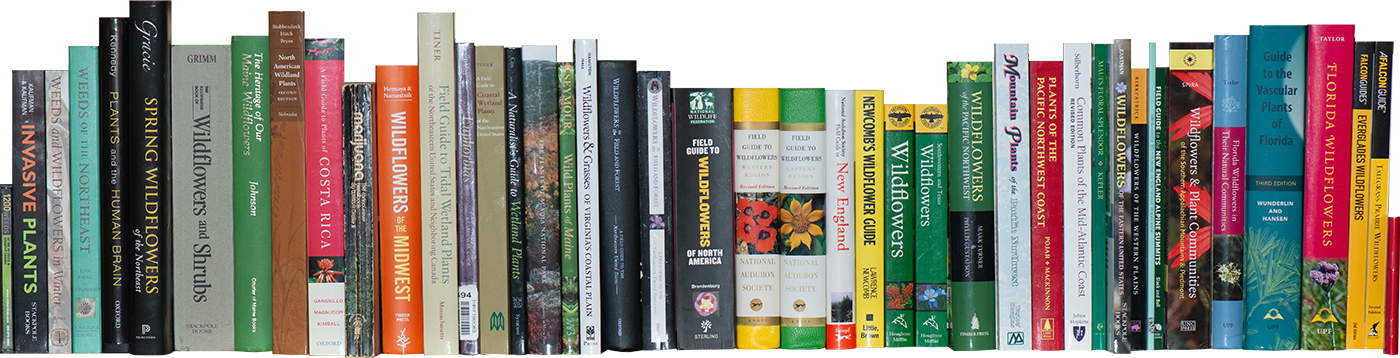
This bibliography includes books on botany, nomenclature, botanical Latin, medicinal, edible or psychoactive plants, etc. If you have no idea what you are looking at, consider the following: Note: book cover sizes in the list below are shown relative to each other. The list is organized by primary author. Some out-of-copyright books are available free at the supplied links. |
|
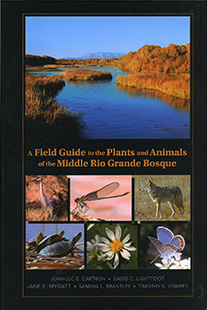
A Field Guide to the Plants and Animals of the Middle Rio Grande Bosque Author(s): Cartron, Jean-Luc E.; Lightfoot, David C.; Mygatt, Jane E.; Brantley, Sandra L.; Lowrey, Timothy K. Publisher: University of New Mexico Press, 2008 ISBN: 978-0826342690 View at: Barnes & Noble, or Amazon Comments: This volume has the ambitious goal of capturing a broad swath of life along the Rio Grande. It discusses the settings and their environmental histories, habitat types, and places to visit. It covers nonvascular plants such as lichens and fungi; vascular plants (flowering and spore-producing); invertabrate animals; and amphibians, reptiles, birds, and mammals. The section on plants makes up about a quarter of the book. It is organized by family. Blooming period is featured prominently, a good idea, since we tend to notice plants in bloom. Also included is identifying information, natural history, and whether a species is threatened. There are about three species per page, so photos tend to be smaller than with some layouts. 375 pages. |
From the back cover: “Extending from the spillway below Cochiti Dam, about fifty miles north of Albuquerque, to the headwaters of Elephant Butte Reservoir, near Truth or Consequences in the southern portion of New Mexico, the Middle Rio Grande Bosque is more than a cottonwood woodland or forest.” |
|
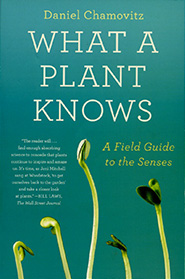
What a Plant Knows: A Field Guide to the Senses Author(s): Chamovitz, Daniel Publisher: Scientific American, 2012 ISBN: 978-0374537128 Comments: How do plants figure out how to go about their business, without brains or nervous systems? How does a mimosa know to snap shut on an insect? How do plants know which way is up? How do they sense things in their environment? How do they attract pollinators, or repel insects, animals, or competing plants? The author considers these and similar questions in tnis scientific but highly readable book. 177 pages. |
|
|
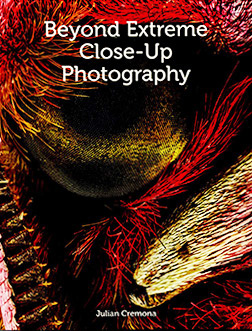
Beyond Extreme Close-up Photography Author(s): Cremona, Julian Publisher: The Crowood Press Ltd, 2018 ISBN: 978-1785004650 Comments: “Macro photography” most frequently means 1:1 magnification—the image on the sensor is the same size as it is in real life. Since the sensor image is typically enlarged for viewing by somewhere around ten times, this means 10X magnification. This book blasts past that limit, exploring higher magnification levels and specialized techniques for obtaining them. Macro rails, inverted lenses, extension tubes, specialized lighting, and various microscopic imaging techniques are explored in detail. 160 pages. |
|
|
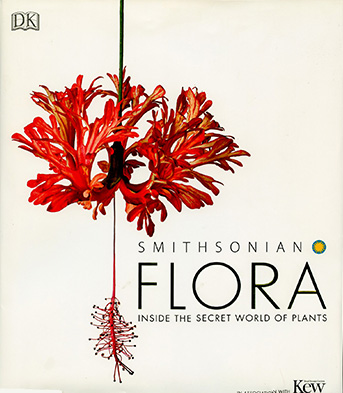
Flora: Inside the Secret World of Plants Author(s): DK Publisher: DK, 2018 ISBN: 978-1465474506 Comments: This stunning coffee table book is a superb introduction to botany. With contributions from Kew The Royal Botanic Gardens, and the Smithsonian Institution, the science is superb. The large format pages display exquisite detail, and the descriptions are imaginative and informative. Although targeted at adult readers, this is a book that children will enjoy too. 440 pages. |
|
|
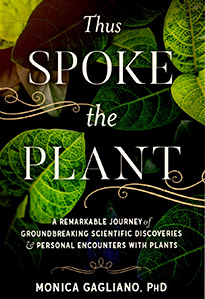
Author(s): Gagliano, Monica Publisher: North Atlantic Books Comments: The author makes an interesting and engaging case for plants as being far more sophisticated in their sensory and reasoning capacity than we generally assume. She suggests that plants have a kind of consciousness. I very much enjoyed her well-written book, but I was not convinced of the premises. 176 pages. |
|
|
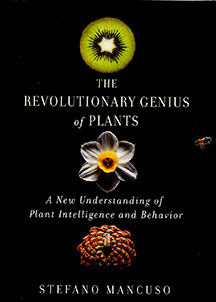
The Revolutionary Genius of Plants: A New Understanding of Plant Intelligence and Behavior Author(s): Mancuso, Stefano Publisher: Atria Books, 2017 ISBN: 978-1501187858 View at: Barnes & Noble, or Amazon Comments: This is a great read. Stefano Mancusso compares various aspects of plant and animal survival strategies, showing the many clever ways in which plants adapt and compete. He challenges our assumptions about whether it is plants or animals that are the higher form of life. Plants are much more interesting and innovative than we tend to realize. I learned a lot and enjoyed the author’s enthusiasm and style. 240 pages. |
|
|
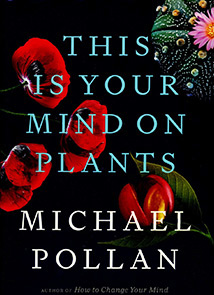
Author(s): Pollan, Michael Publisher: Penquin Press, New York, 2021 ISBN: 978-0593243787 View at: Barnes & Noble, or Amazon Comments: Micahel Pollan has written many thought-provoking and highly readable books about botanical subjects. From the book’s summary: “... Pollan dives deep into three plant drugs—opium, caffeine, and mescaline—and throws the fundamental strangeness and arbitrariness of our thinking about them into sharp relief.” He examines the cultural implications of these drugs, interwoven through human history. |
|
|
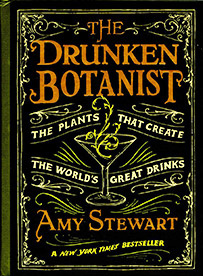
Author(s): Stewart, Amy Publisher: Algonquin Books, 2013 ISBN: 978-1616200466 Comments: When you actually know about the botanical cornucopia of ingredients that go into mixed drinks, you have a whole new appreciation of plants. And a sense that we have just scratched the surface, exploring the potential of plants for medicine, food value, structural materials, or simply a bit of indulgence. This book contains recipes and a look at their botanical background. 400 pages. |
|
|
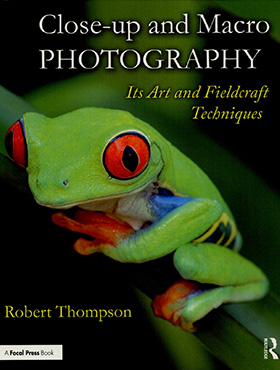
Close-up and Macro Photography: Its Art and Fieldcraft Techniques Author(s): Thompson, Robert Publisher: Focal Press, 2018 ISBN: 978-1138658479 Comments: This book presents a wide variety of techniques for close-up photography, concentrating on natural subjects such as plants, insects, and fungi. Robert Thompson not only covers the equipment and techniques needed to perform this specialized photography, but also describes "fieldcraft," the practical mechanics of finding and photographing suitable subjects in their natural habitats. 230 pages. |
|
|
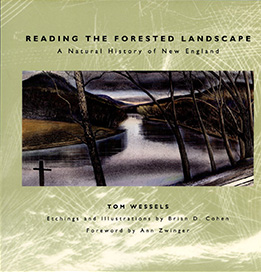
Reading the Forested Landscape: A Natural History of New England Author(s): Wessels, Tom; Cohen, Brian D. Publisher: Countryman Press, 2005 ISBN: 978-0881504200 Comments: I found this book fascinating. With some practice—okay, probably a lot of practice—you can view a wooded landscape or a field and figure out a lot about its history. Was it once a farm? Did it host livestock? Was it logged? What kind of weather did it experience, and when? By examining everything from placement of stones, to random-seeming bumps of land, to scars on trees or remains of downed trees, you can ascertain a great deal of information about a land parcel. Cleverly composed drawings illustrate the book. 200 pages. |
|
|
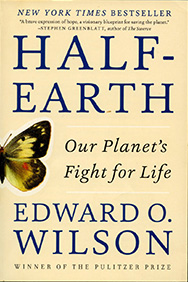
Half-Earth: Our Planet’s Fight for Life Author(s): Wilson, Edward O. Publisher: Liveright, 2017 ISBN: 978-1631492525 Comments: Pulitzer-winning biologist Edward O. Wilson presents a cogent, well-reasoned case for preserving half of our entire ailing planet for natural development, in perpetuity. Why? Because human development is causing the planetary ecosystem to collapse. Unchecked, it will take us with it. 272 pages. |