Acarospora socialis H. Magn.
Bright cobblestone lichen, cracked lichen
Bright cobblestone lichen is native to, and common in, Arizona and southern California deserts. It is sometimes called cracked lichen, because at close range its yellow surface is broken up into irregular cells called sqamules.
Identification: Bright cobblestone lichen is most often bright yellow. It is crustose—so flat against the rocks that it looks almost painted on, though it can be up to 1/32″ (1.5 mm) thick. And squamulose—comprised of minute scales called squamules. It forms patches up to 4″ (10 cm) in size. Lichen spot tests are all negative. It is orange in UV+ light.
Habitats: Sandstones, basaltic rocks, and granites in deserts.
Online References:
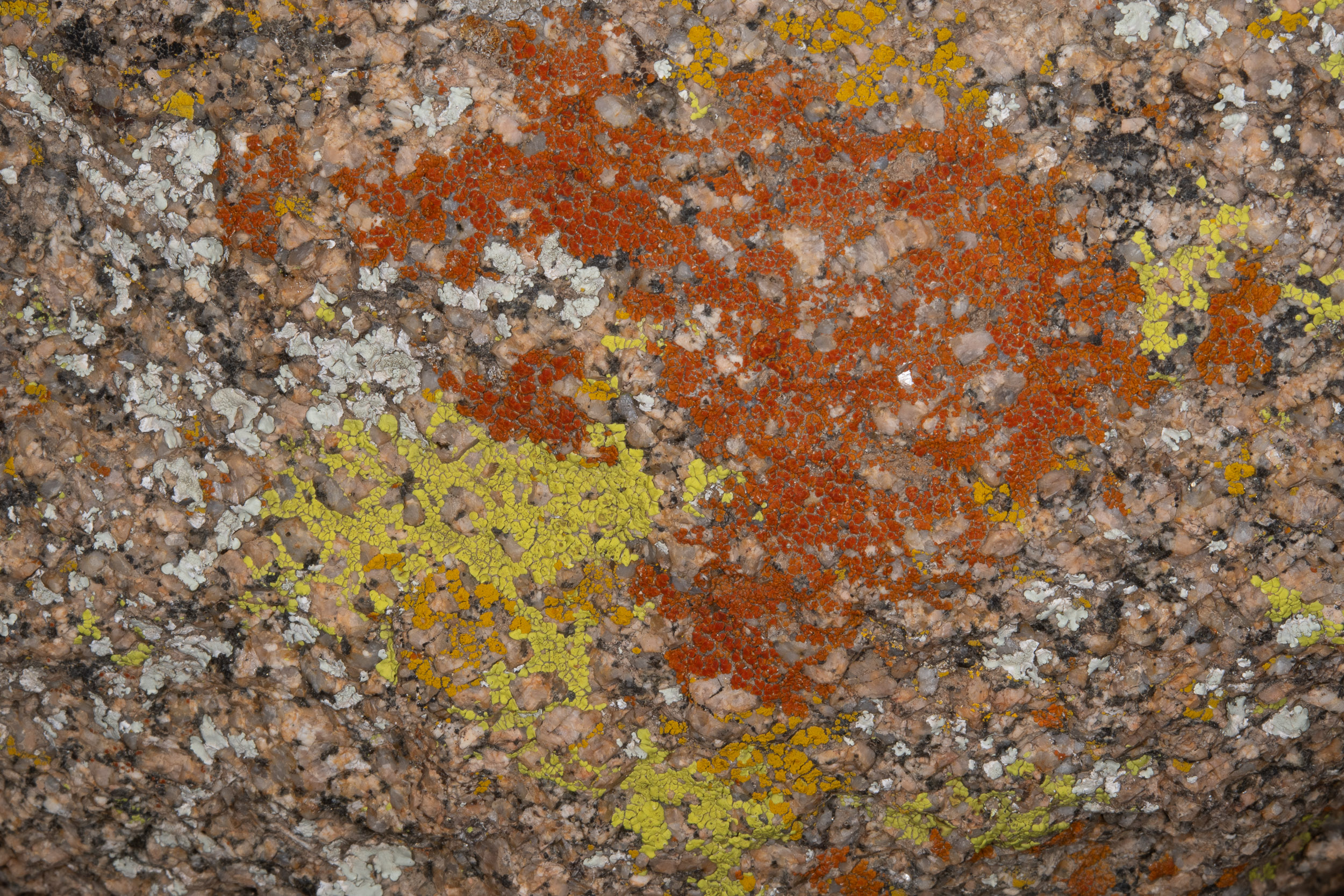
5/2/2018 · Cottonwood Spring, Joshua Tree National Park, California · ≈ 8 × 5″ (20 × 13 cm)  ID is uncertain

4/30/2018 · ≈ 6 × 4″ (15 × 10 cm) 

9/1/2014 · Bandelier National Monument, New Mexico · ≈ 9 × 6″ (23 × 16 cm) 

4/30/2018 · Barber Peak Loop Trail, Mojave National Preserve, California · ≈ 6 × 4″ (14 × 11 cm) 
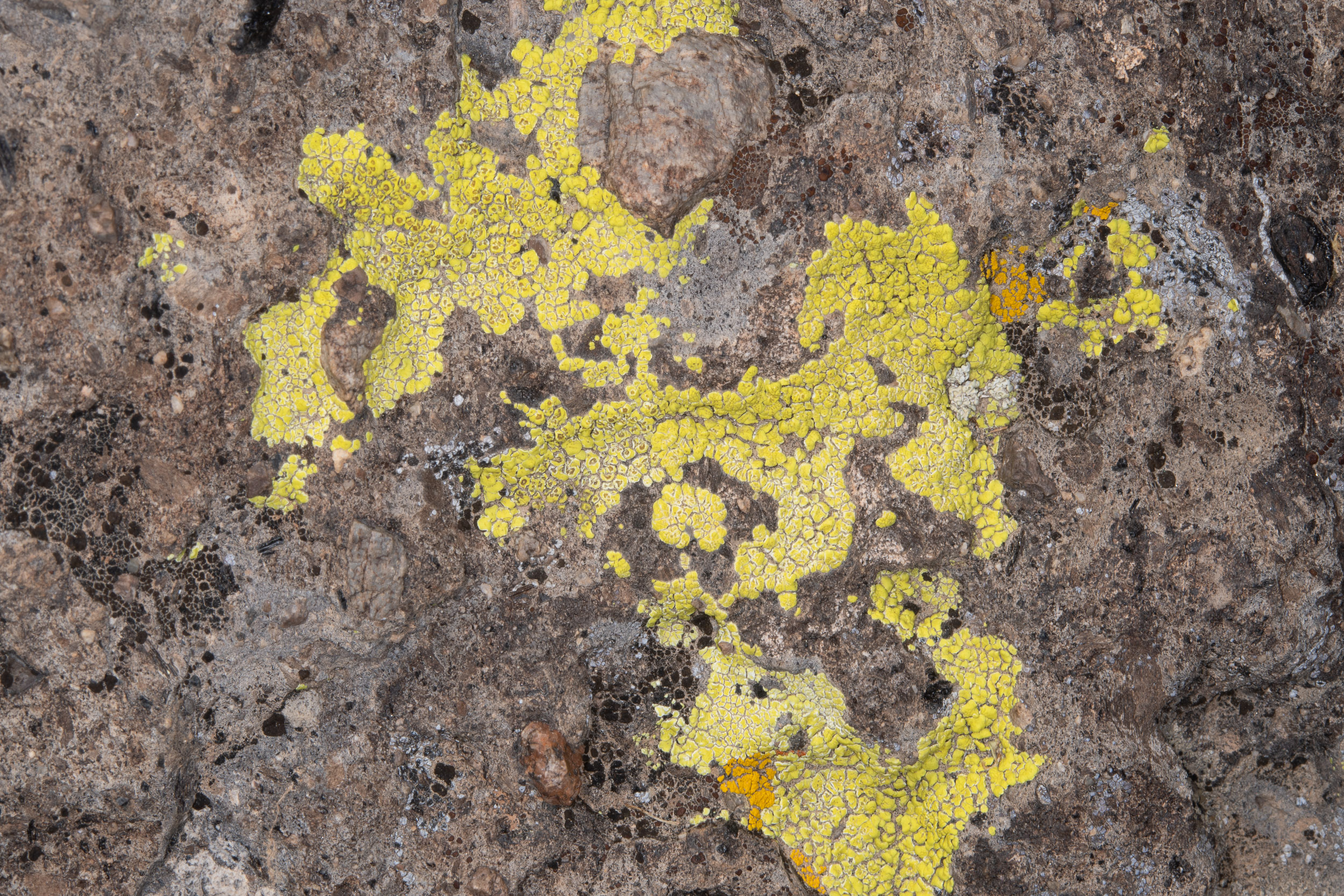
4/30/2018 · ≈ 7 × 4½″ (18 × 12 cm) 
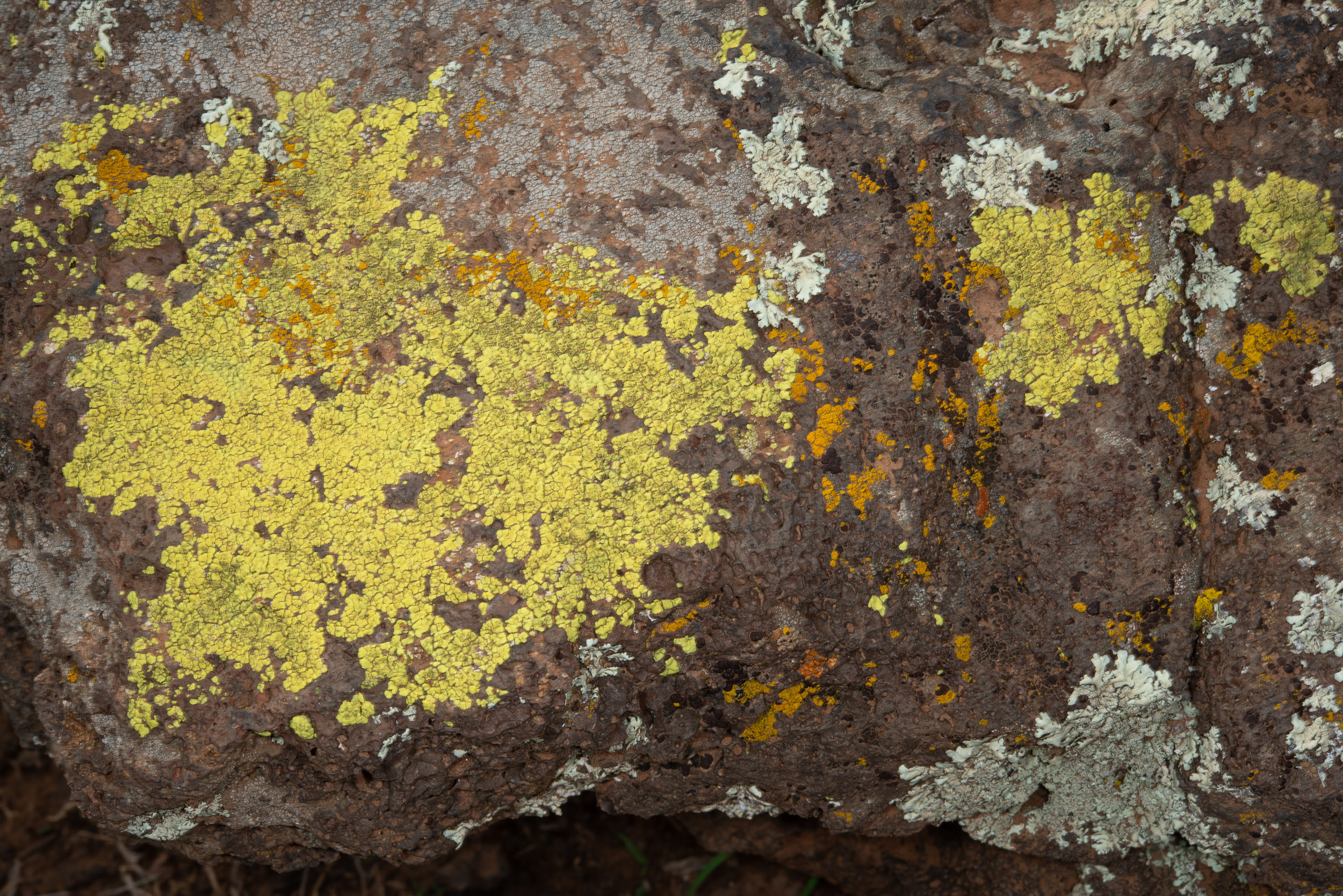
8/26/2014 · Rt. 53, El Malpais Nat. Monument, El Caldaron Area, El Malpais, New Mexico · ≈ 11 × 7″ (28 × 18 cm) 
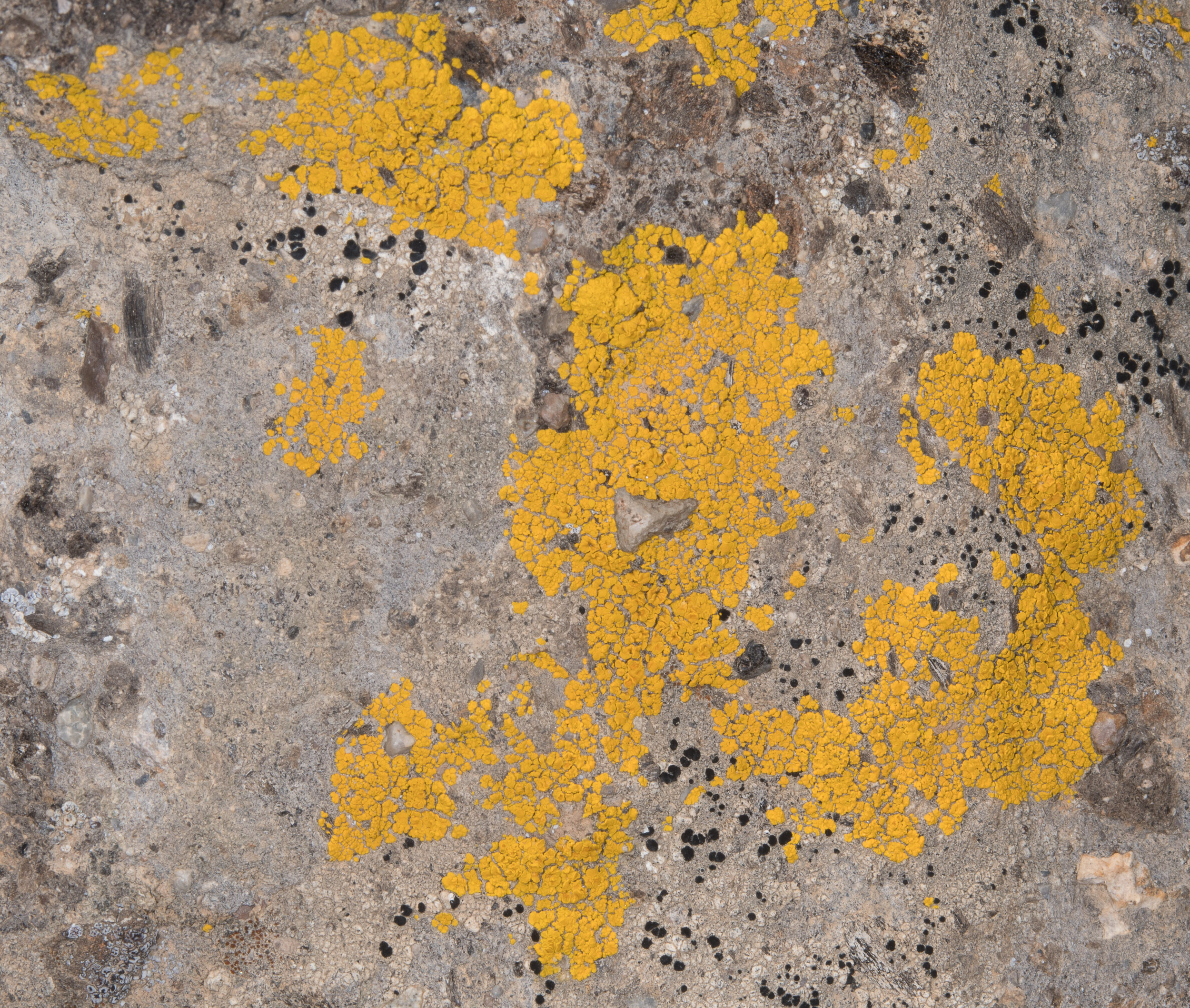
4/30/2018 · ≈ 4½ × 4″ (12 × 10 cm) ID is uncertain 
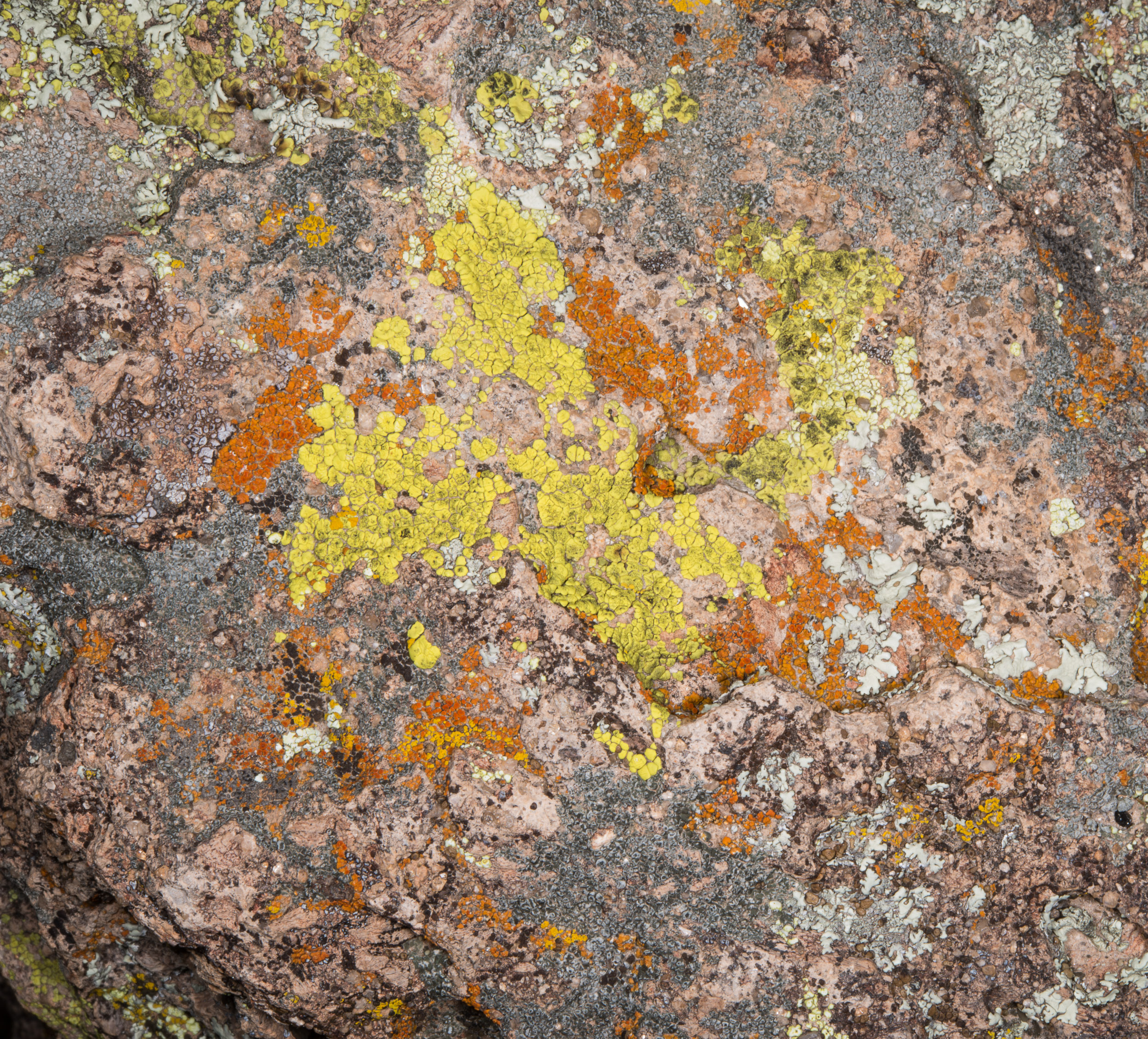
9/1/2014 · Bandelier National Monument, New Mexico · ≈ 6 × 6″ (15 × 14 cm) 
| Kingdom | Fungi | Mushrooms, lichens, gel fungi, yeasts, and molds; also called eukaryotes |
| Division | Ascomycota | Sac fungi |
| Subdivision | Pezizomycotina | Sac fungi with filaments |
| Class | Lecanoromycetes | “Lichenized” fungi |
| Suborder | Acarosporineae | Crustose lichens with green eukaryotic photobionts and polyspored asci, Named for the white non-translucent upper surface of the unstratified thallus |
| Family | Acarosporaceae | Crustose lichens with green eukaryotic photobionts and polyspored asci, Named for the white non-translucent upper surface of the unstratified thallus |
| Genus | Acarospora | For Erik Acharius, who described a one species in 1810. In 1852, Italian lichenologist Abramo Bartolommeo Massalongo described the genus |
| Species | socialis | Growing in colonies |
Acarospora socialis description by Thomas H. Kent, not updated.

© FloraFinder.org. All rights reserved.