Aesculus × carnea ‘Atropunicea’
Red horse-chestnut
Red horsechesnut is not native to the United States. I don’t have information on this ‘Atropunicea’ cultivar, so this article describes Aesculus × carnea, a natural hybrid between red buckeye (Aesculus pavia) and horse chestnut (Aesculus hippocastanum). It was discovered in 1812. Mature red horsechesnut reaches heights of 40–70′ (12–21 m). It tends to be symmetrical in shape, looking a bit like a rounded cone.
Plants: Trees are roughly oval in habit, and 30–40′ (9.1–12 m) tall.
Leaves: Palmate, dark green leaves have five or sometimes 7 leaflets. Each leaflet is ovate-oblong, and 6–10″ (15–25 cm) long, and deeply toothed.
Flowers: The beautiful pink blossoms, in panicles 6–8″ (15–20 cm) long, make this tree a popular planting in yards and along streets.
Fruits: Nuts are round, with thorny husks, 1–1½″ (2.5–3.8 cm) around. The husks protect beautiful shiny brown roundish nuts.
Habitats: Prefers moist, fertile soils.
Edibility: Poisonous.  The nuts of this and other horse chestnut
trees contain a dangerous glycoside.
The nuts of this and other horse chestnut
trees contain a dangerous glycoside.
Online References:
Wikipedia (Aesculus×carnea)
The Missouri Botanical Garden (Aesculus × carnea)
References:

5/23/2008 · Tom and Susan’s, Pepperell, Massachusetts · ≈ 7 × 10″ (17 × 25 cm) 

4/24/2007 · Tom and Susan’s, Pepperell, Massachusetts 

5/29/2007 · Tom and Susan’s, Pepperell, Massachusetts 

5/29/2007 · Tom and Susan’s, Pepperell, Massachusetts 
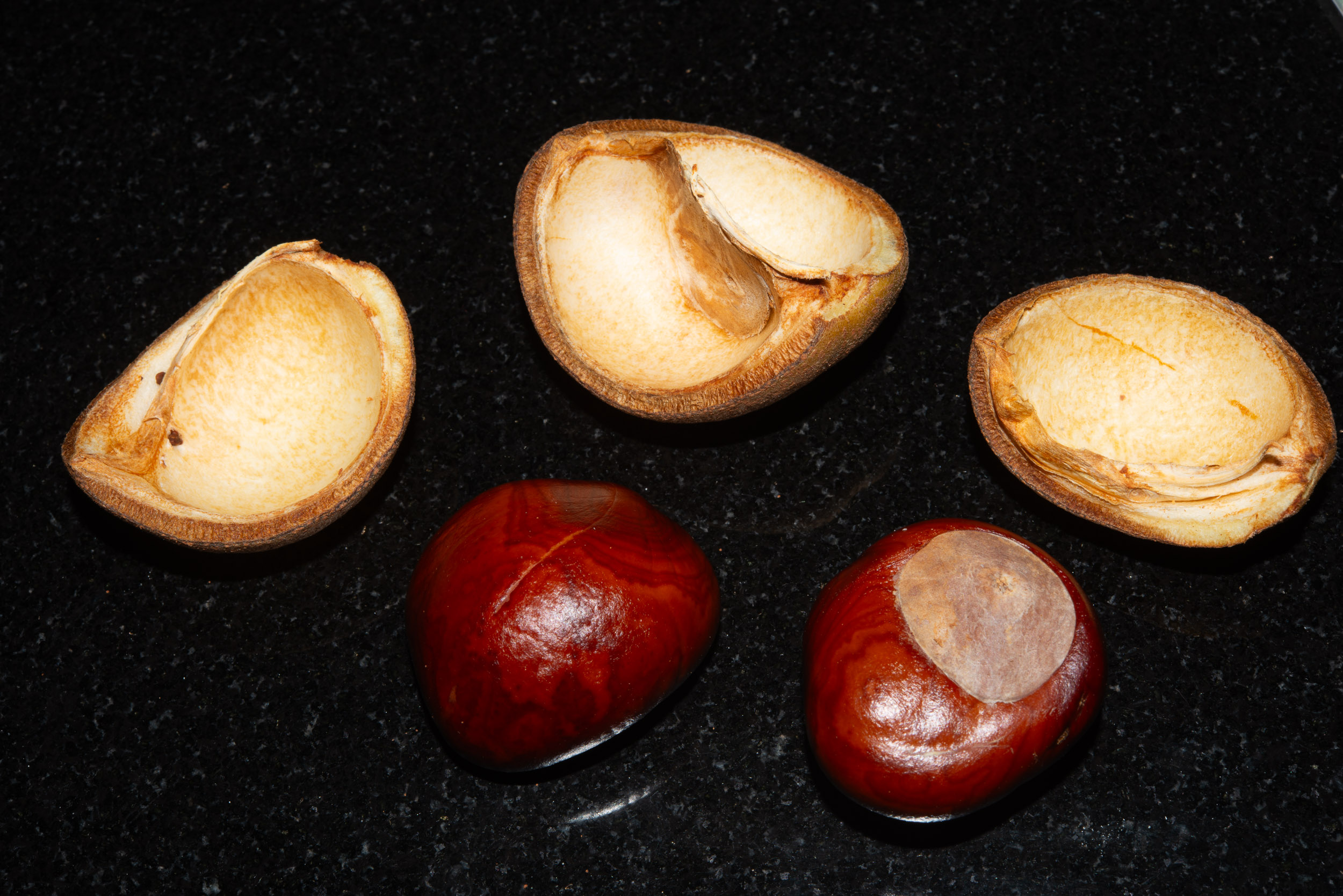
10/30/2014 · Tom and Susan’s, Pepperell, Massachusetts · ≈ 9 × 6″ (22 × 15 cm) 

Shortly after flowering. · 6/4/2013 · Tom and Susan’s, Pepperell, Massachusetts · ≈ 8 × 5″ (19 × 12 cm) 

10/30/2014 · Tom and Susan’s, Pepperell, Massachusetts · ≈ 5 × 4″ (13 × 10 cm) 

6/17/2012 · Coastal Maine Botanical Gardens, Boothbay, Maine · ≈ 4½ × 3″ (11 × 7.9 cm) 

4/24/2007 · Tom and Susan’s, Pepperell, Massachusetts 

10/30/2014 · Tom and Susan’s, Pepperell, Massachusetts · ≈ 6 × 4″ (16 × 10 cm) 

5/28/2008 · Tom and Susan’s, Pepperell, Massachusetts 
| Kingdom | Plantae | Plants, but not fungi, lichens, or algae (from Stearn's Botanical Latin) |
| Subkingdom | Tracheobionta | Vascular plants—plants with a “circulatory system” for delivering water and nutrients |
| Division | Magnoliophyta | Flowering plants, also known as angiosperms |
| Class | Magnoliopsida | Dicotyledons—plants with two initial seed leaves |
| Subclass | Rosidae | Roses, legumes, proteas, dogwoods, hydrangeas, mistletoes, euphorbias, grapes, many more |
| Order | Sapindales | Includes citrus; maples, horse-chestnuts, lychees and rambutans; mangos and cashews; frankincense and myrrh; mahogany and neem |
| Family | Sapindaceae | Soapberry family |
| Genus | Aesculus | Means “edible acorn” (though some species are definitely not edible) |
| Species | carnea | Flesh-colored, pink |

Aesculus × carnea ‘Atropunicea’ description by Thomas H. Kent, not updated.

© FloraFinder.org. All rights reserved.