Agave americana L.
Century plant, American century plant
These striking plants have a rounded array of sharply pointed, blue-gray leaves at the bottom, and an amazing flowering stalk that can reach as much as 26′ (8 m) in height, way above the leaves. The leaves can reach 6′ (1.8 m) in length; the rosette can be 13′ (4.0 m) in diameter. They are extremely tolerant of drought.
Plants: These plants are named in the partially mistaken belief that they take a century to bloom, and die after the first bloom. It really does take about 10 years to bloom under ideal circumstances, and up to 60 in cooler climates. And it really does die after it blooms, although shoots from the main plant, called adventitious shoots, continue to grow. Hence waiting for the unmistakable large stalk of yellow flowers may require more patience than you have. It is unusually large in size, 6–10′ (1.8–3 m) .
Leaves: 3–6½′ (1–2 m) long and 6–10″ (15–25 cm) wide. They are smooth and very rigid, gray-green or bluish, with sharp dark brown teeth along the edges, and tipped with a dark brown spine.
Flowers: Yellow blooms appear on stalks 16–26′ (5–8 m) high, branched at the top into 15-35 branches.
Fruits: Small brown seeds, though they also spread via adventitious shoots.
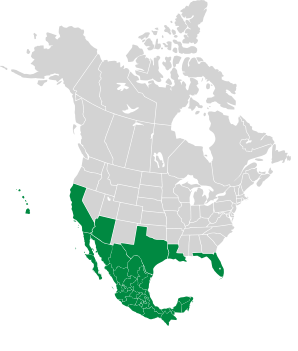
Habitats: Sandy places in desert scrub at elevations around 656′ (200 m) in Texas and eastern Mexico.
Edibility: Sap from broken leaves causes painful irritation or severe dermatitis. Indians of pre-Columbian Mexico cut the flower stems before they flowered, and collected a liquid that they fermented, and these are still used today to produce mezcal.
Online References:
References:
Irish, Mary & Irish, Gary, Agaves, Yuccas and Related Plants: A Gardener’s Guide, Timber Press, 2000, p. 94-97

5/24/2009 · Arizona Sonora Desert Museum, Tucson, Arizona 

5/24/2009 · Arizona Sonora Desert Museum, Tucson, Arizona 
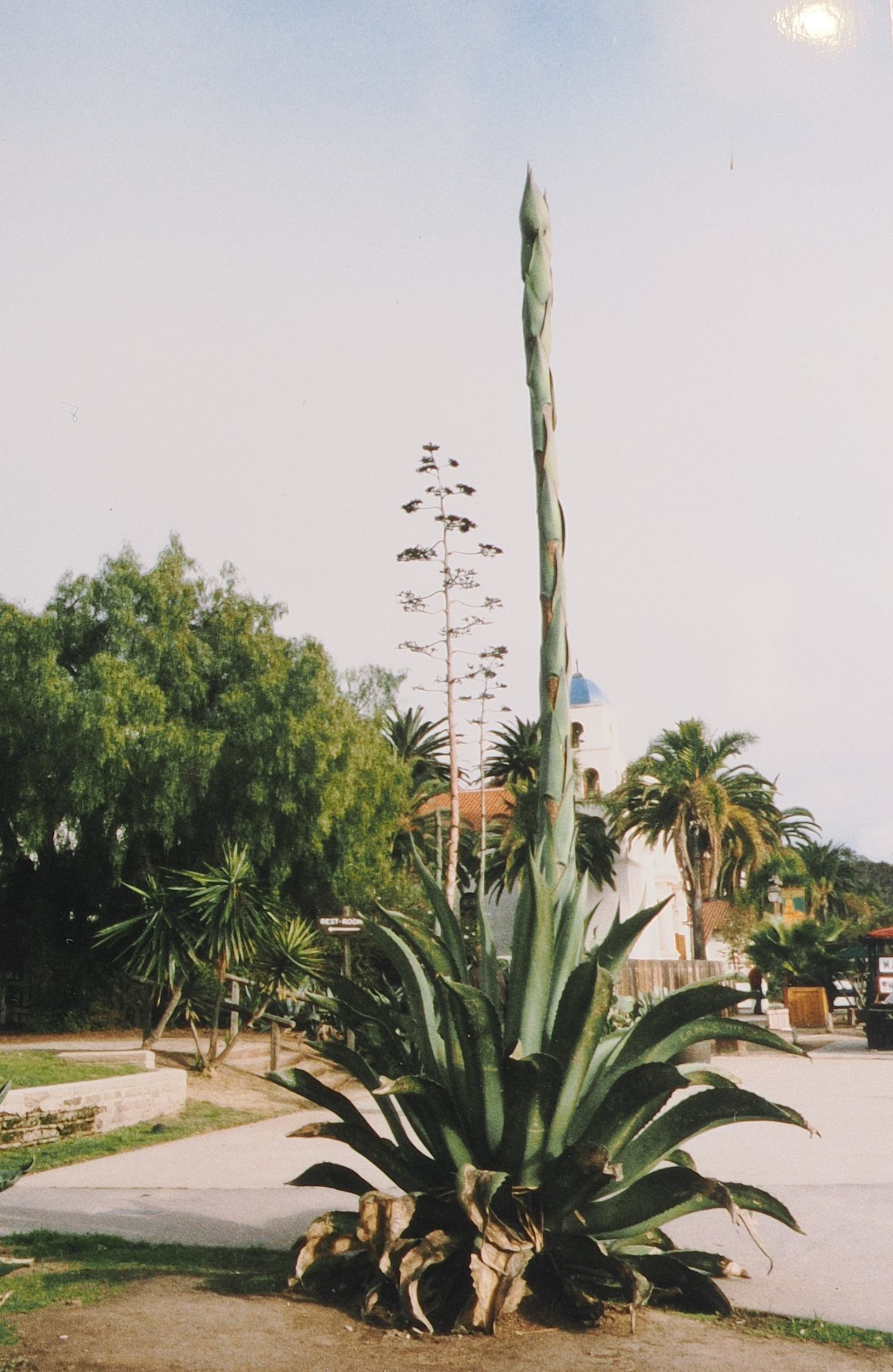
9/27/2024 · Balboa Park, San Diego, California · By Constance Kent  ID is uncertain

5/24/2009 · Arizona Sonora Desert Museum, Tucson, Arizona 

4/6/2011 · Howard Peters Rawlings Conservatory & Botanic Gardens, Druid Hill Park, Baltimore, Maryland 

4/6/2011 · Howard Peters Rawlings Conservatory & Botanic Gardens, Druid Hill Park, Baltimore, Maryland 

9/7/2010 · New England Botanic Garden at Tower Hill, Boylston, Massachusetts 
| Kingdom | Plantae | Plants, but not fungi, lichens, or algae (from Stearn's Botanical Latin) |
| Subkingdom | Tracheobionta | Vascular plants—plants with a “circulatory system” for delivering water and nutrients |
| Division | Magnoliophyta | Flowering plants, also known as angiosperms |
| Class | Liliopsida | Monocots (plants with a single seed leaf); includes the lily family |
| Subclass | Liliidae | Includes lilies, orchids, and many others |
| Order | Asparagales | A diverse group that includes asparagus |
| Family | Asparagaceae | Agaves, asparagus, hyacinths, and others |
| Genus | Agave | From Greek, meaning “noble” |
| Species | americana | “From America” |
Agave americana description by Thomas H. Kent, not updated.

© FloraFinder.org. All rights reserved.