Aloe camperi Schweinf.
Nubian aloe
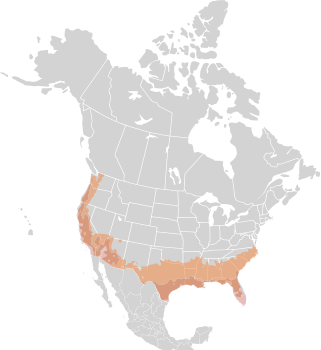
Nubian aloe is a native of Eritrea and Ethiopia. It has become naturalized in South Africa.
Plants: These aloes have a short stem and reach 2–3′ (60–91 cm) in height and up to 2′ (60 cm) around. They often form colonies.
Leaves: Dark green, up to 2′ (60 cm) long, with white flecks near the stem on the leaf undersides.
Flowers: Flower spikes 3′ (91 cm) tall are densely covered with pale shades of pinkish to orange buds, opening to yellow. Flowers may also be a uniform salmon orange color. They appear in April to May.
Fruits: Dehiscent capsules.
Habitats: Rocky slopes and sandy alluvial plains at elevations of 1804–8858′ (550–2700 m).
Edibility: Not edible.
See also the Aloe comparison table.
Online References:

2/26/2010 · San Diego Zoo, San Diego, California · ≈ 3 × 2′ (91 × 66 cm) 
| Kingdom | Plantae | Plants, but not fungi, lichens, or algae (from Stearn's Botanical Latin) |
| Subkingdom | Tracheobionta | Vascular plants—plants with a “circulatory system” for delivering water and nutrients |
| Division | Magnoliophyta | Flowering plants, also known as angiosperms |
| Class | Liliopsida | Monocots (plants with a single seed leaf); includes the lily family |
| Subclass | Liliidae | Includes lilies, orchids, and many others |
| Order | Asparagales | A diverse group that includes asparagus |
| Family | Xanthorrhoeaceae | Aloes, many tropical plants, flax lilies, daylilies, many others |
| Genus | Aloe | Means “goddess” in ancient Sanskrit, for its reputed use as a beauty aid; some sources suggest that the name comes from Alloeh, meaning “shining bitter substance” |
| Species | camperi | Also called Camper‘s aloe, but the origin of the name is unknown |
Aloe camperi description by Thomas H. Kent, not updated.

© FloraFinder.org. All rights reserved.