Amaranthus palmeri S. Watson
Carelessweed, Palmer’s pigweed, dioecious amaranth, Palmer’s amaranth
Palmer’s pigweed is native to much of southern North America, and naturalized in the eastern United States. It has been introduced to other parts of the world, including Europe and Australia. It is now classified as a noxious weed or an invasive in much of its range, due to toxicity to livestock, aggressive spreading, and resistance to glyphosphate and ALS herbicides. The name “pigweed,” which applies to this and other Amaranthus species, reflects their use as pig fodder.
Plants: 3–5′ (1–1.5 m) in height, with multiple branches and smooth stems.
Leaves: Alternate, hairless, lanceolate to elliptic to ovate. Leaves are up to 6″ (15 cm) long, and often have a V-shaped chevron on the upper surface, and whitish veins beneath. They have long petioles.
Flowers: Plants are dioecious—separate plants have male and female flowers. Flowerheads on both are cylindrical or spiked, and up to 2′ (60 cm) long. Individual flowers are densely packed on the flowerheads, and are 1/16–⅛″ (2–3 mm) each. They are white or whitish green, and appear from summer to early fall.
Fruits: Thin-walled utricules (sacs) are 1/32″ (1.5 mm) long. Each contains one round, black-to-purple seed.
Habitats: This amaranth thrives in desert habitats, especially in sunny, sparsely vegetated areas, such as railroads, wastelands, disturbed areas, and farmlands. It has adapted to more temperate climates as well. It grows at elevations below 1.0 mi (1.7 km).
Edibility: Leaves, stems, and seeds are edible and nutritious to humans. Leaves are edible raw or cooked. Native Americans, including the Navajo, Pima, Yuma and Mohave, ate it as a staple food. But because it contains oxalic acid, and because it may absorb excess soil nitrates, it is toxic to nonruminant livestock.
Online References:
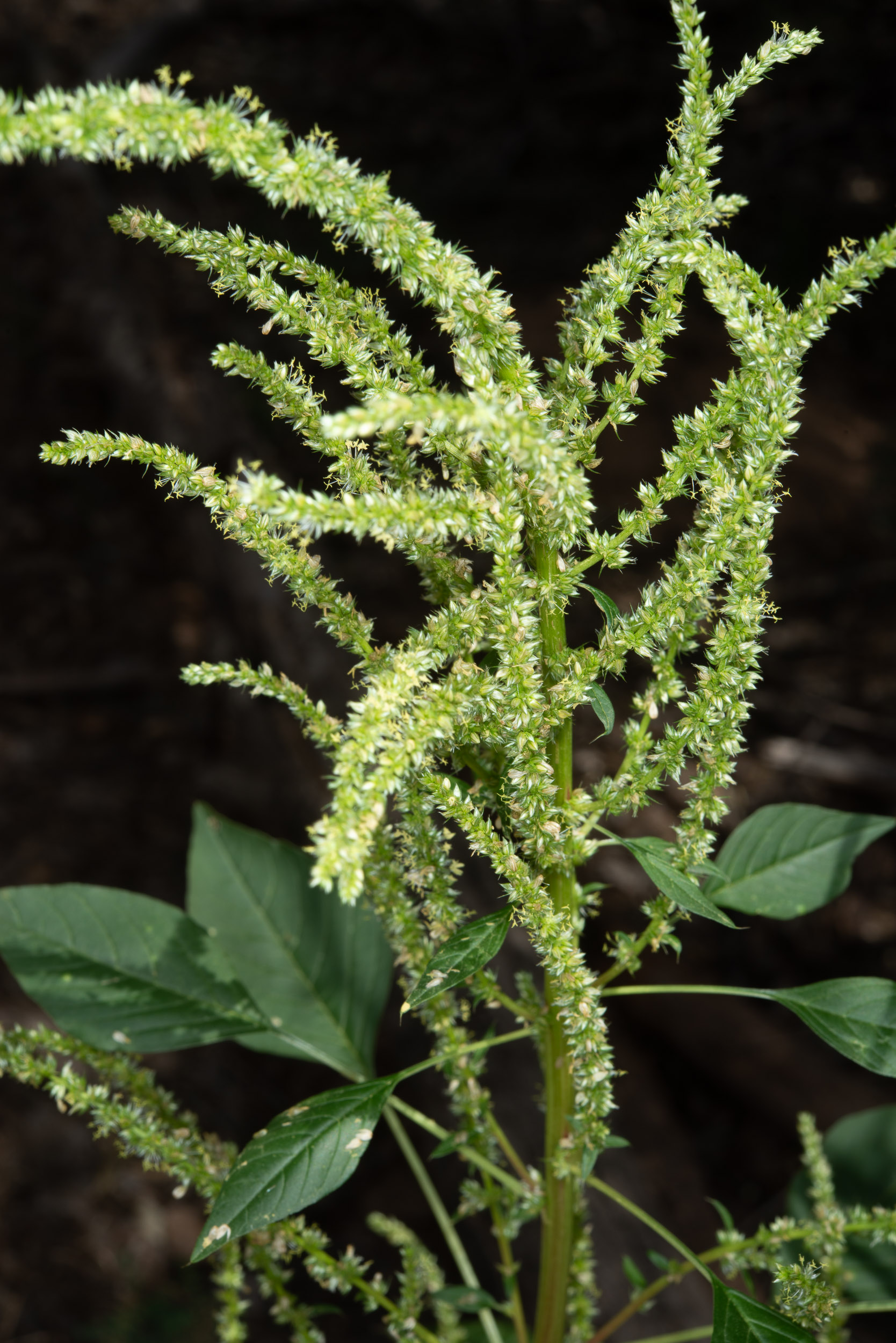
8/27/2014 · Rio Grande Nature Center, Albuquerque, New Mexico · ≈ 6 × 9″ (16 × 23 cm) 

8/27/2014 · Rio Grande Nature Center, Albuquerque, New Mexico · ≈ 7 × 11″ (18 × 28 cm) 
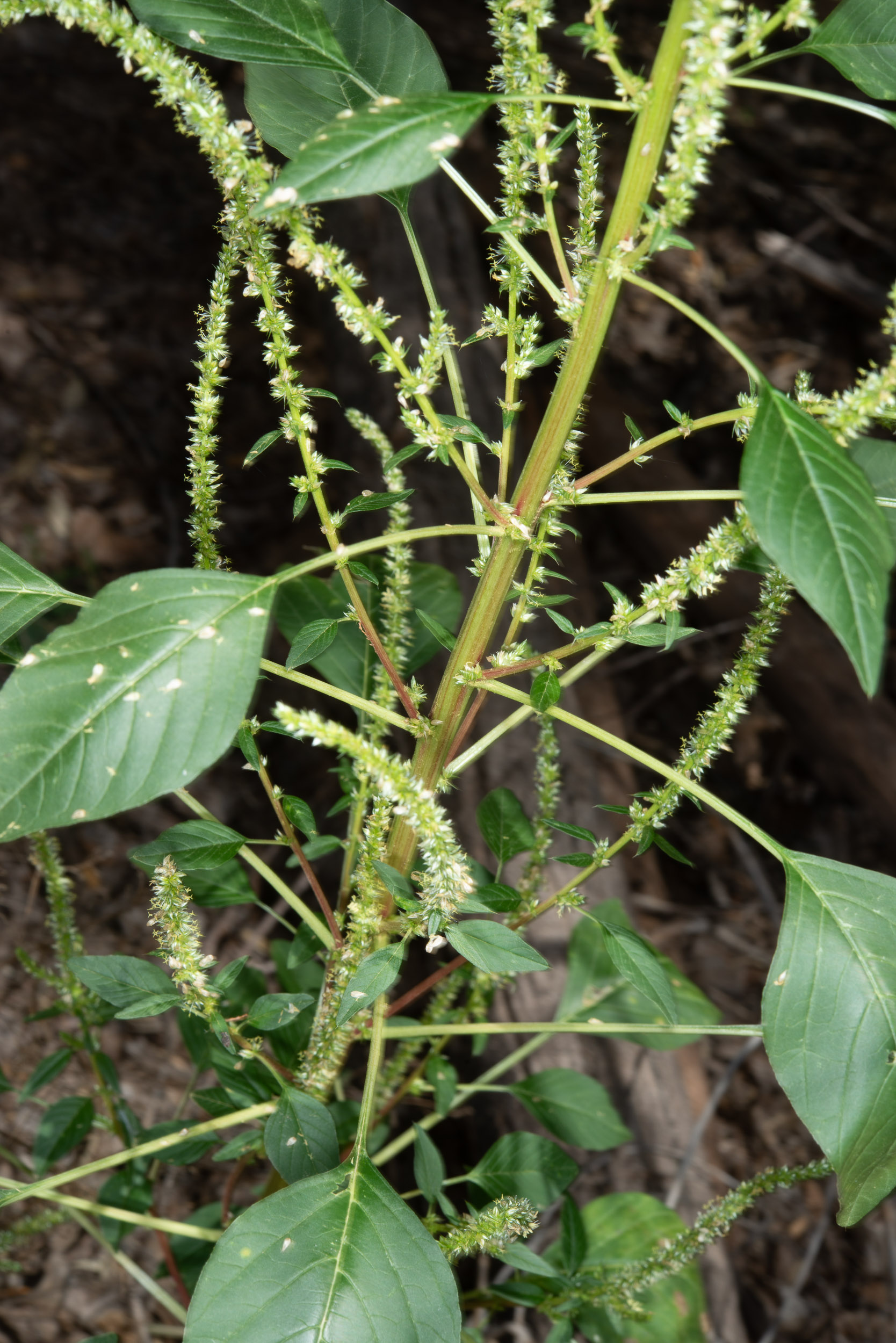
8/27/2014 · Rio Grande Nature Center, Albuquerque, New Mexico · ≈ 8 × 12″ (21 × 31 cm) 
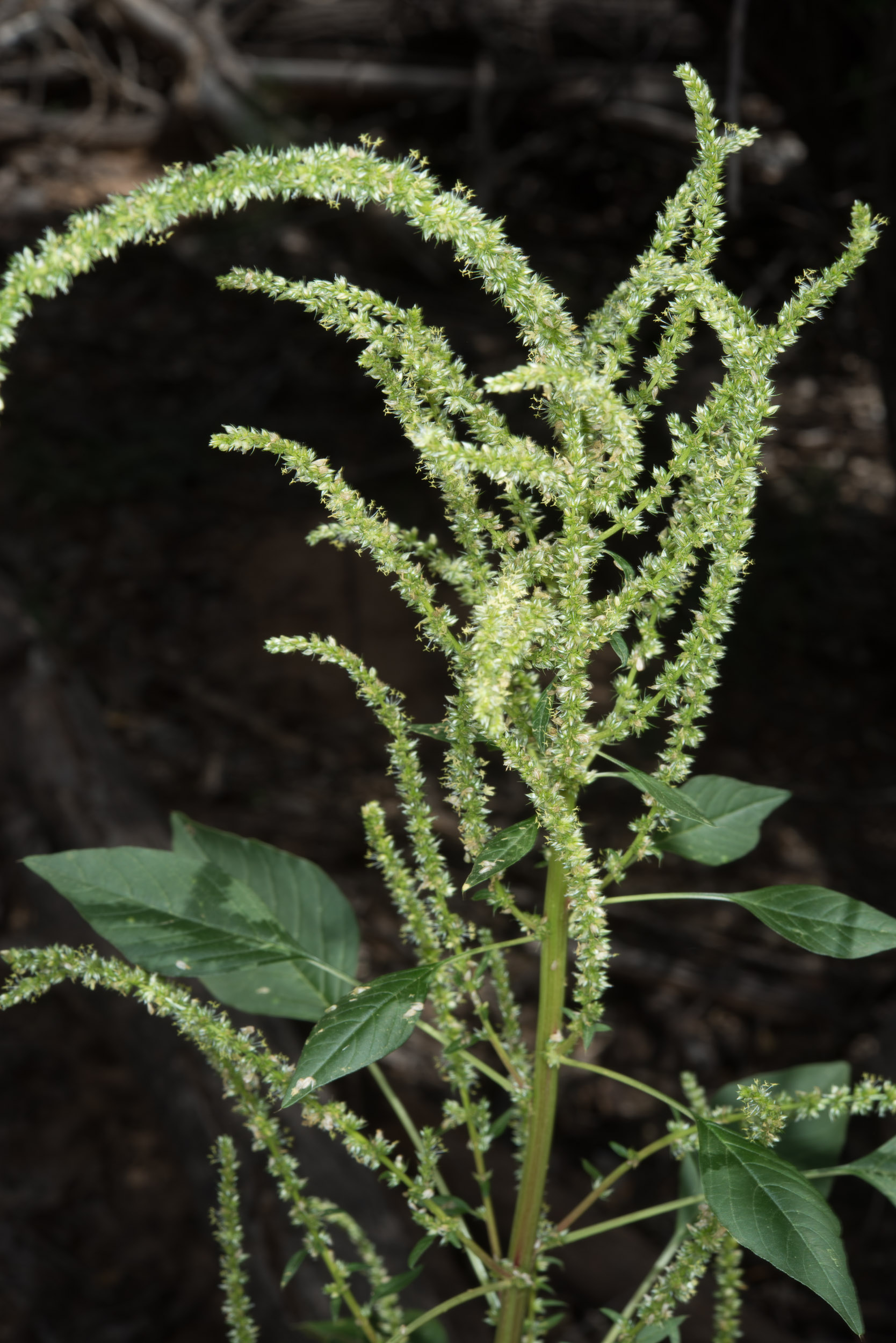
8/27/2014 · Rio Grande Nature Center, Albuquerque, New Mexico · ≈ 7 × 11″ (18 × 28 cm) 
| Kingdom | Plantae | Plants, but not fungi, lichens, or algae (from Stearn's Botanical Latin) |
| Subkingdom | Tracheobionta | Vascular plants—plants with a “circulatory system” for delivering water and nutrients |
| Division | Magnoliophyta | Flowering plants, also known as angiosperms |
| Class | Magnoliopsida | Dicotyledons—plants with two initial seed leaves |
| Subclass | Caryophyllidae | Cacti, many other succulents, carnivorous plants, and leadworts |
| Order | Caryophyllales | Includes cacti, carnations, amaranths, ice plants, and many carnivorous plants |
| Family | Amaranthaceae | Amaranth family |
| Genus | Amaranthus | Contraction of Greek ἀμάραντος (amarantos), “unfading,” with ἄνθος (anthos), “flower” |
| Species | palmeri | For Edward Palmer (1829–1911), a self-taught British botanist and early American archaeologist |

Amaranthus palmeri description by Thomas H. Kent, not updated.

© FloraFinder.org. All rights reserved.