Ampelopsis glandulosa (Wall.) Momiy. var. brevipedunculata (Maxim.) Momiy.
Ampelopsis heterophylla (Thunb.) Siebold & Zucc.
Ampelopsis heterophylla (Thunb.) Siebold & Zucc. var. brevipedunculata (Regel) C.L. Li
Ampelopsis brevipedunculata (Maxim.) Trautv.
Porcelain berry, Amur peppervine, porcelain-berry
Porcelain berry fascinates me, with its profusion of variously-colored berries looking just a little too much like a variety of pebble-shaped rock candy I enjoyed as a child. It is native to China, Korea, Japan and Russian Far East. It was introduced to North America, where it has become naturalized. Unfortunately it is a very vigorous grower, and is considered invasive in many locales. It prefers rich, moist soils.
Plants: Plants are deciduous woody perennial vines, resembling grapes in vine and leaf structure and sheer vitality. It grows to 15–20′ (4.6–6.1 m) in size. Young twigs are hairy. If you cut a branch in half, the interior styrofoam-like pith is white. Porcelaln berry bark does not peel, while grape bark does.
Leaves: Leaves are alternate, simple, with 3 (sometimes 5) lobes that are further divided and coarsely toothed, up to 5″ (12 cm) long. They are dark green, and shiny beneath, with hairs on the leaf veins. Non-adhesive tendrils at the base of each leaf permit it to climb over other plants. Leaf stems are hairy.
Flowers: Insignificant flat-topped clusters of tiny greenish-white flowers appear in June-August.
Fruits: Fruits are berries in an amazing range of pastel or sometimes deeper colors: green, blue, purple, pink, white or yellow, with black or brown speckles. The colors occur together on the same plant, and even in the same cluster, and they mature to a bright turquoise blue. Berries are ⅛–¼″ (4–8 mm) in diameter.
Habitats: Rich, moist soils.
Edibility: Leaves and stems can be cooked, and the fruit can be eaten raw or cooked. It is not very palatable.
Online References:
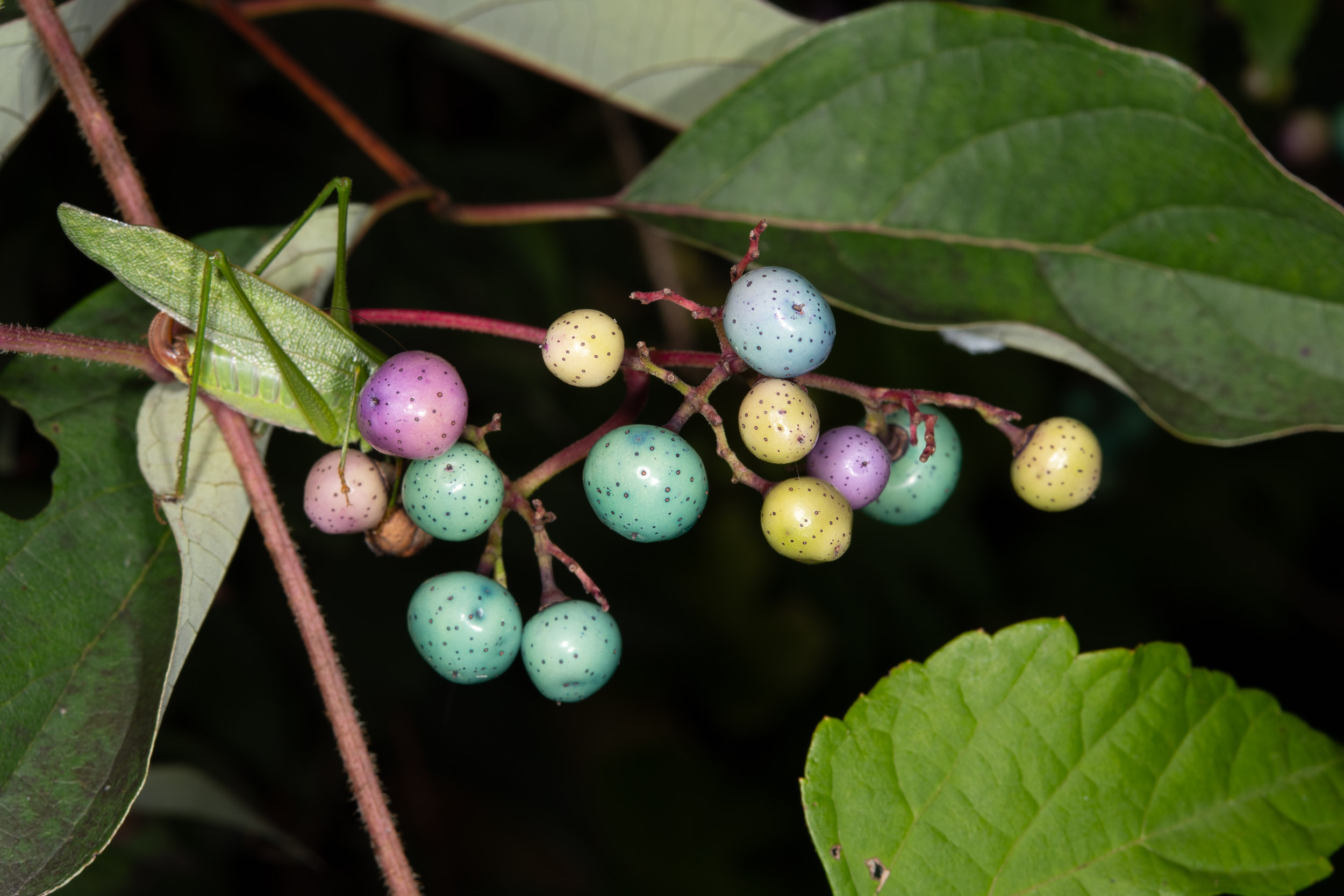
9/8/2017 · Bates Land and Blackman Land, Groton Conservation Trust, Groton, Massachusetts · ≈ 5 × 3½″ (13 × 9.2 cm) 

9/8/2017 · Bates Land and Blackman Land, Groton Conservation Trust, Groton, Massachusetts · ≈ 5 × 4″ (12 × 10 cm) 

9/8/2017 · Bates Land and Blackman Land, Groton Conservation Trust, Groton, Massachusetts · ≈ 7 × 4½″ (17 × 12 cm) 

10/6/2016 · Bates Land and Blackman Land, Gr, Groton, Massachusetts 

7/2/2010 · Mt Vernon Trail, along Potomac River 
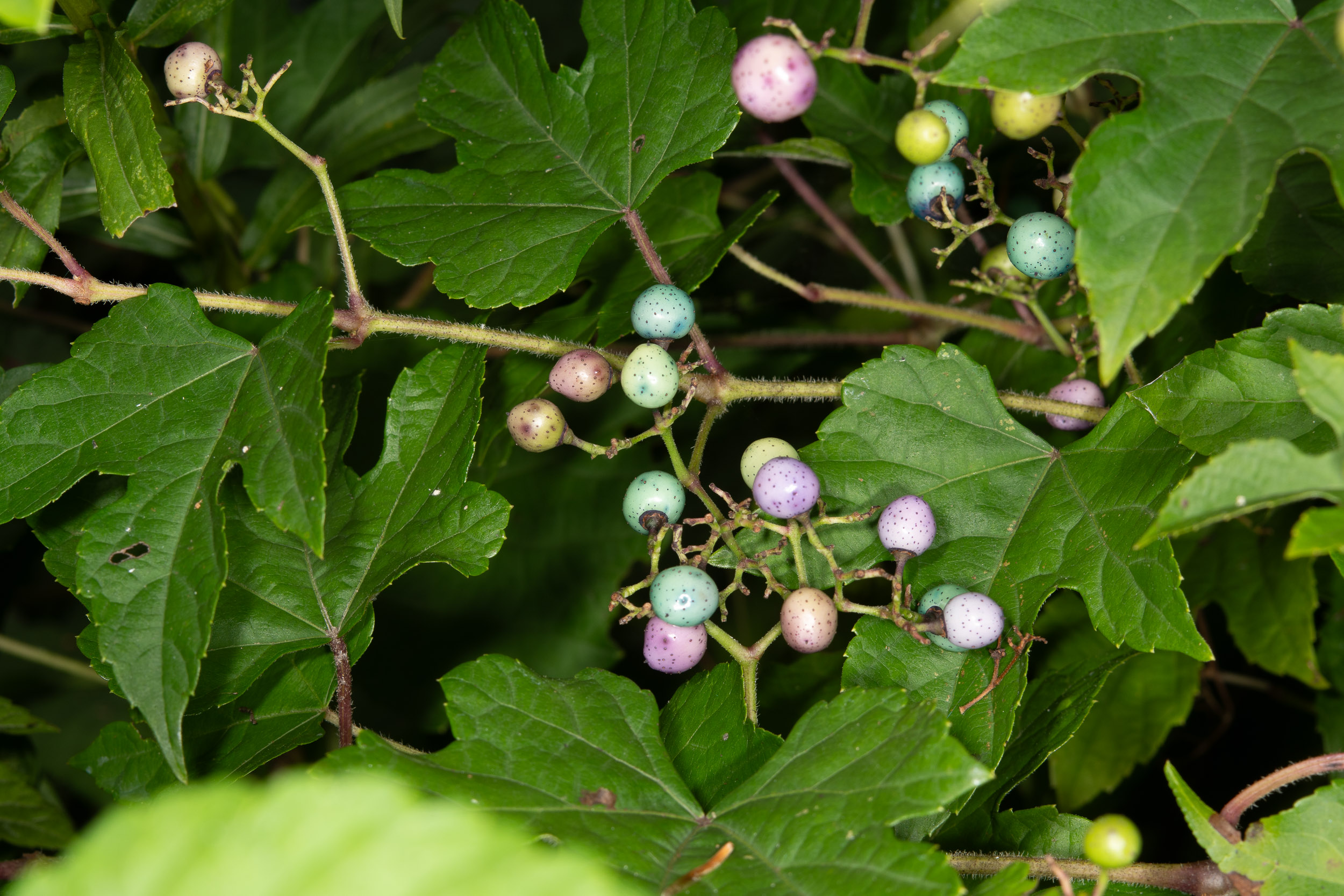
9/1/2018 · Bates Land and Blackman Land, Groton Conservation Trust, Groton, Massachusetts · ≈ 8 × 5″ (20 × 13 cm) 

9/1/2018 · Bates Land and Blackman Land, Groton Conservation Trust, Groton, Massachusetts · ≈ 8 × 5″ (20 × 13 cm) 

10/6/2016 · Bates Land and Blackman Land, Gr, Groton, Massachusetts 

9/18/2010 · Nashua River Rail Trail, Groton Center, Groton, Massachusetts · ≈ 4½ × 7″ (11 × 17 cm) 
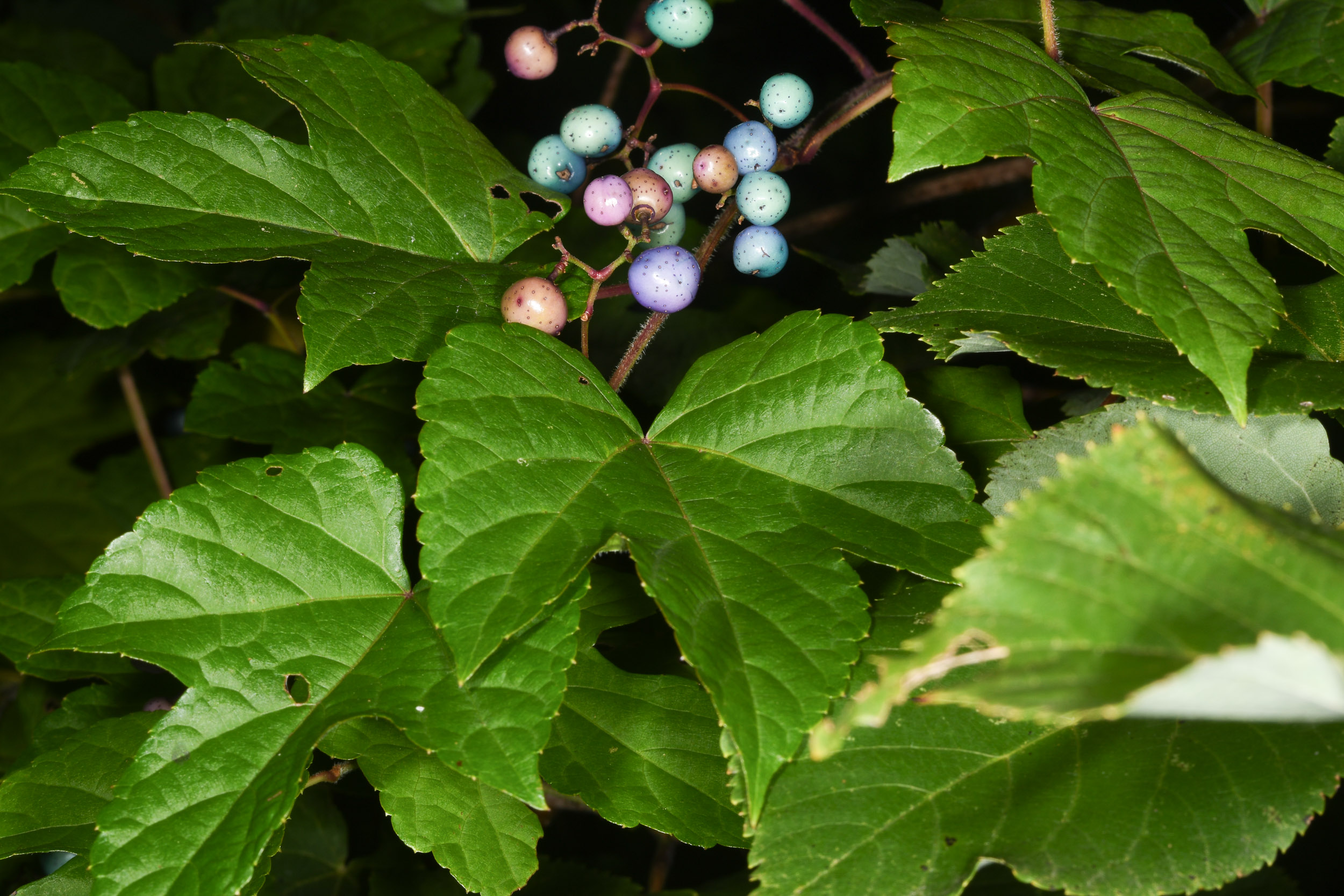
10/6/2016 · Bates Land and Blackman Land, Gr, Groton, Massachusetts 

9/8/2017 · Bates Land and Blackman Land, Groton Conservation Trust, Groton, Massachusetts · ≈ 5 × 3″ (12 × 8.1 cm) 

9/1/2018 · Bates Land and Blackman Land, Groton Conservation Trust, Groton, Massachusetts · ≈ 8 × 5″ (19 × 12 cm) 

10/6/2016 · Bates Land and Blackman Land, Gr, Groton, Massachusetts 

9/18/2010 · Nashua River Rail Trail, Groton Center, Groton, Massachusetts · ≈ 8 × 5″ (19 × 13 cm) 
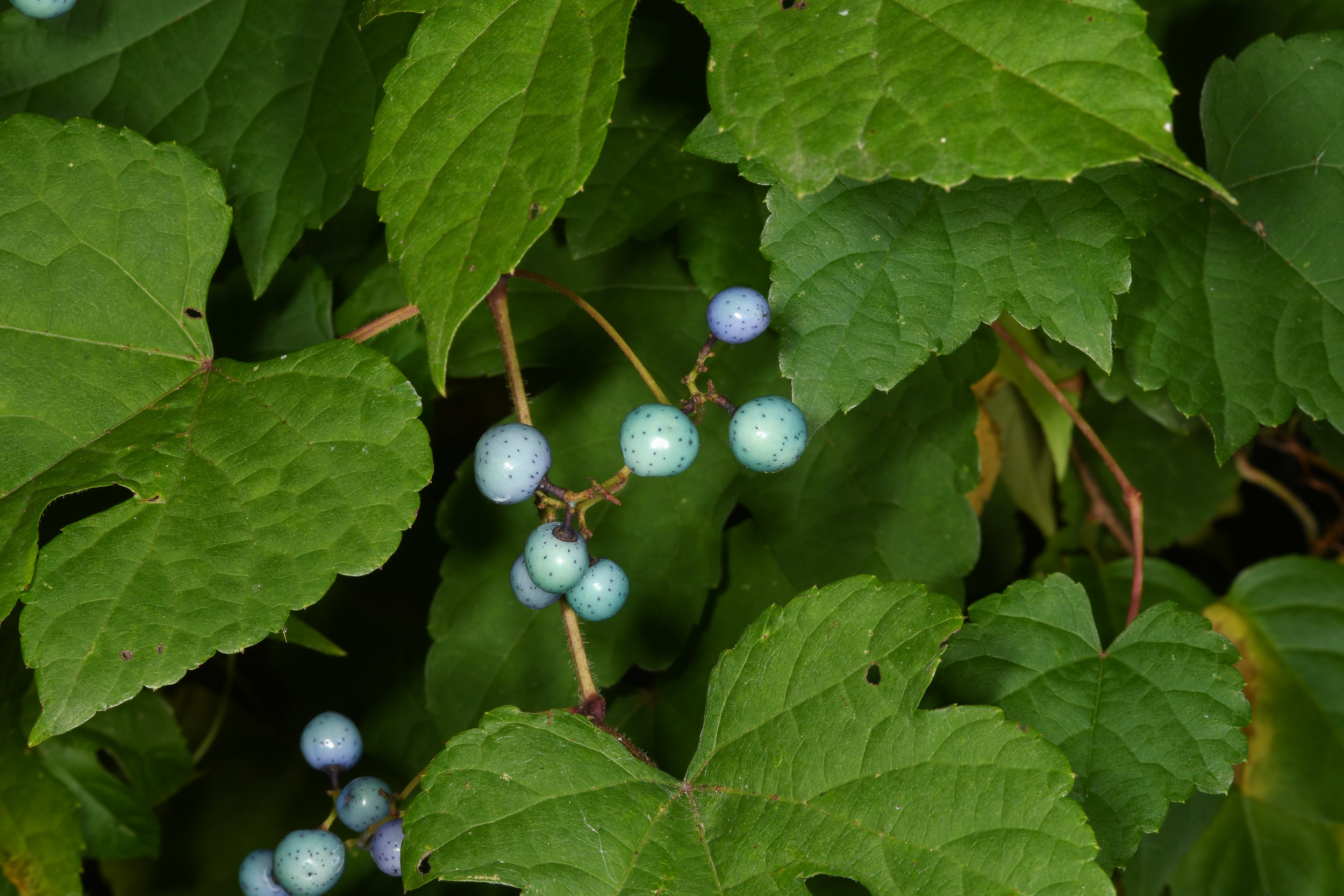
10/6/2016 · Bates Land and Blackman Land, Gr, Groton, Massachusetts 
| Kingdom | Plantae | Plants, but not fungi, lichens, or algae (from Stearn's Botanical Latin) |
| Subkingdom | Tracheobionta | Vascular plants—plants with a “circulatory system” for delivering water and nutrients |
| Division | Magnoliophyta | Flowering plants, also known as angiosperms |
| Class | Magnoliopsida | Dicotyledons—plants with two initial seed leaves |
| Subclass | Rosidae | Roses, legumes, proteas, dogwoods, hydrangeas, mistletoes, euphorbias, grapes, many more |
| Order | Rhamnales | Buckthorns, oleasters, grapes, others |
| Family | Vitaceae | Grape family |
| Genus | Ampelopsis | Greek, “vine-like” |
| Species | brevipedunculata | Brevis, “short,” and peunculus, “little foot” |
Ampelopsis brevipedunculata description by Thomas H. Kent, not updated.

© FloraFinder.org. All rights reserved.
