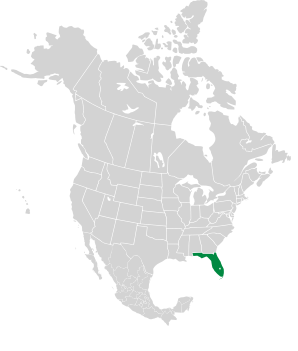
Bromelia comosa L.
Ananas comosus (L.) Merr.
Pineapple
Pineapples are natives of Paraguay and southern Brazil, although they are cultivated in many places in the US. They are bromeliads, the only bromeliads that are cultivated for food. Like most members of this family, pineapples store water, trapping it within tightly overlapped leaf bases.
Identification: Pineapples are cultivated in Hawaii and they do not spread in the wild, so you aren’t likely to encounter them outside of gardens or commercial growers. The pineapple is a series of fruits fused around a central stalk, with tough, spiky leaves emerging from the top, and this arrangement is very distinctive. (Though see the pineapple lily for a curious, albeit unrelated, plant.)
Edibility: Pineapple fruit is prized for its sweet, acid flavor. It contains an enzyme that tenderizes meat, making it a good component for marinades. Medically, this same enzyme is used to treat edema and inflammation, along with various uses in folk medicine.
Online References:
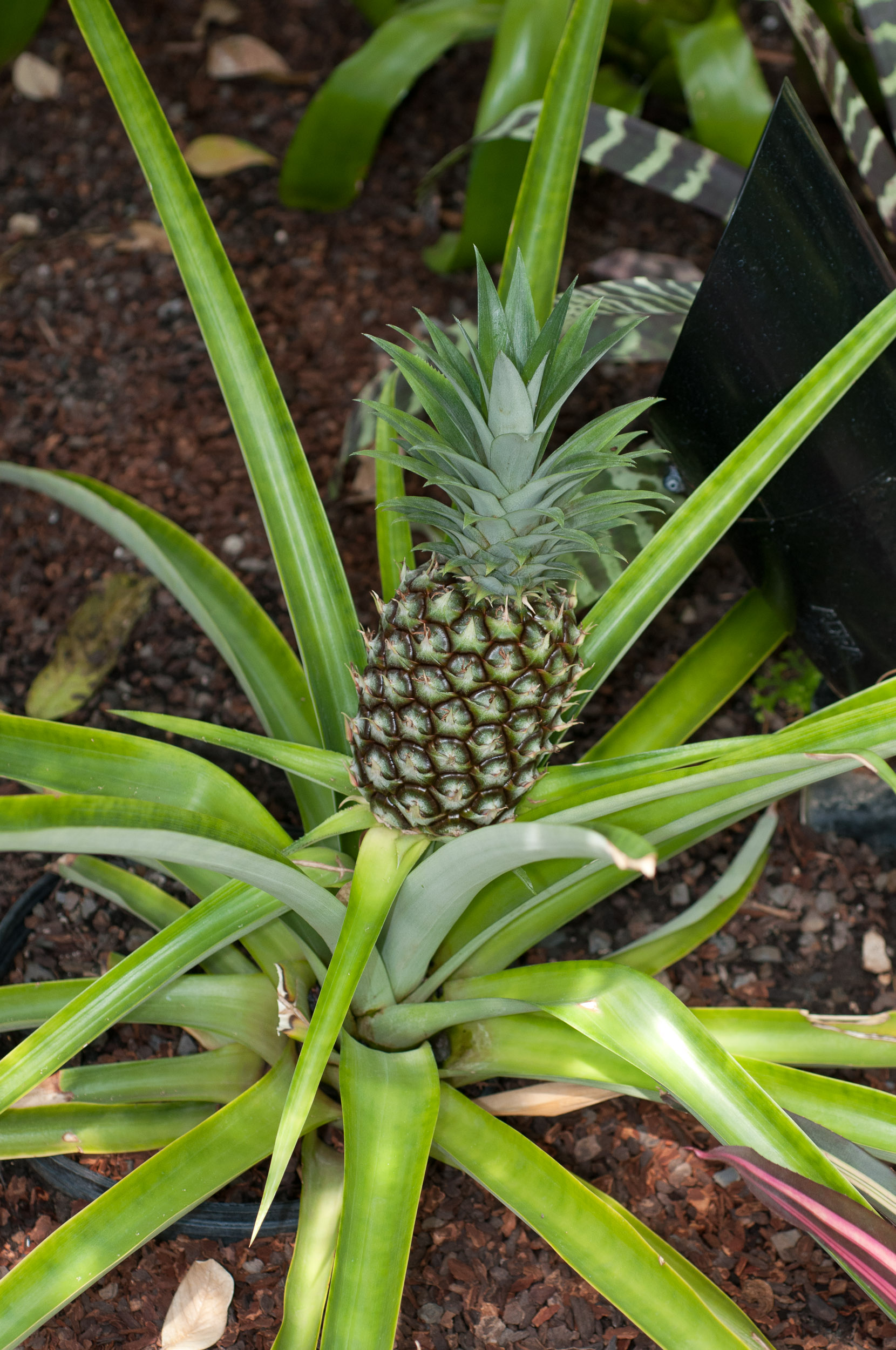
4/6/2011 · Howard Peters Rawlings Conservatory & Botanic Gardens, Druid Hill Park, Baltimore, Maryland · ≈ 1 × 2′ (41 × 62 cm) 
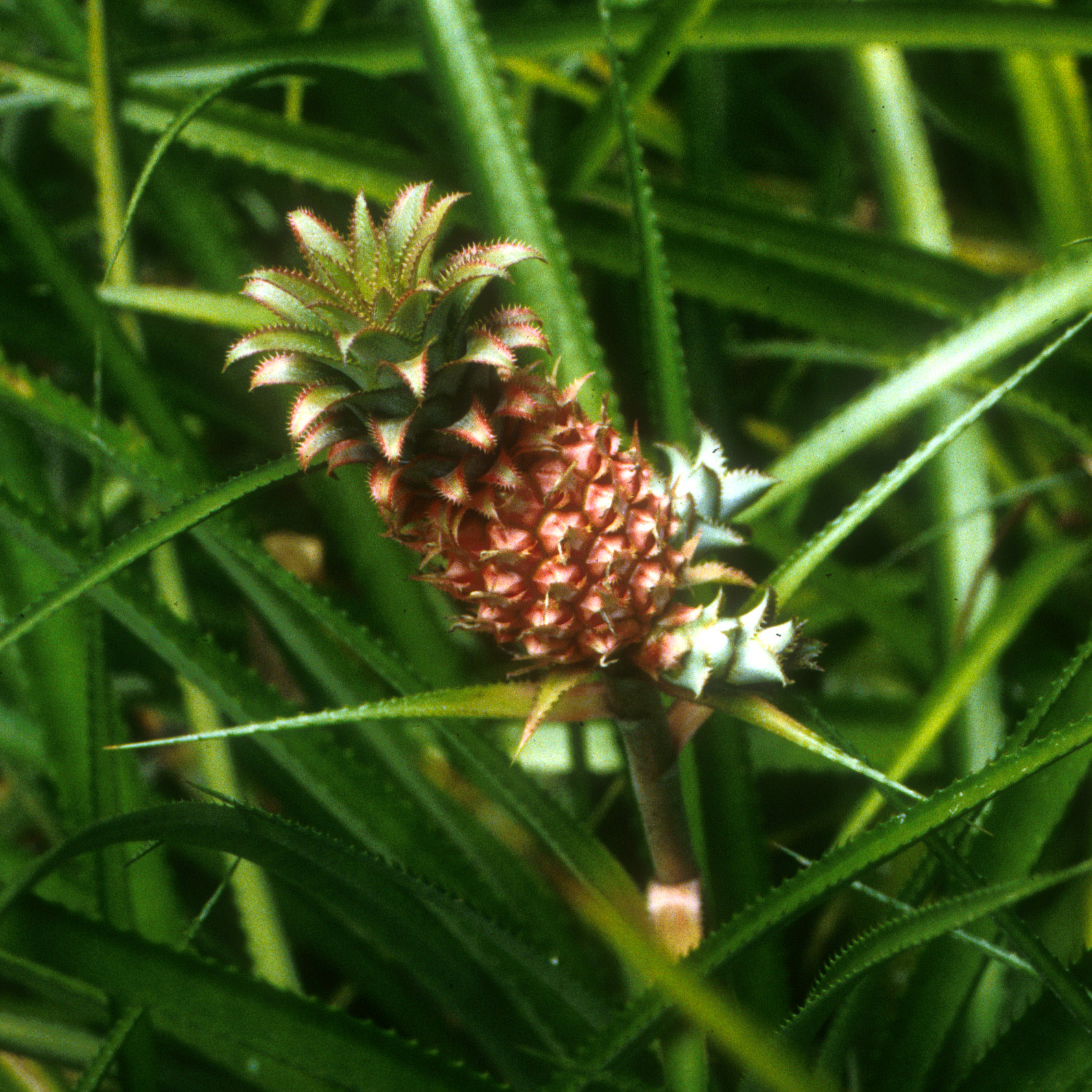
3/15/2001 · Hawaii Tropical Botanical Gardens, Papaikou, Hawaii 
| Kingdom | Plantae | Plants, but not fungi, lichens, or algae (from Stearn's Botanical Latin) |
| Subkingdom | Tracheobionta | Vascular plants—plants with a “circulatory system” for delivering water and nutrients |
| Division | Magnoliophyta | Flowering plants, also known as angiosperms |
| Class | Liliopsida | Monocots (plants with a single seed leaf); includes the lily family |
| Subclass | Zingiberidae | Gingers and related plants |
| Order | Bromeliales | Bromeliads: tropical plants adapted to limited water, often epiphytes |
| Family | Bromeliaceae | Bromelias: tropical and subtropical plants, the best known being pineapple |
| Genus | Ananas | Either directly from Old Tupi nanas (“excellent fruit”), or the name for pineapples |
| Species | comosus | From Latin coma, “hair,” and -ōsus, “-y”—hairy or leafy |
Ananas comosus description by Thomas H. Kent, not updated.

© FloraFinder.org. All rights reserved.