Apiosporina morbosa (Schwein. : Fr.) Arx 1954
Black knot fungus
Black knot fungus is a plant pathogen that once severely impacted Prunus species, such as plum and cherry trees. It is native to North America.
Identification: This rather disturbing looking fungus creates a black, rough, uneven swelling. They are hard and dry to the touch, like charcoal briquets. Although it is well-controlled in most of today’s orchards, I see it quite commonly on wild cherry in New England. The knotty swellings can be ⅞–12″ (2.5–30 cm) in size, wrapping around branches, and they eventually kill the tree.
Online References:
References:

Looks like the infected tree is wild cherry. · 8/15/2015 · Grafton Notch State Park, Newry, Maine · ≈ 6 × 8″ (14 × 20 cm) 
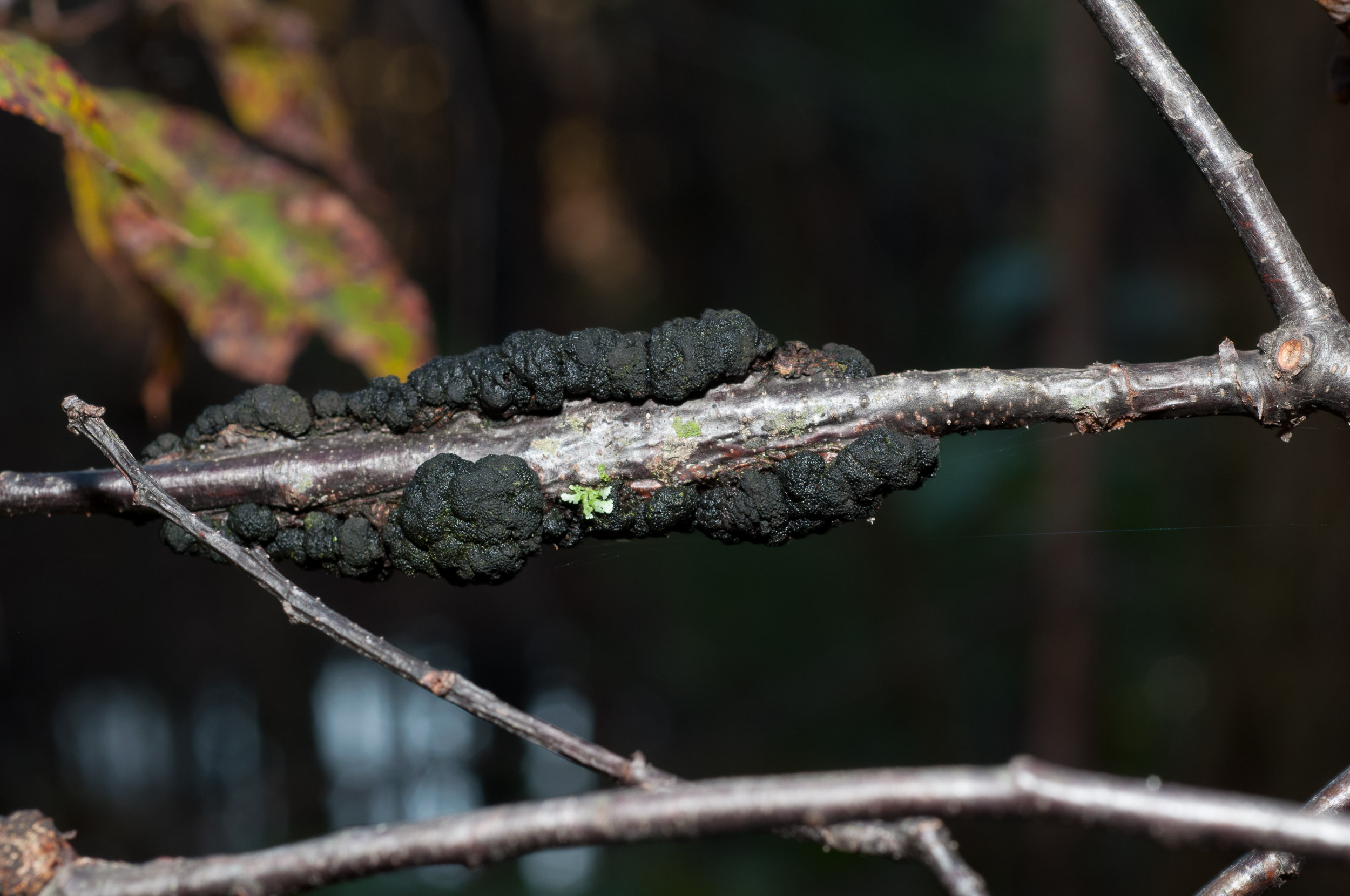
10/25/2009 · Nashua River Rail Trail, Nashua, New Hampshire · ≈ 7 × 4½″ (17 × 11 cm) 

11/3/2011 · Pearl Hill State Park, Townsend, Massachusetts 

Looks like the infected tree is wild cherry. · 8/15/2015 · Grafton Notch State Park, Newry, Maine · ≈ 8 × 5″ (19 × 13 cm) 
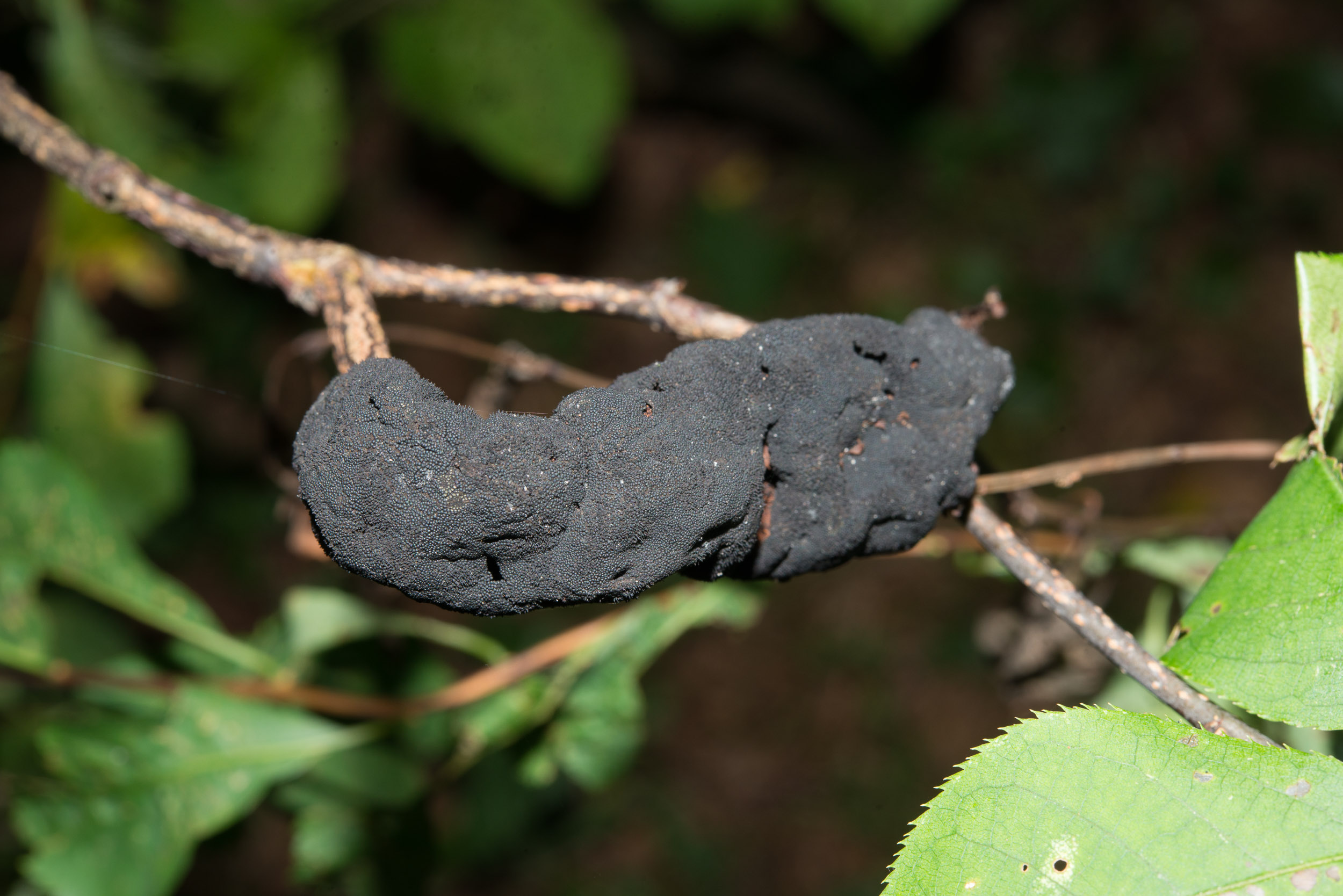
Looks like the infected tree is wild cherry. · 8/15/2015 · Grafton Notch State Park, Newry, Maine · ≈ 6 × 4″ (16 × 10 cm) 

4/27/2023 · Mitchell Field, Harpswell, Maine 

10/25/2009 · Nashua River Rail Trail, Nashua, New Hampshire · ≈ 11 × 7″ (27 × 18 cm) 

10/25/2009 · Nashua River Rail Trail, Nashua, New Hampshire · ≈ 4 × 4½″ (10 × 11 cm) 
| Roughly 75 people in North America are poisoned each year by mushrooms, often from eating a poisonous species that resembles an edible species. Though deaths are rare, there is no cure short of a liver transplant for severe poisoning. Don’t eat any mushroom unless you are absolutely certain of its identity! Please don’t trust the identifications on this site. We aren’t mushroom experts and we haven’t focused on safely identifying edible species. |
Apiosporina morbosa description by Thomas H. Kent, not updated.

© FloraFinder.org. All rights reserved.