FloraFinder uses cookies only for correct operation. More info. Okay
Aquilegia canadensis L.
Red columbine, American columbine, Eastern columbine, Canada columbine, meetinghouses, rock bells, honeysuckle, rock lily, cluckies, jack-in-trousers, wild honeysuckle, granny’s bonnets, dancing fairies, wild columbine
Red columbine, one of the prettiest darned flowers I’ve ever seen, is native to North America.
The genus Aquilegia means eagle-like, a reference to the talon-like spurs on the back
of each flower. Columbines are related to buttercups.
Plants: 1–3′ (30–91 cm) high, with red to green
stems. See other columbines.
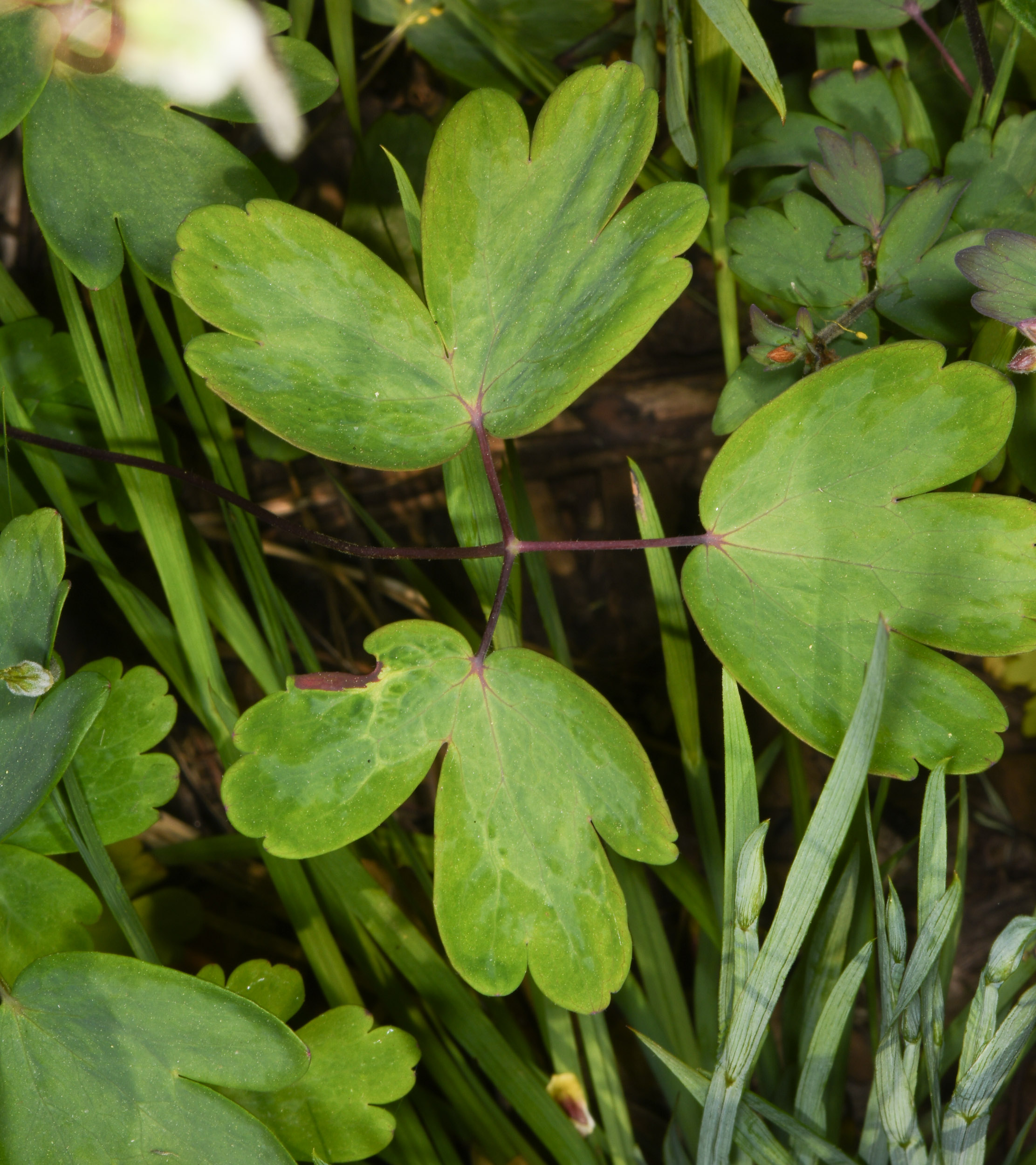
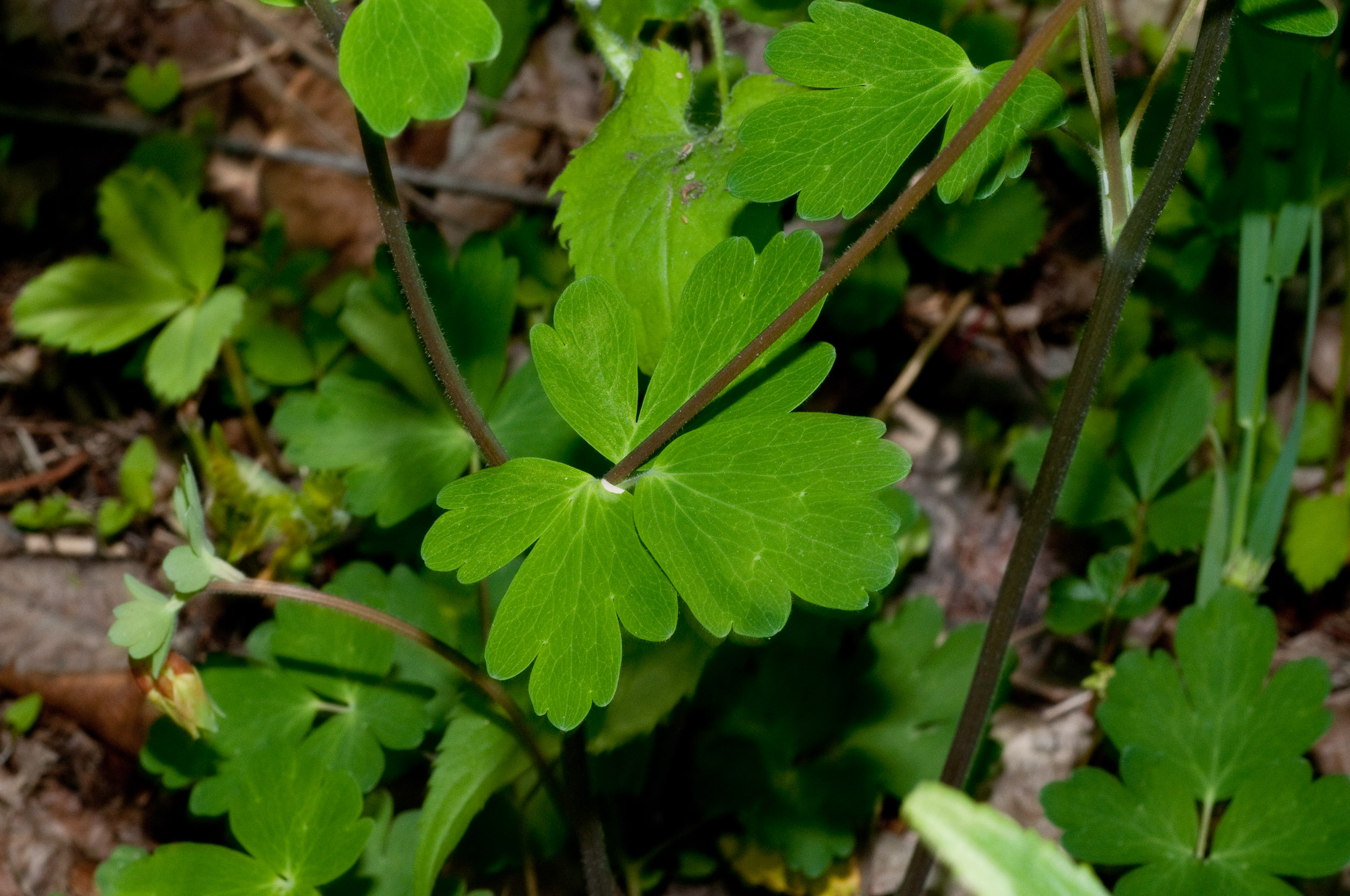
Leaves: Mostly basal, with a few along the stem, divided into progressively smaller groups of two or three. They
are up to 3″ (7.6 cm) long. Leaves may be oval, but wider toward the ends; or rounded, with lobes or teeth.
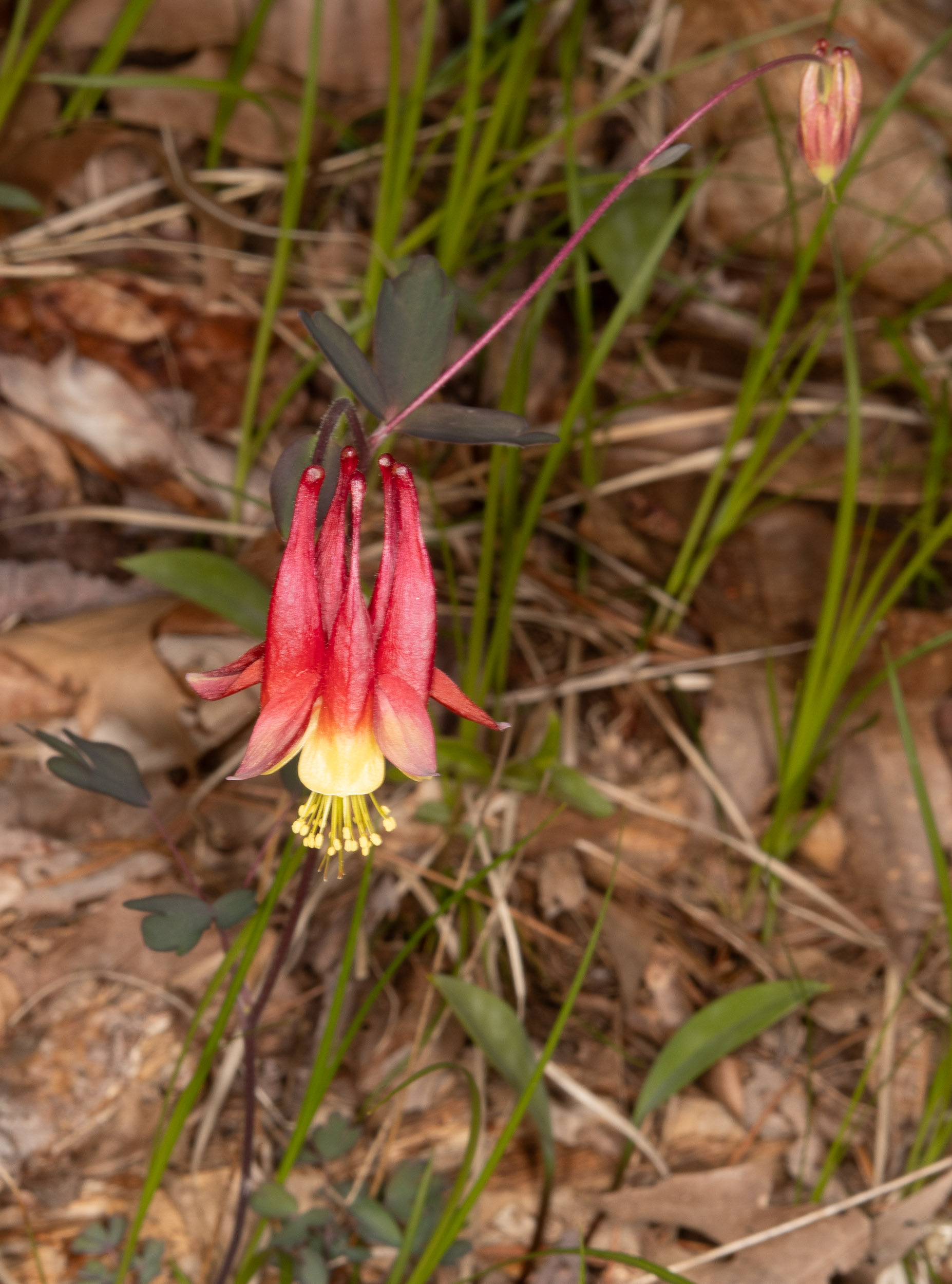
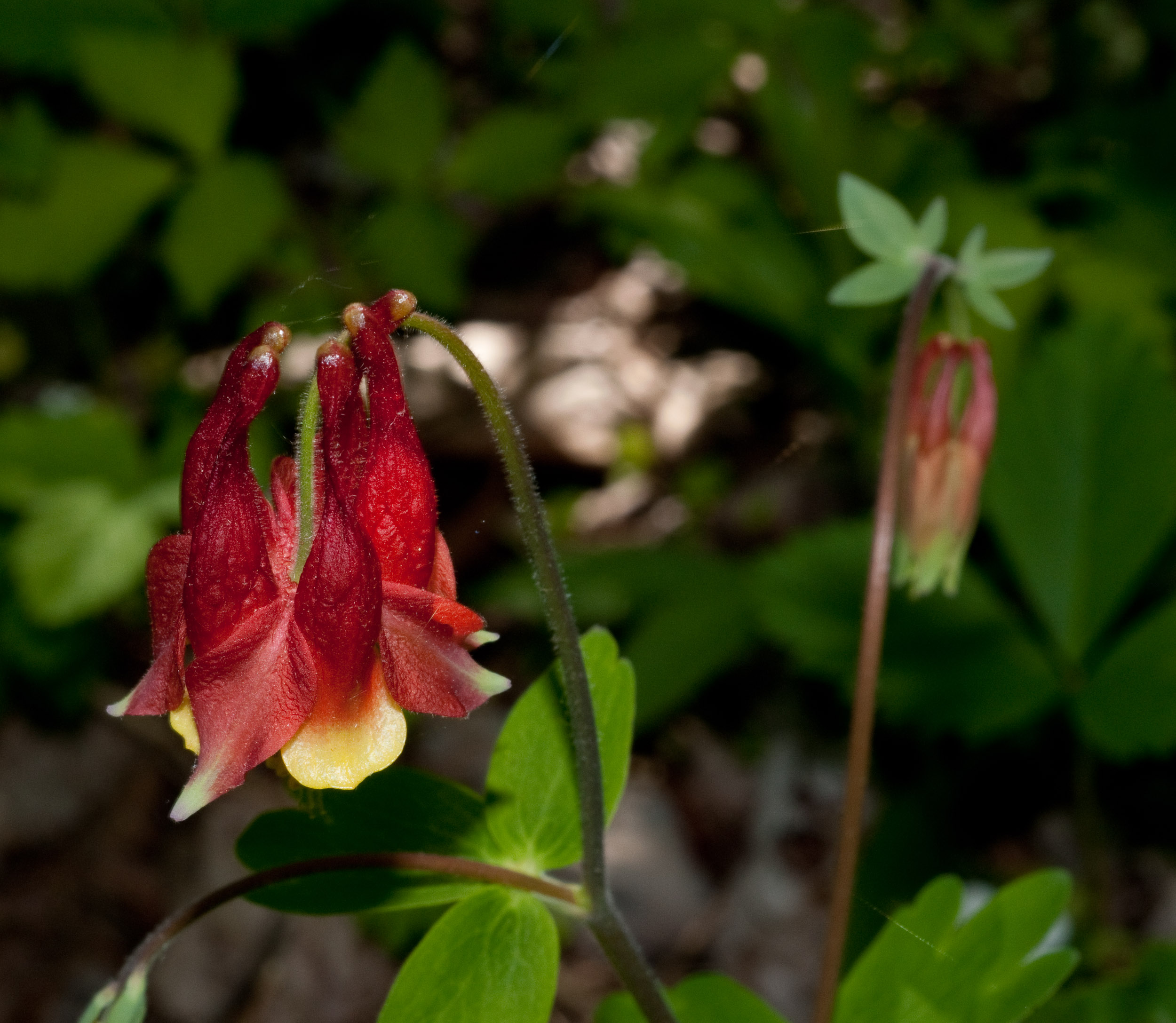
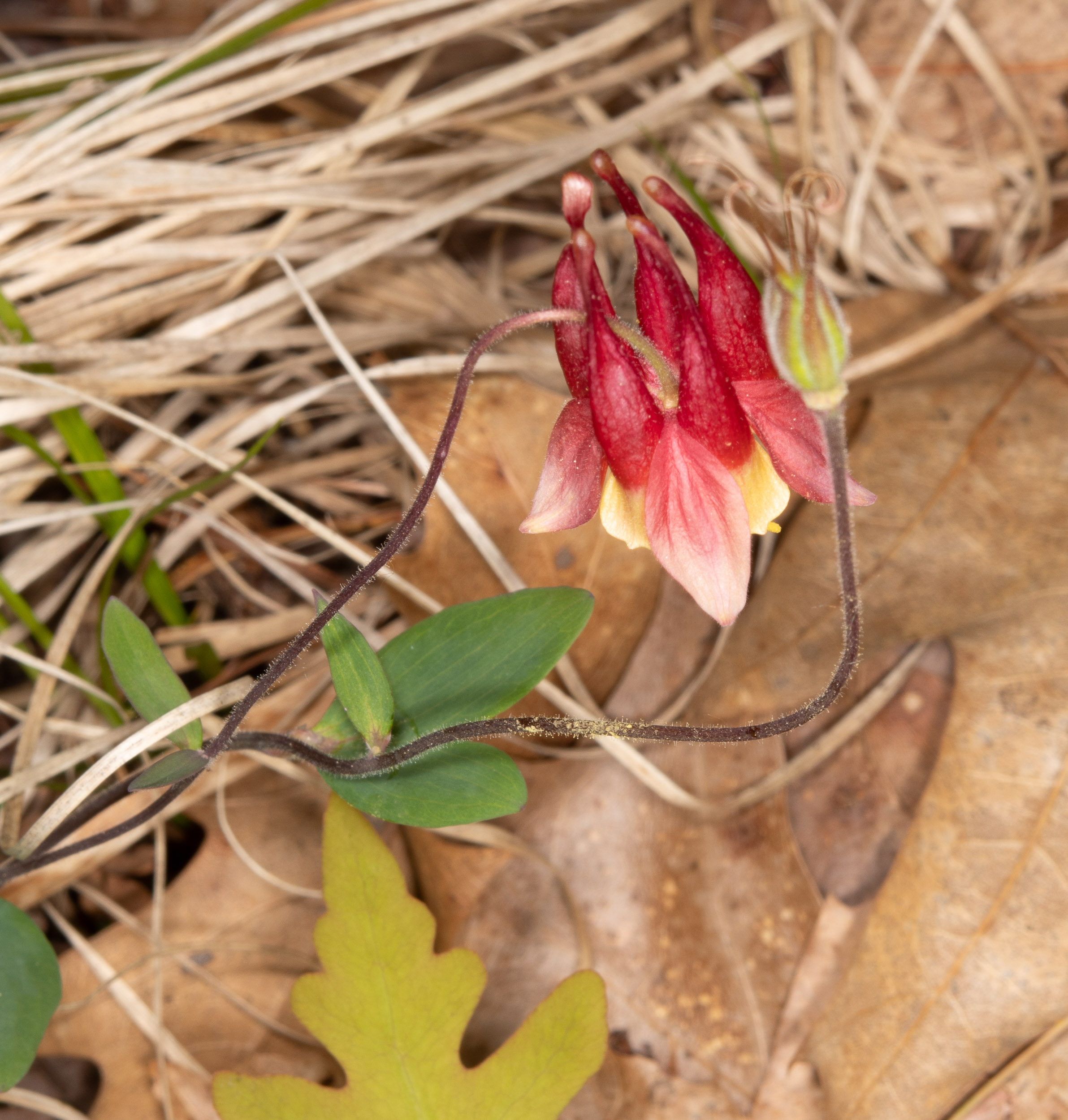
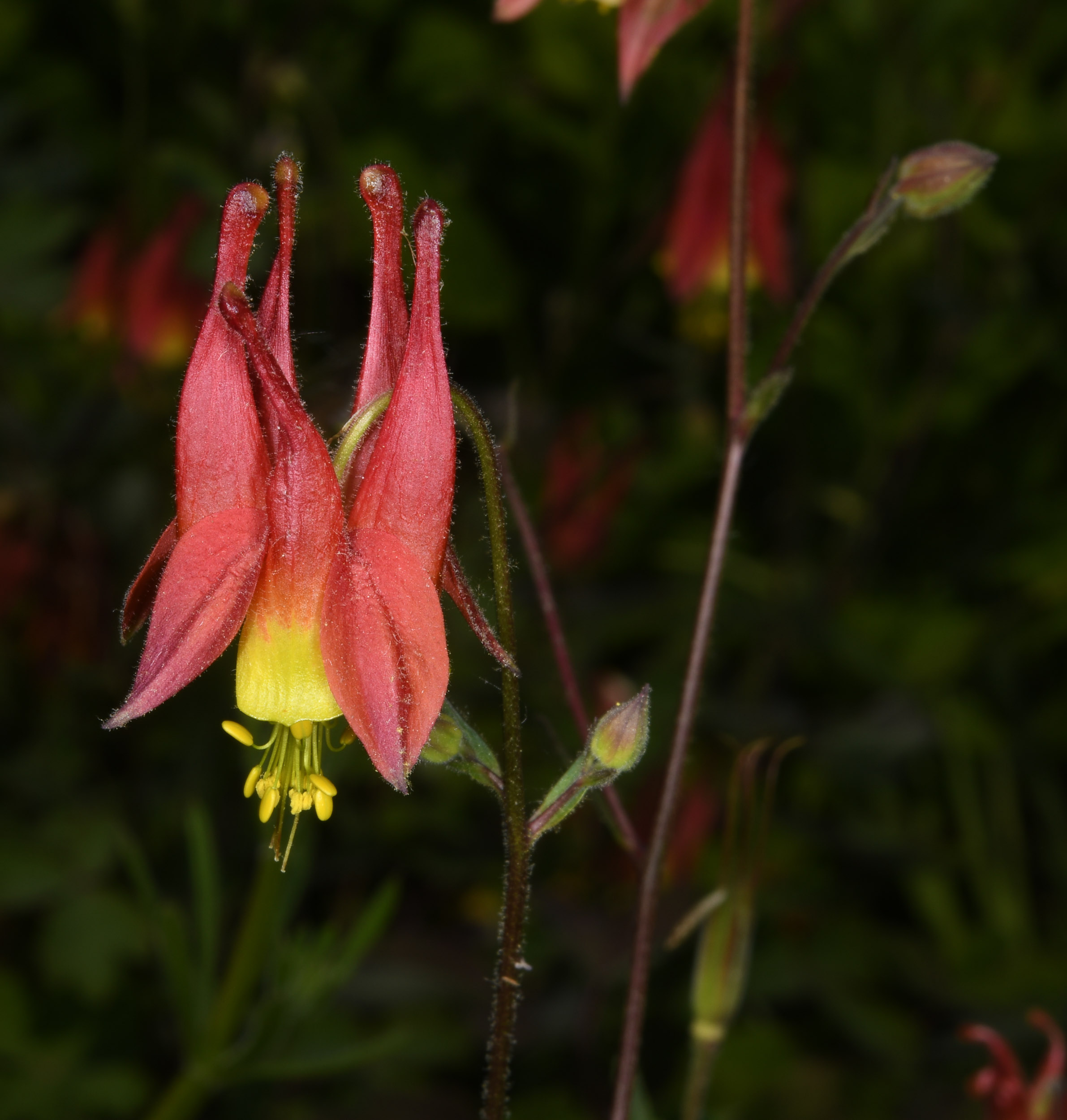
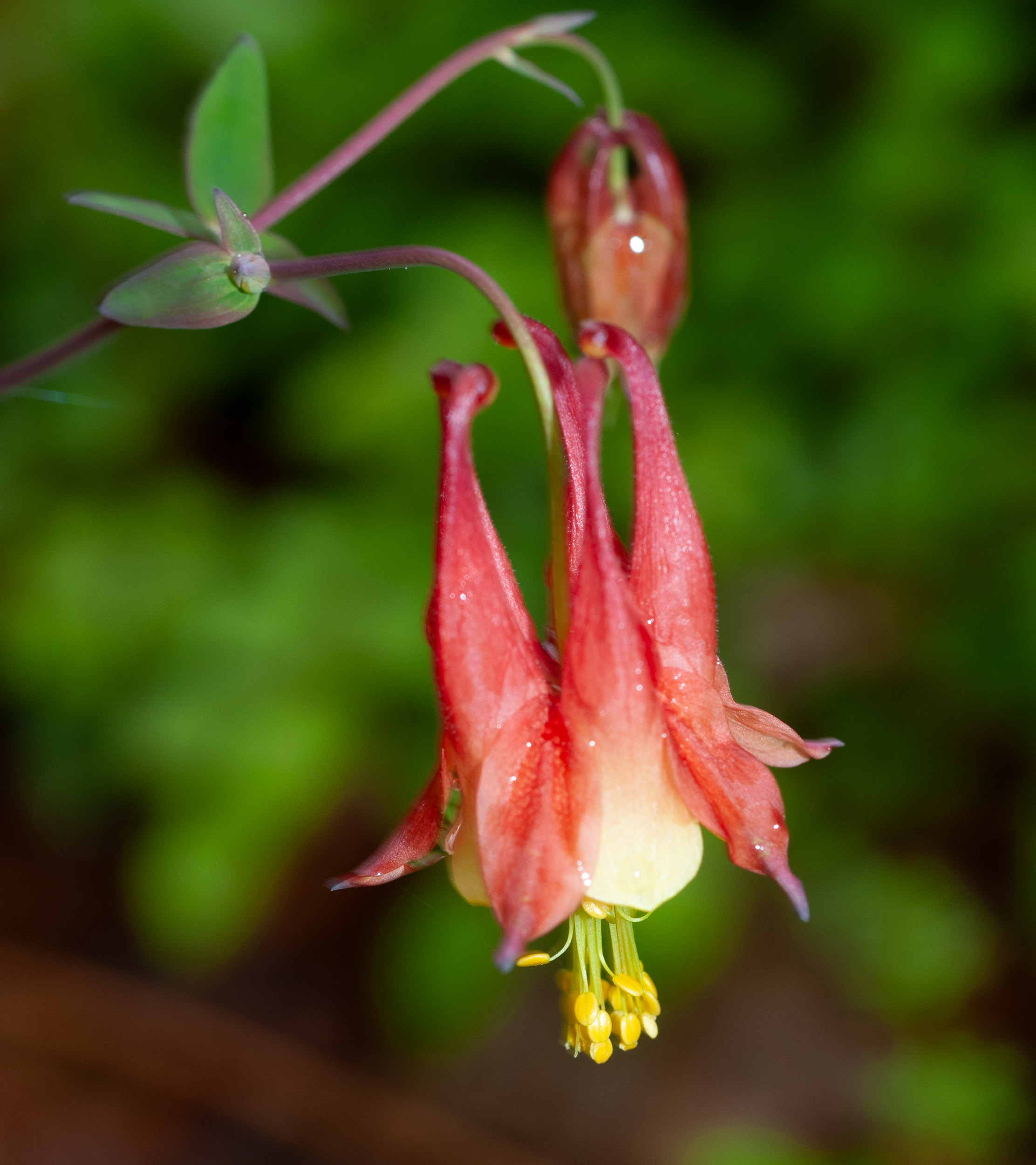
Flowers: A single flower hangs downward from each stem. The flower has five symmetrical parts, and is about
1¼–2″ (3.2–5 cm) in length. They vary from light pink to deep red in color, with yellow centers, and
bloom from April to July. The spurs on the back of each flower are unique in shape.
Nectar in the round spur ends attract hummingbirds and butterflies.
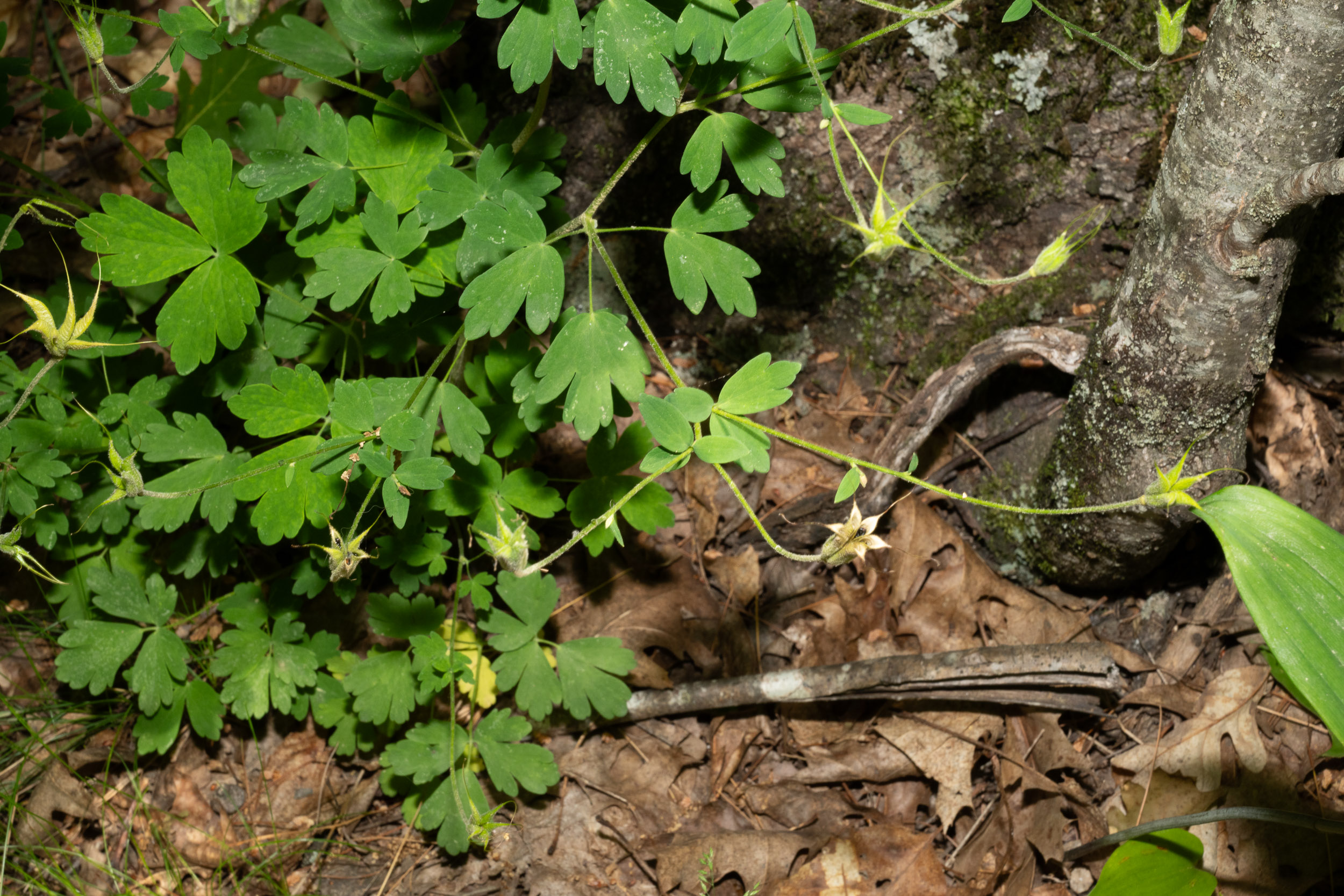
Fruits: Five pod-shaped follicles with long beaks
split open along one side to release shiny black seeds.
Habitats: Found in dry woods, on forest floors and cliffs.
Edibility: Poisonous. The seeds and roots are highly poisonous, and the leaves of many other members of the buttercup
family are poisonous.
Aquilegia australis Small Aquilegia canadensis L. var. australis (Small) Munz Aquilegia canadensis L. var. coccinea (Small) Munz Aquilegia canadensis L. var. eminens (Greene) B. Boivin Aquilegia canadensis L. var. hybrida Hook. Aquilegia canadensis L. var. latiuscula (Greene) Munz Aquilegia coccinea Small Aquilegia latiuscula Greene Aquilegia phoenicantha Cory
 The seeds and roots are highly poisonous, and the leaves of many other members of the buttercup
family are poisonous.
The seeds and roots are highly poisonous, and the leaves of many other members of the buttercup
family are poisonous.