Aronia arbutifolia ‘Brilliantissima’
Red chokeberry
Wild chokeberries are deciduous shrubs native to eastern North America. This red chokeberry cultivar is often used in landscaping.
Plants: Vase-shaped shrubs are up to 6–8′ (1.8–2.4 m) in height, with a spread of about 4′ (1.2 m). Bark is reddish, and peeling.
Leaves: Elliptic to oblong to obovate. Each leaf is up to 3½″ (8.9 cm) long, green above, and grayish green below due to fine hairs. In the fall, the foliage turns bright or deep ruby red.
Flowers: White or pink, and fragrant. Each flower has five petals and is about ¼″ (8.5 mm) in diameter. Flowers appear in April
Fruits: Bright red and fairly hard, about ⅜″ (1 cm), like tiny apples.
Habitats: Well-drained soils with medium moisture content, and partial to full sun.
Edibility: The berries are not poisonous, but they are so tart that they cause choking. They can be cooked and sweetened to produce jams and jellies.
 |
Chokeberries vs. chokecherries. |
Online References:

4/24/2007 · Tom and Susan’s, Pepperell, Massachusetts 

10/22/2009 · Tom and Susan’s, Pepperell, Massachusetts · ≈ 5 × 3½″ (13 × 9.2 cm) 
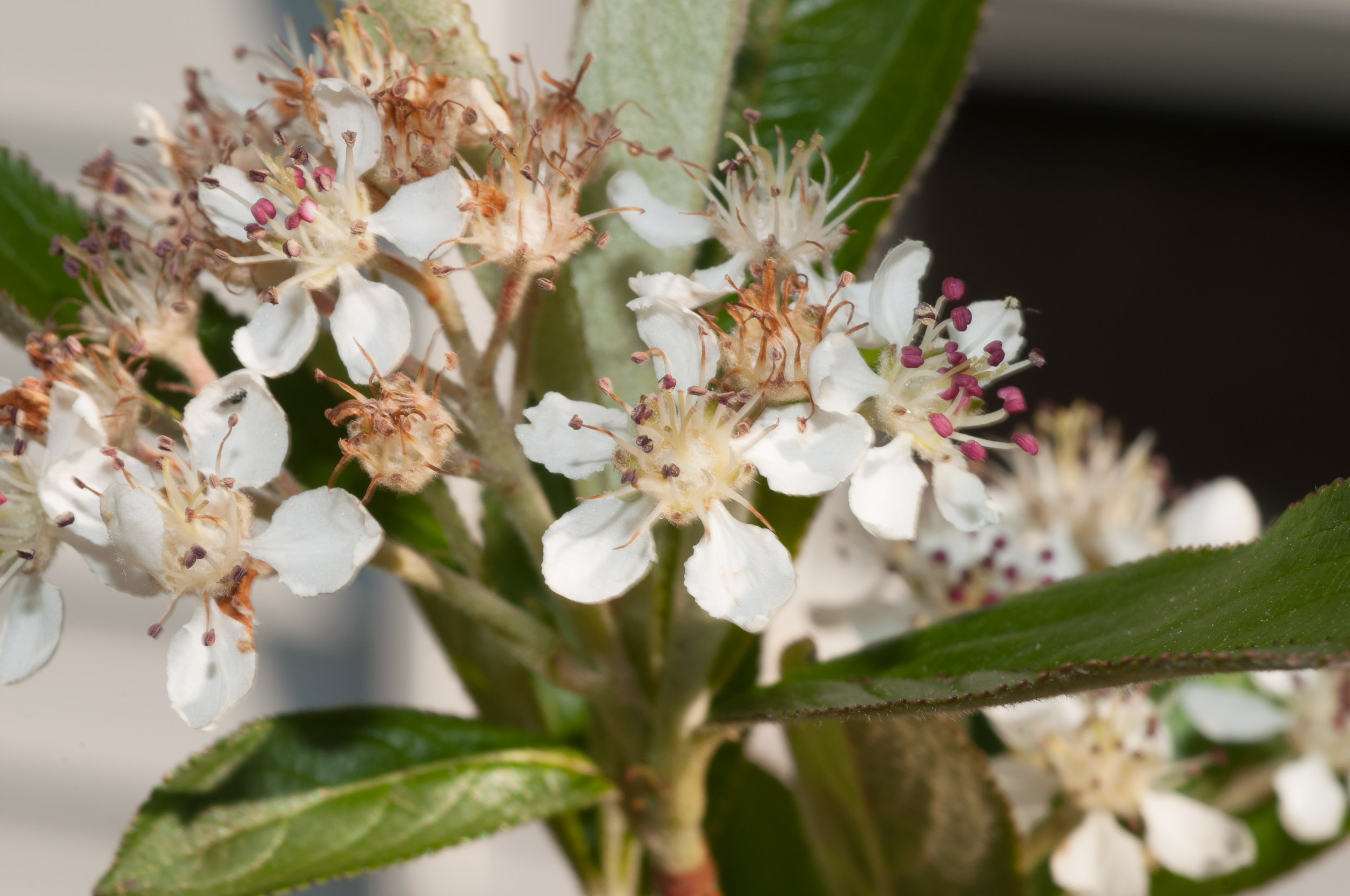
5/11/2010 · Tom and Susan’s, Pepperell, Massachusetts · ≈ 4½ × 3″ (11 × 7.9 cm) 
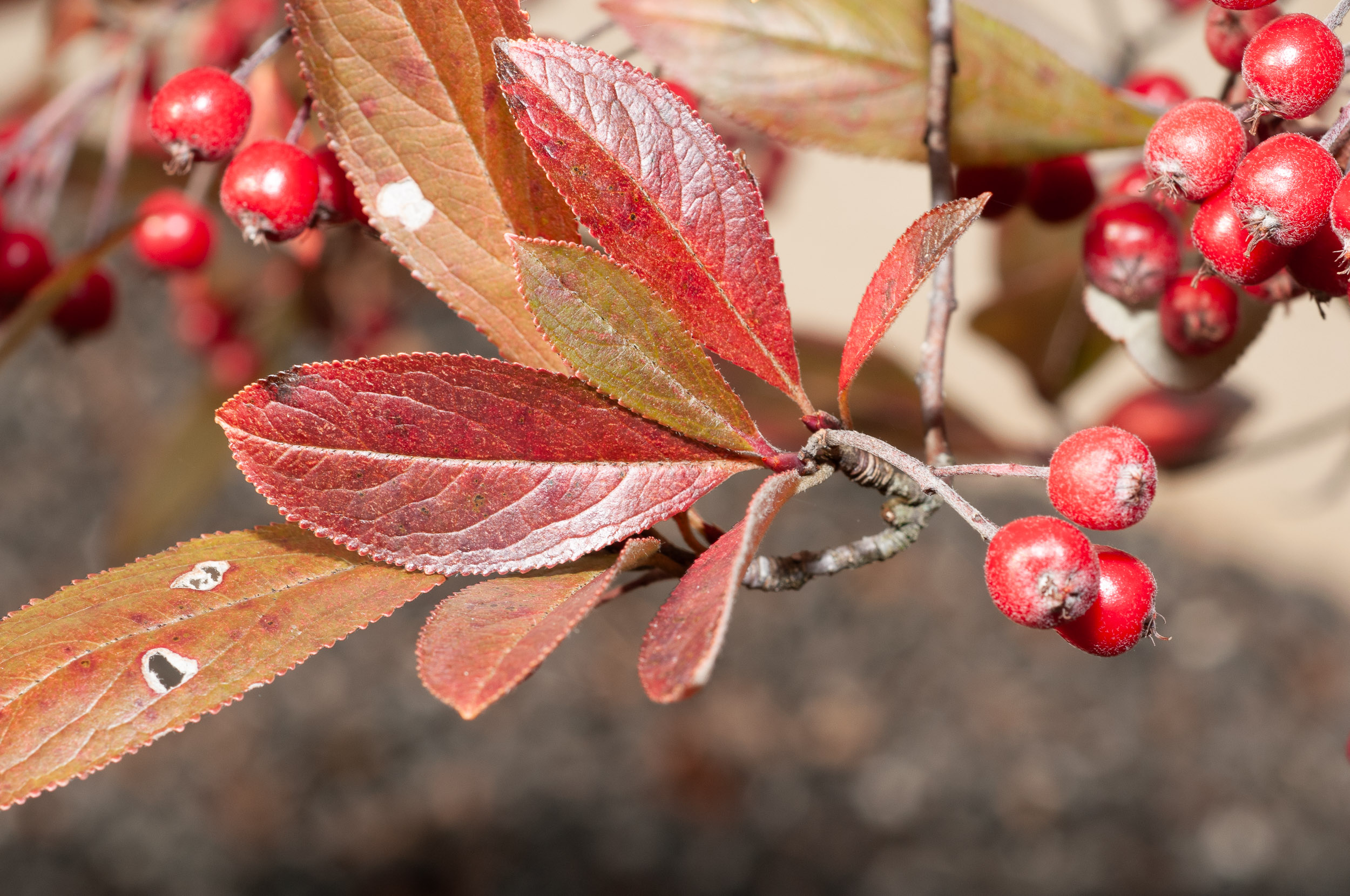
10/22/2009 · Tom and Susan’s, Pepperell, Massachusetts · ≈ 6 × 4″ (15 × 10 cm) 

8/4/2007 · Tom and Susan’s, Pepperell, Massachusetts 

10/22/2009 · Tom and Susan’s, Pepperell, Massachusetts · ≈ 7 × 4½″ (17 × 11 cm) 

10/22/2009 · Tom and Susan’s, Pepperell, Massachusetts · ≈ 4½ × 3″ (11 × 7.9 cm) 
| Kingdom | Plantae | Plants, but not fungi, lichens, or algae (from Stearn's Botanical Latin) |
| Subkingdom | Tracheobionta | Vascular plants—plants with a “circulatory system” for delivering water and nutrients |
| Division | Magnoliophyta | Flowering plants, also known as angiosperms |
| Class | Magnoliopsida | Dicotyledons—plants with two initial seed leaves |
| Subclass | Rosidae | Roses, legumes, proteas, dogwoods, hydrangeas, mistletoes, euphorbias, grapes, many more |
| Order | Rosales | Rose family and eight others |
| Family | Rosaceae | Includes apples, apricots, plums, cherries, peaches, pears, raspberries, strawberries, almonds, roses, meadowsweets, photinias, firethorns, rowans, and hawthorns; many others |
| Genus | Aronia | From the Greek aria, which is the specific epithet of a mountain ash (Sorbus aria) which has similar fruit |
| Species | arbutifolia | Having leaves like Arbutus unedo, the Spanish madrone |

Aronia arbutifolia ‘Brilliantissima’ description by Thomas H. Kent, not updated.

© FloraFinder.org. All rights reserved.