Aronia nigra (Willd.) Koehne
Mespilus arbutifolia L. var. melanocarpa Michx.
Photinia melanocarpa (Michx.) K.R. Robertson & Phipps
Pyrus arbutifolia (L.) L. f. var. nigra Willd.
Pyrus melanocarpa (Michx.) Willd.
Sorbus melanocarpa (Michx.) Heynh.
Aronia melanocarpa (Michx.) Elliott
Black chokeberry
Black chokeberry is a deciduous shrub native to eastern North America.
Plants: Shrubs are 3–10′ (91–304 cm) high and 3–6′ (91–182 cm) around.
Leaves: Glossy, elliptic to obovate, finely toothed, 1–3½ ⨉ ½–1¾″ (3–9 ⨉ 1.5–5 cm). Leaves turn bright red in the fall.
Flowers: Clusters of 5-6 white flowers. Each flower has five petals. Flowers appear in May.
Fruits: Produces large clusters of shiny deep purple or black berries. Berries are ⅛–¼″ (5–7.6 mm) in size.
Habitats: Wet areas.
Edibility: Edible, but extremely tart, hence the common name “chokeberry.” Nothing enough sugar cannot cure.
Medical: This has been actively researched for at least 15 years, for its hepatoprotective (liver-protective), gastroprotective, and anti-inflammatory effects. It shows bacteriostatic activity in vitro against Staphylococcus aureus and Escherichia coli, and an antiviral activity against Type A influenza. It also shows promise against breast cancer.
Online References:

9/7/2021 · Kennebec River Bridge, Bowdoinham, Maine · ≈ 4 × 2½″ (10 × 6.7 cm) 
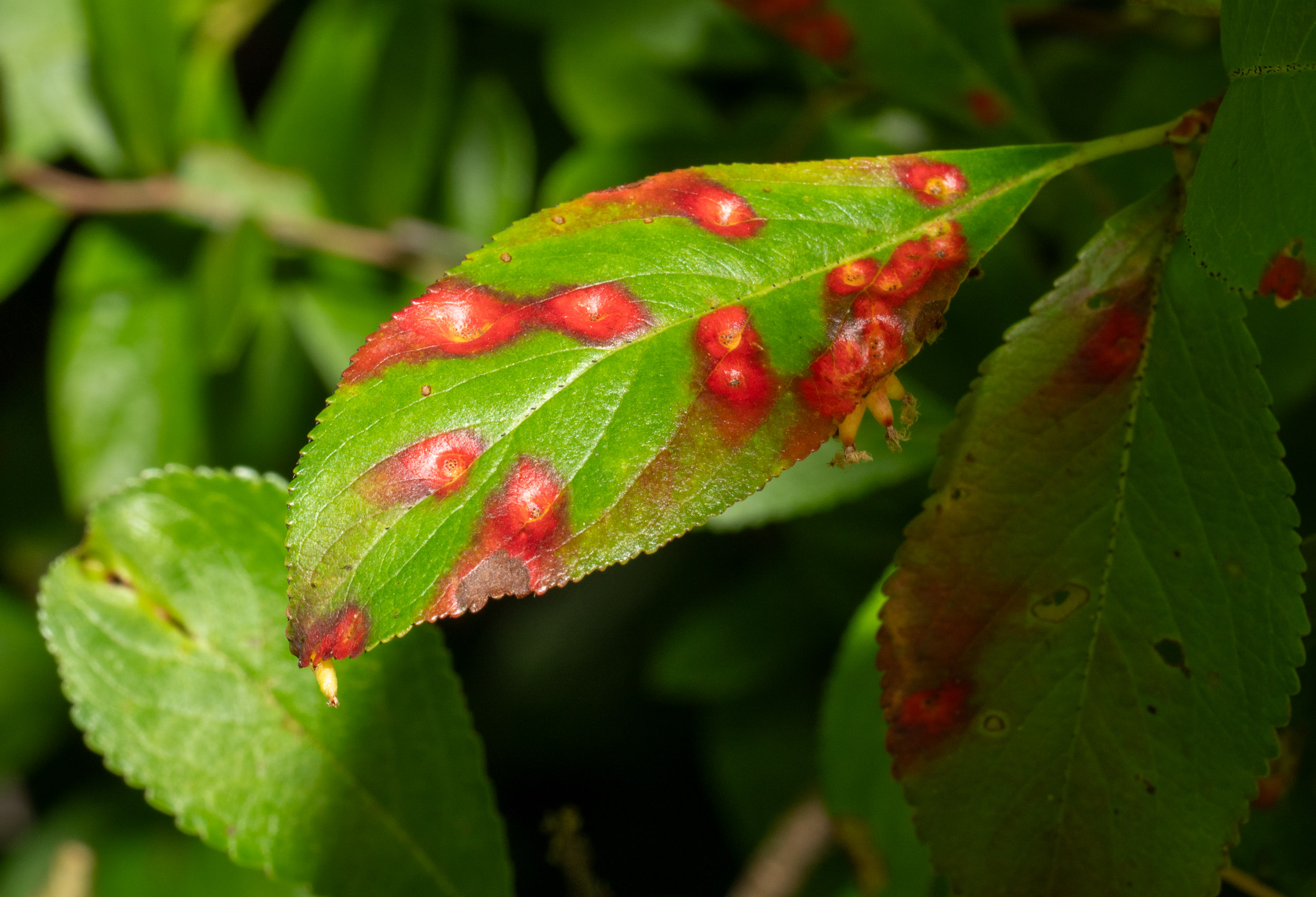
The red spots may be Entomosporium leaf spot (Diplocarpon mespili) · 8/3/2025 · Saco Heath Preserve, Saco, Maine · ≈ 3½ × 2½″ (9.7 × 6.6 cm)  ID is uncertain
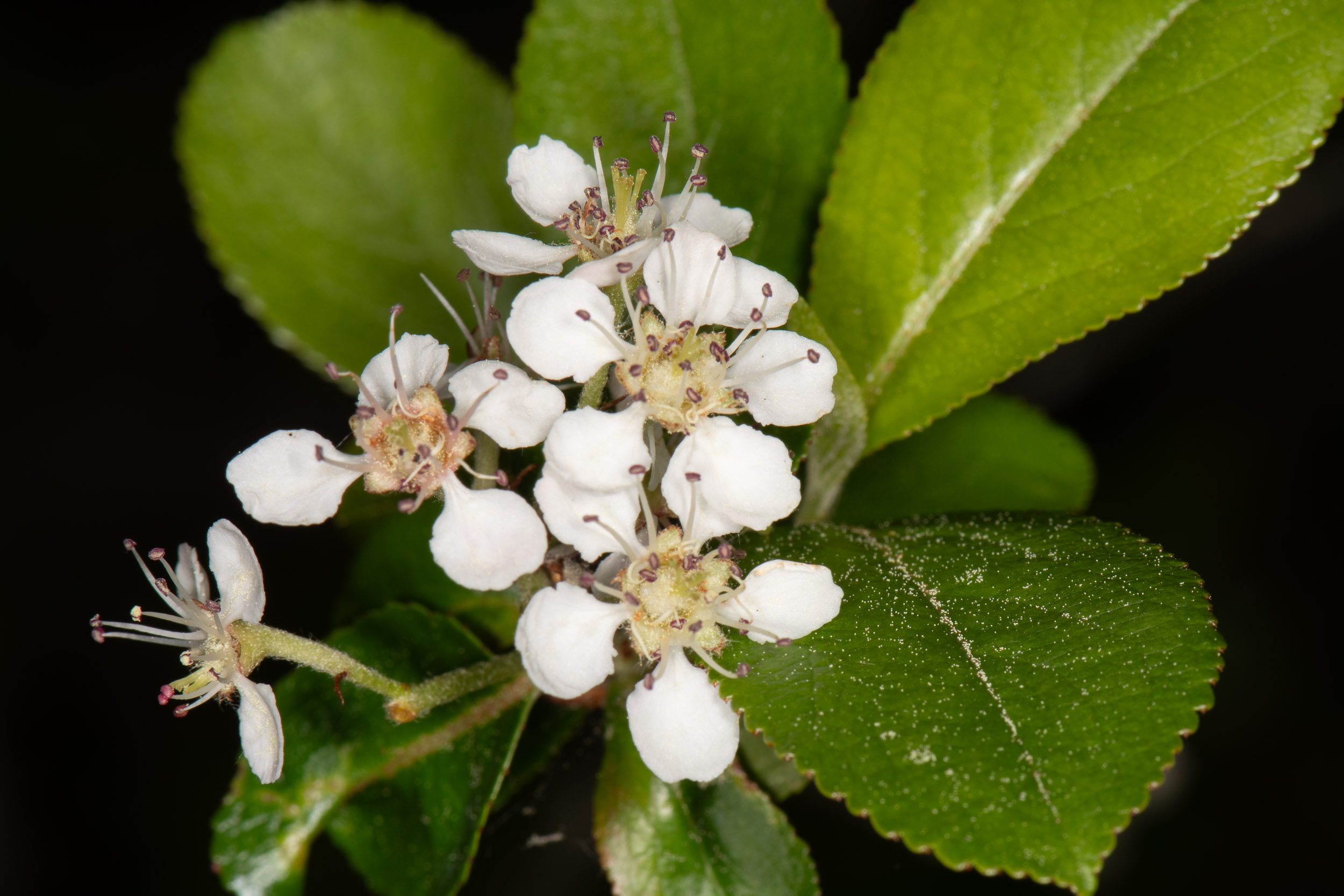
5/28/2021 · Brunswick Commons, Brunswick, Maine · ≈ 4 × 2½″ (10 × 6.7 cm) 

5/28/2023 · Giant’s Stairs, Bailey Island, Maine 

5/28/2023 · Giant’s Stairs, Bailey Island, Maine 
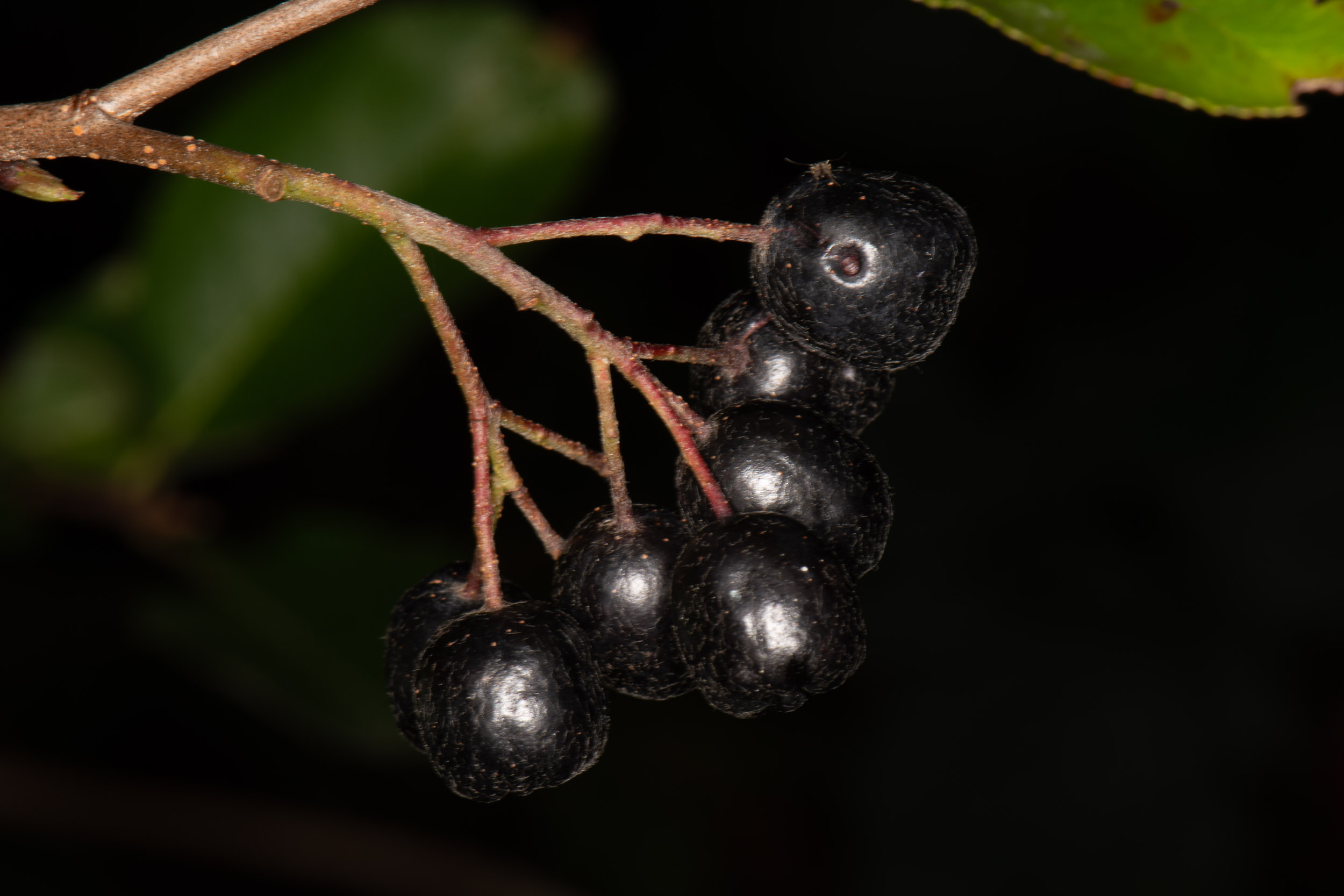
9/7/2021 · Kennebec River Bridge, Bowdoinham, Maine · ≈ 5 × 3″ (12 × 8.4 cm) 

5/28/2023 · Giant’s Stairs, Bailey Island, Maine 
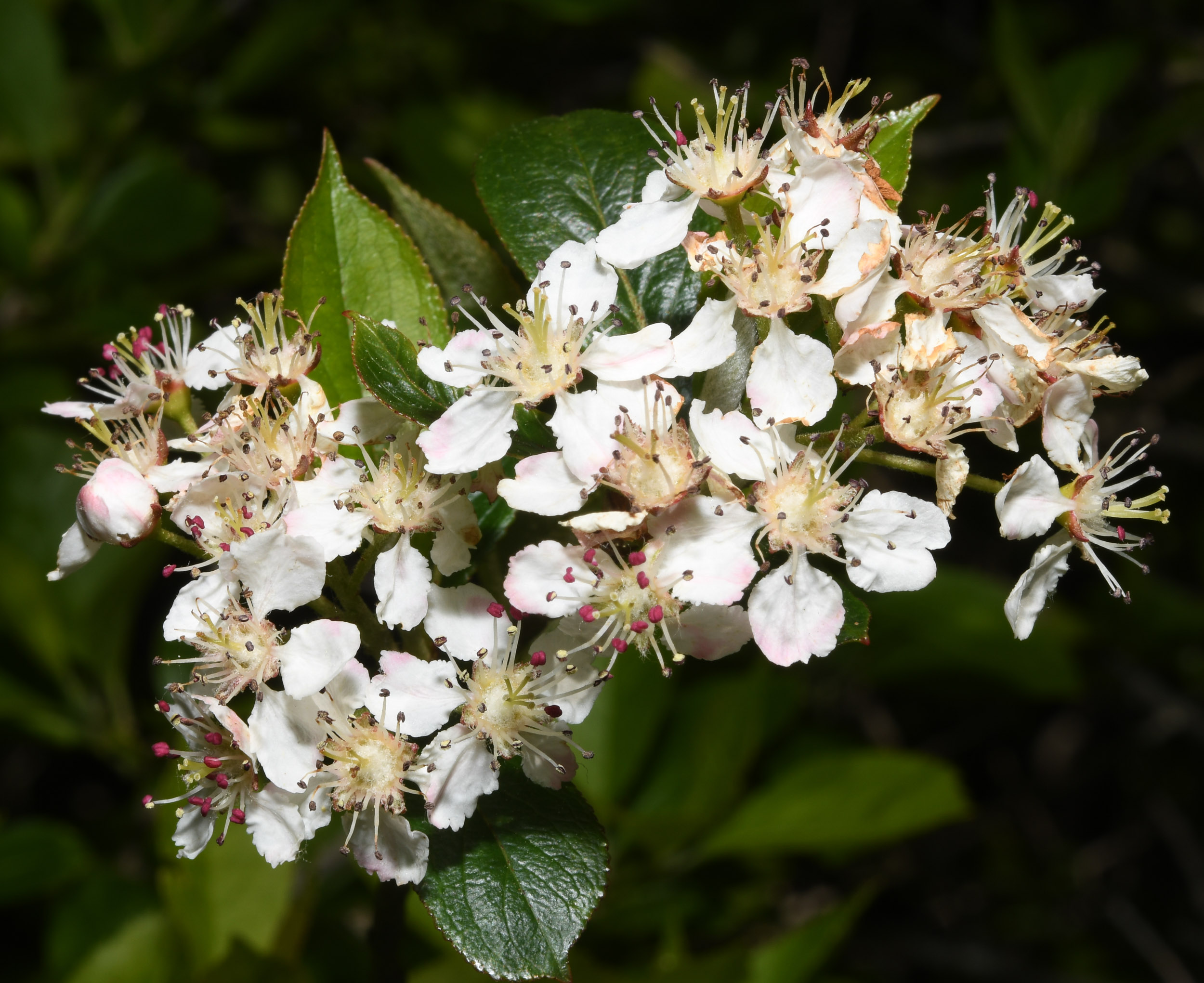
6/9/2016 · Monhegan Island, Maine 
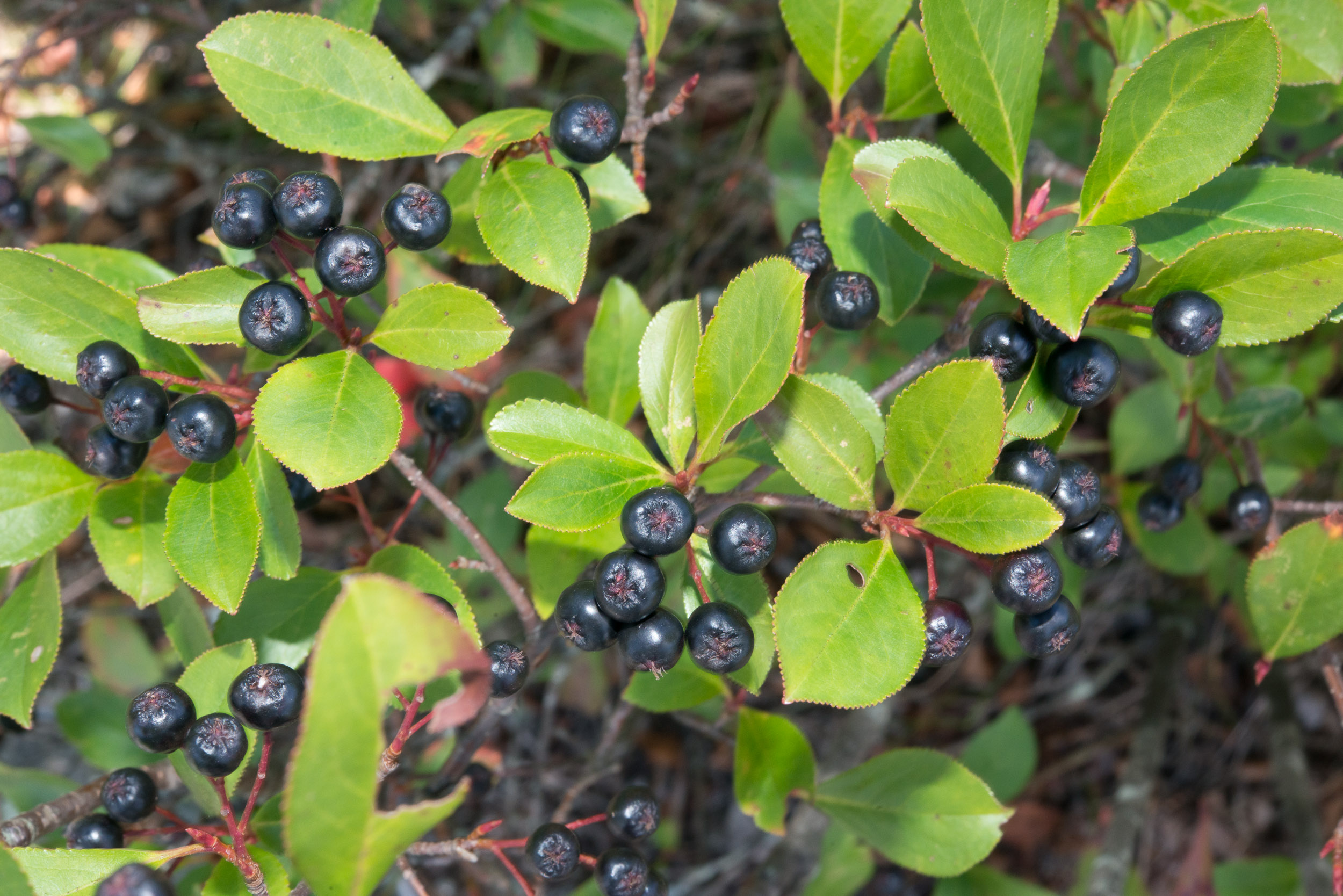
8/8/2015 · Mt. Wachusett · ≈ 8 × 6″ (20 × 14 cm) 

9/7/2021 · Kennebec River Bridge, Bowdoinham, Maine · ≈ 4½ × 6″ (11 × 14 cm) 

The red spots may be Entomosporium leaf spot (Diplocarpon mespili) · 8/3/2025 · Saco Heath Preserve, Saco, Maine · ≈ 7 × 4½″ (18 × 12 cm) ID is uncertain 

5/28/2021 · Brunswick Commons, Brunswick, Maine · ≈ 2½ × 3″ (7.3 × 7.7 cm) 

5/28/2021 · Brunswick Commons, Brunswick, Maine · ≈ 6 × 4½″ (14 × 11 cm) 
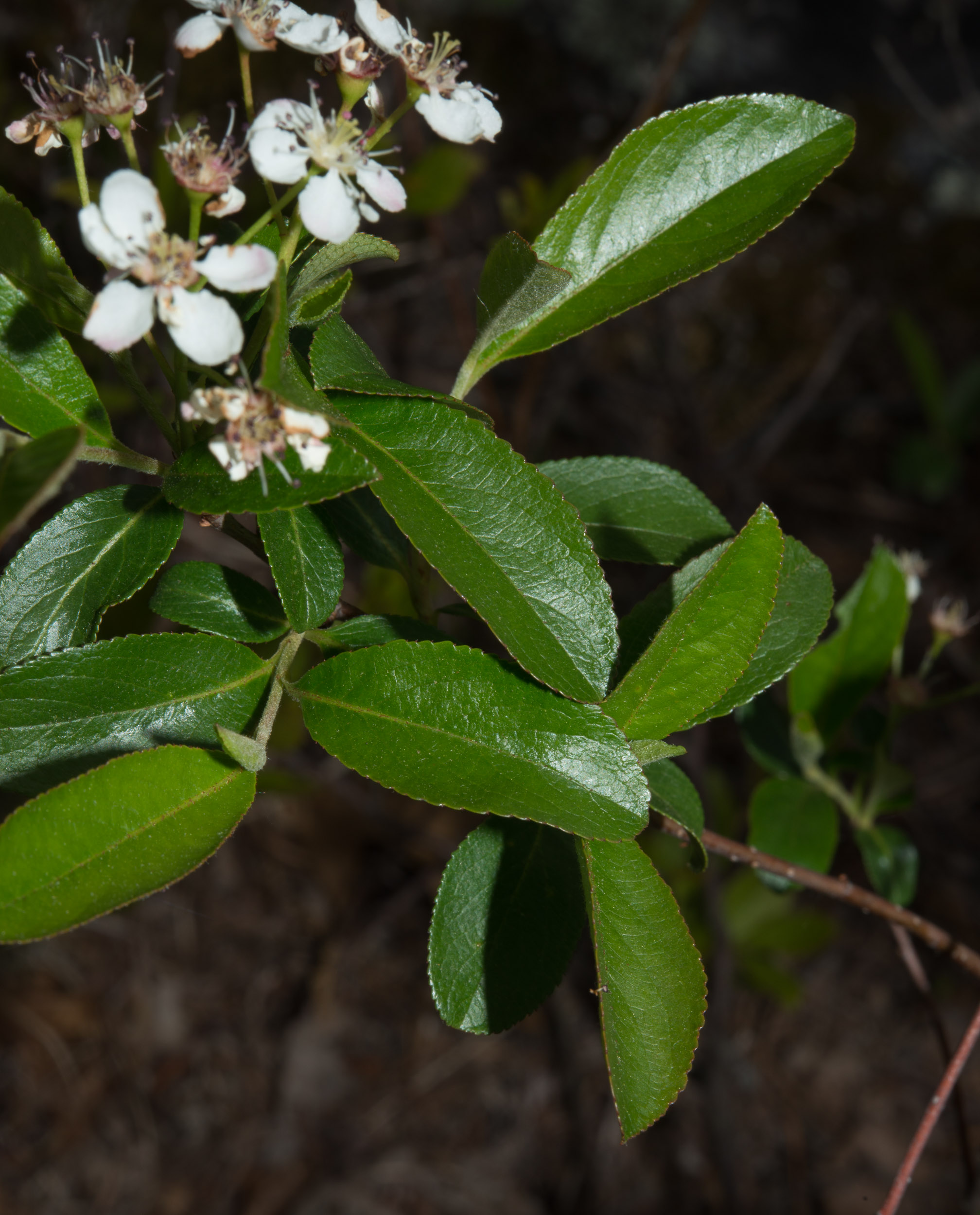
5/18/2013 · Oak Hill, Littleton Conservation Land, Littleton, Massachusetts · ≈ 4½ × 6″ (12 × 14 cm) 

9/7/2021 · Kennebec River Bridge, Bowdoinham, Maine · ≈ 8 × 5″ (20 × 13 cm) 

5/28/2023 · Giant’s Stairs, Bailey Island, Maine 

5/18/2013 · Oak Hill, Littleton Conservation Land, Littleton, Massachusetts · ≈ 7 × 4½″ (18 × 12 cm) 

9/7/2021 · Kennebec River Bridge, Bowdoinham, Maine · ≈ 7 × 4½″ (16 × 11 cm) 
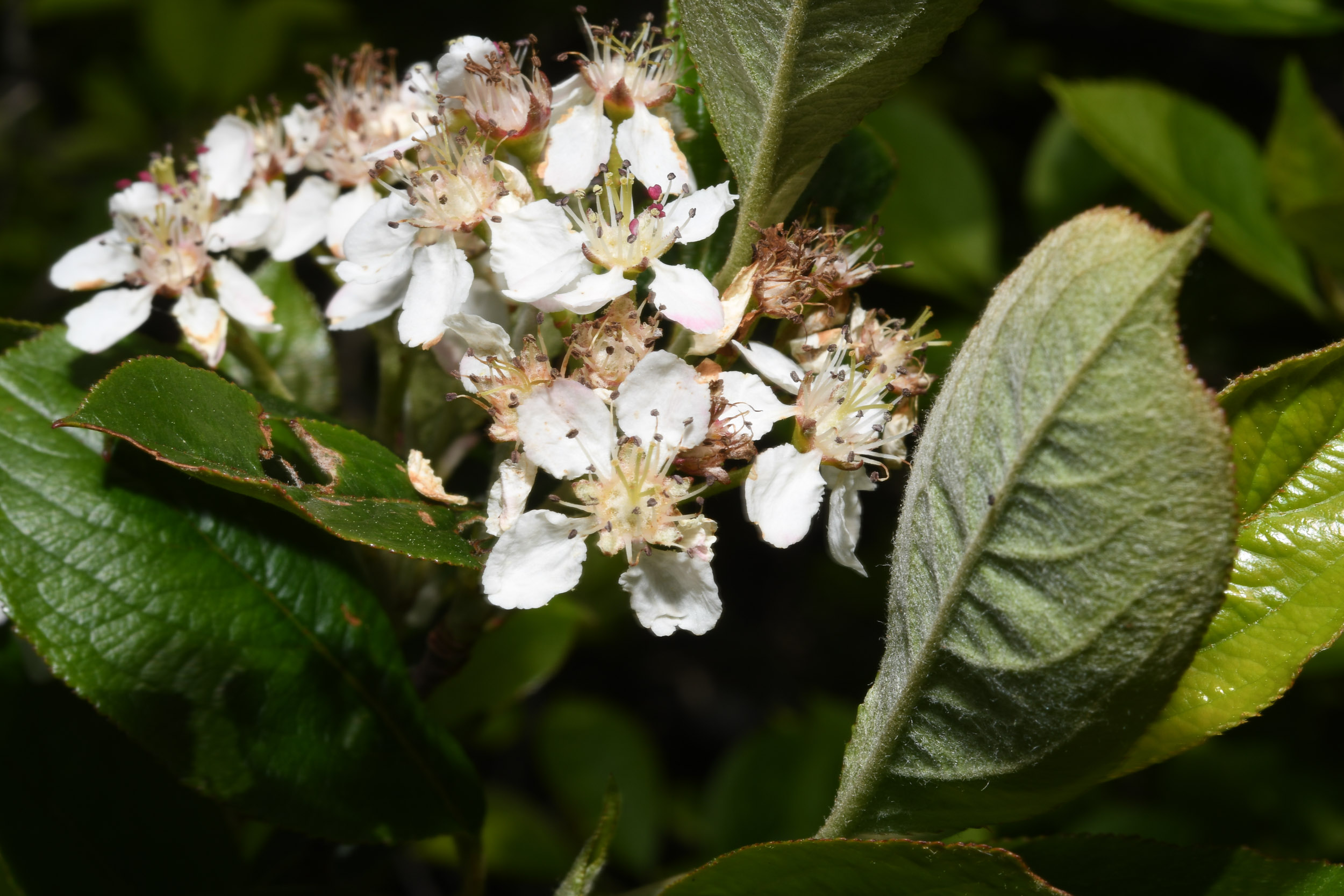
6/9/2016 · Monhegan Island, Maine 
| Kingdom | Plantae | Plants, but not fungi, lichens, or algae (from Stearn's Botanical Latin) |
| Subkingdom | Tracheobionta | Vascular plants—plants with a “circulatory system” for delivering water and nutrients |
| Division | Magnoliophyta | Flowering plants, also known as angiosperms |
| Class | Magnoliopsida | Dicotyledons—plants with two initial seed leaves |
| Subclass | Rosidae | Roses, legumes, proteas, dogwoods, hydrangeas, mistletoes, euphorbias, grapes, many more |
| Order | Rosales | Rose family and eight others |
| Family | Rosaceae | Includes apples, apricots, plums, cherries, peaches, pears, raspberries, strawberries, almonds, roses, meadowsweets, photinias, firethorns, rowans, and hawthorns; many others |
| Genus | Aronia | From the Greek aria, which is the specific epithet of a mountain ash (Sorbus aria) which has similar fruit |
| Species | melanocarpa | From melano, “black,” and carpa, “fruit” |
Aronia melanocarpa description by Thomas H. Kent, not updated.

© FloraFinder.org. All rights reserved.
