Baccharis halimifolia L.
Eastern baccharis, groundsel bush, sea myrtle, saltbush, eastern false willow, silverling, high-tide-bush, mulletbush, waterbush, mangler, consumption-weed, winter-willow
Eastern baccharis is native to eastern and southern North America. It is naturalized (and potentially invasive) in Europe and invasive in New Zealand.
Plants: A deciduous or evergreen shrub, or sometimes a small tree, 3–13 ⨉ 3–13′ (1–4 ⨉ 1–4 m) in size.
Leaves: Alternate, simple, dark green, leathery, rhombic to ellliptic or obovate. Leaves are 1–3 ⨉ ⅜–2″ (3–8 ⨉ 1–6 cm), and toothed toward the apex.
Flowers: This species is dioecious—separate plants have either male or female flowers. Female flowers are conspicuous, rather arresting large leafy inflorescences of snowy-white cottony flowerheads. Male flowers look yellowish and a bit dingy by contrast. Flowers appear from August to October.
Fruits: Cylindrical, with long white plumes, pappi.
Habitats: Wet, salty or brackish shores of marshes and estuaries, and inland shores of coastal barrier islands. It occurs in freshwater tidal marshes and seacoast open woods. In Florida it is found in ditches and old fields as well. They can also show up along heavily salted road edges further north.
Edibility: Poisonous  Seeds are toxic to
people.
Seeds are toxic to
people.
Online References:
Baccharis halimifolia L. var. angustior DC.
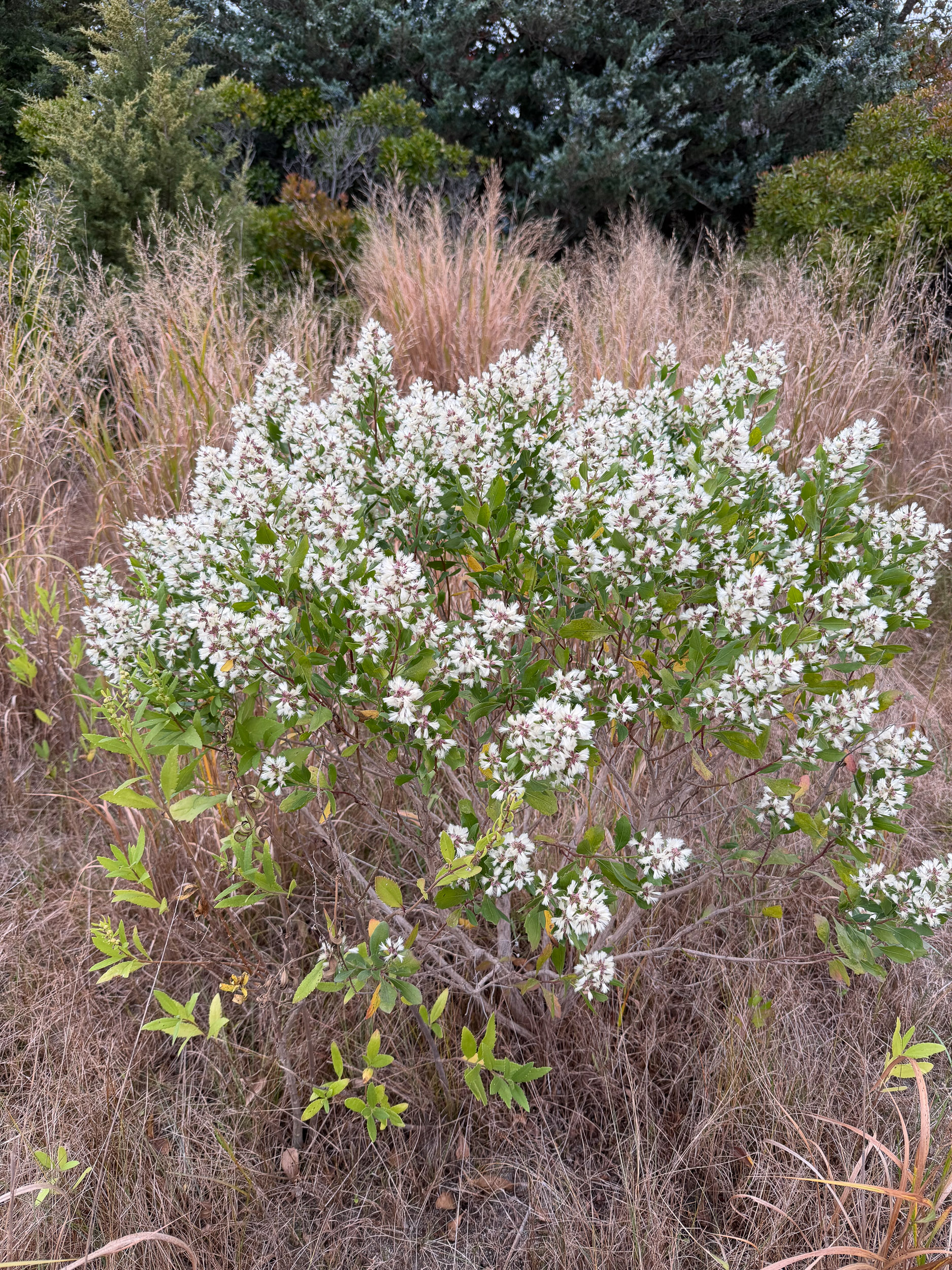
10/12/2025 · Scituate Dog Park, Scituate, Massachusetts · By Heather A. Kent 
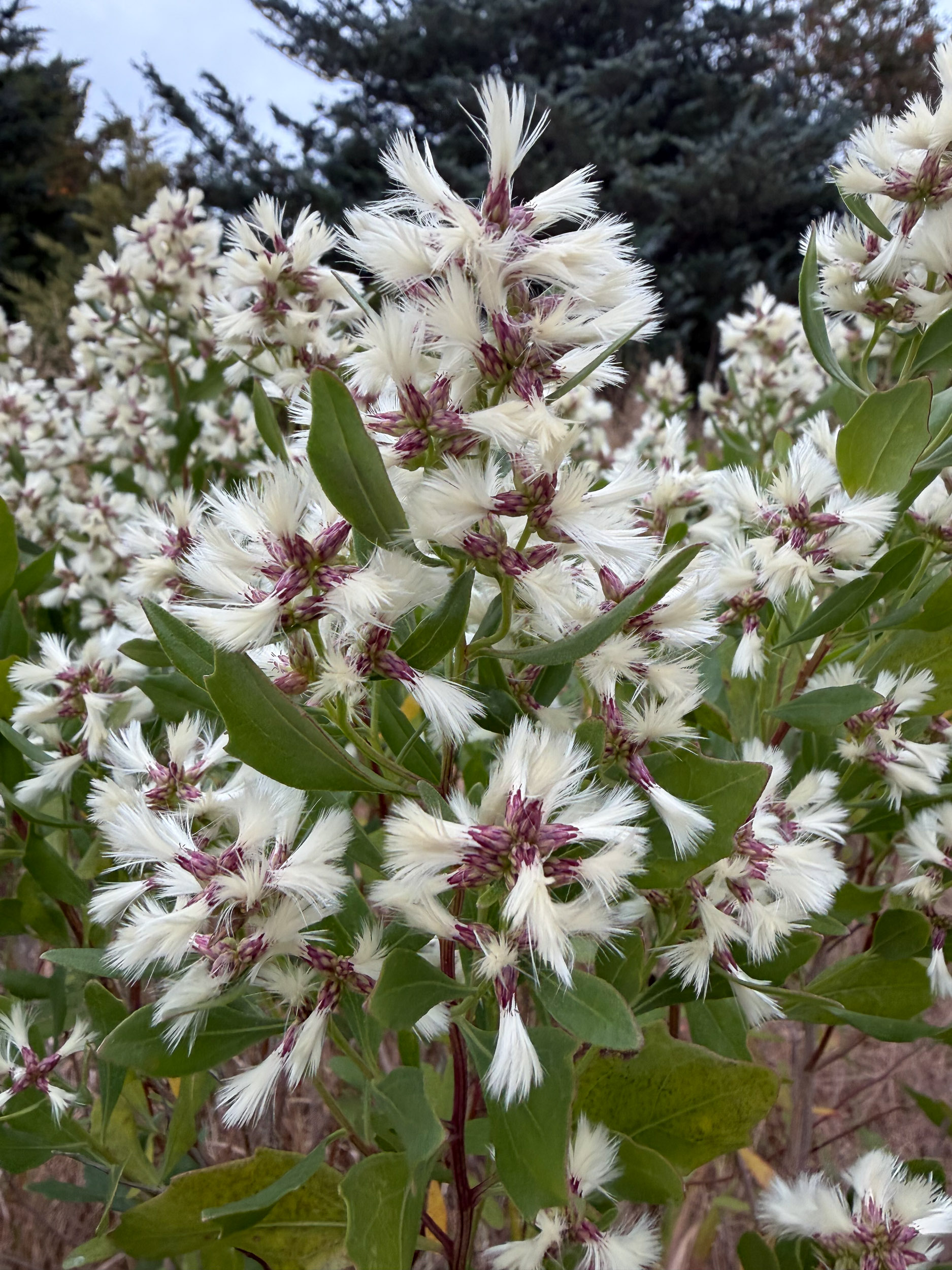
10/12/2025 · Scituate Dog Park, Scituate, Massachusetts · By Heather A. Kent 

10/12/2025 · Scituate Dog Park, Scituate, Massachusetts · By Heather A. Kent 
| Kingdom | Plantae | Plants, but not fungi, lichens, or algae (from Stearn's Botanical Latin) |
| Subkingdom | Tracheobionta | Vascular plants—plants with a “circulatory system” for delivering water and nutrients |
| Division | Magnoliophyta | Flowering plants, also known as angiosperms |
| Class | Magnoliopsida | Dicotyledons—plants with two initial seed leaves |
| Subclass | Asteridae | A large class that encompasses asters |
| Order | Asterales | Flowering plants with a central disk flower and surrounding petals, like daisies |
| Family | Asteraceae | The aster family, which also includes daisies and sunflowers; from the Greek ἀστήρ, “star,” for the star-shaped flowers |
| Genus | Baccharis | From Greek name Bakkaris given in honor of Bacchus, the god of wine, to a plant with a fragrant root and recycled by Linnaeus |
| Species | halimifolia | With leaves like halimus, a species of orach or saltbush (Atriplex halimus) |
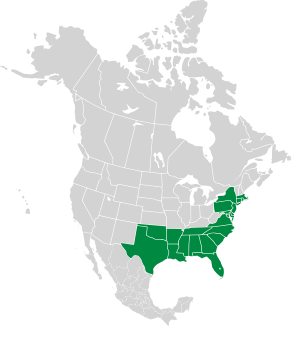
Baccharis halimifolia description by Thomas H. Kent, not updated.

© FloraFinder.org. All rights reserved.