Baileya pauciradiata Harv. & A. Gray ex A. Gray
Laxflower, Colorado desert marigold, Colorodo Desert Marigold
Laxflower is native to northern Mexico and the southwestern United States, at elevations of less than 3000′ (914 m). It prefers sandy habitats and full sun.
Plants: 4–20″ (10–50 cm), often branched. Stems are silvery (tomentose) due to the presence of many tiny hairs.
Leaves: Basal leaves wither quickly. Leaves higher up are 1½–6″ (4–14 cm) long, linear-oblong to lanceolate or oblanceolate, sometimes deeply lobed.
Flowers: Composite flowers are yellow. Each stem contains 2-3 flowers. Each flower contains 4-8 obovate rays, each with 3 shallow lobes, yellow or pale yellow. There are 8-20 disc flowers, also yellow, and hairy. Flowers appear from March to May.
Fruits: Club-shaped, ⅛–3/16″ (4–5 mm), evenly ribbed.
Habitats: Sandy desert soils, at elevations of 197–2297′ (60–700 m).
Medical: Contains odoratin and paucin, which may prove effective against certain cancers.
Online References:
Www.sciencedirect.com (paywalled)
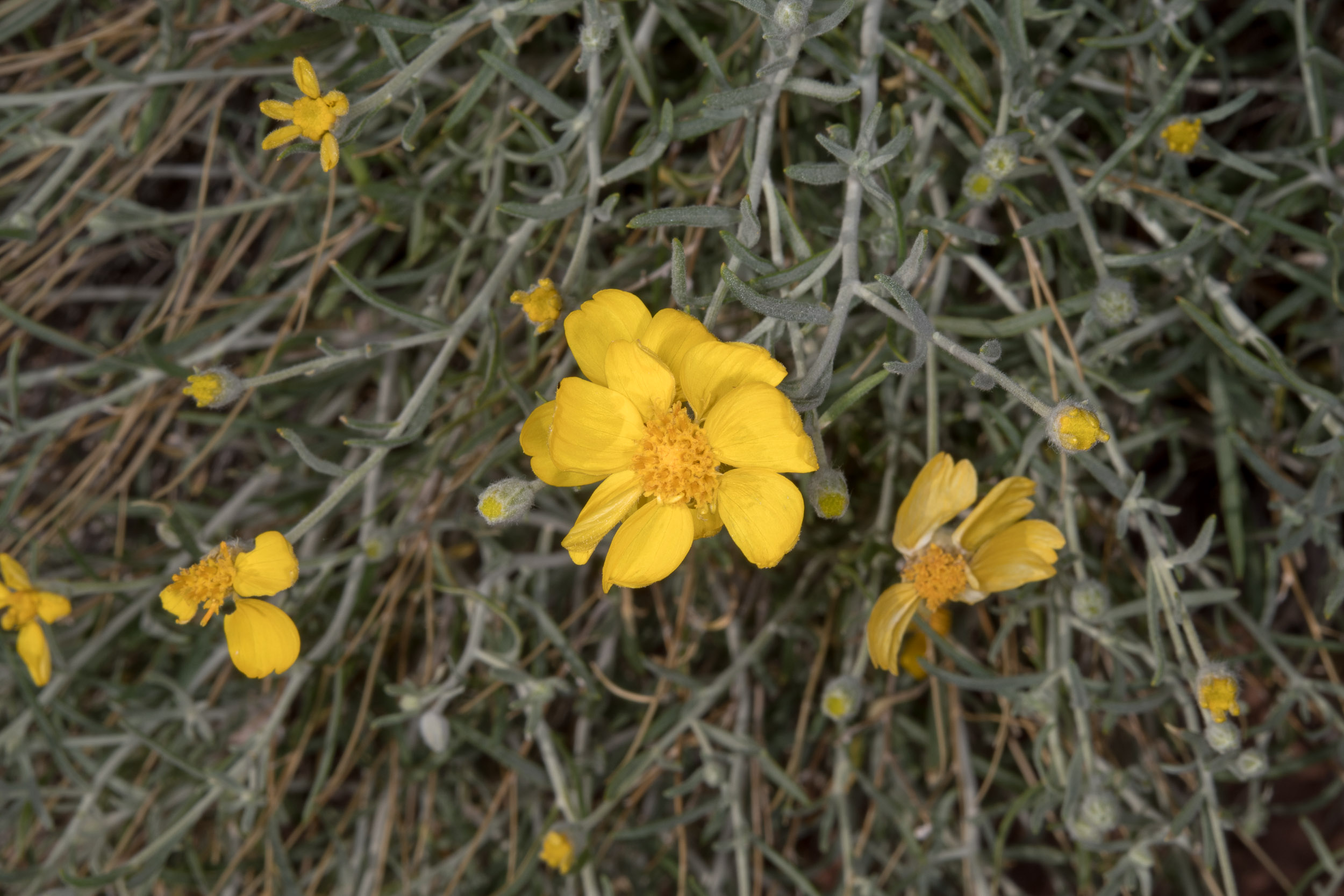
4/29/2018 · Red Spring Calico Basin, Red Rock Canyon, Nevada · ≈ 7 × 4½″ (18 × 12 cm) 
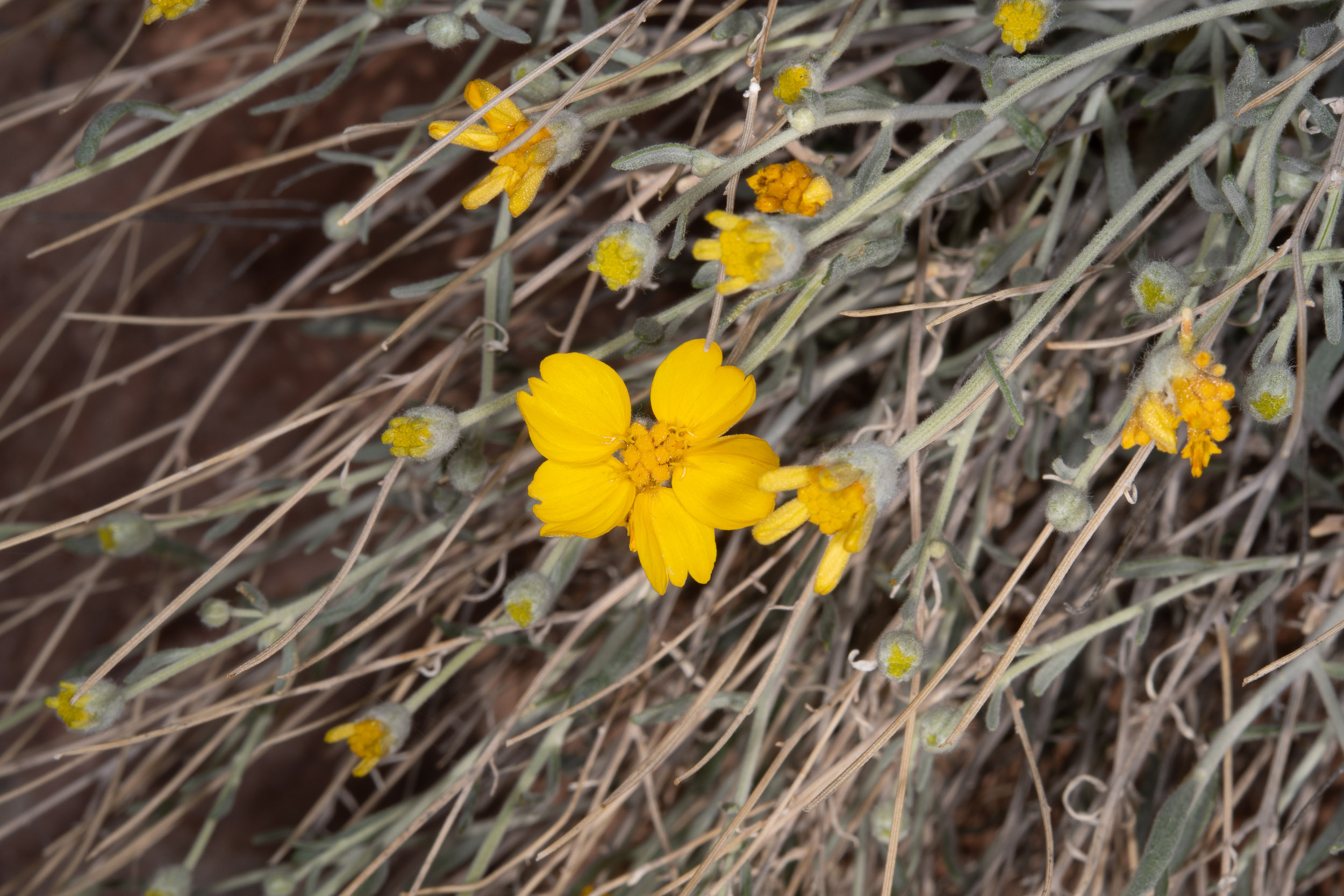
4/29/2018 · Red Spring Calico Basin, Red Rock Canyon, Nevada · ≈ 6 × 4″ (15 × 10 cm) 
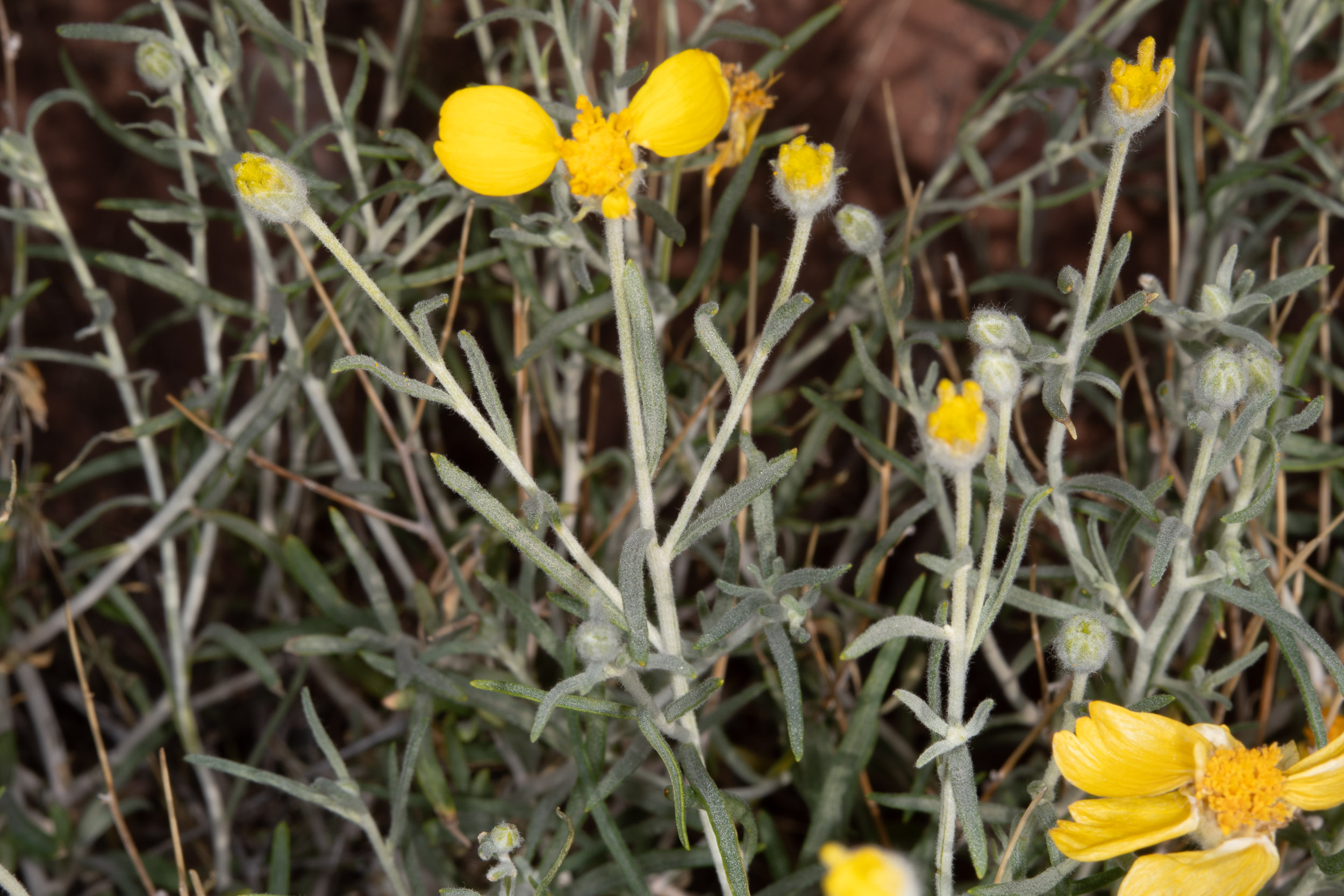
4/29/2018 · Red Spring Calico Basin, Red Rock Canyon, Nevada · ≈ 4 × 6″ (11 × 16 cm) 
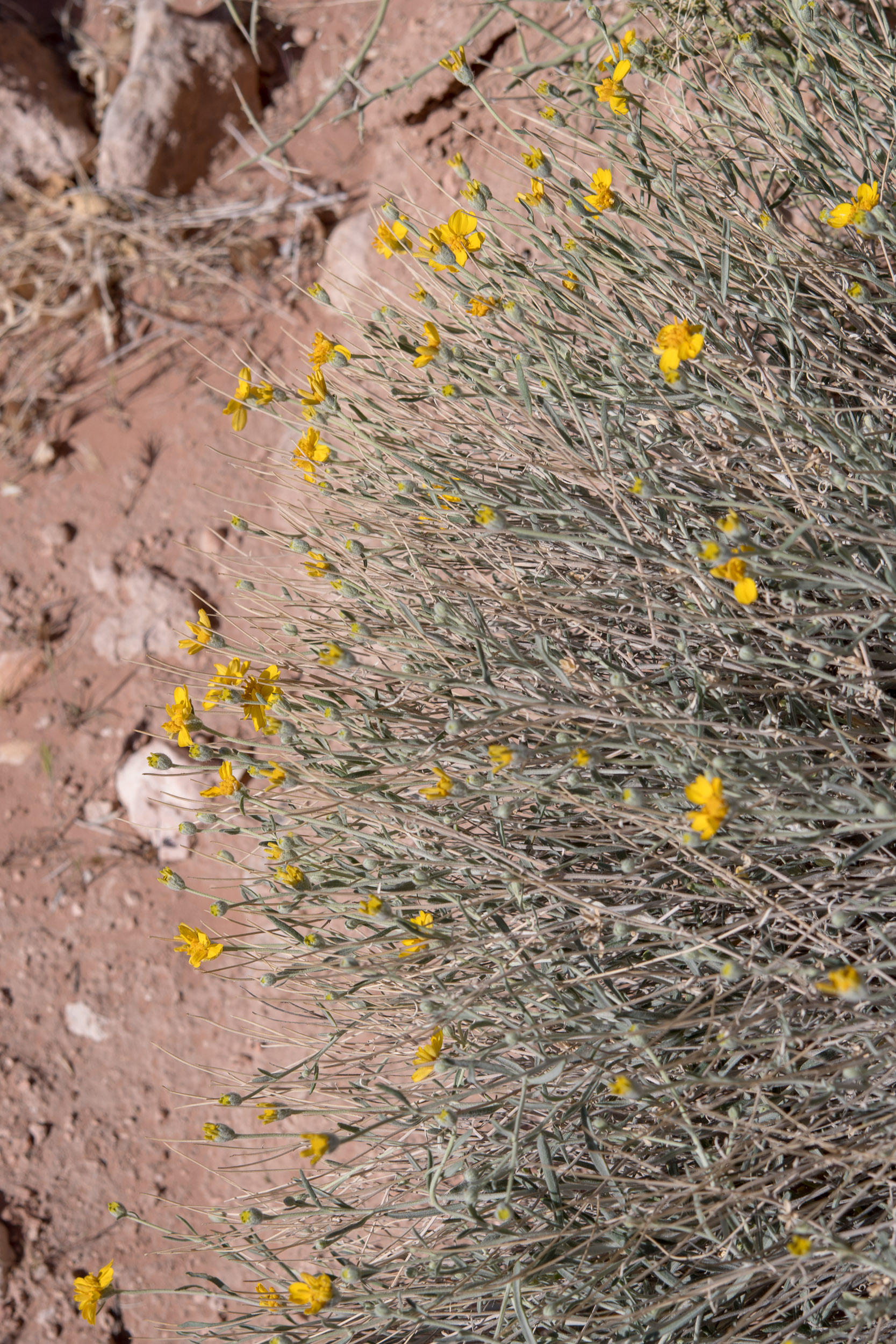
4/29/2018 · Red Spring Calico Basin, Red Rock Canyon, Nevada · ≈ 1 × 1½′ (34 × 52 cm) 
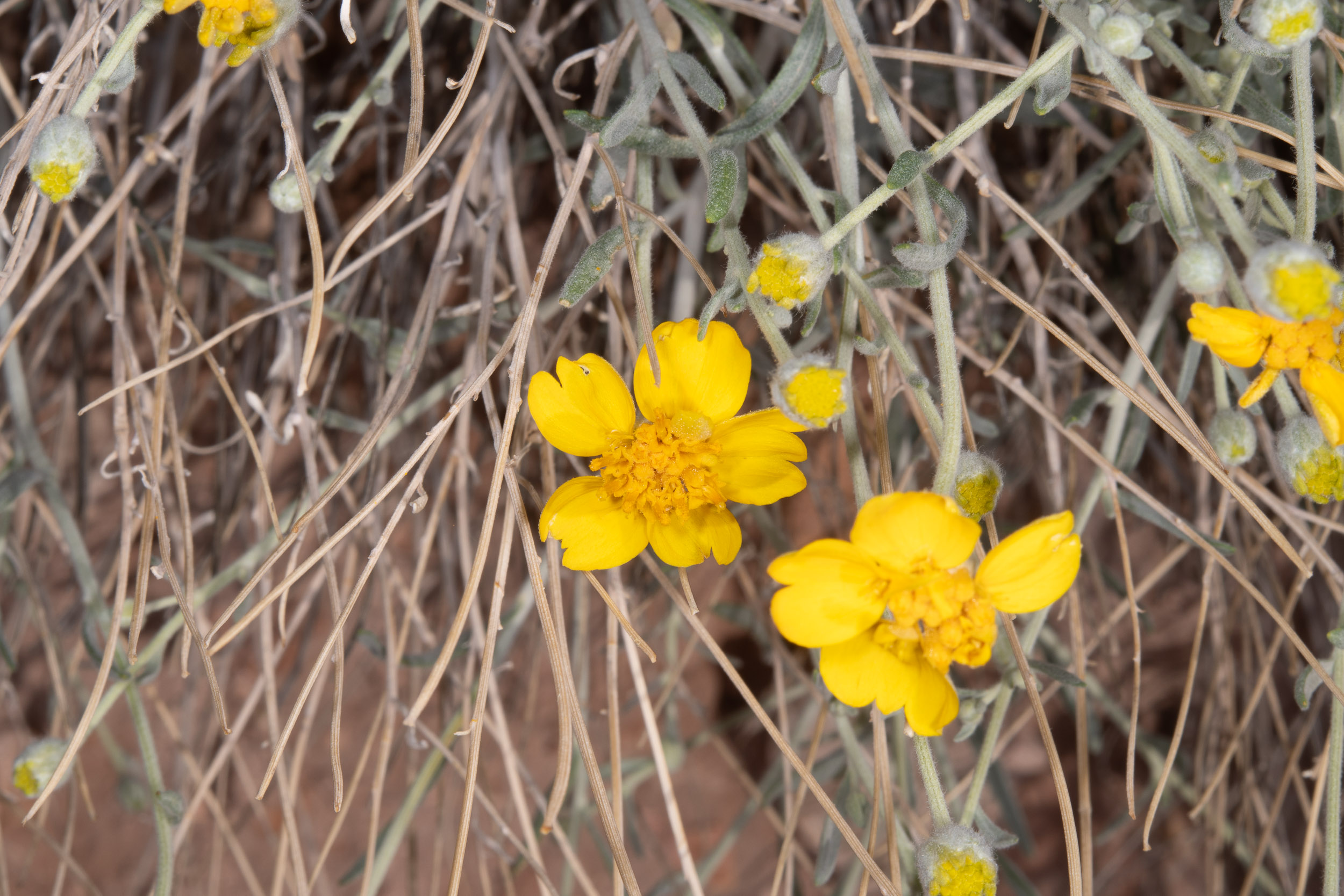
4/29/2018 · Red Spring Calico Basin, Red Rock Canyon, Nevada · ≈ 6 × 4″ (14 × 10 cm) 
| Kingdom | Plantae | Plants, but not fungi, lichens, or algae (from Stearn's Botanical Latin) |
| Subkingdom | Tracheobionta | Vascular plants—plants with a “circulatory system” for delivering water and nutrients |
| Division | Magnoliophyta | Flowering plants, also known as angiosperms |
| Class | Magnoliopsida | Dicotyledons—plants with two initial seed leaves |
| Subclass | Asteridae | A large class that encompasses asters |
| Order | Asterales | Flowering plants with a central disk flower and surrounding petals, like daisies |
| Family | Asteraceae | The aster family, which also includes daisies and sunflowers; from the Greek ἀστήρ, “star,” for the star-shaped flowers |
| Genus | Baileya | After Jacob Whitman Bailey (1811-1857), early American microscopist and pioneer of this means of investigation. He graduated from West Point Military Academy and from 1834 until his death he taught and eventually became full professor of chemistry, minerology and geology at that institute. He made numerous improvements in the design of the microscope and amassed large collections of slides of microscopic objects. He was elected President of the American Association of the Advancement of Science in 1856 and was the author of more than 50 scientific papers. One of his sons became a chemist and geologist, and another, William Whitman, became a botanist |
| Species | pauciradiata | From the Latin for “few-rayed” [Compare pleniradiata] |

Baileya pauciradiata description by Thomas H. Kent, not updated.

© FloraFinder.org. All rights reserved.