Berberis koreana Palib.
Korean barberry
Korean barberry is native to Japan, Korea, northeastern China, and other parts of East Asia. It is popular as an ornamental shrub in North America, South America, and Europe. It is reported naturalized, probably escaped from gardens, in a few locations in Vermont, and I have twice spotted it, apparently naturalized, in northern central Massachusetts. It is hardy to 5°F (–15°C), and grows in many soil types, and both well drained and moist soils. It needs partial or full sunlight.
Plants: Shrubs are 3–6′ (91–182 cm) around, with multiple smooth-barked spiny branches.
Leaves: ⅞–2½″ (2.5–7 cm) long, medium to dark green, alternate, edged with spiny teeth. In the fall, leaves are red-purple.
Flowers: This shrub doesn’t just flower, it lights up like a searchlight! Flowers are ⅛″ (5 mm), bell-shaped, in dense bright yellow racemes on reddish branches. It flowers from May to June. (In the two specimens I have seen, the duration of flowering was short, a few days.)
Fruits: Dense clusters of egg-shaped berries ripen to yellow and bright red. Berries are ⅛–¼″ (5–7.6 mm) long.
Habitats: Anthropogenic (man-made or disturbed habitats), forest edges.
Edibility: One source says the fruits are edible, either raw or cooked, and that young leaves may be cooked and eaten.
Medical: Barberry root bark contains vitamin C, and several isoquinoline alkaloids, predominantly berberine. These compounds have been found to have effects on animals, such as lowering blood pressure in cats, or reducing fever in rabbits. There is also evidence that some of these compounds are converted in the human body to MPTP (1[N]-methyl-4-phenyl-1,2,3,6-tetrahydropyridine), which contributes to the development of Parkinson’s disease. There are no substantiated safe uses for extracts from barberries.
Online References:

5/30/2018 · Westford Rd., Ayer, Massachusetts · ≈ 6 × 4½″ (15 × 12 cm) 

5/28/2018 · Westford Rd., Ayer, Massachusetts 

5/28/2018 · Westford Rd., Ayer, Massachusetts 

5/30/2018 · Westford Rd., Ayer, Massachusetts · ≈ 7 × 5″ (17 × 13 cm) 

5/28/2018 · Westford Rd., Ayer, Massachusetts 
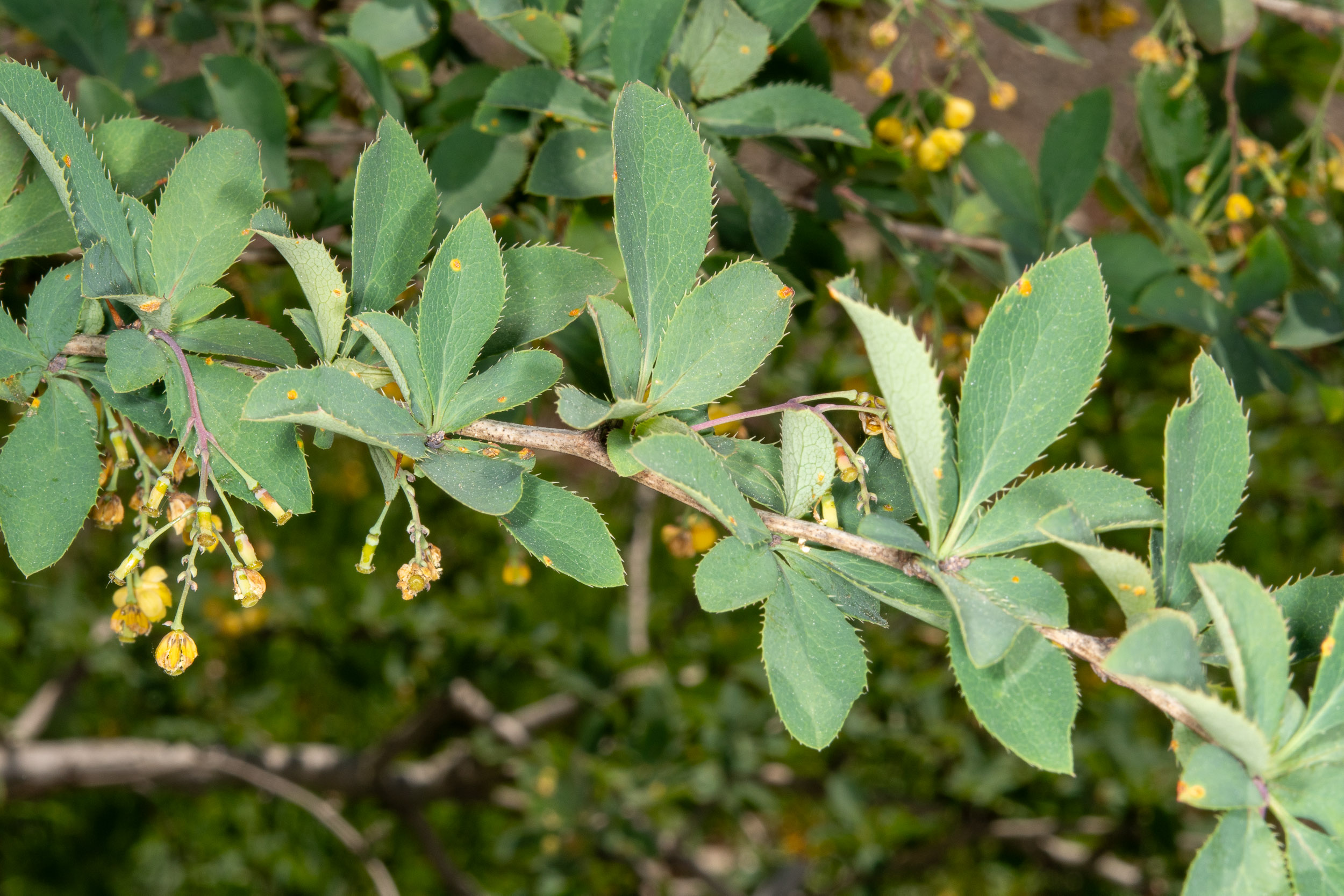
5/30/2018 · Westford Rd., Ayer, Massachusetts · ≈ 7 × 4½″ (18 × 12 cm) 

5/30/2018 · Westford Rd., Ayer, Massachusetts · ≈ 4½ × 4″ (11 × 10 cm) 

5/28/2018 · Westford Rd., Ayer, Massachusetts 
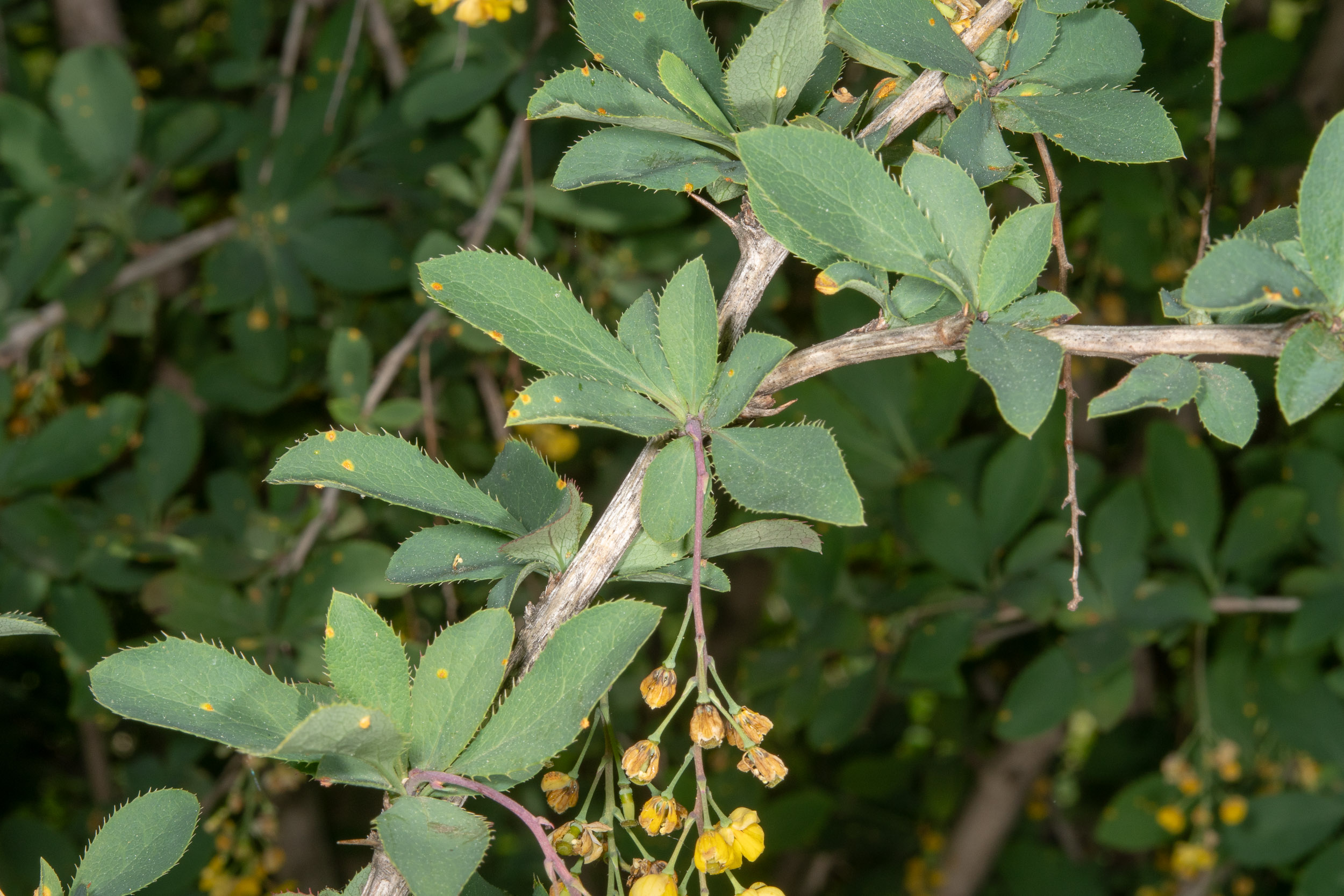
5/30/2018 · Westford Rd., Ayer, Massachusetts · ≈ 7 × 4½″ (18 × 12 cm) 

5/28/2018 · Westford Rd., Ayer, Massachusetts 

5/28/2018 · Westford Rd., Ayer, Massachusetts 
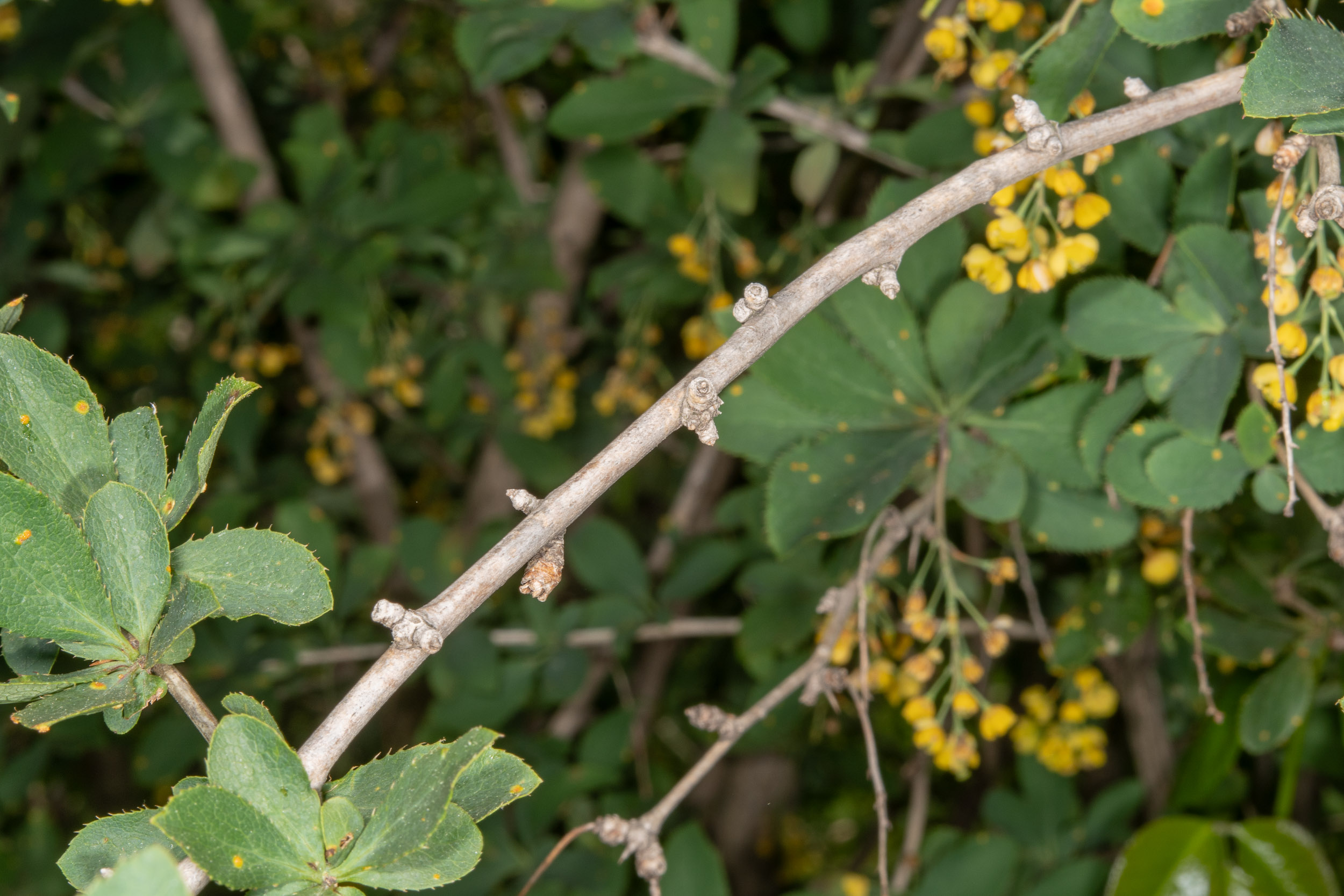
No thorns. Most barberries have thorny stems. · 5/30/2018 · Westford Rd., Ayer, Massachusetts · ≈ 7 × 4½″ (18 × 12 cm) 

5/30/2018 · Westford Rd., Ayer, Massachusetts · ≈ 8 × 5″ (20 × 13 cm) 

5/28/2018 · Westford Rd., Ayer, Massachusetts 

5/28/2018 · Westford Rd., Ayer, Massachusetts 
| Kingdom | Plantae | Plants, but not fungi, lichens, or algae (from Stearn's Botanical Latin) |
| Subkingdom | Tracheobionta | Vascular plants—plants with a “circulatory system” for delivering water and nutrients |
| Division | Magnoliophyta | Flowering plants, also known as angiosperms |
| Class | Magnoliopsida | Dicotyledons—plants with two initial seed leaves |
| Subclass | Magnoliidae | Includes magnolias, nutmeg, bay laurel, cinnamon, avocado, black pepper, and many others |
| Order | Ranunculales | Basal (evolved earlier) eudicots, also called “true dicots” |
| Family | Berberidaceae | Barberry family |
| Genus | Berberis | The Latinized form of the Arabic name for this fruit |
| Species | koreana | Of or from Korea |

Berberis koreana description by Thomas H. Kent, not updated.

© FloraFinder.org. All rights reserved.