Betula L.
Birch
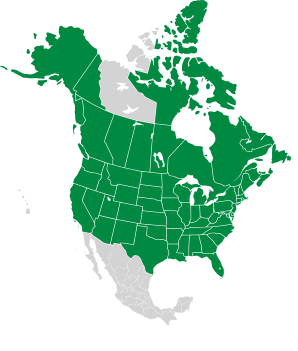
The Betula genus—birch trees—consists of about 30 species of mid-sized trees. (That’s BET-u-la.) They are widespread throughout the northern hemisphere. Among the most common are several with unmistakable white, papery bark—”birch” means “white, bright; to shine.” Birch bark has several other unusual properties. It has long, horizontal lenticels (essentially air vents). It is remarkably waterproof, persisting for long periods after the death of the tree, and favored for this reason (and for lightness) in the construction of canoes. This same waterproof property makes birch bark excellent kindling for a fire.
Identification: White birch and gray birch both share bright white bark, an unmistakable indicator. Several other birch trees have bark that tends to be shaggy, peeling easily. The table below compares some common species:
 |
Birch comparisons |
Online References:
References:

Birch (Betula) · 11/26/2011 · Nashua River Rail Trail, East Pepperell, Massachusetts · ≈ 2 × 1½″ (5.4 × 4 cm)  Species not yet identified

(Betula) · The holes are made by yellow-bellied sapsuckers, Sphyrapicus varius · 10/20/2023 · Schiller Coastal Studies Center, Orr’s Island, Maine 

Yellow birch (Betula alleghaniensis) · 10/2/2010 · Hackers Trail, Cliff Park, Delaware Water Gap National Recr, Pennsylvania · ≈ 8 × 5″ (19 × 13 cm) ID is uncertain 

Yellow birch (Betula alleghaniensis) · 10/6/2011 · Pack Monadnock, 2200', Peterborough, New Hampshire · ≈ 8 × 12″ (20 × 31 cm) 

River birch (Betula nigra) · 5/15/2010 · Garden in the Woods, Framingham, Massachusetts · ≈ 1 × 1½′ (34 × 52 cm) 

Gray birch (Betula populifolia) · 3/10/2010 · Nashua River Rail Trail, Groton Center, Groton, Massachusetts · ≈ 9 × 14″ (23 × 35 cm) ID is uncertain 

Gray birch (Betula populifolia) · 5/2/2010 · Nashua River Rail Trail, Groton Center, Groton, Massachusetts · ≈ 6 × 4½″ (14 × 11 cm) 
| Kingdom | Plantae | Plants, but not fungi, lichens, or algae (from Stearn's Botanical Latin) |
| Subkingdom | Tracheobionta | Vascular plants—plants with a “circulatory system” for delivering water and nutrients |
| Division | Magnoliophyta | Flowering plants, also known as angiosperms |
| Class | Magnoliopsida | Dicotyledons—plants with two initial seed leaves |
| Subclass | Rosidae | Roses, legumes, proteas, dogwoods, hydrangeas, mistletoes, euphorbias, grapes, many more |
| Order | Fagales | Birch, she-oak, beech, walnut, bayberry, others |
| Family | Betulaceae | Birch family: birches, alders, hazels, hornbeams and hop-hornbeams |
| Genus | Betula | Birch |
Betula description by Thomas H. Kent, not updated.

© FloraFinder.org. All rights reserved.