Lichens Bibliography
Irwin Brodo, author of Lichens of North America, provides this comprehensive lichen bibliography.

Author(s): Brodo, Irwin M.; Sharnoff, Sylvia Duran; Sharnoff, Stephen
Publisher: Yale University Press, 2001
ISBN: 978-0300082494
View at: Barnes & Noble, or Amazon
Comments: This book is a masterpiece. At 795 large-format pages and nearly ten pounds, you won't be stuffing this in your back pocket. It contains about 900 large, beautifully detailed photos, and describes about 1500 species. Includes chemical tests. This is the platinum standard of reference books for lichens, and a true pleasure to read.
Range: Covers North America.
A Field Guide to the Plants and Animals of the Middle Rio Grande Bosque
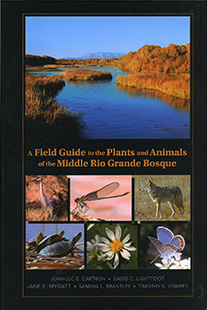
Author(s): Cartron, Jean-Luc E.; Lightfoot, David C.; Mygatt, Jane E.; Brantley, Sandra L.; Lowrey, Timothy K.
Publisher: University of New Mexico Press, 2008
ISBN: 978-0826342690
View at: Barnes & Noble, or Amazon
Comments: This volume has the ambitious goal of capturing a broad swath of life along the Rio Grande. It discusses the settings and their environmental histories, habitat types, and places to visit. It covers nonvascular plants such as lichens and fungi; vascular plants (flowering and spore-producing); invertabrate animals; and amphibians, reptiles, birds, and mammals. The section on plants makes up about a quarter of the book. It is organized by family. Blooming period is featured prominently, a good idea, since we tend to notice plants in bloom. Also included is identifying information, natural history, and whether a species is threatened. There are about three species per page, so photos tend to be smaller than with some layouts. 375 pages.
Range: From the back cover: “Extending from the spillway below Cochiti Dam, about fifty miles north of Albuquerque, to the headwaters of Elephant Butte Reservoir, near Truth or Consequences in the southern portion of New Mexico, the Middle Rio Grande Bosque is more than a cottonwood woodland or forest.”
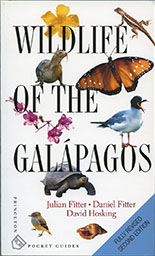
Author(s): Fitter, Julian; Fitter, Daniel; Hosking, David
Publisher: Princeton University Press, 2015
ISBN: 978-0691170428
Comments: This compact guide does an amazing job at summarizing the natural history of the Galápagos archipelago. It covers geology, vulcanism, ocean currents, ecological zones, and points of interest. It also covers animals, birds, plants, and marine animals, most with photos. It lists islands and ecological zones and some of the species to be found there. How they managed to cram all this information into a pocket guide frankly boggles the imagination! 287 pages.
Range: Galápagos Islands
Plants of the Pacific Northwest Coast
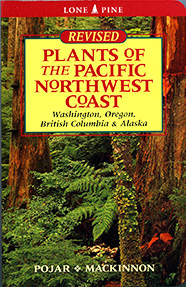
Author(s): Pojar, Jim; MacKinnon, Andy
Publisher: Lone Pine, 1994
ISBN: 978-1551055305
View at: Barnes & Noble, or Amazon
Comments: Describes 794 species, including trees, shrubs, wildflowers, aquatic plants, grasses, ferns, mosses and lichens. Includes 1100 color photos and 1000 line drawings and silhouettes. While many field guides cover wider regions and larger numbers of species, this provides deeper detail about each species in the more restricted region. If you search for wildflowers only in this region, this may be the only resource you need, and it is an excellent complement to other guides if you need to identify plants from a wider or different area. Includes keys that require moderate, but not advanced, understanding of botanical terminology. 528 pages.
Range: Washington, Oregon, British Columbia and Alaska, from the coast to the mountains.
Field Guide to the New England Alpine Summits
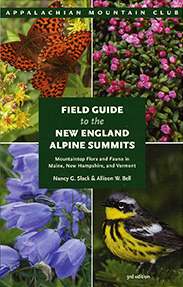
Author(s): Slack, Nancy G.; Bell, Allison W.
Publisher: Appalachian Mountain Club Books, 2013
ISBN: 978-1934028889
View at: Barnes & Noble, or Amazon
Comments: New England mountain tops can be challenging places for plants, and the species that colonize these exposed, cooler, more rugged climates are a hardy bunch. This books describes the trees, shrubs, herbacous plants, mosses, lichens, and ferns; as well as mammals, birds, insects, reptiles and amphibians that are common in this habitat, about 200 species in all. The book includes discussions of climate and geography.
Range: New England mountains
Mosses, Lichens and Ferns of Northwest North America
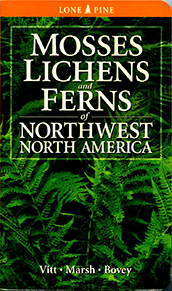
Author(s): Vitt, Dale H., Marsh, Janet E., & Bovey, Robin B.
Publisher: Lone Pine, 1988
ISBN: 978-1551055695
Comments: This 296-page guide covers about 370 species of mosses, lichens, liverworts, and ferns that are commonly found in the Pacific northwest. The guide includes range maps, photos, habitat indicators, and dichotomous keys as aids to identification. These plants can be difficult subjects, requiring microscopic examination and/or chemical tests, so there are relatively few guide books available.
Range:

Author(s): Walewski, Joe
Publisher: Kollath+Stensaas Publishing, 2007
ISBN: 978-0979200601
View at: Barnes & Noble, or Amazon
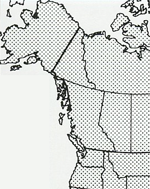
Comments: You might think that such a limited geographic area (see the range map) would limit the usefulness of this book, but you would be wrong. I have successfully identified many New England lichens using this reference. This 152-page book covers 111 species of lichens, organized first by what they grow on (the ground, rocks, or trees). The concise, attractive layout lists a description, chemical tests, similar species, and nature notes, together with a photo for each species. This is a great place to start if you are interested in lichens.
Range:

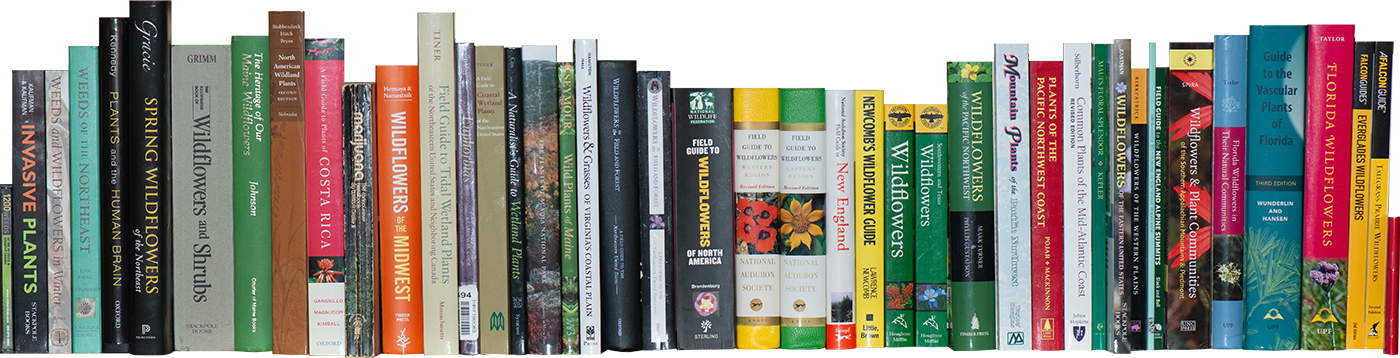
Note: book cover sizes in the list below are shown relative to each other. The list is organized by primary author. Some out-of-copyright books are available free at the supplied links.