Brassica integrifolia Rupr.
Brassica japonica Thunb.
Brassica juncea (L.) Czern. var. crispifolia L.H. Bailey
Brassica juncea (L.) Czern. var. japonica (Thunb.) L.H. Bailey
Brassica willdenowii Boiss.
Sinapis juncea L.
Brassica juncea (L.) Czern.
Brown mustard, mustard greens, Indian mustard, Chinese mustard, kai choi
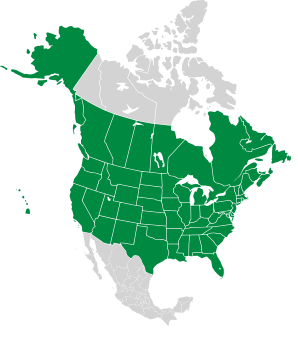
Brown mustard originated in Asia, but has become naturalized throughout North America
Plants: Up to 3′ (1 m) tall, with long, erect branches.
Leaves: Lower leaves have petioles (stems), are green but sometimes with a whitish covering, ovate to obovate, with various undulating margins that might be called toothed, scalloped, or frilled. Upper leaves are on shorter stems or sessile, 1–2 ⨉ 1/16–⅛″ (3–6 cm ⨉ 2–3.5 mm), sometimes constricted, thinning to a short seedless beak ⅛–⅜″ (5–10 mm) long.
Flowers: Flowers are pale yellow, a bit scraggly, with four petals, about ½″ (1.3 cm) around. They appear in June.
Fruits: Fruits are shaped like thin beans, ½–1½″ (1.5–4 cm) long. Seeds are miniscule: there are well over 15,000 in an ounce.
Habitats: Moist, well-drained soils in a wide range of climates.
Edibility: Leaves, flowers, and young flowering stems are peppery flavored, eaten raw or cooked. Seeds are used to create prepared brown mustard. Brown mustard shows up in various forms in a wide variety of Asian, African, and American cuisines.
Online References:

7/27/2015 · Two Lights, Cape Elizabeth, Maine · ≈ 1¾ × 2″ (4.9 × 5.2 cm) 
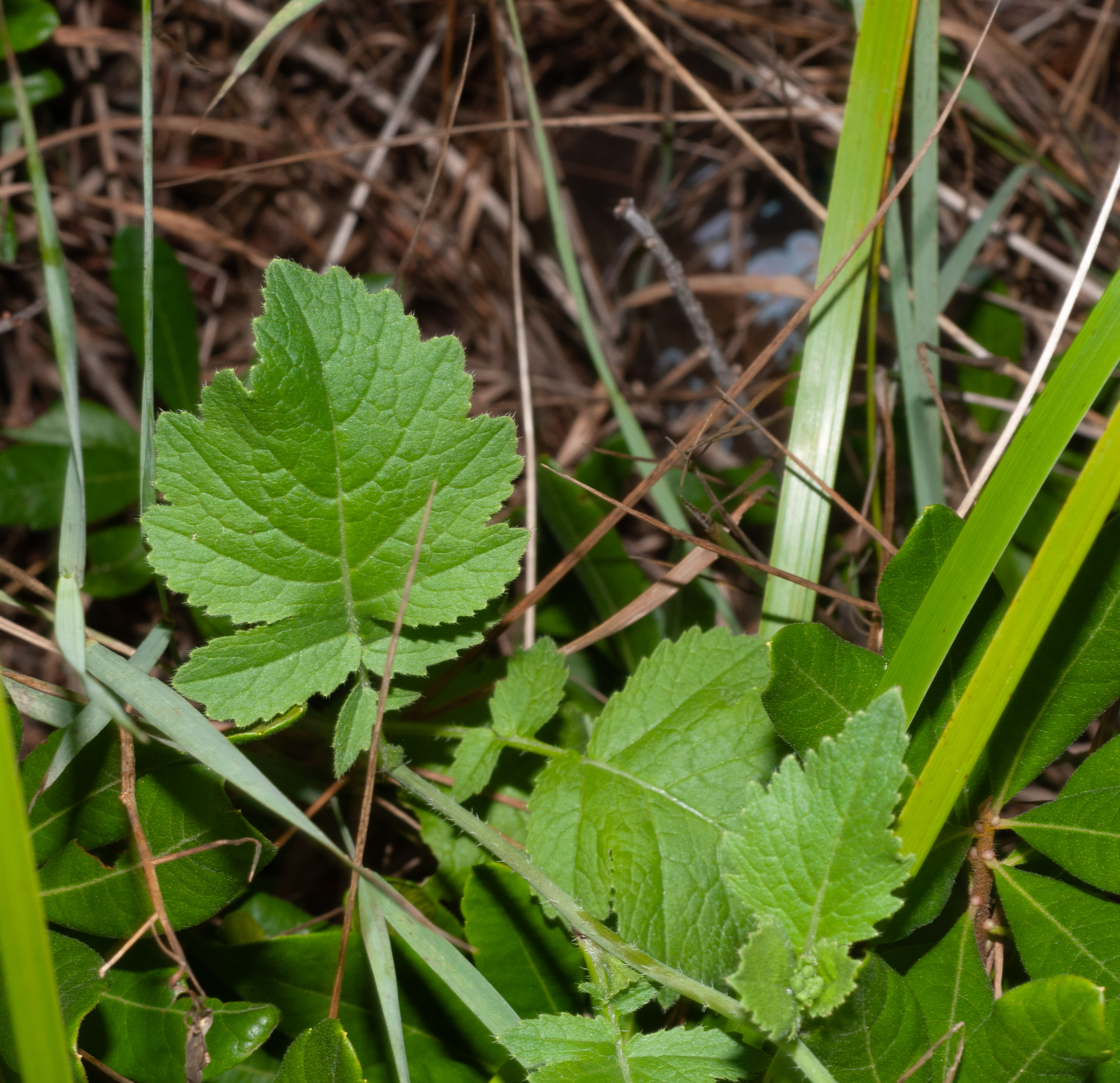
7/17/2010 · Kennebunkport, Maine · ≈ 6 × 6″ (16 × 15 cm)  ID is uncertain

7/15/2012 · Fort Point State Park, Stockton Springs, Maine · ≈ 3 × 3″ (7.8 × 8 cm) ID is uncertain 

7/15/2012 · Fort Point State Park, Stockton Springs, Maine · ≈ 8 × 5″ (19 × 13 cm) ID is uncertain 
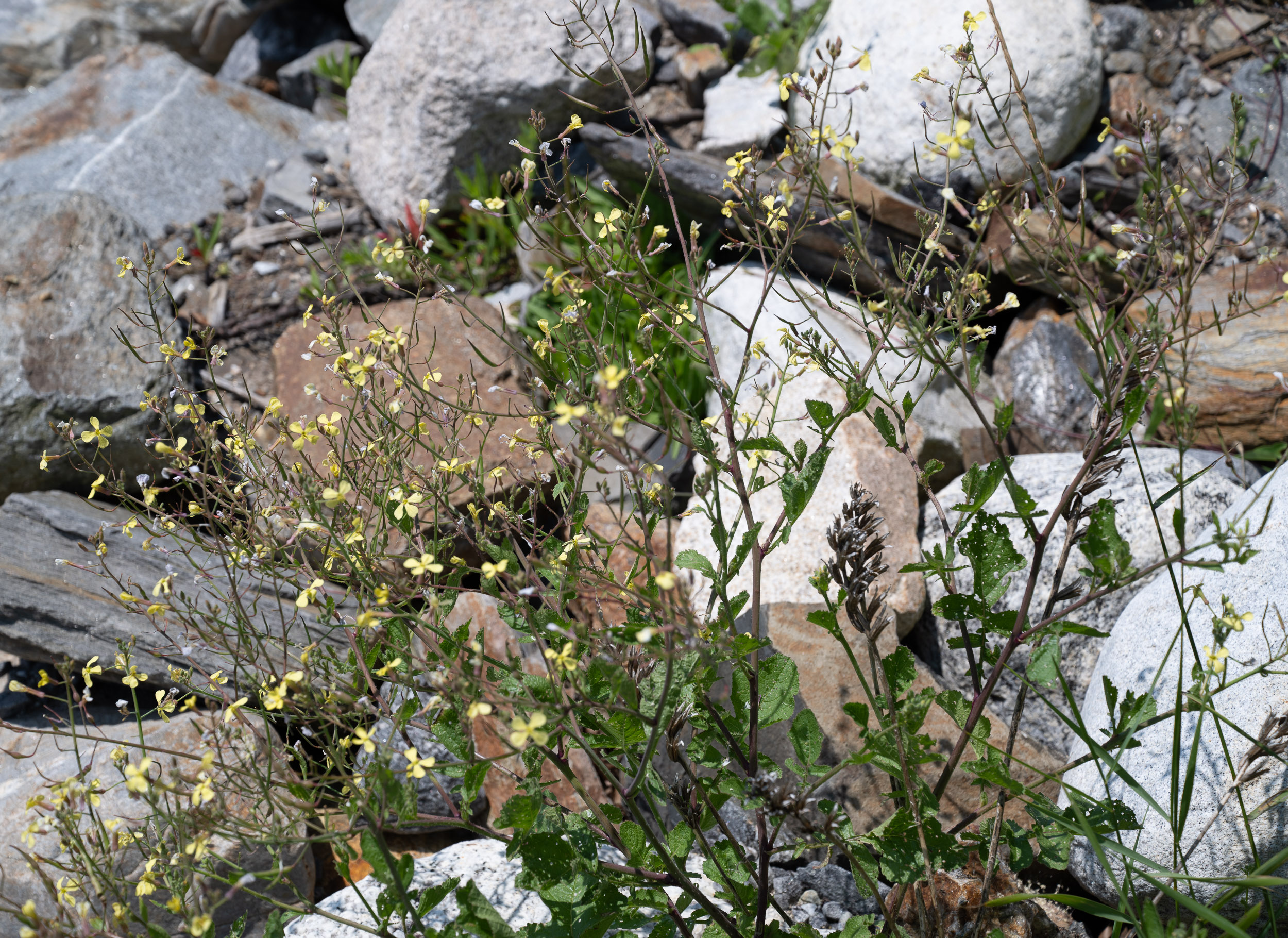
8/2/2025 · Land’s End, Bailey Island, Maine · ≈ 3 × 2′ (88 × 64 cm) 
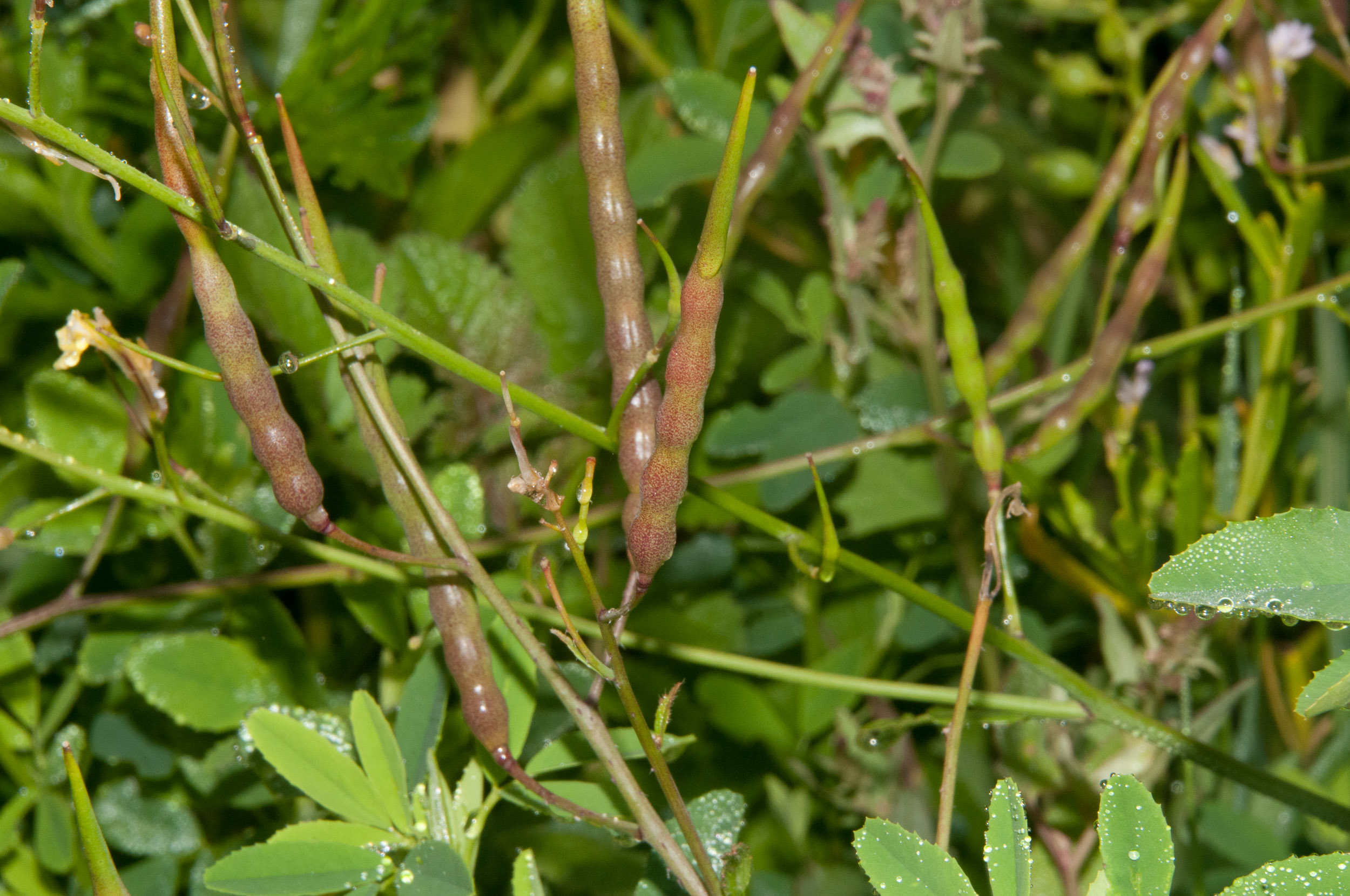
7/27/2015 · Two Lights, Cape Elizabeth, Maine · ≈ 3½ × 2½″ (9.4 × 6.3 cm) 

7/15/2012 · Fort Point State Park, Stockton Springs, Maine · ≈ 14 × 11″ (34 × 26 cm) ID is uncertain 

7/15/2012 · Fort Point State Park, Stockton Springs, Maine · ≈ 13 × 10″ (33 × 25 cm) ID is uncertain 

7/17/2010 · Kennebunkport, Maine · ≈ 4½ × 3½″ (11 × 9.2 cm) ID is uncertain 
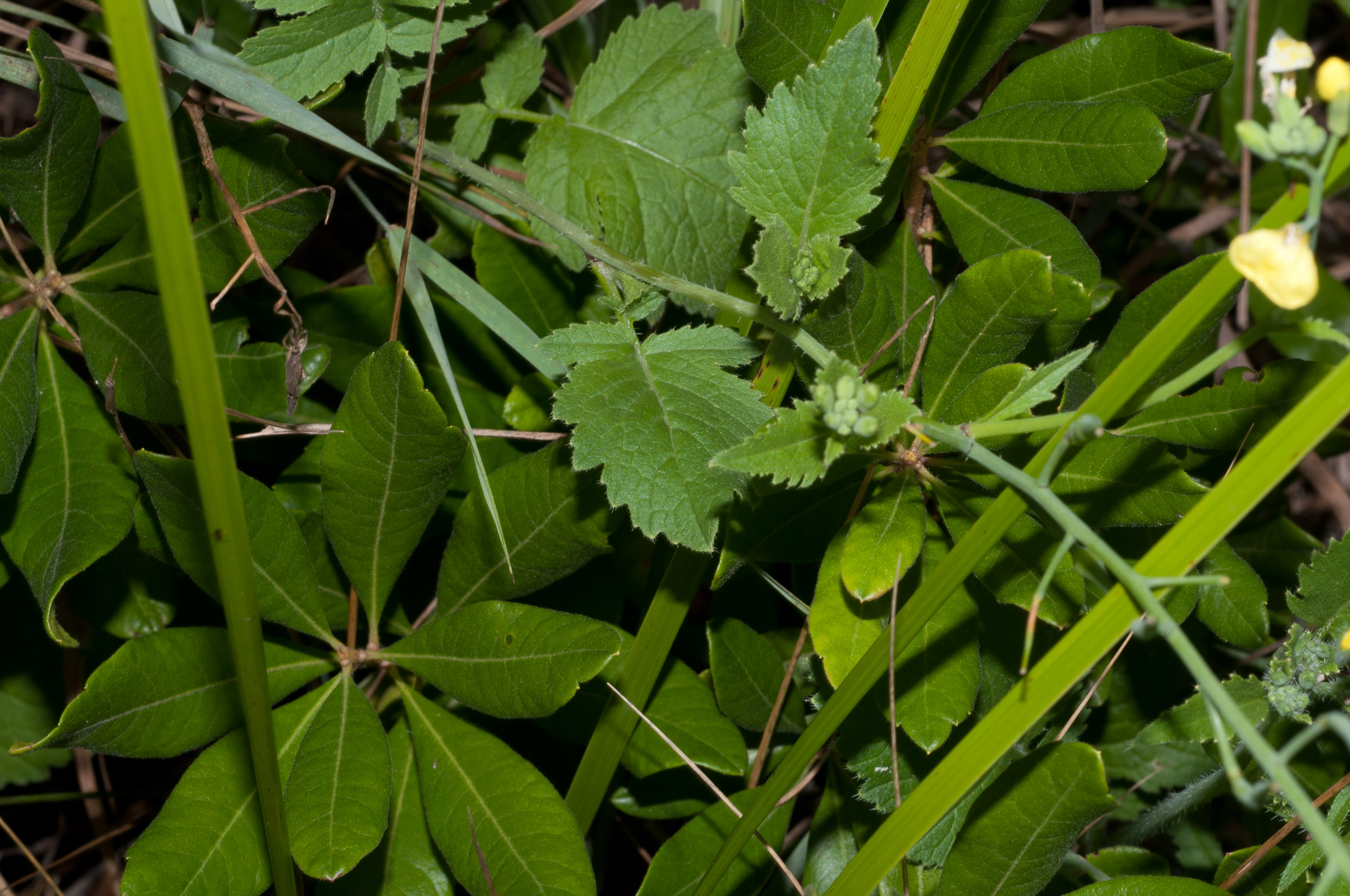
7/17/2010 · Kennebunkport, Maine · ≈ 9 × 6″ (22 × 14 cm) ID is uncertain 
| Kingdom | Plantae | Plants, but not fungi, lichens, or algae (from Stearn's Botanical Latin) |
| Subkingdom | Tracheobionta | Vascular plants—plants with a “circulatory system” for delivering water and nutrients |
| Division | Magnoliophyta | Flowering plants, also known as angiosperms |
| Class | Magnoliopsida | Dicotyledons—plants with two initial seed leaves |
| Subclass | Rosidae | Roses, legumes, proteas, dogwoods, hydrangeas, mistletoes, euphorbias, grapes, many more |
| Order | Brassicales | Mustard, cabbage, caper, papaya, nasturtiums, many others; most produce mustard oil |
| Family | Brassicaceae | Mustards, cabbages |
| Genus | Brassica | A Latin name for “cabbage” |
| Species | juncea | Rush-like, referring to the leafless stems of this plant |
Brassica juncea description by Thomas H. Kent, not updated.

© FloraFinder.org. All rights reserved.