Brassica nigra (L.) W.D.J. Koch
Black mustard
Black mustard is native to tropical North Africa, temperate regions of Europe, and parts of Asia. It is naturalized throughout most of North America. The plant contains glucosinolates, chemicals that deter herbivores.
Plants: 2–8′ (60–243 cm) tall, branching sometimes. Stems are smooth near the top, become sparsely to densely hairy near the base. They are covered with a waxy substance that rubs off easily.
Leaves: alternate, up to 10 ⨉ 3″ (25 ⨉ 7.6 cm) in size, on long stalks (petioles). They are deeply divided.
Flowers: Yellow, with four petals, in clusters at stem tips. Each petal is ¼–⅜″ (7–11 mm) long and 1/16–⅛″ (3–4 mm) wide.
Fruits: Long narrow upward-pointing seedpods are ⅜–⅞″ (1–2.5 cm) in length. Each seedpod contains four rounded black or brown seeds.
Habitats: Disturbed soils, river or stream floodplains, lake shores, and meadows and fields.
Edibility: Black or dark brown seeds are commonly used, after removing seed coats and grinding, as a curry spice or similar flavoring agent.
Medical: Mustard or other pastes made from the seeds were once used to treat respiratory ailments or relieve muscular pains.
Online References:
Sinapis nigra L.
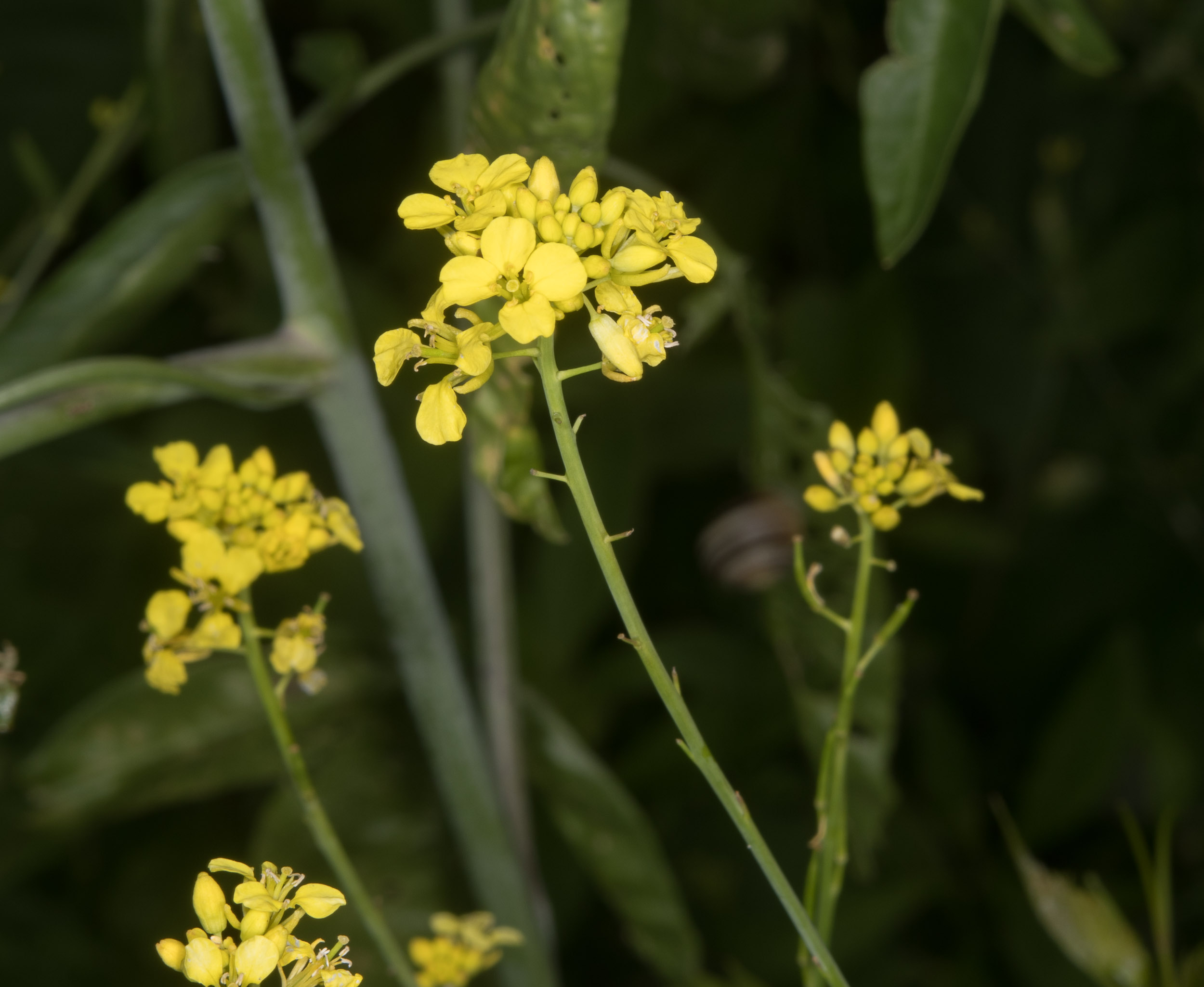
7/19/2017 · Monongahela National Forest, Monongahela, West Virginia · ≈ 4 × 3″ (10 × 8.3 cm) 
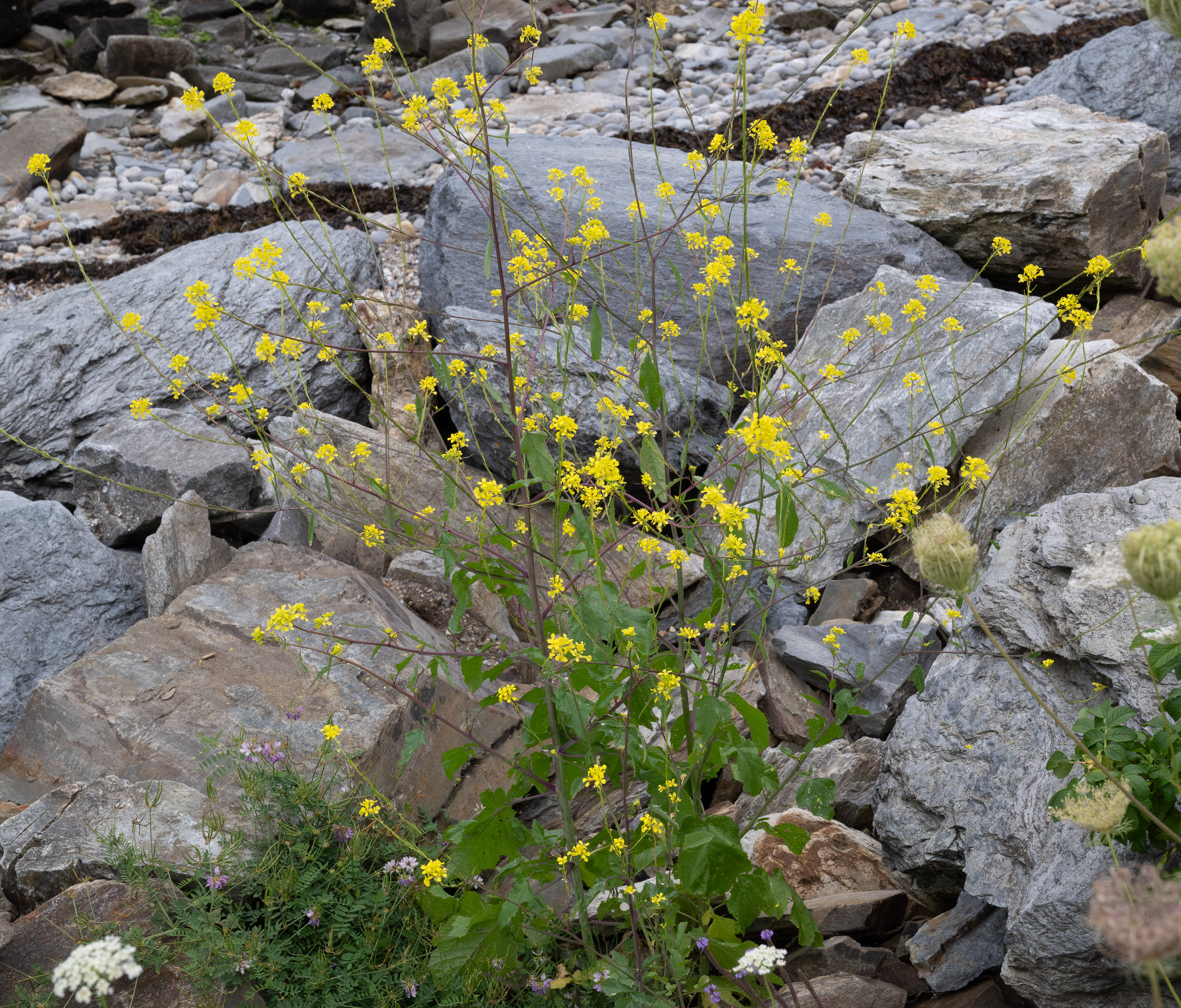
8/20/2025 · Peaks Island, Maine 

8/20/2025 · Peaks Island, Maine · ≈ 17 × 11″ (43 × 28 cm) 
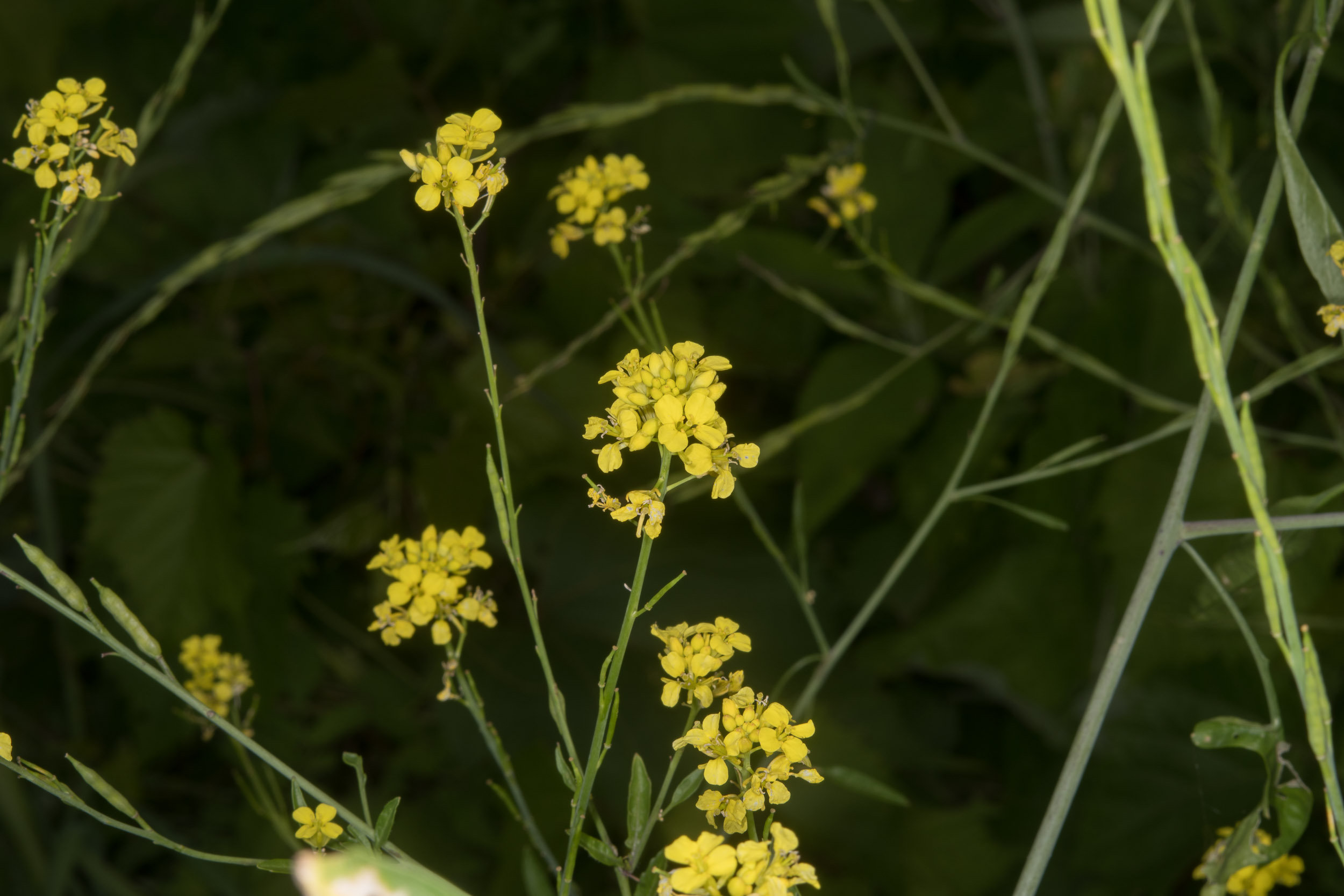
7/19/2017 · Monongahela National Forest, Monongahela, West Virginia · ≈ 8 × 5″ (20 × 13 cm) 
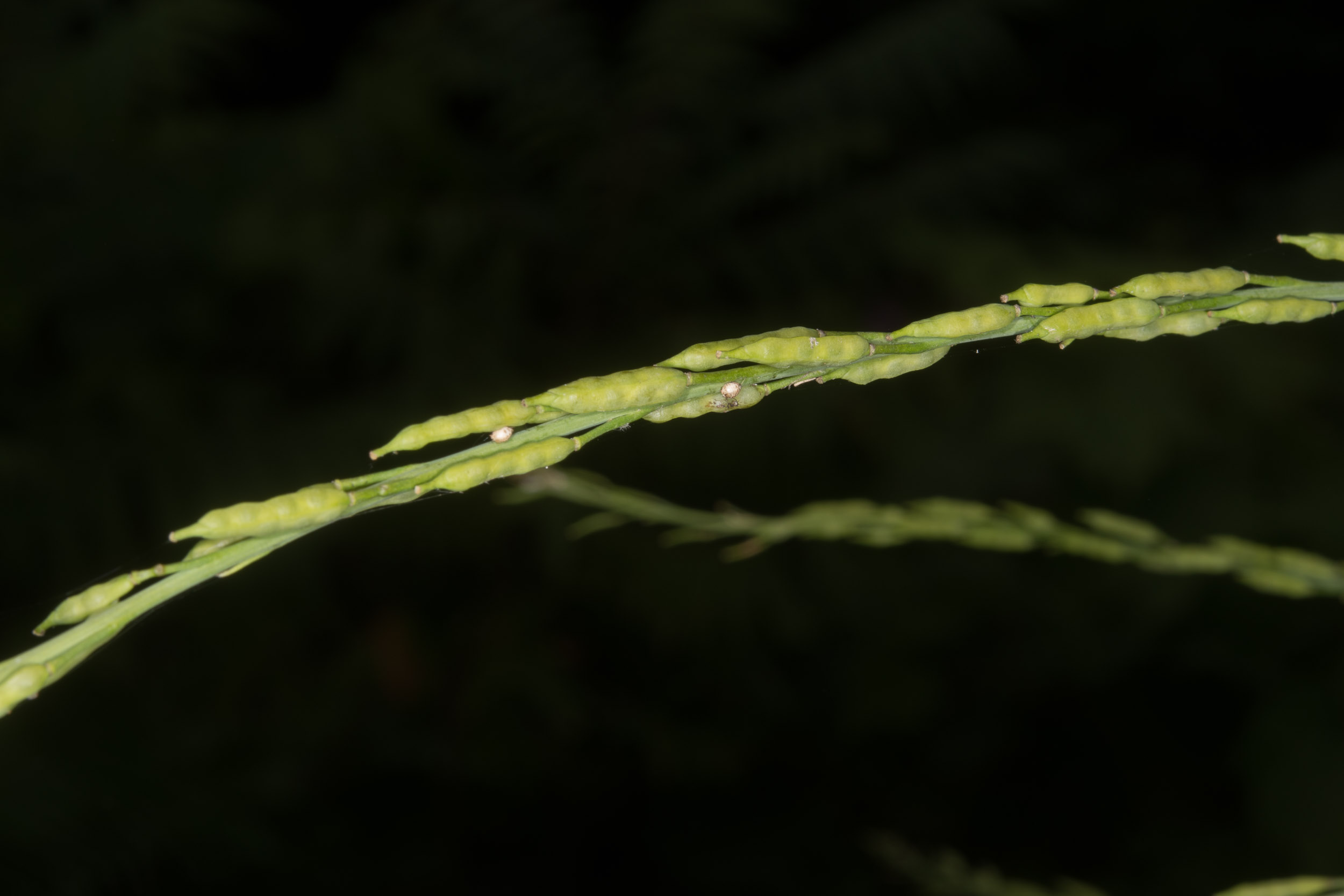
7/19/2017 · Monongahela National Forest, Monongahela, West Virginia · ≈ 6 × 4″ (14 × 10 cm) 

8/20/2025 · Peaks Island, Maine · ≈ 17 × 11″ (43 × 28 cm) 
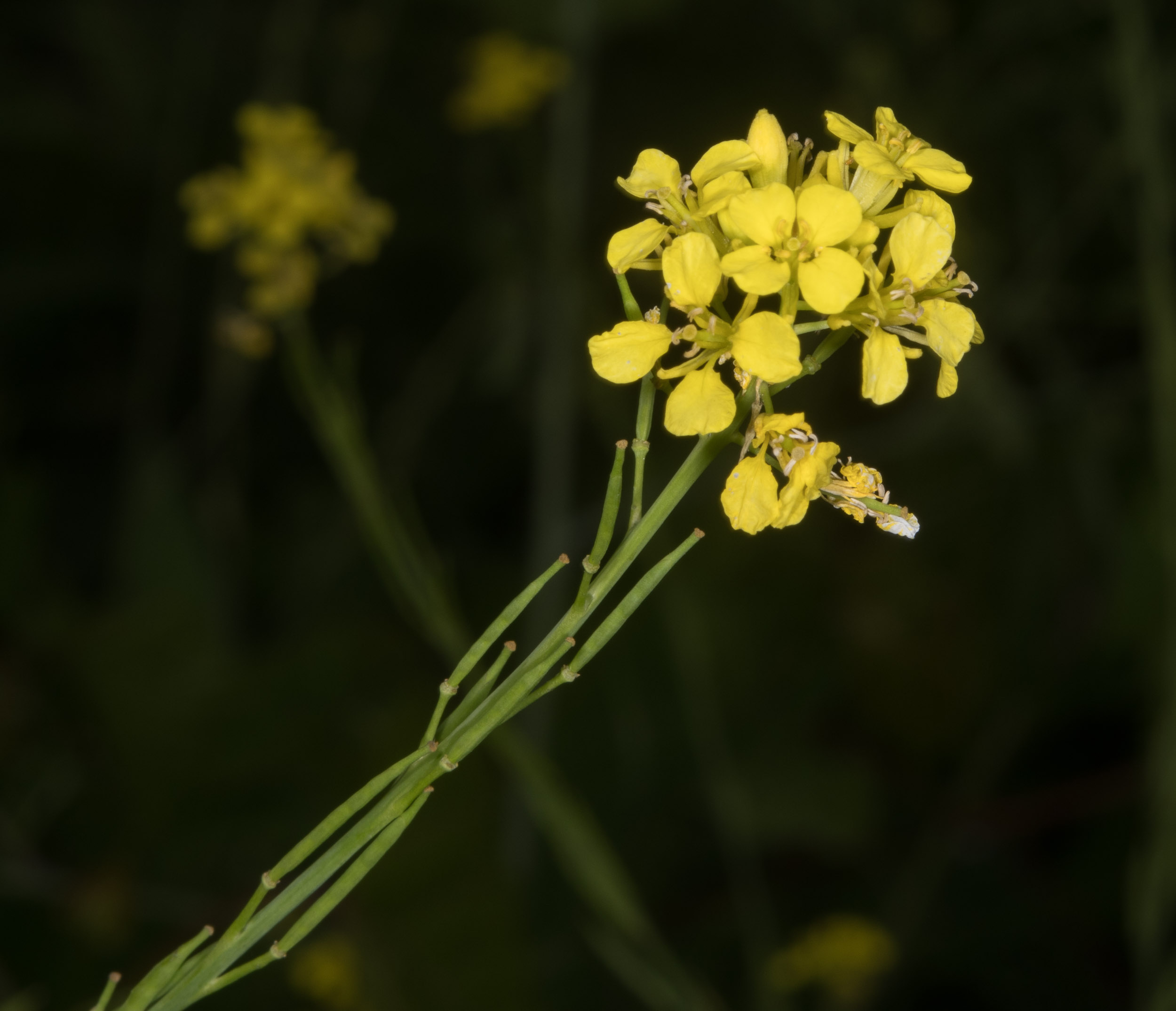
7/19/2017 · Monongahela National Forest, Monongahela, West Virginia · ≈ 3½ × 3″ (8.6 × 7.4 cm) 
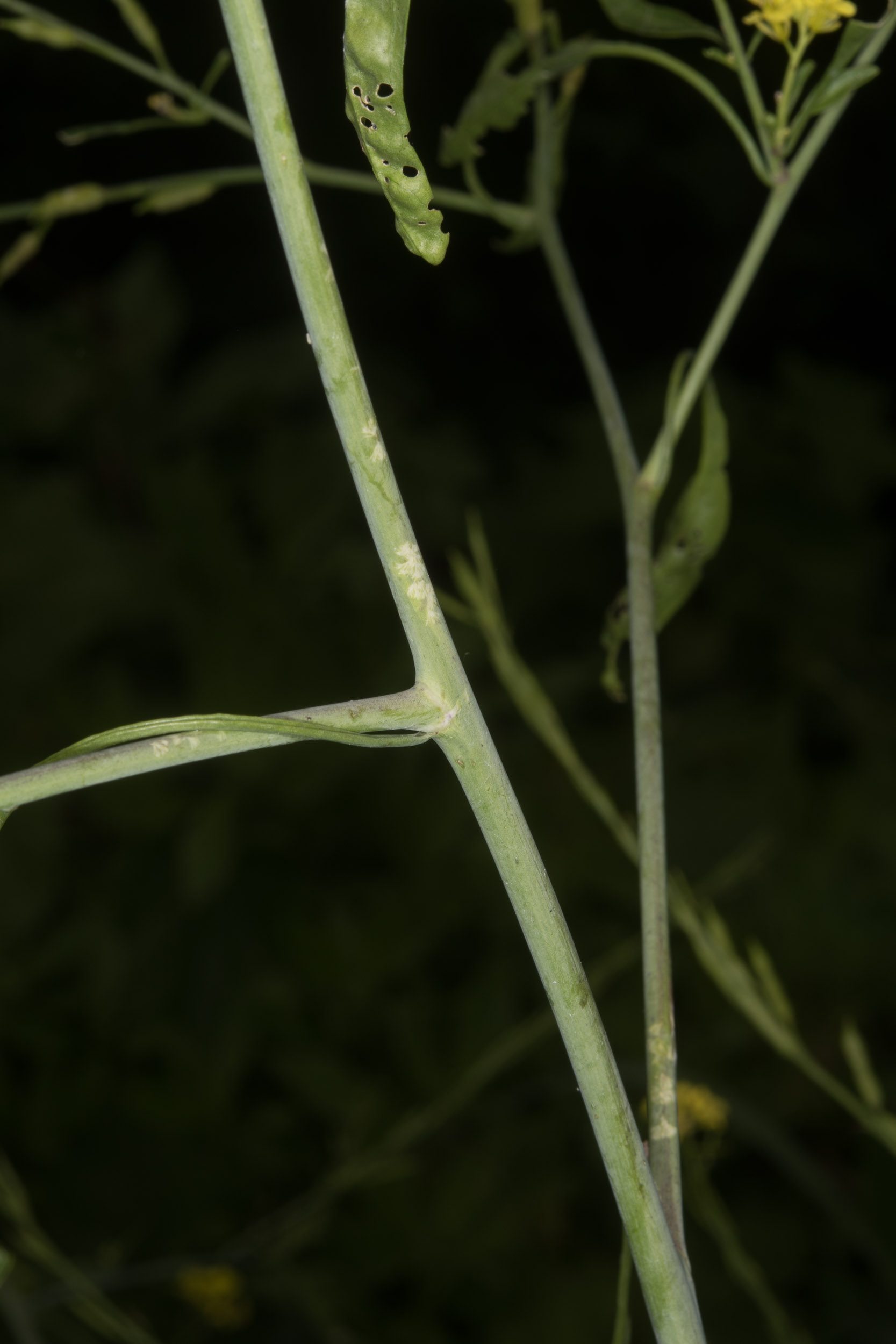
7/19/2017 · Monongahela National Forest, Monongahela, West Virginia · ≈ 4 × 6″ (10 × 15 cm) 
| Kingdom | Plantae | Plants, but not fungi, lichens, or algae (from Stearn's Botanical Latin) |
| Subkingdom | Tracheobionta | Vascular plants—plants with a “circulatory system” for delivering water and nutrients |
| Division | Magnoliophyta | Flowering plants, also known as angiosperms |
| Class | Magnoliopsida | Dicotyledons—plants with two initial seed leaves |
| Subclass | Rosidae | Roses, legumes, proteas, dogwoods, hydrangeas, mistletoes, euphorbias, grapes, many more |
| Order | Brassicales | Mustard, cabbage, caper, papaya, nasturtiums, many others; most produce mustard oil |
| Family | Brassicaceae | Mustards, cabbages |
| Genus | Brassica | A Latin name for “cabbage” |
| Species | nigra | Black, referring to the color of the seeds |
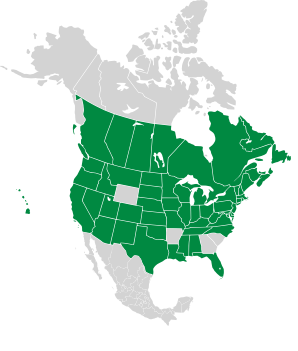
Brassica nigra description by Thomas H. Kent, not updated.

© FloraFinder.org. All rights reserved.