Cantharellus cibarius
Chanterelle, golden chanterelle
The chanterelles described here actually aren’t Cantharellus cibarius, which is, according to research described on www.mushroomexpert.com, a purely European species. Other variants are unique to western or eastern North America. But the name will have to do until the newly discovered variants are fully sorted out. They occur in mixed woodlands, and especially under birches, where they attach to tree roots. They smell faintly of apricots.
Identification: Chanterelles are yellow or golden in color, and shaped like a trumpet, with a wavy, irregular “bell” or cap. The mushrooms are 1¾–4″ (5–10 cm) in height. The cap is 1–4″ (3–10 cm) in diameter, and its center is often depressed. The stipe (stem) is flared at the top, and the flared portion is covered with “false gills.” The stipe is 1–3″ (2.5–7.6 cm) long and ½–1″ (1.3–2.5 cm) wide. The gill-like structures are veins, for lack of a better term. They are roughly vertically oriented, but especially near the top, they tend to branch out into a veinlike network. This distinguishes them from false chanterelles.
Edibility: This table lists several species that are sometimes confused. Two of them are poisonous, so don’t take any chances!
| Chanterelle (Cantharellus cibarius) et. al. | Edible, choice. Other similar-appearing chanterelles, such as Cantharellus lateritius are also edible. |
| False chanterelle (Hygrophoropsis aurantiaca) |  Accounts of toxicity vary. At best, it is unappealing, and several sources describe it as causing serious digestive problems, in part because of a type of sugar alcohol called arabitol. Accounts of toxicity vary. At best, it is unappealing, and several sources describe it as causing serious digestive problems, in part because of a type of sugar alcohol called arabitol. |
| Eastern jack-o’lantern mushroom (Omphalotus illudens) | Very poisonous, due to the presence of illudin S and illudin M, toxic compounds
first isolated from this species. |
| Hedgehog mushrooms (Hydnum repandum) | Edible; nearly as good as chanterelles. |
Online References:

10/7/2018 · Shepley Hill, Groton, Massachusetts 

9/4/2021 · Bradbury Mountain State Park, Pownal, Maine · ≈ 2½ × 3″ (6.6 × 8.1 cm) 

10/7/2018 · Shepley Hill, Groton, Massachusetts 

8/21/2018 · Oak Hill, Littleton, Massachusetts · ≈ 5 × 4½″ (13 × 11 cm) 

10/7/2018 · Shepley Hill, Groton, Massachusetts 
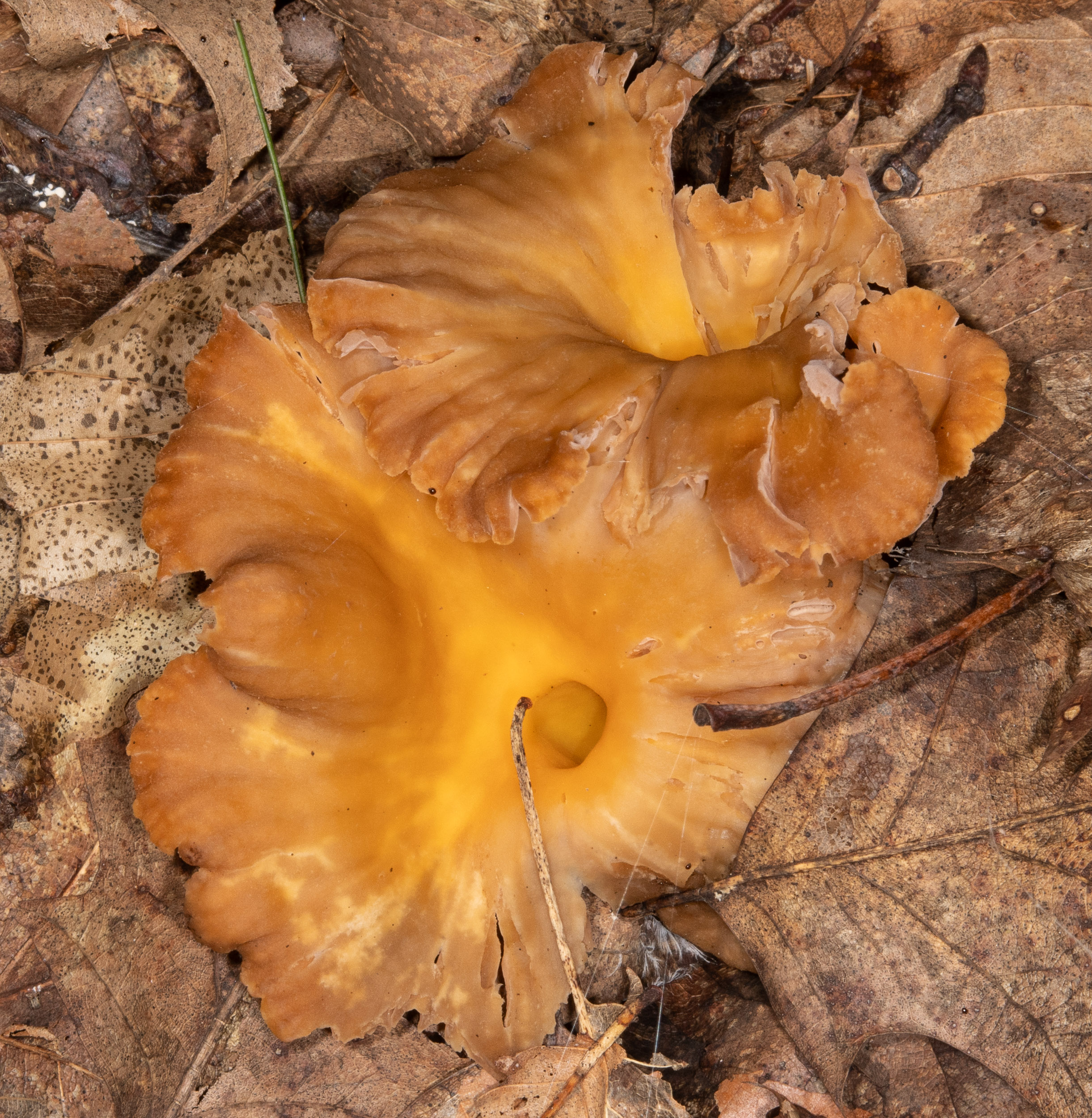
8/21/2018 · Oak Hill, Littleton, Massachusetts · ≈ 4½ × 4½″ (11 × 12 cm) 
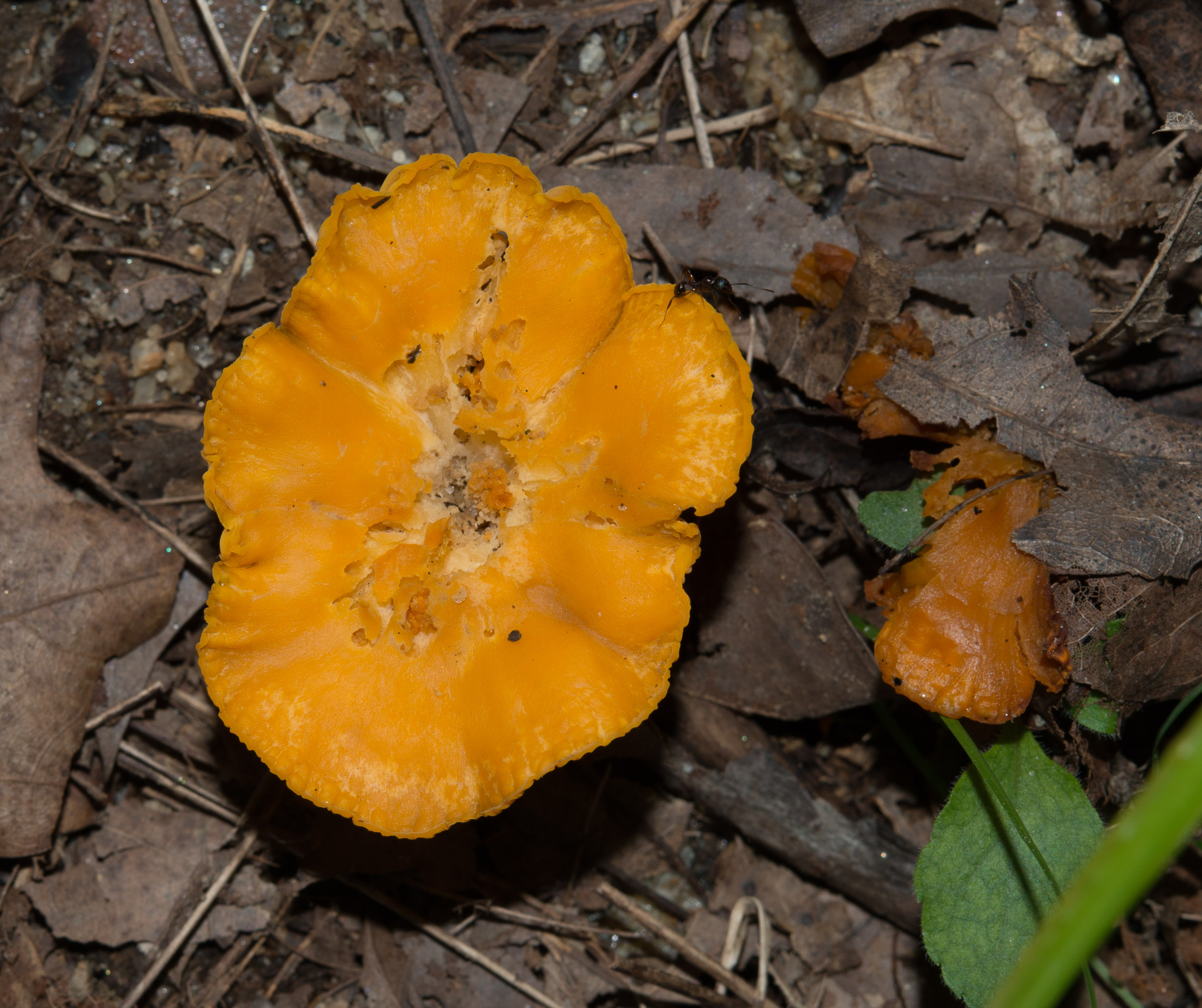
These might also be poisonous Omphalotus olearius mushrooms · 7/28/2013 · Andres Institute of Art, Big Bear Mountain, Brookline, New Hampshire · ≈ 4½ × 3½″ (11 × 9.4 cm)  ID is uncertain

8/12/2023 · Highlands Trail via Pismire Bluffs Trail, Raymond Community Forest, Raymond, Maine · ≈ 3½ × 3″ (9.3 × 8.3 cm) 
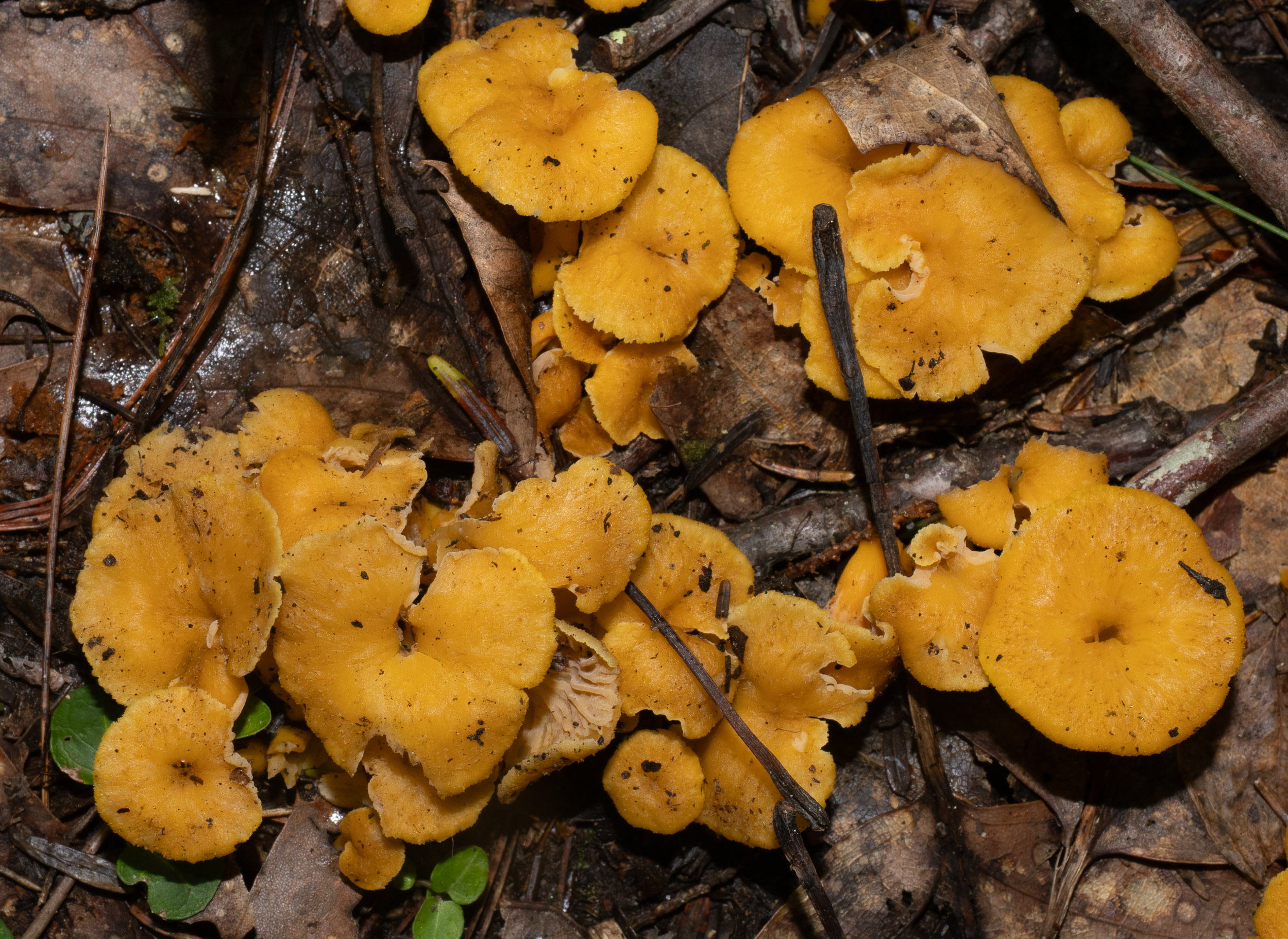
8/5/2023 · Oven’s Mouth Preserve, West Preserve, Boothbay, Maine 

8/12/2023 · Highlands Trail via Pismire Bluffs Trail, Raymond Community Forest, Raymond, Maine · ≈ 4 × 3″ (10 × 8.1 cm) 

These might also be poisonous Omphalotus olearius mushrooms · 7/25/2013 · Beaver Brook Conservation Area, Hollis, New Hampshire · ≈ 9 × 7″ (22 × 16 cm) ID is uncertain 

8/27/2023 · Tenants Harbor, Maine 

8/21/2018 · Oak Hill, Littleton, Massachusetts · ≈ 4½ × 3½″ (11 × 9.6 cm) 
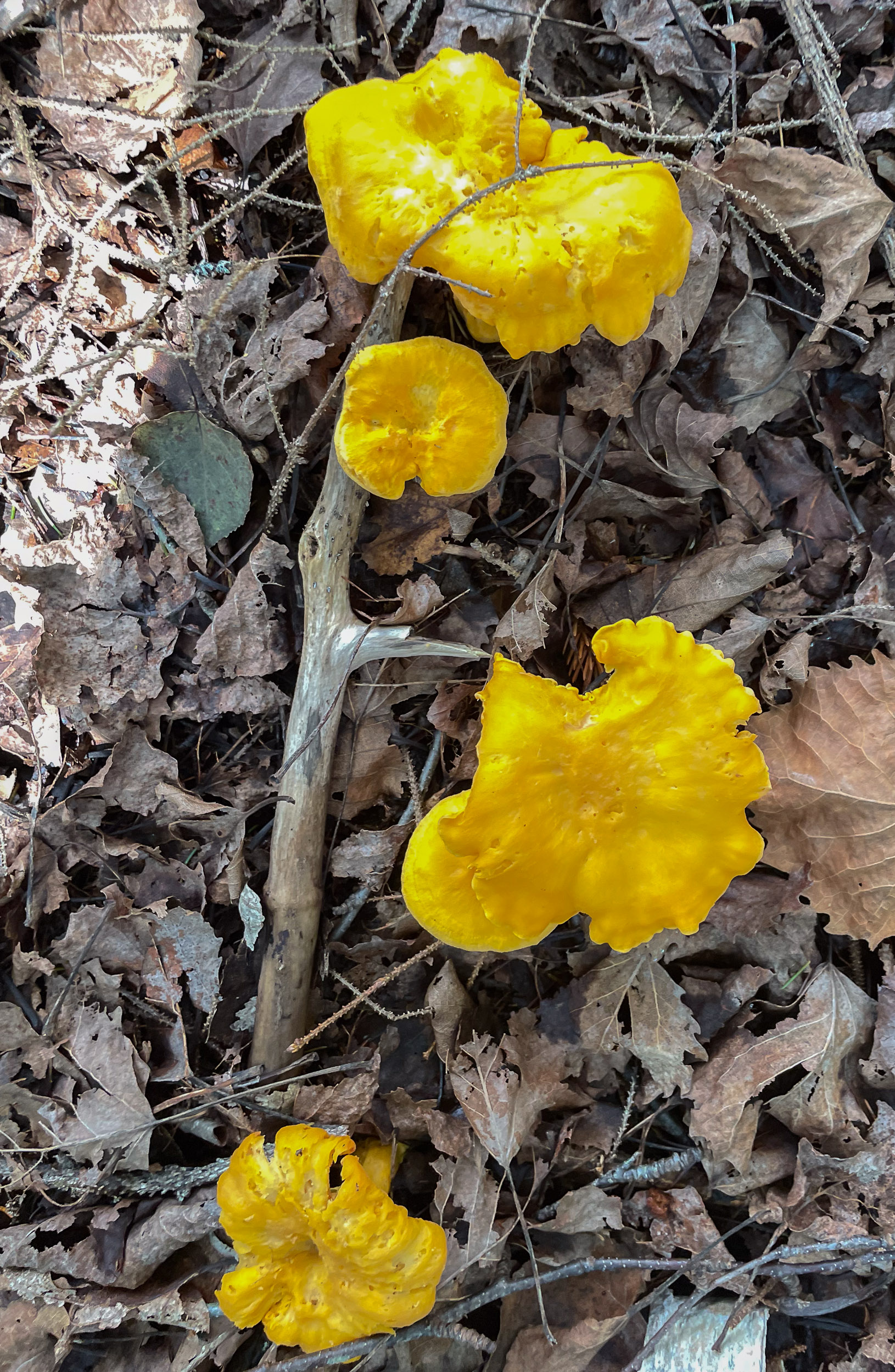
8/27/2023 · Tenants Harbor, Maine 
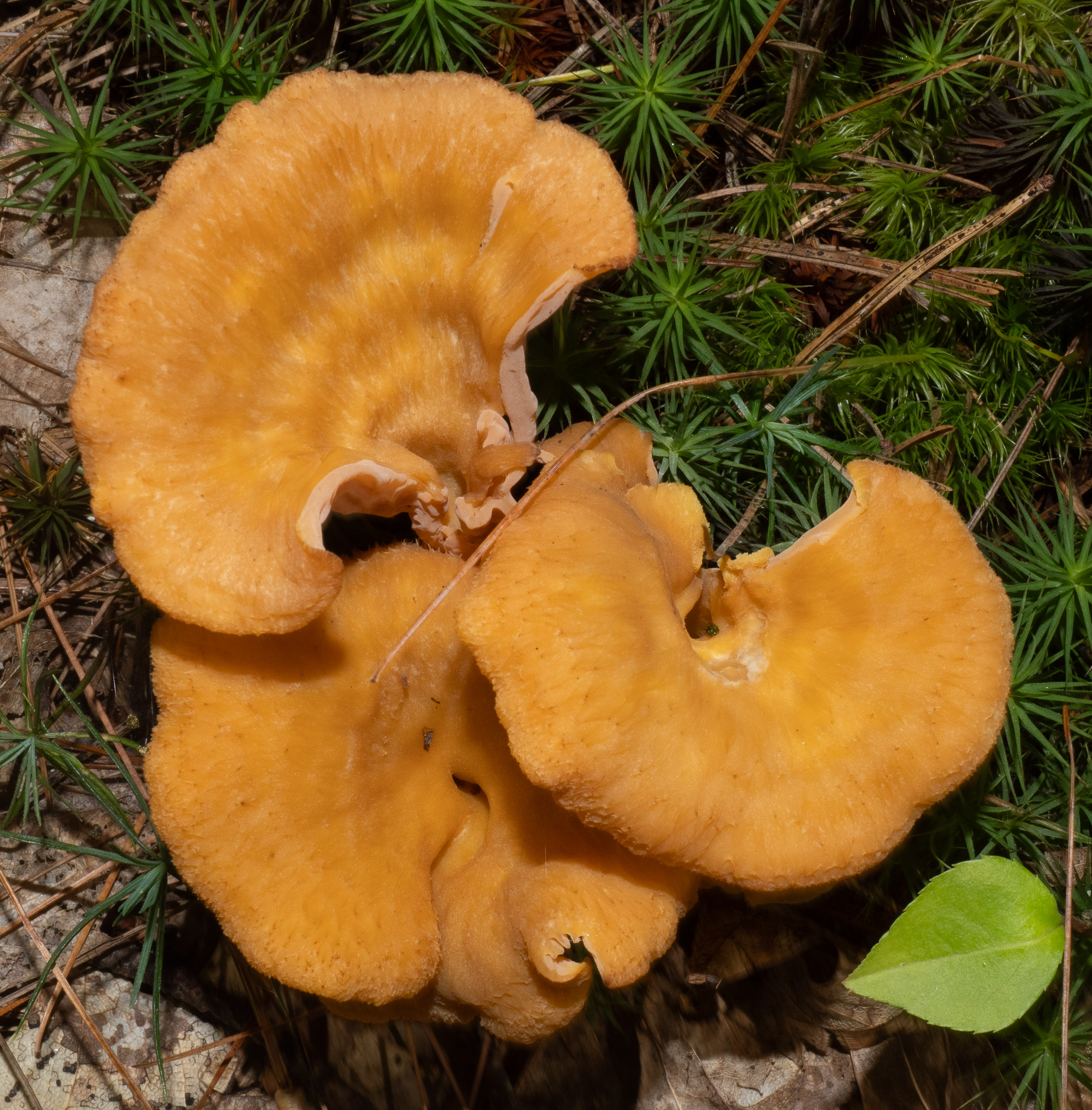
8/2/2023 · Higgins Mountain, Georgetown, Maine 
| Roughly 75 people in North America are poisoned each year by mushrooms, often from eating a poisonous species that resembles an edible species. Though deaths are rare, there is no cure short of a liver transplant for severe poisoning. Don’t eat any mushroom unless you are absolutely certain of its identity! Please don’t trust the identifications on this site. We aren’t mushroom experts and we haven’t focused on safely identifying edible species. |
Cantharellus cibarius description by Thomas H. Kent, not updated.

© FloraFinder.org. All rights reserved.