Cereus giganteus Engelm.
Carnegiea gigantea (Engelm.) Britton & Rose
Saguaro, giant saguaro
There is nothing like a saguaro. (Well, almost nothing. It looks fairly similar to cardón, an example of convergent evolution, wherein unrelated species sometimes evolve identical forms to adapt to similar habitats in different locations.) These tall, long-lived cacti (up to 150 years) are iconic of the American southwest. In fact, though, this is more due to moviemakers than to actual geographic distribution. Saguaros are found only in the Sonoran Desert—Arizona, a tiny part of California, and the Mexican states of Baja California and Sonora. Sometimes a single column, sometimes branched, they serve as condominiums for birds and a few small mammals. Saguaros are on the decline now, increasingly protected.
These plants have always struck me as precariously top-heavy in appearance, with their relatively narrow, often dried looking bases and heavy, water-filled arms. But they possess a very strong support framework that persists, like an eerie skeleton, long after the cactus dies.
Plants: Saguaros reach 50′ (15 m) in height and up to 2′ (60 cm) in diameter, growing slowly. They remain a single column until they are about 75 years old, when they usually develop branches. Their size and shape are unmistakable.
Flowers: White with yellow centers, about 3½–5″ (8.9–12 cm) around, appearing at branch tips. They bloom from May to early June.
Fruits: Deep red fruits are 2–3½″ (6–9 cm) long. They ripen in June. Each fruit contains about 2,000 seeds, plus sweet, fleshy connective tissue.
Habitats: The Sonoran desert.
Edibility: Saguaro fruits and seeds are moderately digestible, and served as a major food source for the Papago and Pima Indians.
Online References:

8/31/2013 · Lewis Ginter Botanical Garden, Richmond, Virginia · ≈ 1½ × 2′ (53 × 69 cm) 

11/6/2005 
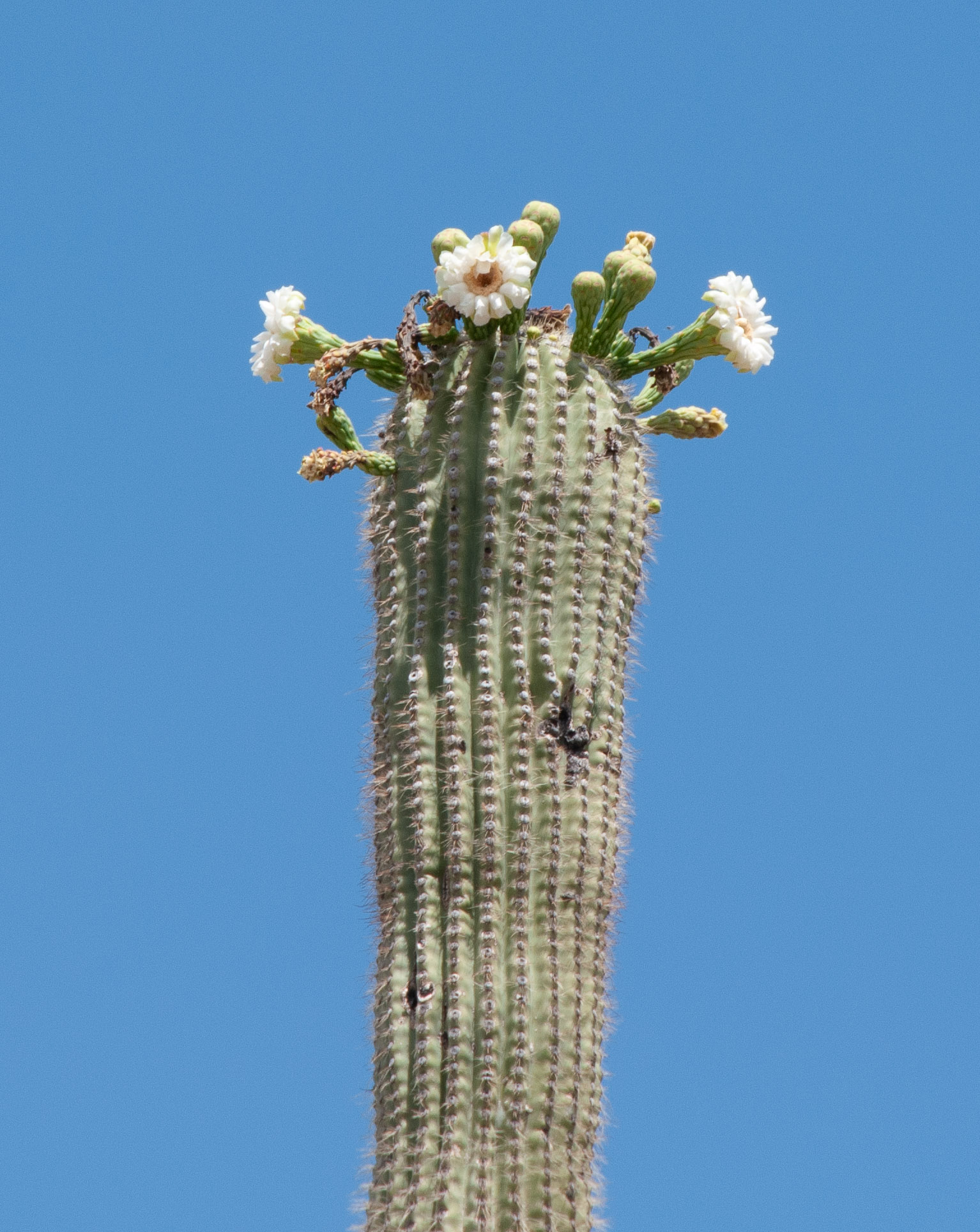
5/24/2009 · Arizona Sonora Desert Museum, Tucson, Arizona 

11/6/2005 
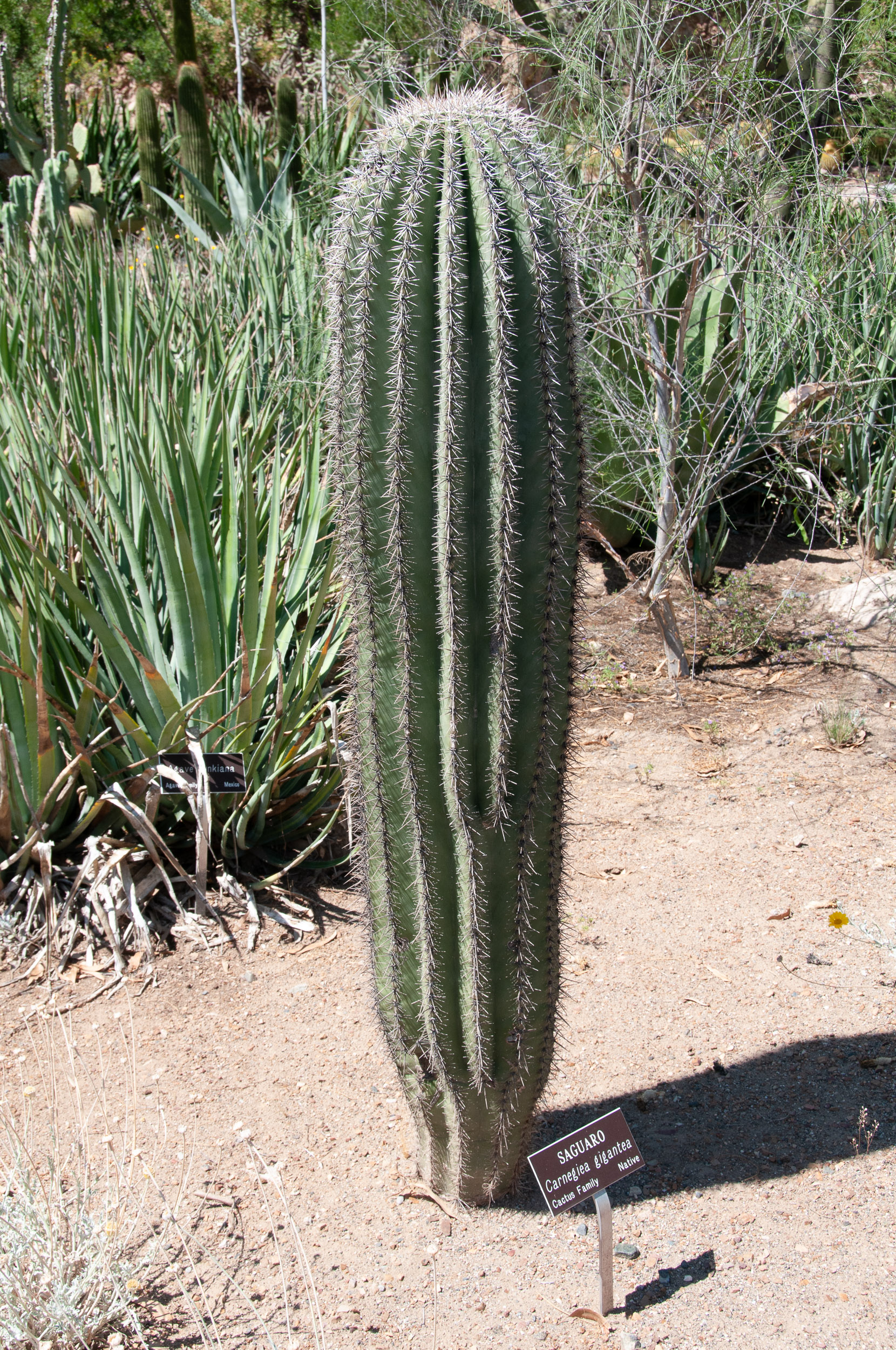
5/25/2009 · Boyce Thompson Arboretum, Superior, Arizona 

5/24/2009 · Arizona Sonora Desert Museum, Tucson, Arizona 

5/24/2009 · Saguaro National Park, Arizona 

5/24/2009 · Arizona Sonora Desert Museum, Tucson, Arizona · ≈ 2 × 3′ (62 × 93 cm) 

5/25/2009 · Rancho Sonora, Florence, Arizona 

5/24/2009 · Saguaro National Park, Arizona 
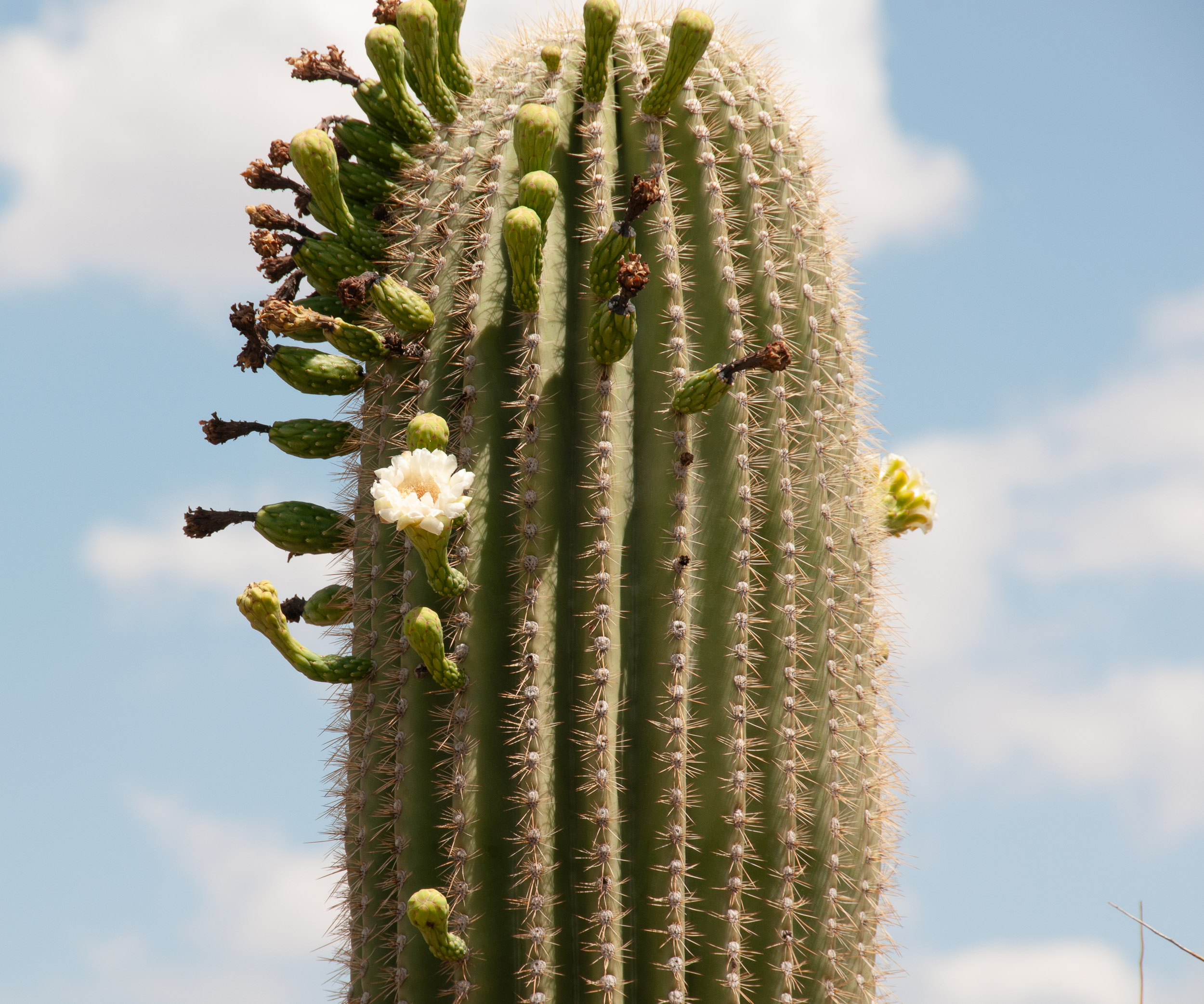
5/24/2009 · Arizona Sonora Desert Museum, Tucson, Arizona 

5/24/2009 · Saguaro National Park, Arizona 
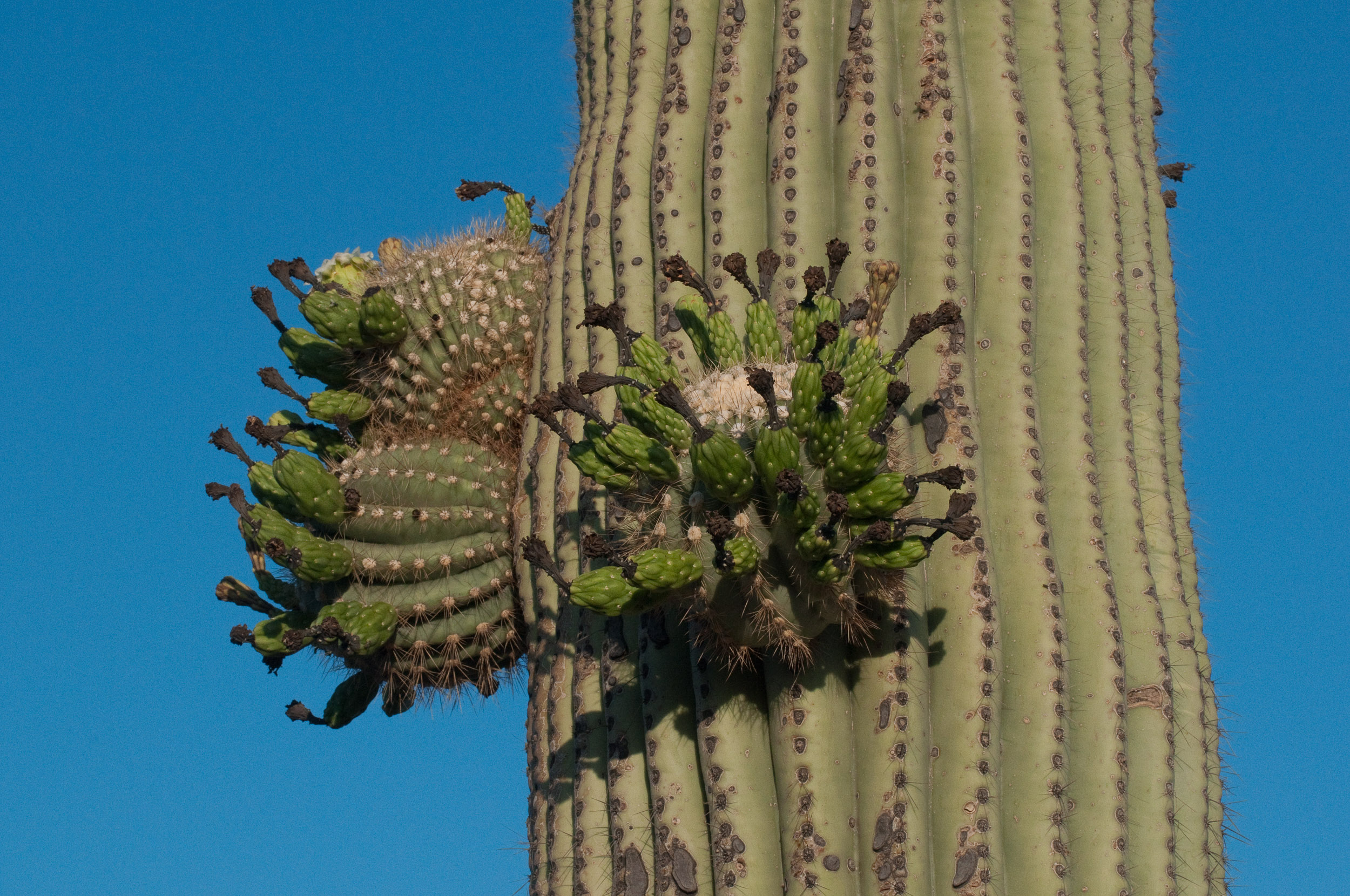
5/25/2009 · Rancho Sonora, Florence, Arizona 

The short guys in the foreground are teddy bear chollas. · 5/25/2009 · Tonto National Monument, Arizona 

5/24/2009 · Arizona Sonora Desert Museum, Tucson, Arizona  ID is uncertain
| Kingdom | Plantae | Plants, but not fungi, lichens, or algae (from Stearn's Botanical Latin) |
| Subkingdom | Tracheobionta | Vascular plants—plants with a “circulatory system” for delivering water and nutrients |
| Division | Magnoliophyta | Flowering plants, also known as angiosperms |
| Class | Magnoliopsida | Dicotyledons—plants with two initial seed leaves |
| Subclass | Caryophyllidae | Cacti, many other succulents, carnivorous plants, and leadworts |
| Order | Caryophyllales | Includes cacti, carnations, amaranths, ice plants, and many carnivorous plants |
| Family | Cactaceae | Succulent (water-storing) plants, often spiny |
| Genus | Carnegiea | Named for the Scottish philanthropist Andrew Carnegie (1835-1919) |
| Species | gigantea | “Gigantic” |
Carnegiea gigantea description by Thomas H. Kent, not updated.

© FloraFinder.org. All rights reserved.
