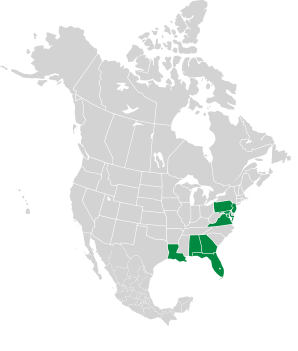
Cleome icosandra L.
Polanisia viscosa (L.) DC.
Cleome viscosa L.
Sticky caper, tick weed, Asian spiderflower
Sticky caper, native to Australia, is found in tropical and subtropical habitats in the Americas, Africa, and Asia. It is common during rainy seasons, and invasive in most of its range.
Plants: Herbaceous plants are 12–39″ (30–100 cm) tall. Stems are viscid—sticky and clammy.
Leaves: Ovate to oblanceolate-elliptic, ¾–2 ⨉ ⅛–1¼″ (2–6 cm ⨉ 5–35 mm) in size, with smooth margins and hairy/sticky surfaces. Petioles are ½–1¾″ (1.5–4.5 cm) long.
Flowers: Yellow flowers appear on racemes 1¾–8″ (5–20 cm) long. Each flower is about 1″ (3 cm) around, bright yellow, sometimes with a purple base, on pedicels ⅛–1″ (6–30 mm) long. Four petals are arranged in a semicircle.
Fruits: Beanlike, erect capsules are 1–4 ⨉ 1/16–⅛″ (3–10 cm ⨉ 2–4 mm). When they dry, they open partway to release light brown seeds 1/32–1/16 ⨉ ~1/32″ (1.2–1.8 ⨉ 1–1.2 mm) in size.
Habitats: Disturbed habitats in warm, humid climates.
Online References:
References:
McMullen, Conley K., Flowering Plants of the Galápagos, Comstock Publishing Associates, 1999, p. 200

That's a marine iguana behind the plants. · 4/3/2025 · North Seymour, Galápagos Islands, Ecuador · By Kathryn Morgis 
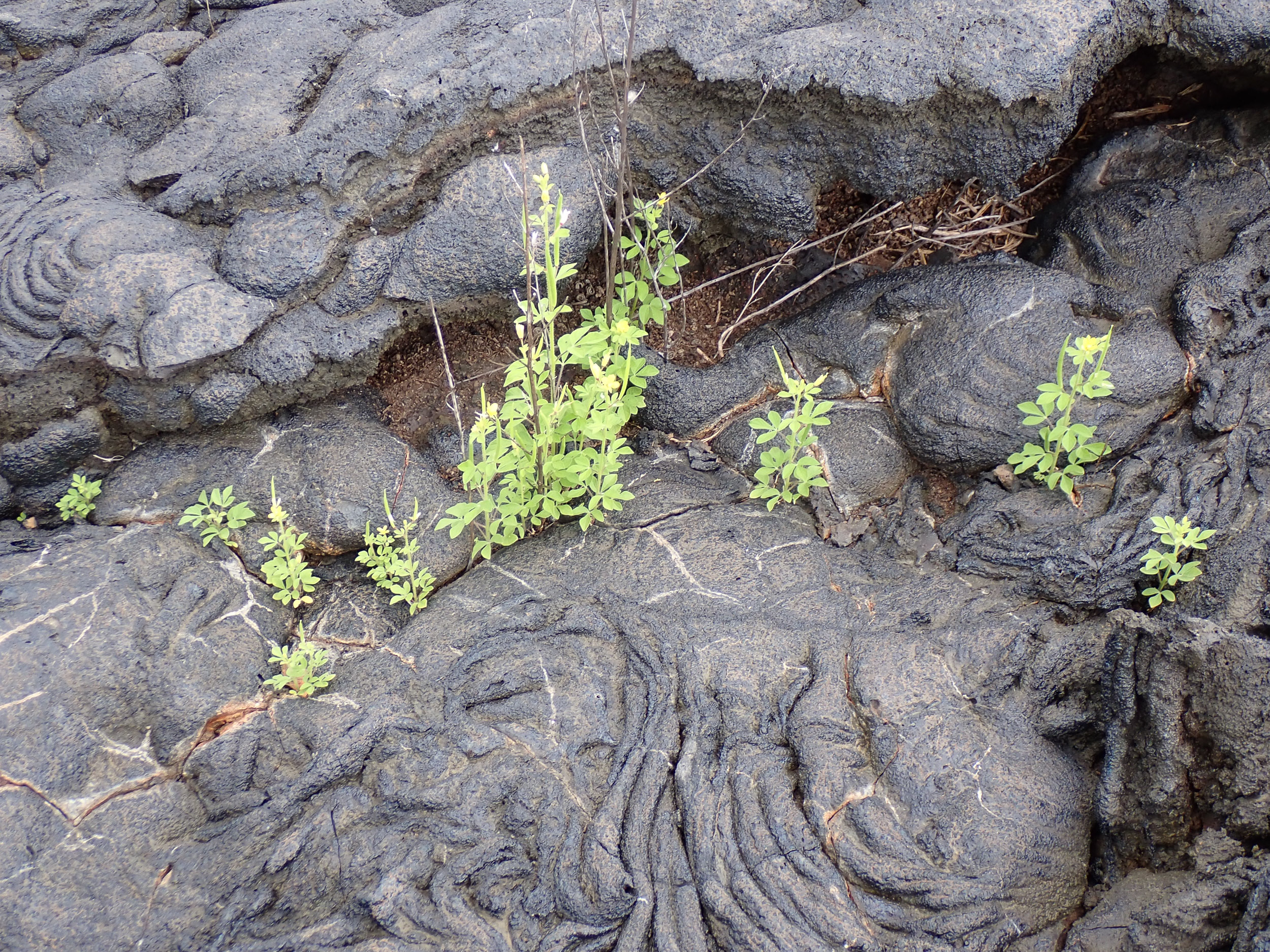
4/2/2025 · Lava Fields, Sullivan Bay, Santiago, Galápagos Islands, Ecuador · By Heather Kent and Kathryn Morgis 

4/2/2025 · Lava Fields, Sullivan Bay, Santiago, Galápagos Islands, Ecuador · By Heather Kent and Kathryn Morgis 
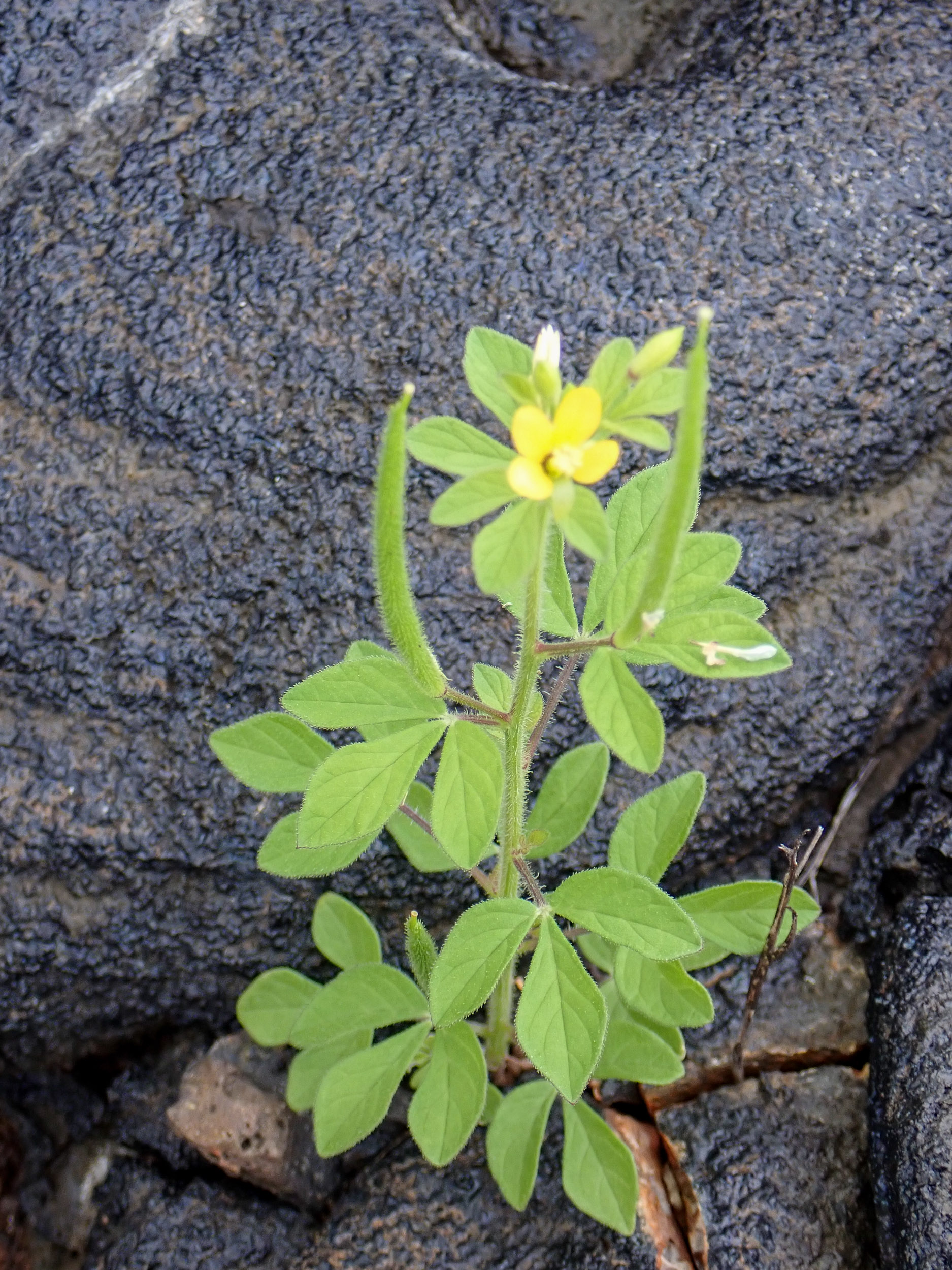
4/2/2025 · Lava Fields, Sullivan Bay, Santiago, Galápagos Islands, Ecuador · By Heather Kent and Kathryn Morgis 
| Kingdom | Plantae | Plants, but not fungi, lichens, or algae (from Stearn's Botanical Latin) |
| Subkingdom | Tracheobionta | Vascular plants—plants with a “circulatory system” for delivering water and nutrients |
| Division | Magnoliophyta | Flowering plants, also known as angiosperms |
| Class | Magnoliopsida | Dicotyledons—plants with two initial seed leaves |
| Subclass | Rosidae | Roses, legumes, proteas, dogwoods, hydrangeas, mistletoes, euphorbias, grapes, many more |
| Order | Brassicales | Mustard, cabbage, caper, papaya, nasturtiums, many others; most produce mustard oil |
| Family | Cleomaceae | Caper family |
| Genus | Cleome | An ancient name of some mustard-like plant |
| Species | viscosa | Sticky |
Cleome viscosa description by Thomas H. Kent, not updated.

© FloraFinder.org. All rights reserved.