Cordia lutea Lam.
Yellow cordia, muyoyo
Yellow cordia is native to the Galápagos Islands, mainland Ecuador, Peru, and the Marquesas Islands in Polynesia. In the Galápagos, it is found on Baltra, Española, Floreana, Genovesa, Isabela, Marchena, Pinta, Pinzón, Rábida, San Cristóbal, Santa Cruz, Santa Fe, Santiago, Seymour, and Wolf.
Darwin’s own notes, as he watched bees obtaining nectar from yellow cordia, transcribed from the Darwin Online manuscripts:
The hood springs one way & pistil springs otherway; so opposed elasticities & coherence of edge of hood keep in place the whole till force of bee acts— The stigma loaded with mass of coherent pollen, will hit same point of bee’s lower side of body, & whilst bee sucks, will be routed against the hairs already charged with pollen. — Pistil straight & not curved as W. describes that of C. claviculata — After in C. lutea pistil has sprung bees can insert proboscis on either side of base lower part of pistil, into nectary, & perhaps would rub stigma, for this does not rest with its face against upper petal, but one end rest against it.— [sketch] petal.
I must watch bees on flower already sprung.—
The hood of upper or nectary petal protects stigma from rain, owing to horizontal position of flower, from rain, but not very well —
Plants: Shrubs or small trees are up to 26′ (8 m) tall.
Leaves: Alternate, 1½–4″ (4–10 cm) long, ovate or rounded, with irregular margins that are somewhere between toothed and crenate. The upper surface of each leaf is rough-textured, while the lower surface is hairy.
Flowers: Cymes of bright yellow funnel-shaped flowers have a delightful sweet aroma. Each flower is ¾–1½″ (2–4 cm) across, with five to eight lobes and 5-8 stamens.
Fruits: White drupes are irregularly rounded and ¼–⅜″ (8–12 mm) in size. Each contains 1-4 seeds.
Habitats: Arid lowlands, often close to the sea.
Online References:
References:

4/3/2025 · North Seymour, Galápagos Islands, Ecuador 

3/29/2025 · Intiñan Museum at the Equator, Quito, Ecuador 

3/31/2025 · Puerto Egas, Santiago, Galápagos Islands, Ecuador 

3/30/2025 · Galápagos Airport, Baltra, Galápagos Islands, Ecuador 
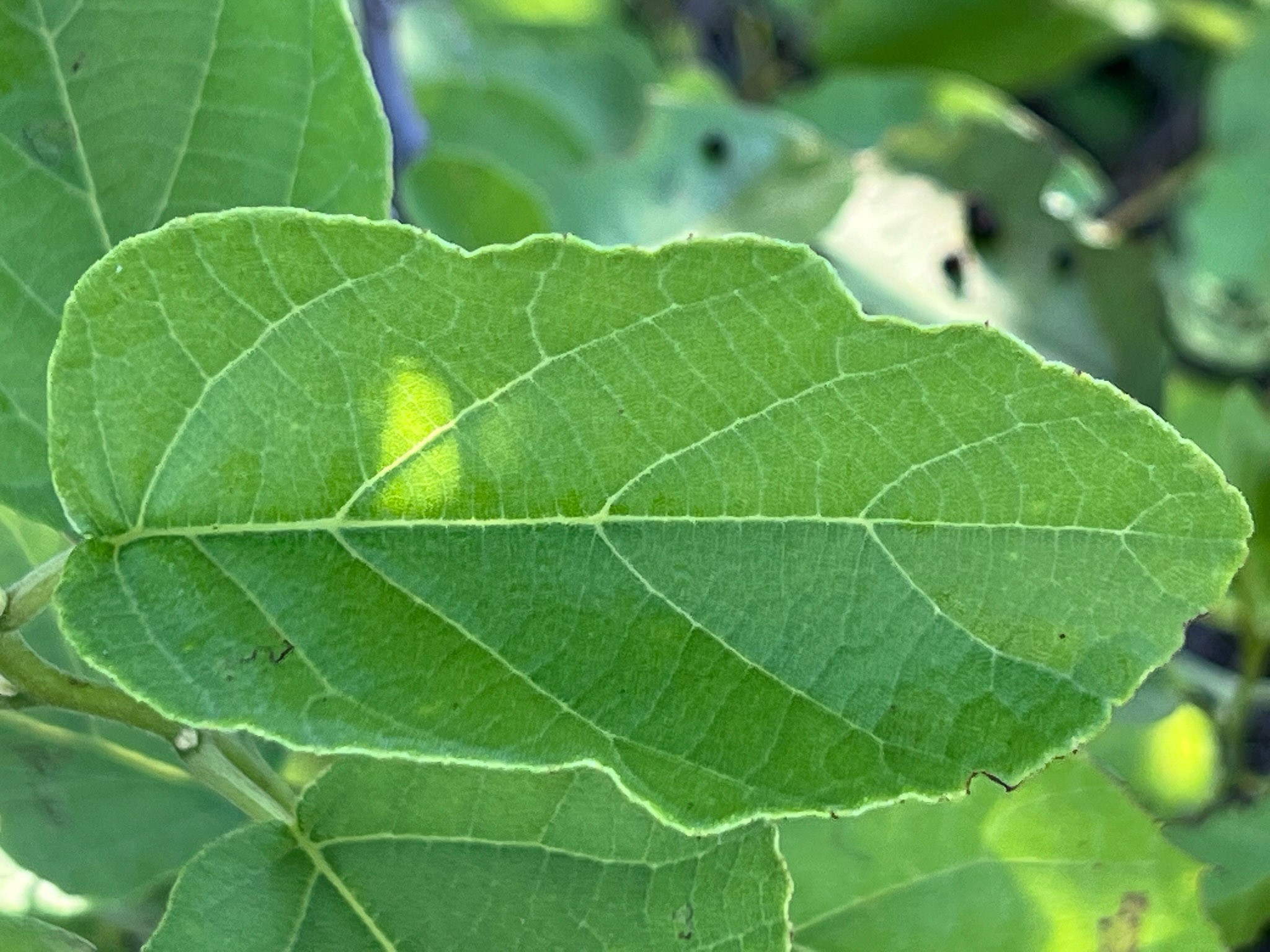
3/31/2025 · Puerto Egas, Santiago, Galápagos Islands, Ecuador · By Heather Kent 
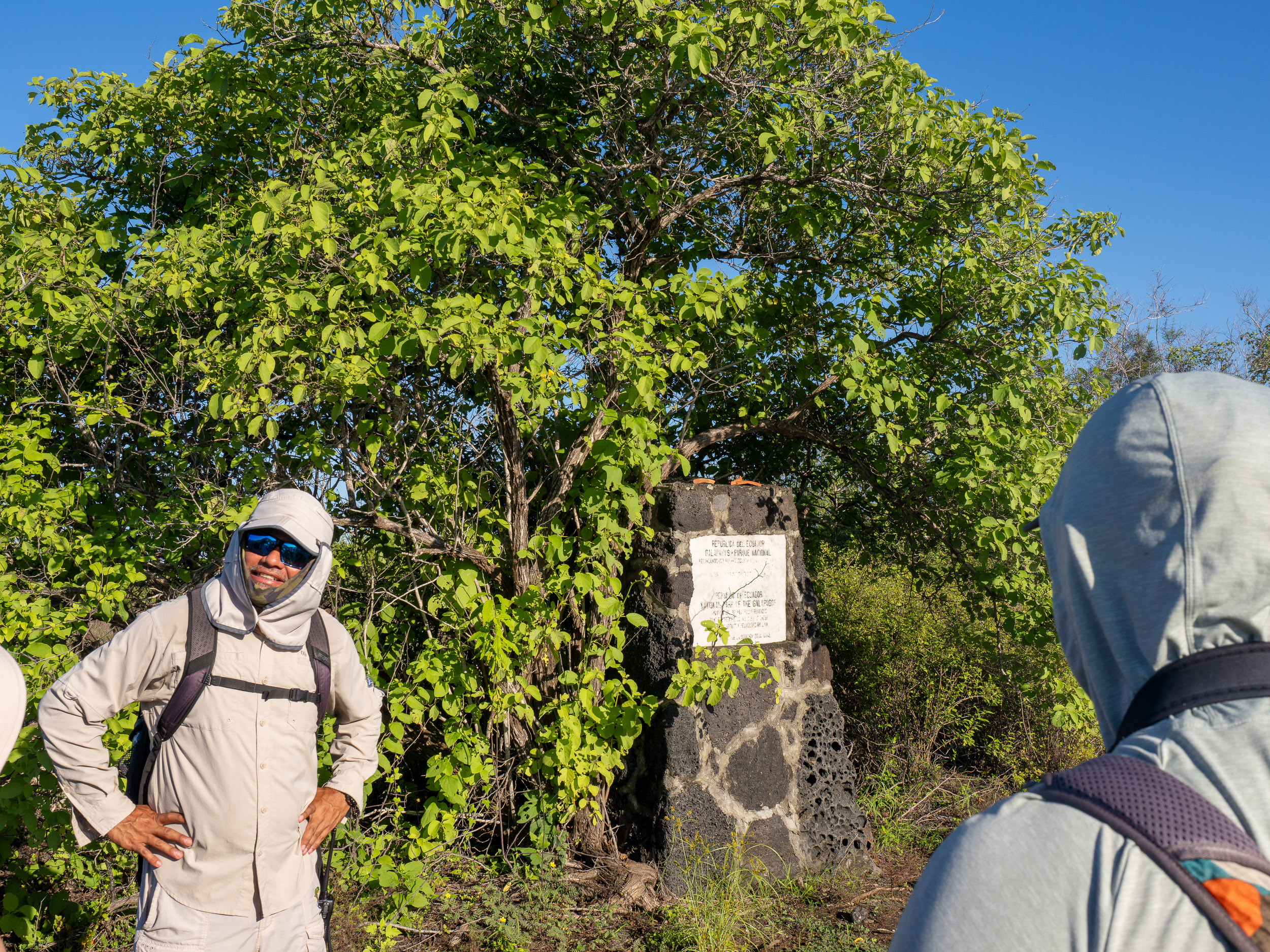
3/31/2025 · Puerto Egas, Santiago, Galápagos Islands, Ecuador 

4/4/2025 · Interpretation Center Gianny Arismendi, Puerto Baquerizo Moreno, San Cristóbal, Galápagos Islands, Ecuador 
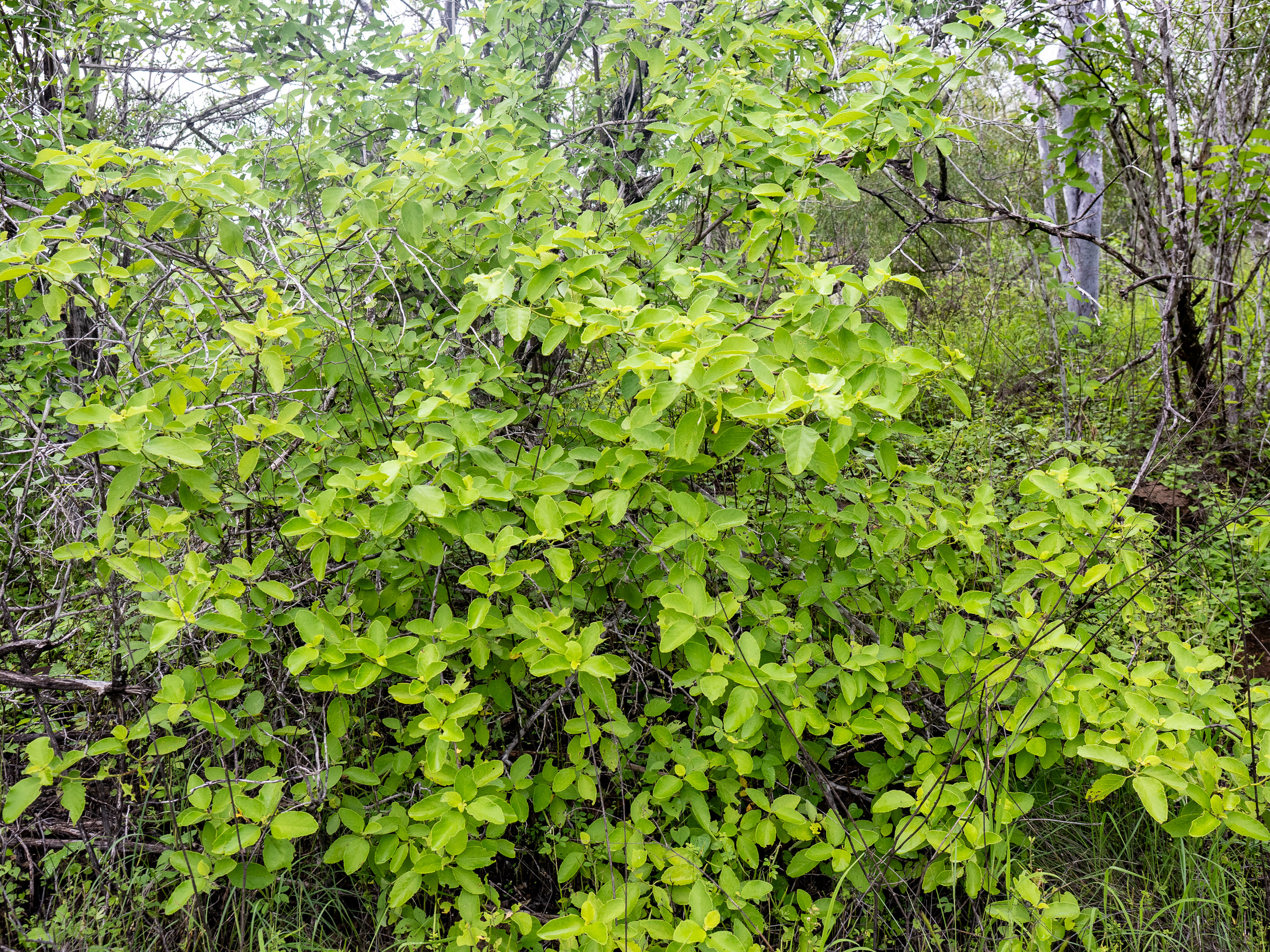
4/1/2025 · Tagus Cove, Isabella, Galápagos Islands, Ecuador 

4/1/2025 · Tagus Cove, Isabella, Galápagos Islands, Ecuador 

4/1/2025 · Tagus Cove, Isabela Island, Galápagos Islands, Ecuador · By Kathryn Morgis 
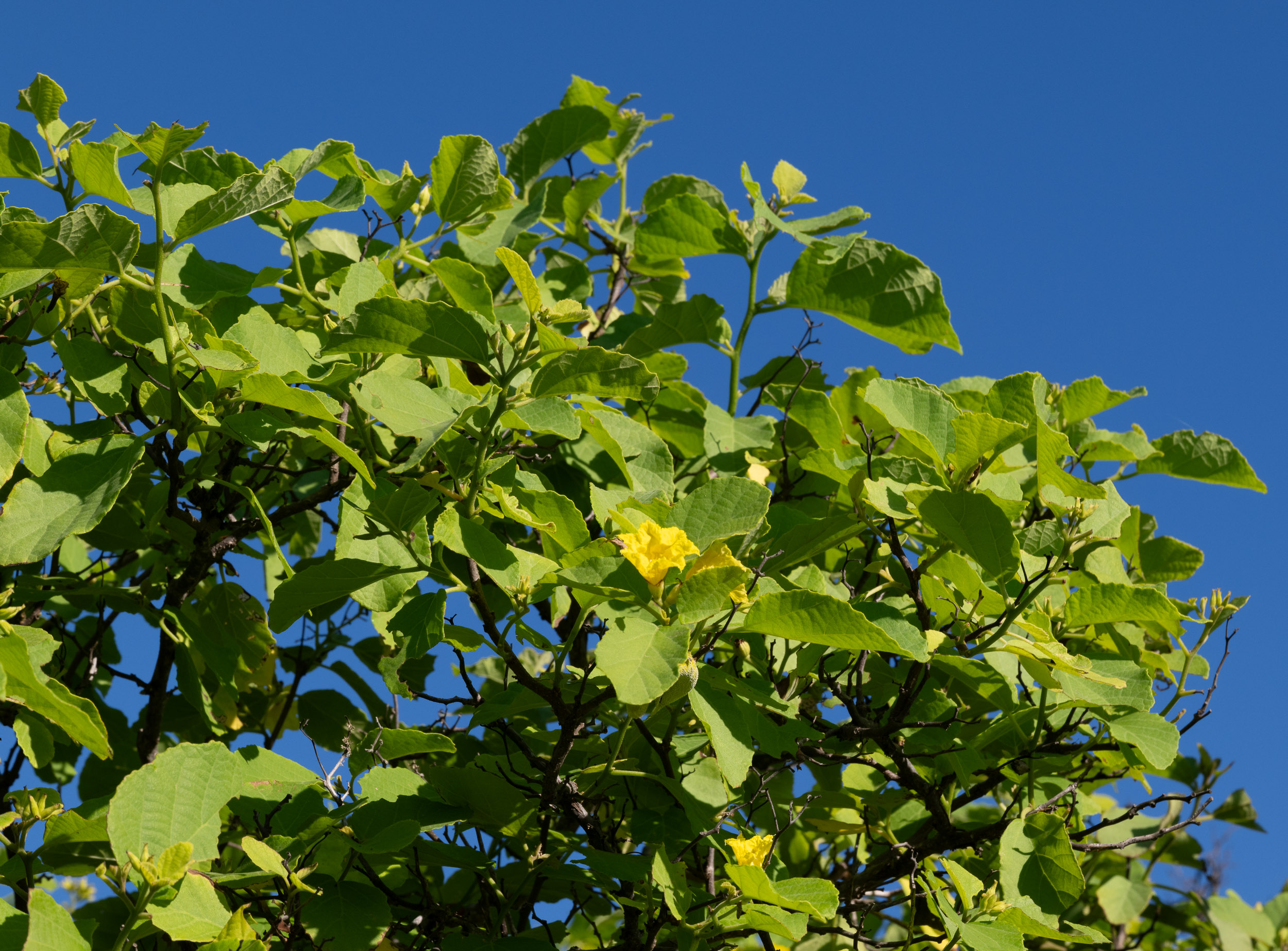
3/31/2025 · Puerto Egas, Santiago, Galápagos Islands, Ecuador · ≈ 1½ × 1′ (51 × 38 cm) 
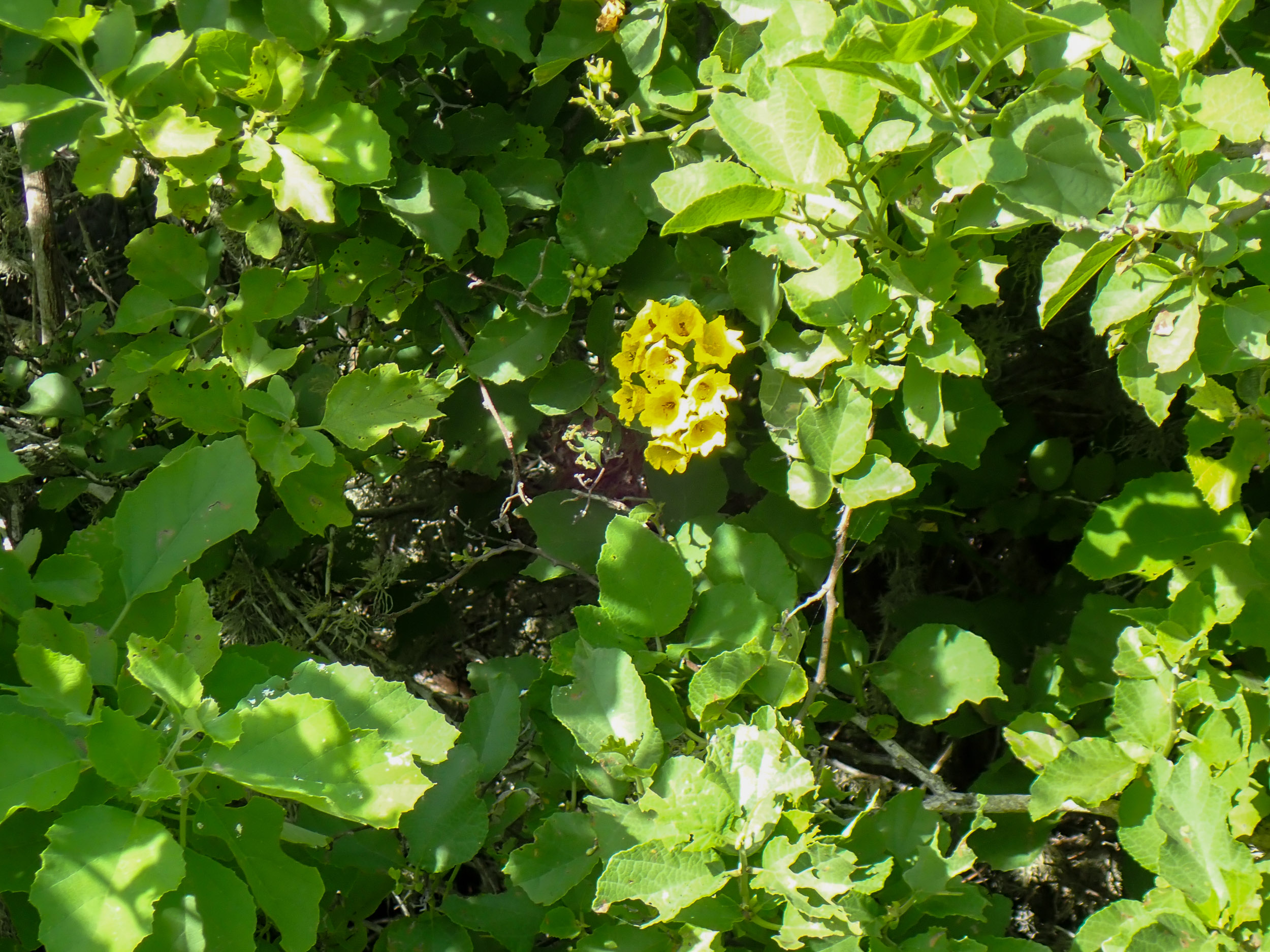
4/4/2025 · Punta Pitt, San Cristóbal, Galápagos Islands · By Heather Kent and Kathryn Morgis 
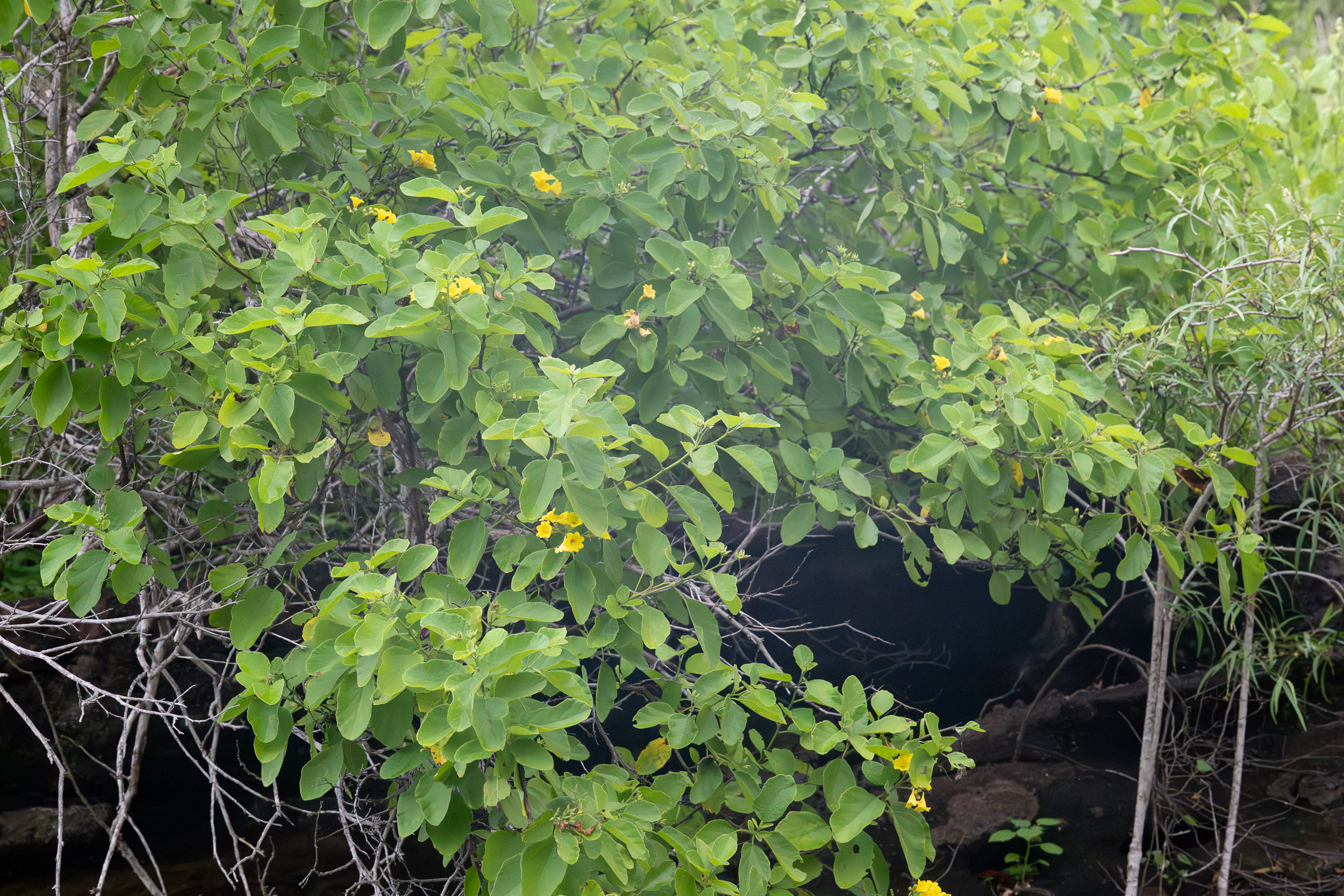
4/1/2025 · Tagus Cove, Isabella, Galápagos Islands, Ecuador 

4/1/2025 · Tagus Cove, Isabela Island, Galápagos Islands, Ecuador · By Kathryn Morgis 
| Kingdom | Plantae | Plants, but not fungi, lichens, or algae (from Stearn's Botanical Latin) |
| Subkingdom | Tracheobionta | Vascular plants—plants with a “circulatory system” for delivering water and nutrients |
| Division | Magnoliophyta | Flowering plants, also known as angiosperms |
| Class | Magnoliopsida | Dicotyledons—plants with two initial seed leaves |
| Subclass | Asteridae | A large class that encompasses asters |
| Order | Lamiales | Aromatic herbs and shrubs, including lavender, lilac, olive, jasmine, ash, teak, snapdragon, sesame, psyllium, garden sage, mint, basil, and rosemary |
| Family | Boraginaceae | Borages or forget-me-nots |
| Genus | Cordia | For German botanist Euricius Cordus (1485-1535) |
| Species | lutea | Yellow, from a source of yellow dye called lutum |
Cordia lutea description by Thomas H. Kent, not updated.

© FloraFinder.org. All rights reserved.