Cordyline terminalis (L.) Kunth
Cordyline terminalis (L.) Kunth var. ti (Schott) Baker
Dracaena terminalis (L.) L.
Cordyline fruticosa (L.) A. Chev
Ti plant, kī, lā‘ī, tiplant
The ti plant is probably a native of southeast Asia and Papua New Guinea. It may also be native to Melanesia, northeastern Australia, the Indian Ocean, and parts of Polynesia. Or it may have been spread by the Polynesians, who used it as a food source, to many of these locations, including Hawai‘i and New Zealand. Ti plant and its cultivars are popular among gardeners.
Plants: Ti plant looks a bit like a palm, but it is a member of the lily family. It is 12–24″ (30–60 cm) in height.
Leaves: 12–24 ⨉ 1¾–4″ (30–60 ⨉ 5–10 cm) and green, reddish purple or combinations thereof. Leaf petioles are grooved.
Flowers: Its flowers form hanging panicles, 1–2′ (40–60 cm) long, with yellowish, pink or red flowers less than ½″ (1.3 cm) across.
Fruits: Red berries.
Habitats: Tropical climates, with high light, moist soil and medium relative humidity.
Online References:

7/26/2007 · Guam · By Jacquelyn Boyt 
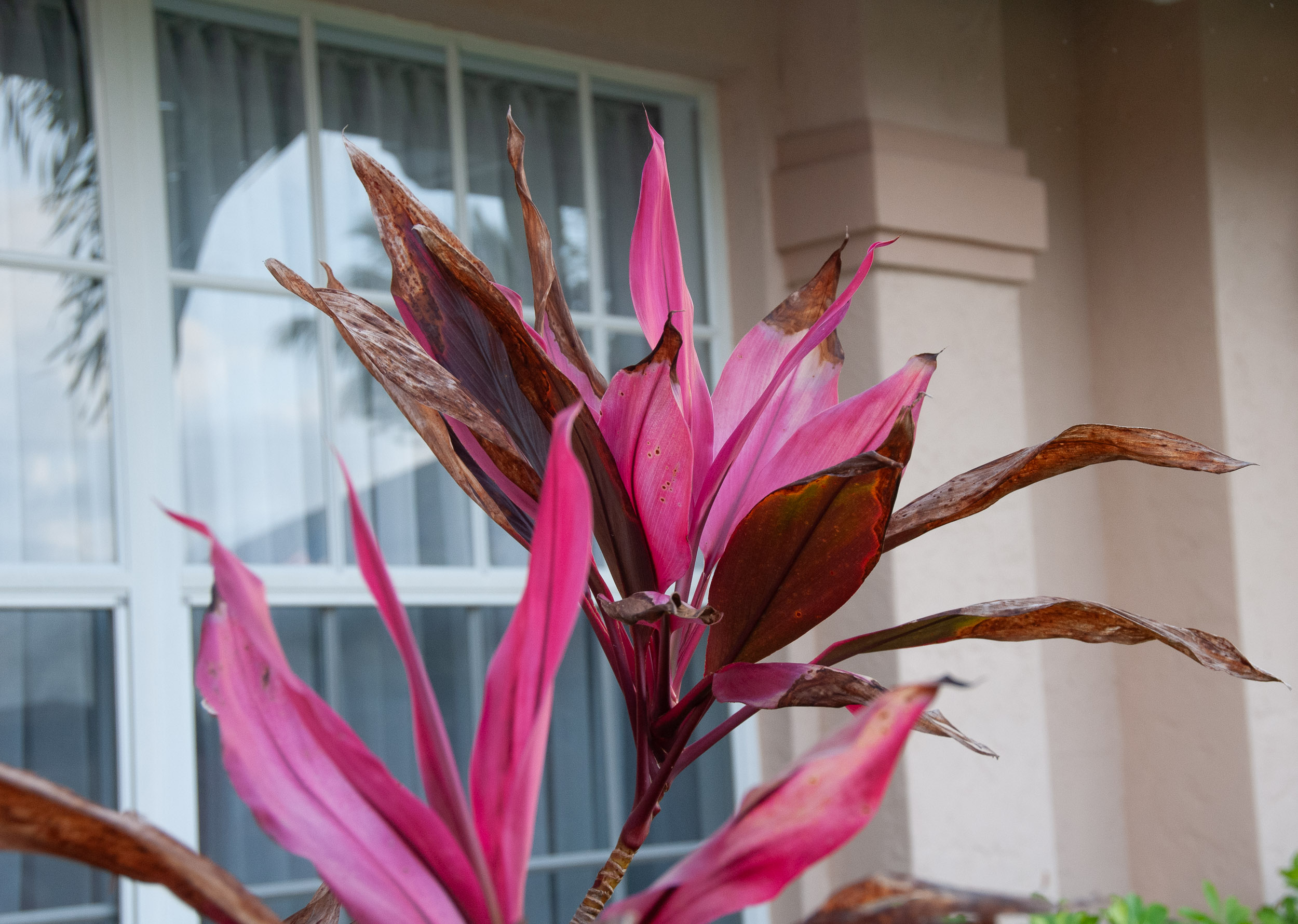
4/9/2015 · MacDonald‘s, Marco Island, Florida · By Susan M. Kent · ≈ 2 × 1½′ (66 × 47 cm) 
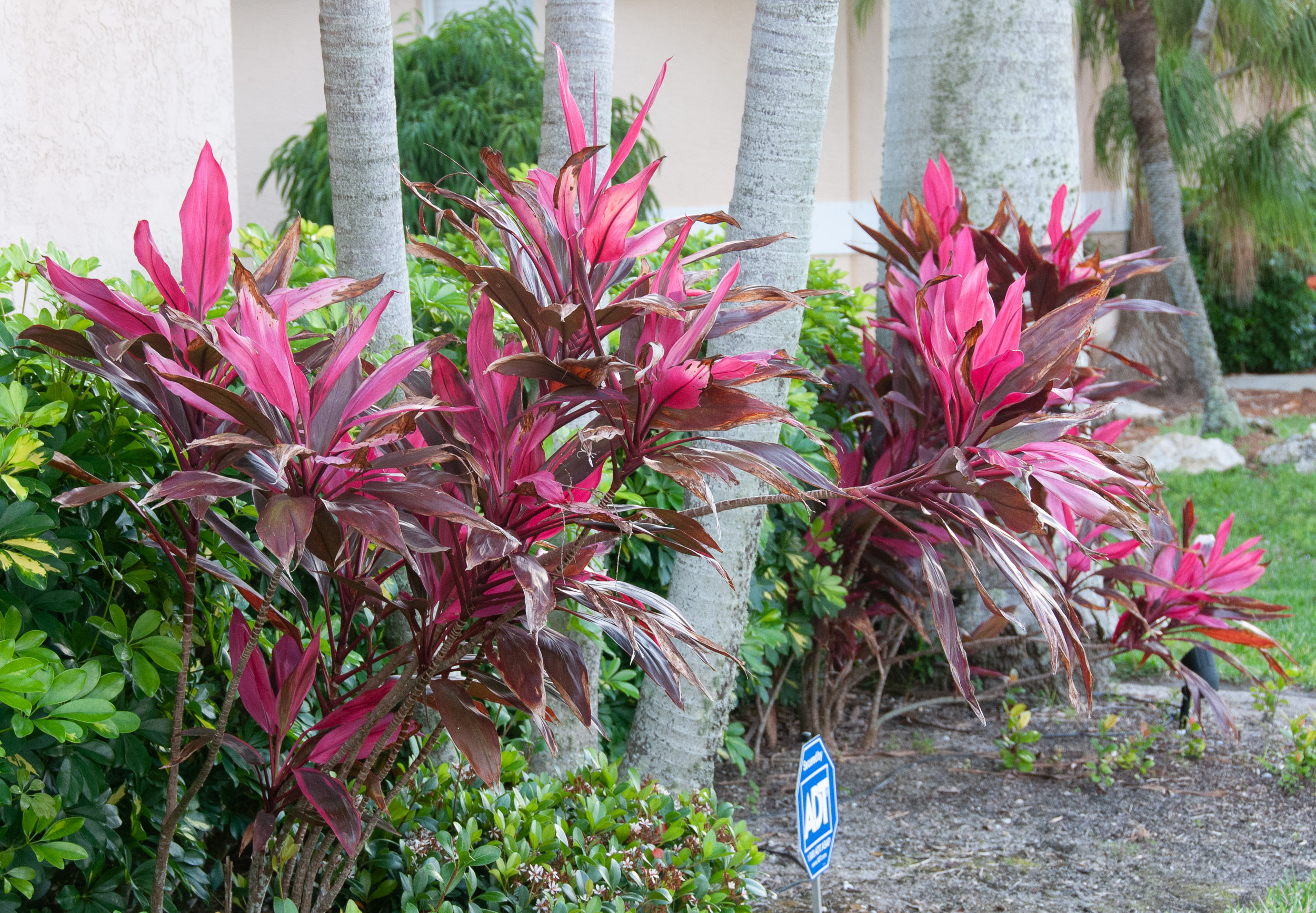
4/9/2015 · MacDonald‘s, Marco Island, Florida 

7/26/2007 · Guam · By Jacquelyn Boyt 

4/10/2015 · Naples Botanical Garden, Naples, Florida 
11/15/2001 · Road to Hana, Maui, Hawaii · By Constance B. Kent  ID is uncertain

3/2/2001 · Maui Botanical Gardens, Maui, Hawaii 

7/7/2007 · Guam · By Jacquelyn Boyt 

1/5/2026 · Guam · By Jacquelyn Boyt 
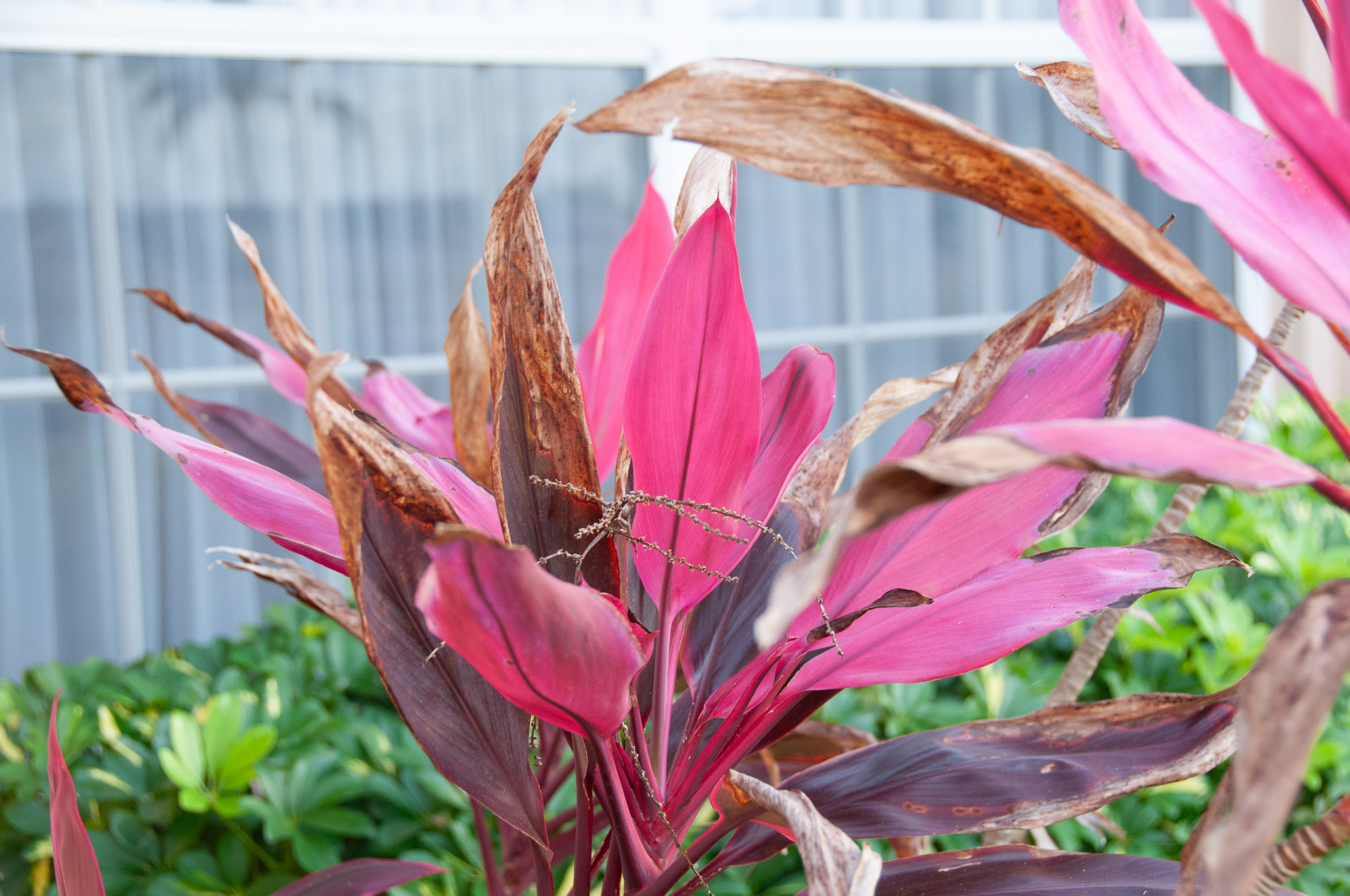
4/9/2015 · MacDonald‘s, Marco Island, Florida · ≈ 1½ × 1′ (52 × 35 cm) 
| Kingdom | Plantae | Plants, but not fungi, lichens, or algae (from Stearn's Botanical Latin) |
| Subkingdom | Tracheobionta | Vascular plants—plants with a “circulatory system” for delivering water and nutrients |
| Division | Magnoliophyta | Flowering plants, also known as angiosperms |
| Class | Liliopsida | Monocots (plants with a single seed leaf); includes the lily family |
| Subclass | Liliidae | Includes lilies, orchids, and many others |
| Order | Asparagales | A diverse group that includes asparagus |
| Family | Asparagaceae | Agaves, asparagus, hyacinths, and others |
| Genus | Cordyline | From the Greek cordyle, “a club” |
| Species | fruticosa | From the Latin frutex, “a shrub,” therefore, shrubby, bushy |
Cordyline fruticosa description by Thomas H. Kent, not updated.

© FloraFinder.org. All rights reserved.
