Crotalaria incana var. incana
Low rattlebox, fuzzy rattlebox, shake-shake
Originally native to tropical Americas, it is now naturalized in similar climates worldwide. It is invasive in many habitats.
Plants: These upright perennials can reach 6½′ (2 m) in height.
Leaves: Alternate, odd pinnate, with three-leaflet clusters. Each leaflet is elliptic, ovate, rounded at the tip, or obovate, and ⅜–1¾″ (1–5 cm) long.
Flowers: Racemes of flowers. Each flower is ½–⅝″ (1.5–1.8 cm) in size, with a large standard petal, two lateral wing petals, and two lower keel petals. The large petal is usually tinged reddish to reddish brown. There are five partially fused sepals beneath. Ten stamens are fused into a tube.
Fruits: Beanlike legumes are tan or brown, ¾–1¾″ (2–5 cm) long, and filled with numerous yellow to brownish seeds. When dry, the seeds rattle inside, hence the name “rattlebox.”
Habitats: Arid lowlands and moist uplands, in disturbed habitats.
Online References:
References:
McMullen, Conley K., Flowering Plants of the Galápagos, Comstock Publishing Associates, 1999, p. 201
Crotalaria incana var. nicaraguensis Senn

4/11/2015 · Loop Road, Big Cypress National Preserve, Florida · ≈ 9 × 7″ (23 × 16 cm) 
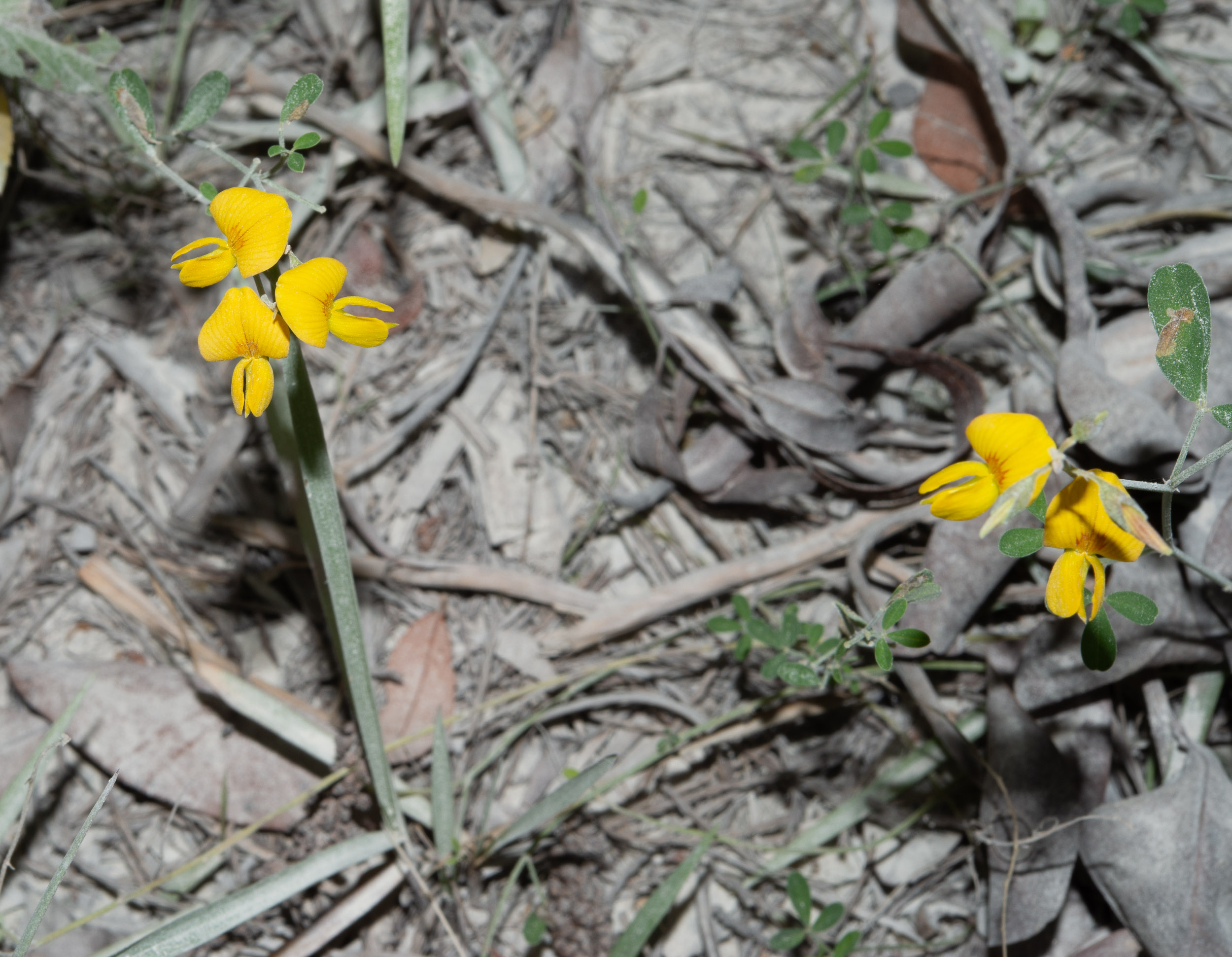
4/11/2015 · Loop Road, Big Cypress National Preserve, Florida · ≈ 7 × 5″ (16 × 12 cm) 
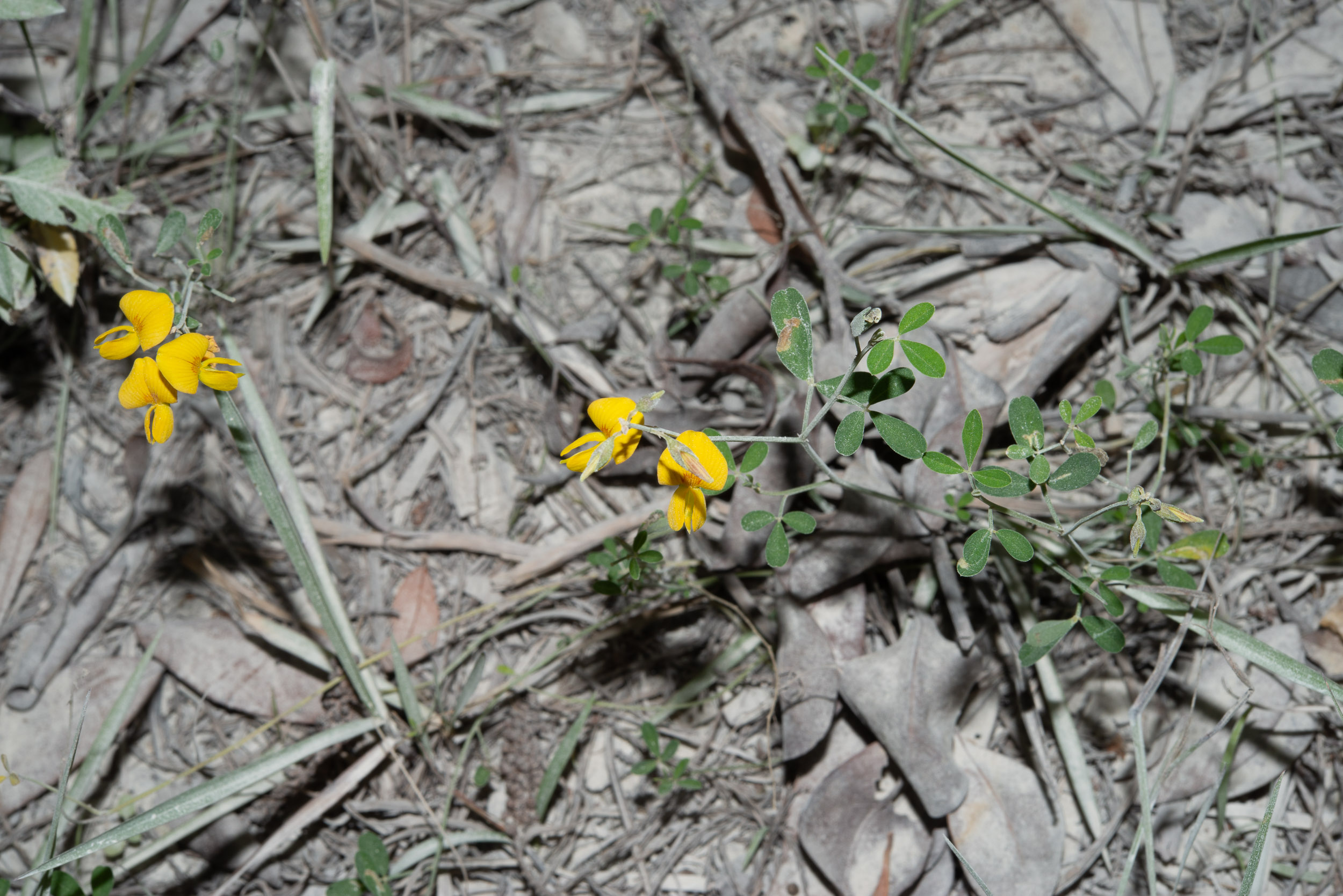
4/11/2015 · Loop Road, Big Cypress National Preserve, Florida · ≈ 10 × 7″ (25 × 16 cm) 
| Kingdom | Plantae | Plants, but not fungi, lichens, or algae (from Stearn's Botanical Latin) |
| Subkingdom | Tracheobionta | Vascular plants—plants with a “circulatory system” for delivering water and nutrients |
| Division | Magnoliophyta | Flowering plants, also known as angiosperms |
| Class | Magnoliopsida | Dicotyledons—plants with two initial seed leaves |
| Subclass | Rosidae | Roses, legumes, proteas, dogwoods, hydrangeas, mistletoes, euphorbias, grapes, many more |
| Order | Fabales | Legumes (pea and bean families) |
| Family | Fabaceae | Legume family (peas and beans) |
| Genus | Crotalaria | From Greek crotalon, meaning “rattle,” referring to loose seeds inside inflated pod |
| Species | incana | Grayish or hoary |
| var. | incana | Grayish or hoary |
Crotalaria incana var. incana description by Thomas H. Kent, not updated.

© FloraFinder.org. All rights reserved.