Cytisus scoparius (L.) Link
Common broom, scotch broom
Common broom is a European native, introduced to North and South America, where it was planted in gardens or used for roadside or beach erosion control. It is now fairly widespread, and in some western US habitats it is an invasive.
Plants: Deciduous plants are 3–9½′ (1–3 m) high, with main stems up to 1¾″ (5 cm) thick.
Leaves: Erect green five-angled branches have alternate, trifoliate, lanceolate or obovate leaves ⅛–½″ (5–15 mm) in size.
Flowers: Yellow flowers are ¾–1″ tall ⨉ ½–¾″ wide (2–3 ⨉ 1.5–2 cm). Cultivars may be gold, pink, red, or burgundy in color. Flowers appear in spring and summer.
Fruits: Peapod-like seed pods are ¾–1″ long ⨉ ¼″ wide (2–3 cm ⨉ 8 mm), with hairs along their seams. Seed pods mature to black in color, and burst rather explosively when dry, scattering seeds. The seeds are shiny and greenish-brown to black.
Habitats: Sunny, dry, sandy soils at low altitudes, tolerating very acidic soil conditions.
Edibility: Somewhat toxic to livestock. Not edible.
Medical:
Online References:
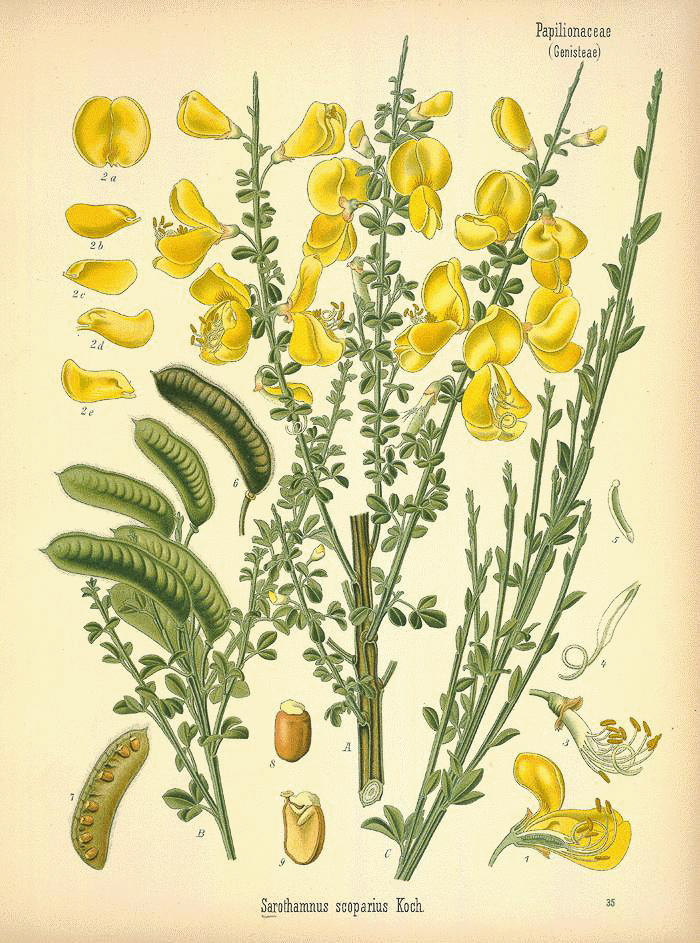
From Koehler’s Medicinal Plants (1887) · 1/1/2000 

8/26/2007 · Cape Kiwanda, Pacific City, Oregon 
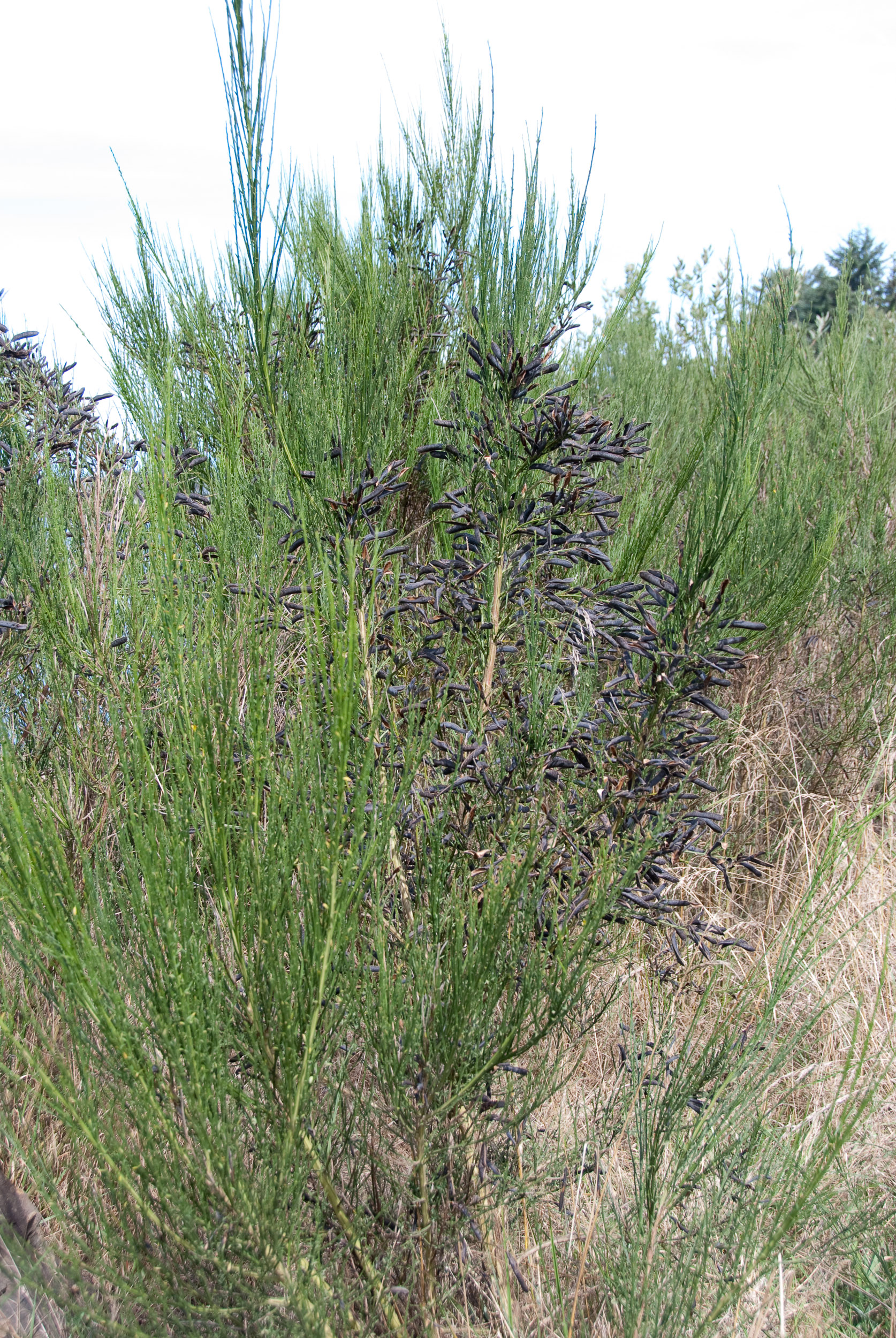
8/26/2007 · Cape Kiwanda, Pacific City, Oregon 
| Kingdom | Plantae | Plants, but not fungi, lichens, or algae (from Stearn's Botanical Latin) |
| Subkingdom | Tracheobionta | Vascular plants—plants with a “circulatory system” for delivering water and nutrients |
| Division | Magnoliophyta | Flowering plants, also known as angiosperms |
| Class | Magnoliopsida | Dicotyledons—plants with two initial seed leaves |
| Subclass | Rosidae | Roses, legumes, proteas, dogwoods, hydrangeas, mistletoes, euphorbias, grapes, many more |
| Order | Fabales | Legumes (pea and bean families) |
| Family | Fabaceae | Legume family (peas and beans) |
| Genus | Cytisus | From Greek kutisus, a type of clover |
| Species | scoparius | “Broom-like,” for the plant structure |

Cytisus scoparius description by Thomas H. Kent, not updated.

© FloraFinder.org. All rights reserved.