Datura metel L. var. quinquecuspida Torr.
Datura wrightii Regel
Angel’s trumpet, sacred thorn-apple, sacred datura, western jimson weed, belladonna, toloache, Jimsonweed, thorn-apple, angel trumpet
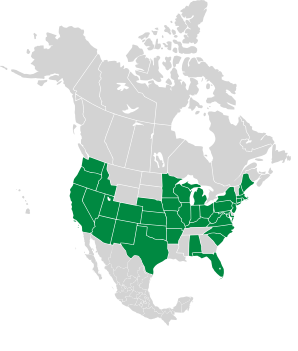
Although native to Mexico and the southwestern United States, angel’s trumpet is found through much of North America now.
Plants: Angel’s trumpet grows in bushes 2–4′ (60–121 cm) high, with grayish-green stems coated with fine hairs.
Leaves: Alternate, 6 ⨉ 4″ (15 ⨉ 10 cm), with smooth margins. The leaves have the unusual property that they are not symmetric at the base— one side is somewhat larger than the other.
Flowers: 5–9″ (12–22 cm) long, trumpet-shaped, and white, cream-colored, or purplish. The fragrant flowers have several segments, with small points at the edges between them.
Fruits: Prickly, about 1″ (2.5 cm) across.
Habitats: Coastal sage scrub, valley grasslands, joshua tree woods, pinyon-juniper woods.
Edibility: Poisonous  Datura contains
several poisonous alkaloids that can cause temporary blindness, respiratory depression, seizures,
high fevers, and hallucinations. It has been used by some North American native cultures for
religious purposes, and more recently, by some as a recreational hallucinogenic. But the
effective dosage is dangerously close to the fatal dosage, and panic following temporary
blindness causes many injuries as well. See the description of the closely related species
D. stramonium for more information.
Datura contains
several poisonous alkaloids that can cause temporary blindness, respiratory depression, seizures,
high fevers, and hallucinations. It has been used by some North American native cultures for
religious purposes, and more recently, by some as a recreational hallucinogenic. But the
effective dosage is dangerously close to the fatal dosage, and panic following temporary
blindness causes many injuries as well. See the description of the closely related species
D. stramonium for more information.
 |
These varieties of Datura have similar ranges and psychoactive effects, and they are often confused. |
References:
Online References:

8/7/2010 · Nashua River Rail Trail, near Nashoba Hospital, Ayer, Massachusetts · ≈ 14 × 9″ (35 × 23 cm)  ID is uncertain

5/2/2018 · Pinto Basin Road, Joshua Tree National Park, California · ≈ 10 × 6″ (24 × 16 cm) 

9/1/2014 · Bandelier National Monument, New Mexico · ≈ 11 × 9″ (26 × 22 cm) 

5/2/2018 · Pinto Basin Road, Joshua Tree National Park, California · ≈ 10 × 8″ (24 × 20 cm) 

8/27/2014 · Petroglyph National Monument Visitor Center, New Mexico 
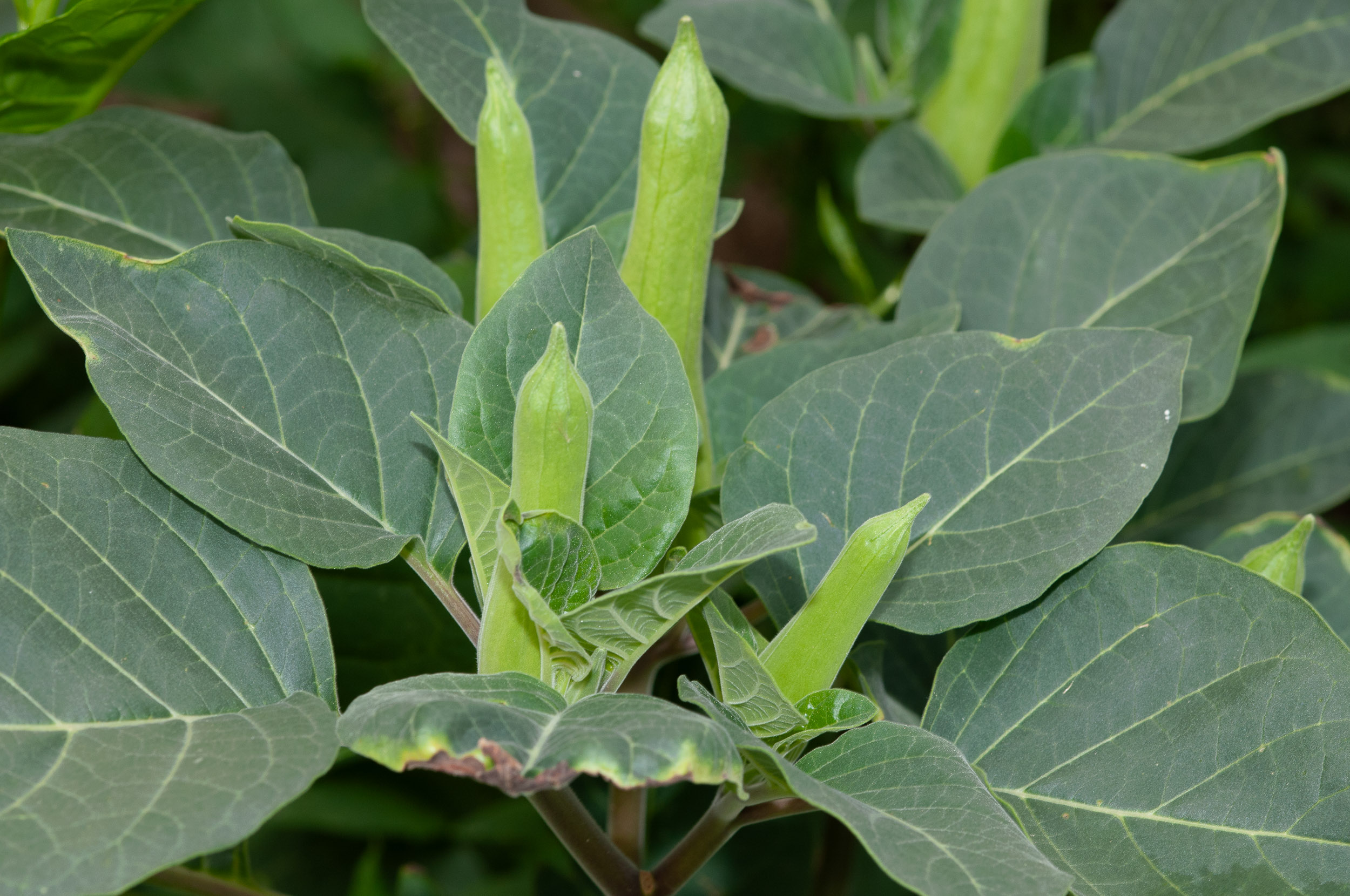
8/7/2010 · Nashua River Rail Trail, near Nashoba Hospital, Ayer, Massachusetts · ≈ 10 × 7″ (25 × 16 cm) ID is uncertain 

8/7/2010 · Nashua River Rail Trail, near Nashoba Hospital, Ayer, Massachusetts · ≈ 9 × 6″ (22 × 15 cm) ID is uncertain 

6/14/2008 · Stan & Connie’s, Falmouth, Maine · ≈ 16 × 11″ (40 × 26 cm) ID is uncertain 

8/27/2014 · Petroglyph National Monument Visitor Center, New Mexico · ≈ 12 × 8″ (30 × 21 cm) 

5/31/2009 · Marble Canyon, Arizona ID is uncertain 

4/29/2018 · Willow Spring Picnic Area, Red Rock Canyon, Nevada · ≈ 8 × 12″ (20 × 31 cm) 

9/1/2014 · Bandelier National Monument, New Mexico · ≈ 10 × 11″ (25 × 28 cm) 

5/2/2018 · Pinto Basin Road, Joshua Tree National Park, California · ≈ 10 × 6″ (24 × 16 cm) 

5/2/2018 · Pinto Basin Road, Joshua Tree National Park, California · ≈ 7 × 4½″ (18 × 12 cm) 
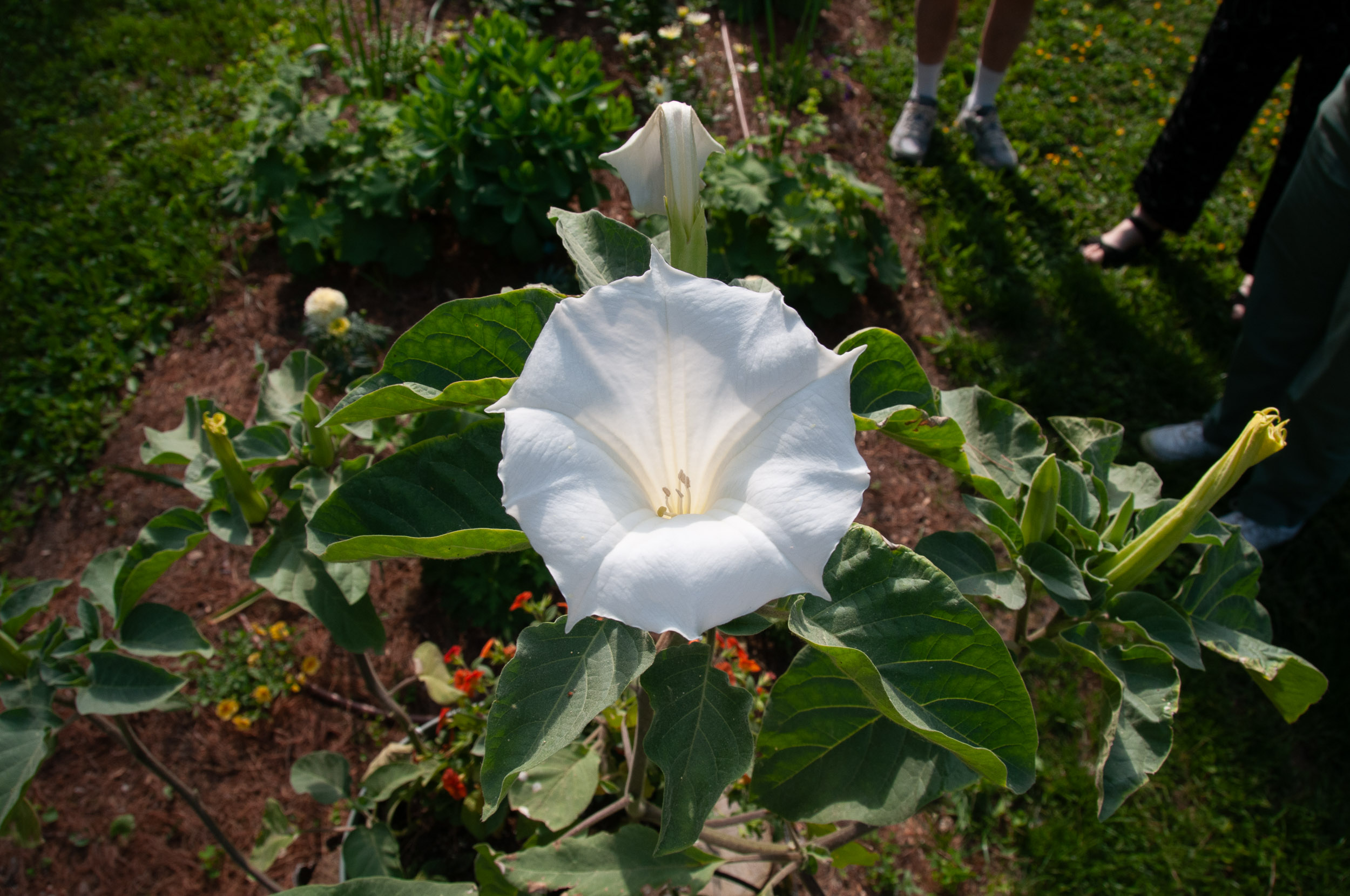
6/14/2008 · Stan & Connie’s, Falmouth, Maine · ≈ 2 × 1½′ (65 × 43 cm) ID is uncertain 

5/2/2018 · Pinto Basin Road, Joshua Tree National Park, California · ≈ 10 × 6″ (24 × 16 cm) 
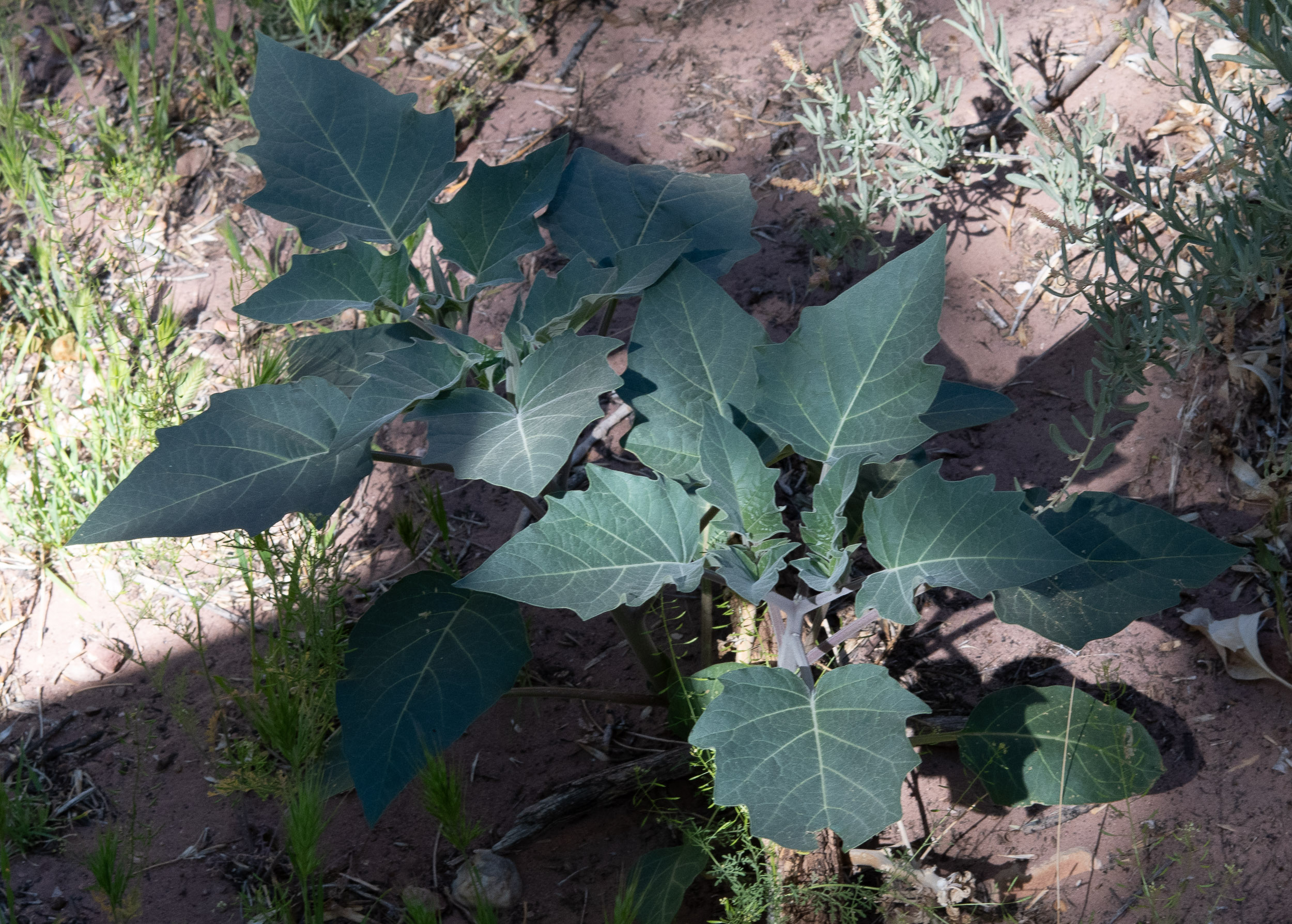
4/29/2018 · Red Spring Calico Basin, Red Rock Canyon, Nevada 
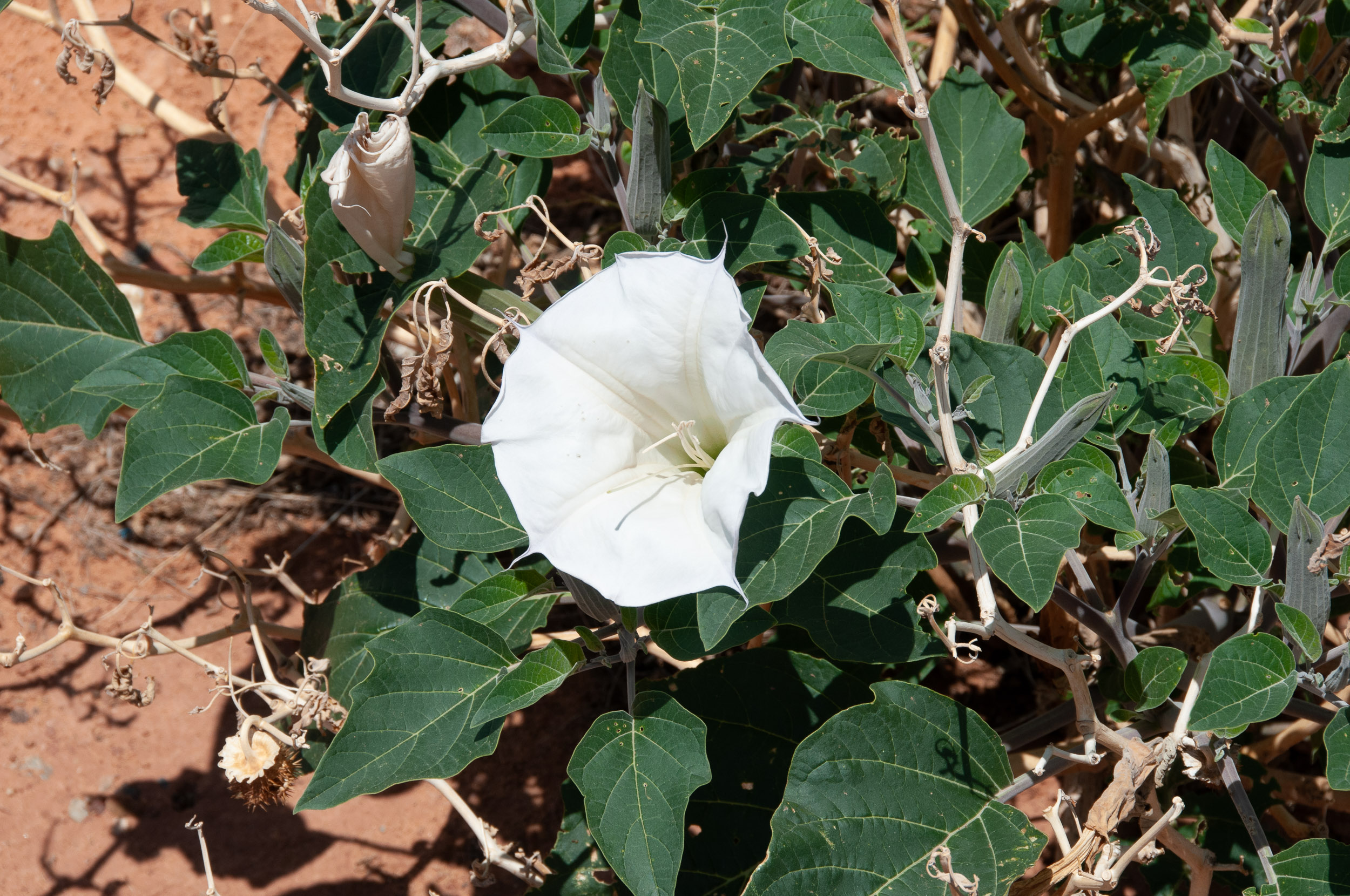
5/31/2009 · Marble Canyon, Arizona ID is uncertain 
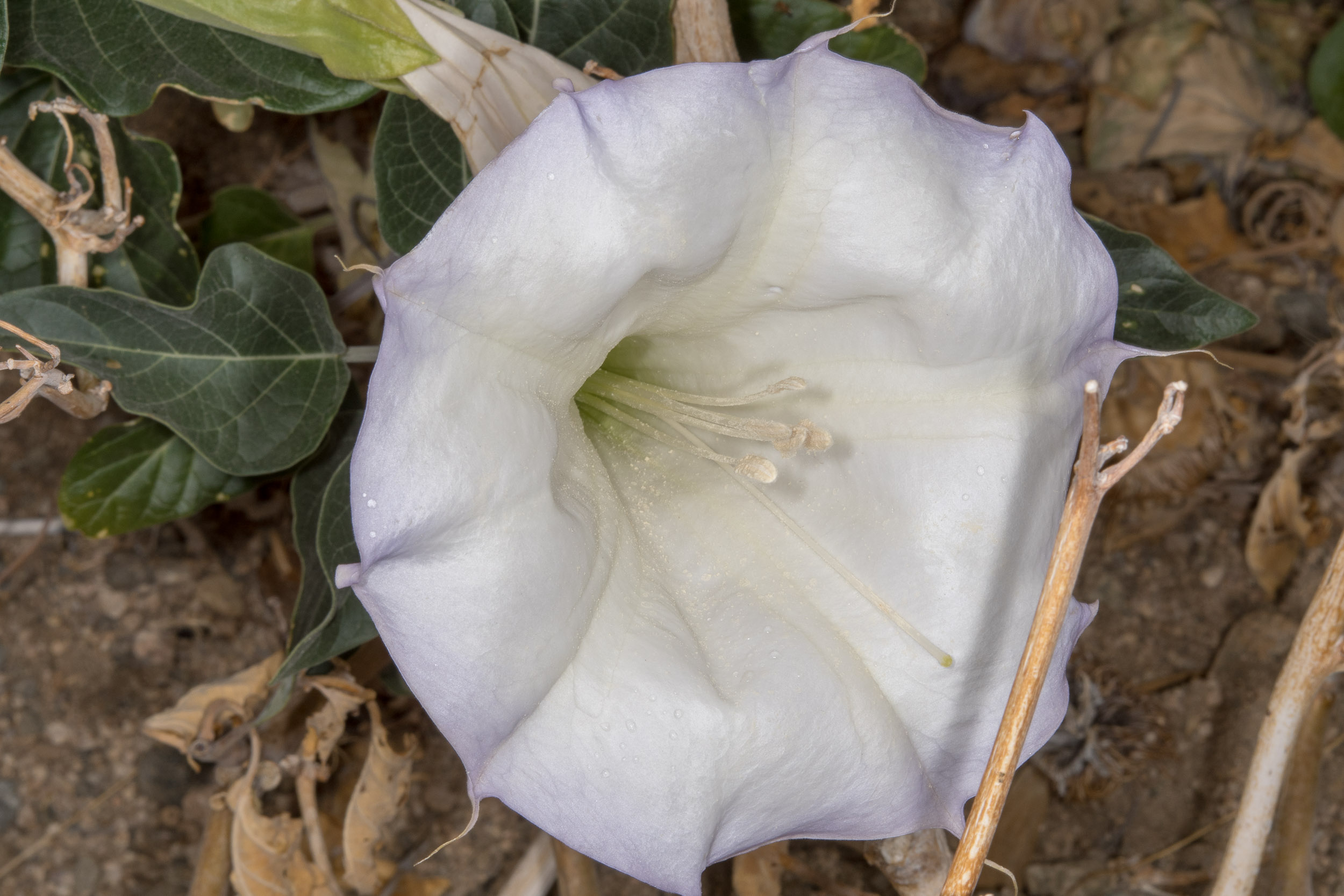
5/2/2018 · Pinto Basin Road, Joshua Tree National Park, California · ≈ 8 × 5″ (20 × 13 cm) 
| Kingdom | Plantae | Plants, but not fungi, lichens, or algae (from Stearn's Botanical Latin) |
| Subkingdom | Tracheobionta | Vascular plants—plants with a “circulatory system” for delivering water and nutrients |
| Division | Magnoliophyta | Flowering plants, also known as angiosperms |
| Class | Magnoliopsida | Dicotyledons—plants with two initial seed leaves |
| Subclass | Asteridae | A large class that encompasses asters |
| Order | Solanales | Potatoes, eggplants, tomatoes, peppers, tobacco, petunias, sweet potatoes, morning glories, many others |
| Family | Solanaceae | Nightshade or potato family |
| Genus | Datura | From dhatura, an ancient Hindu word for a plant |
| Species | wrightii | Named for botanist Charles Wright |
Datura wrightii description by Thomas H. Kent, not updated.

© FloraFinder.org. All rights reserved.