Dipsacus sativus (L.) Honck.
Indian teasel
In California, this teasel species is considered invasive. It is a North American native.
Plants: 4–6′ (1.2–1.8 m) tall, rarely up to 9′ (2.7 m). Stems have prickles.
Leaves: A basal rosette of prickly, lanceolate leaves
Flowers: Usually white. The involucre bracts at the base of each flowerhead spread almost straight outward, rather than bending upward. In common teasel, the bracts extend upward and even over the top of the flowerhead. The flowerhead is comprised of around 4 zillion tiny flowers. Each flower is about 1/32″ (1 mm) around, with four overlapping petals that form a rough cylinder. A stigma with two lobes extends some distance from the flower, while the stamens are inside it.
Fruits: Flowerheads mature to produce up to 2000 seeds each.
Habitats: Most soils, in full sunlight. Most common in somewhat moist ditches, waterways, roads, and forests.
 |
Similar species. |
Online References:
Dipsacus fullonum L. ssp. sativus (L.) Thell.

7/23/2017 · Scranton, Pennsylvania · ≈ 5 × 8″ (13 × 20 cm) 

Pretty far gone ... most of the “behive” has dispersed · 10/2/2013 · Chestnut Farm, Beaver Brook Conservation Area, Hollis, New Hampshire · ≈ 4½ × 5″ (11 × 13 cm) 
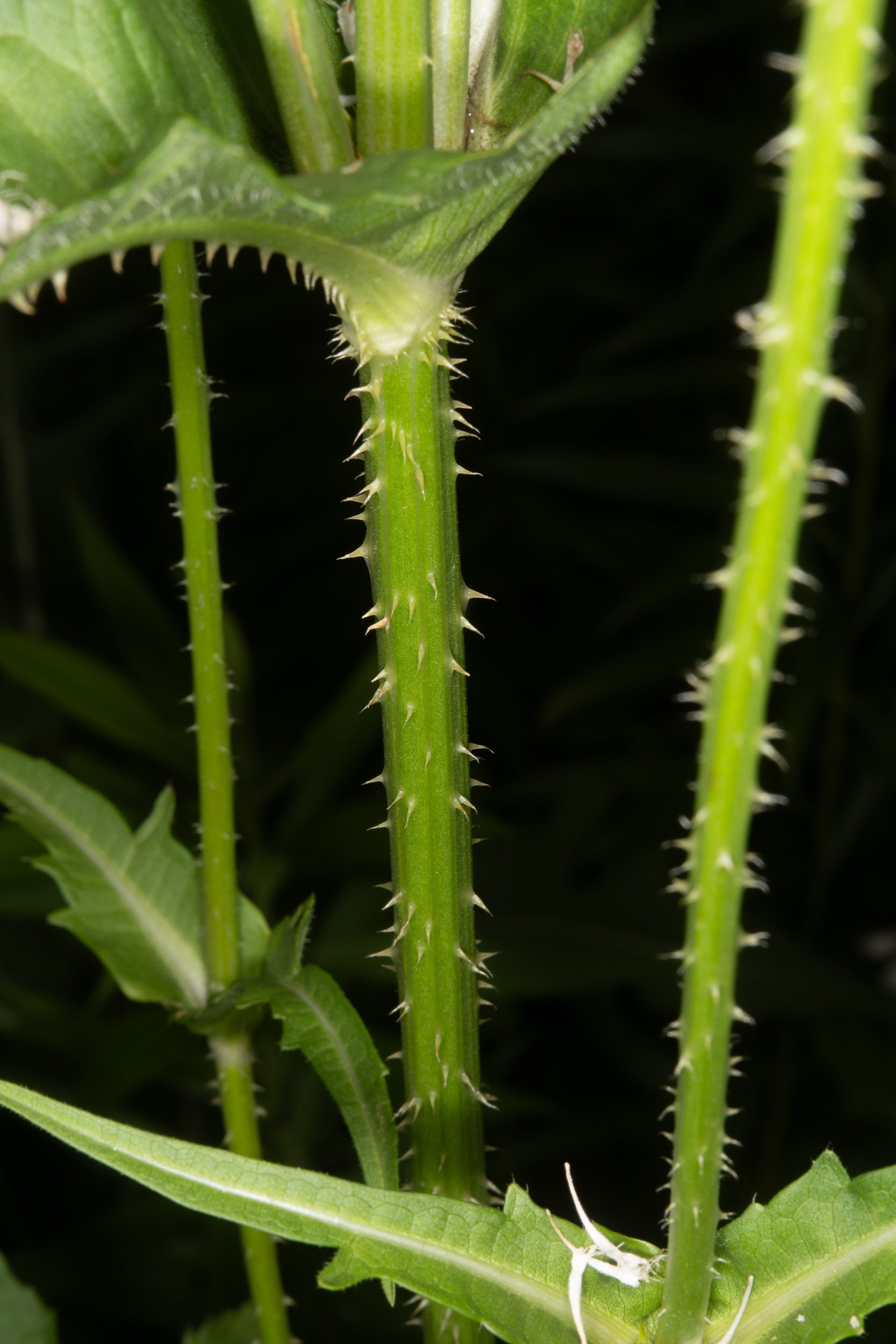
7/23/2017 · Scranton, Pennsylvania · ≈ 4 × 6″ (11 × 16 cm) 

7/23/2017 · Scranton, Pennsylvania · ≈ 4 × 5″ (10 × 12 cm) 
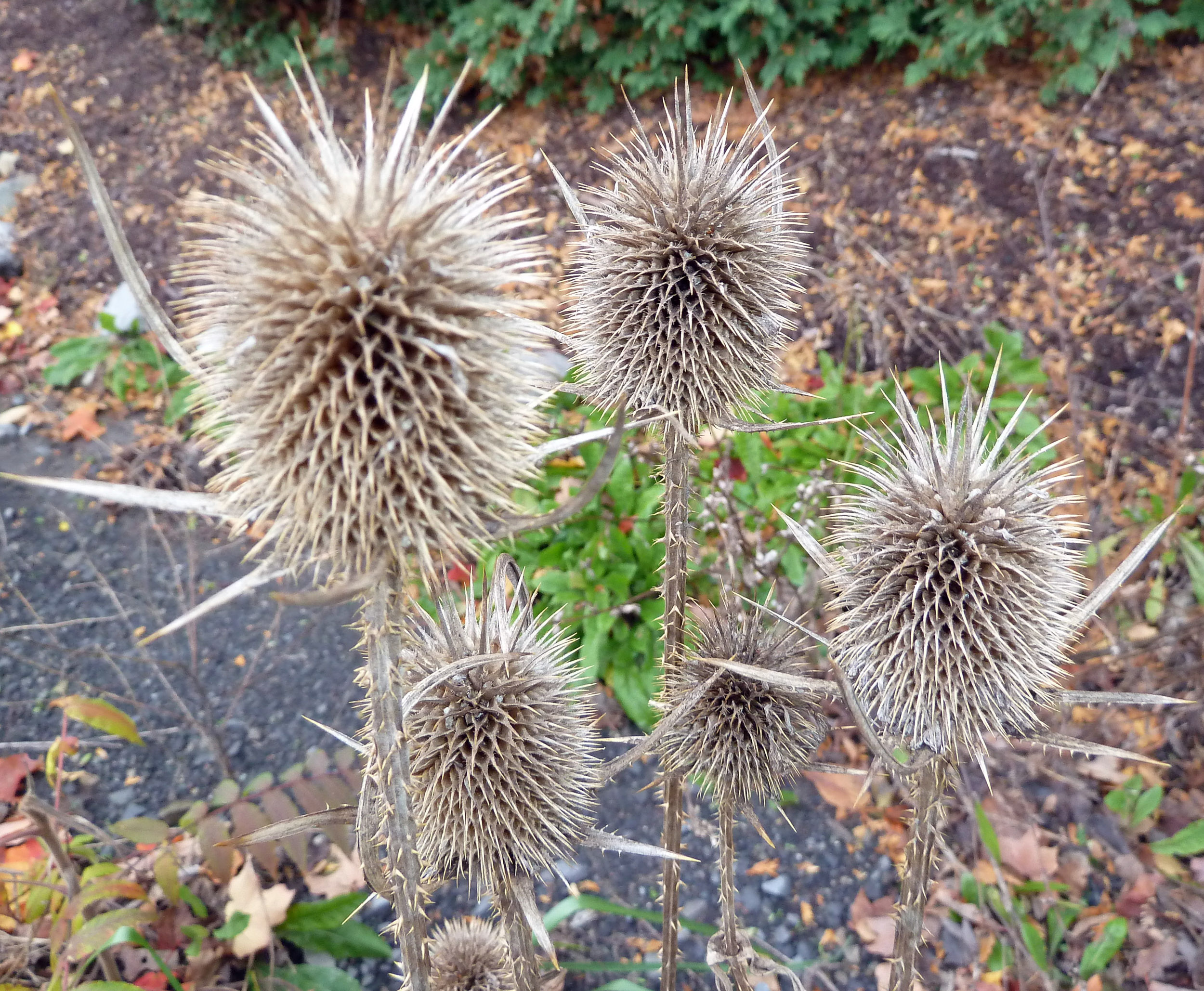
10/17/2010 · Syracuse area, New York · By Tim Chandler 

7/23/2017 · Scranton, Pennsylvania · ≈ 4½ × 4″ (12 × 10 cm) 
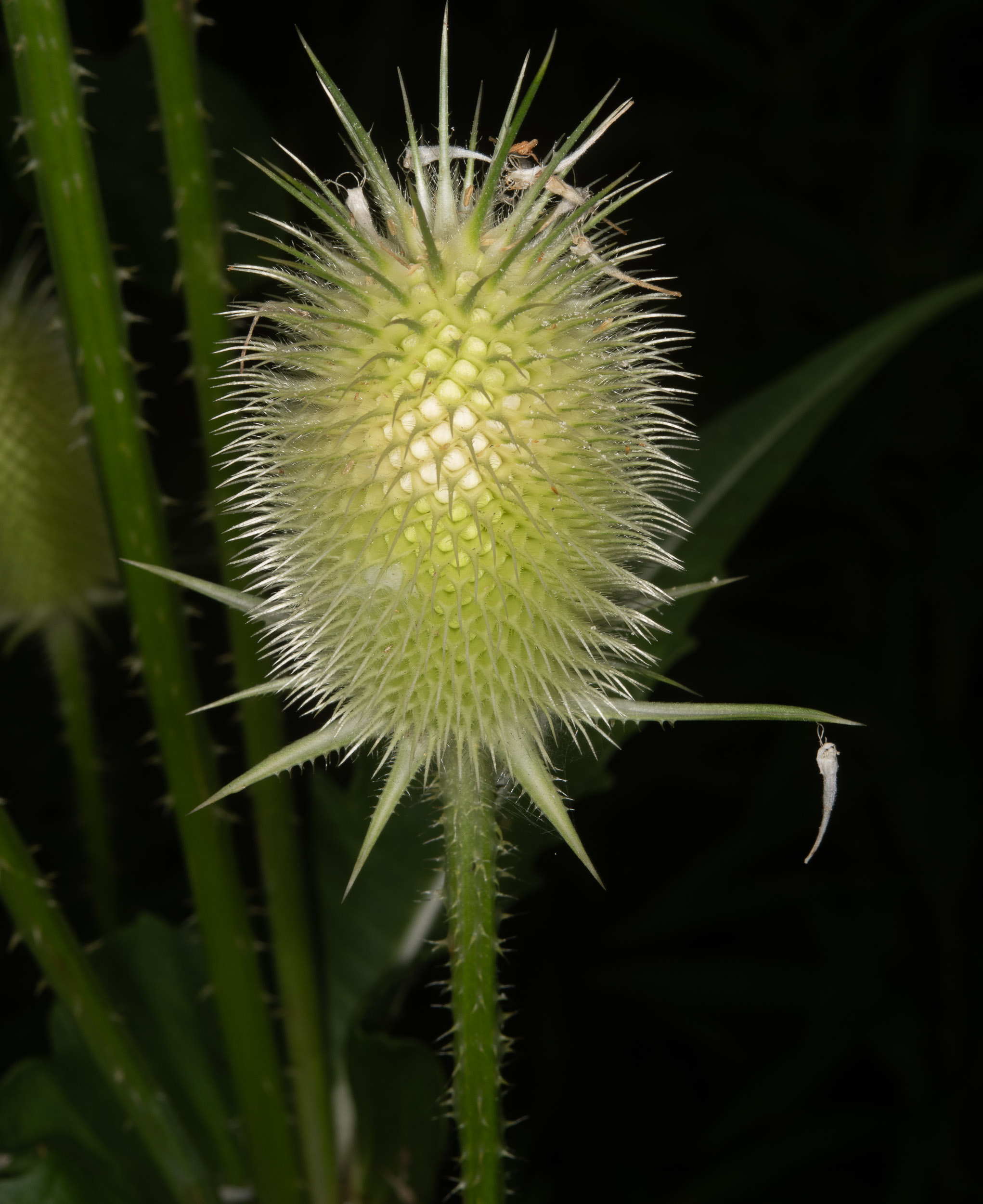
7/23/2017 · Scranton, Pennsylvania · ≈ 4 × 5″ (11 × 13 cm) 

7/23/2017 · Scranton, Pennsylvania · ≈ 4 × 6″ (10 × 14 cm) 
| Kingdom | Plantae | Plants, but not fungi, lichens, or algae (from Stearn's Botanical Latin) |
| Subkingdom | Tracheobionta | Vascular plants—plants with a “circulatory system” for delivering water and nutrients |
| Division | Magnoliophyta | Flowering plants, also known as angiosperms |
| Class | Magnoliopsida | Dicotyledons—plants with two initial seed leaves |
| Subclass | Asteridae | A large class that encompasses asters |
| Order | Dipsacales | Includes viburnum, honeysuckle, snowberry, beautybush, twinflower, many others |
| Family | Dipsacaceae | Teasel family |
| Genus | Dipsacus | From the Greek dipsa, “thirst,” from the connate (joined or attached) leaf bases that in some ssp. hold water |
| Species | sativus | Means “that which is sown,” indicating the plant is a cultivated one |

Dipsacus sativus description by Thomas H. Kent, not updated.

© FloraFinder.org. All rights reserved.