Drosera rotundifolia L.
Common sundew, roundleaf sundew
Common sundew is a perennial found in boggy areas and mountain and coastal wetlands. Bogs are acidic environments low in nutrients, and sundew is among the plants that have adapted by becoming carnivorous (well, technically “insectivorous,” but “carnivorous” sounds way more dramatic). Hard as they work to eke out a living, bog-dwelling ants apparently make off with up to two thirds of their trapped prey. Fortunately, sundew gets some of its energy from good old-fashioned photosynthesis. For information on this and other insectivorous bog-dwelling species, see Field Trip Through a Maine Raised Bog.
Plants: Plants are low, nestled in sphagnum mosses and barely distinguishable from them, in color or height. Technically they are 2–10″ (5–25 cm) high, but the leaves are rarely more than 2″ (5 cm) in height.
Leaves: Leaves are basal, somewhere between green and red, and flat, rounded disks, with smooth edges. Each leaf is ⅛–⅜ ⨉ ¼–¾″ (3.2–10 ⨉ 6.3–19 mm). Leaf tops are covered with deep red hairs tipped with a sticky honeylike substance. Each leaf is on a stalk, also covered with sticky hairs, that is ½–2″ (1.3–5 cm) long. The leaf hairs attract, then entrap insects, slowly bending to bring the insect into contact with digestive enzymes on the leaf stalks.
Flowers: Flowers appear on a separate, thin stem, as a one-sided raceme containing 3 to 25 flowers. Each flower is pink to red, or white, with 4-7 petals.
Fruits: Seeds are light brown, tapered, slender, and ~1/32″ (1–1.5 mm) long.
Habitats: Wetlands such as marshes and fens. It is also found in wet stands of black spruce, sphagnum bogs, silty and boggy shorelines and wet sands. It prefers open, sunny or partly sunny habitats.
Edibility: Although not edible, it is a curious fact that these diminutive plants have more vitamin C than any other plant.
Online References:
Rzottoli.wordpress.com Bog plants

7/5/2025 · Cathance River Nature Preserve, Topsham, Maine · ≈ 5 × 4″ (13 × 10 cm) 

9/11/2021 · By Priscilla Seimer 

7/15/2020 · Cathance River Nature Preserve, Topsham, Maine · ≈ 4½ × 7″ (12 × 18 cm) 
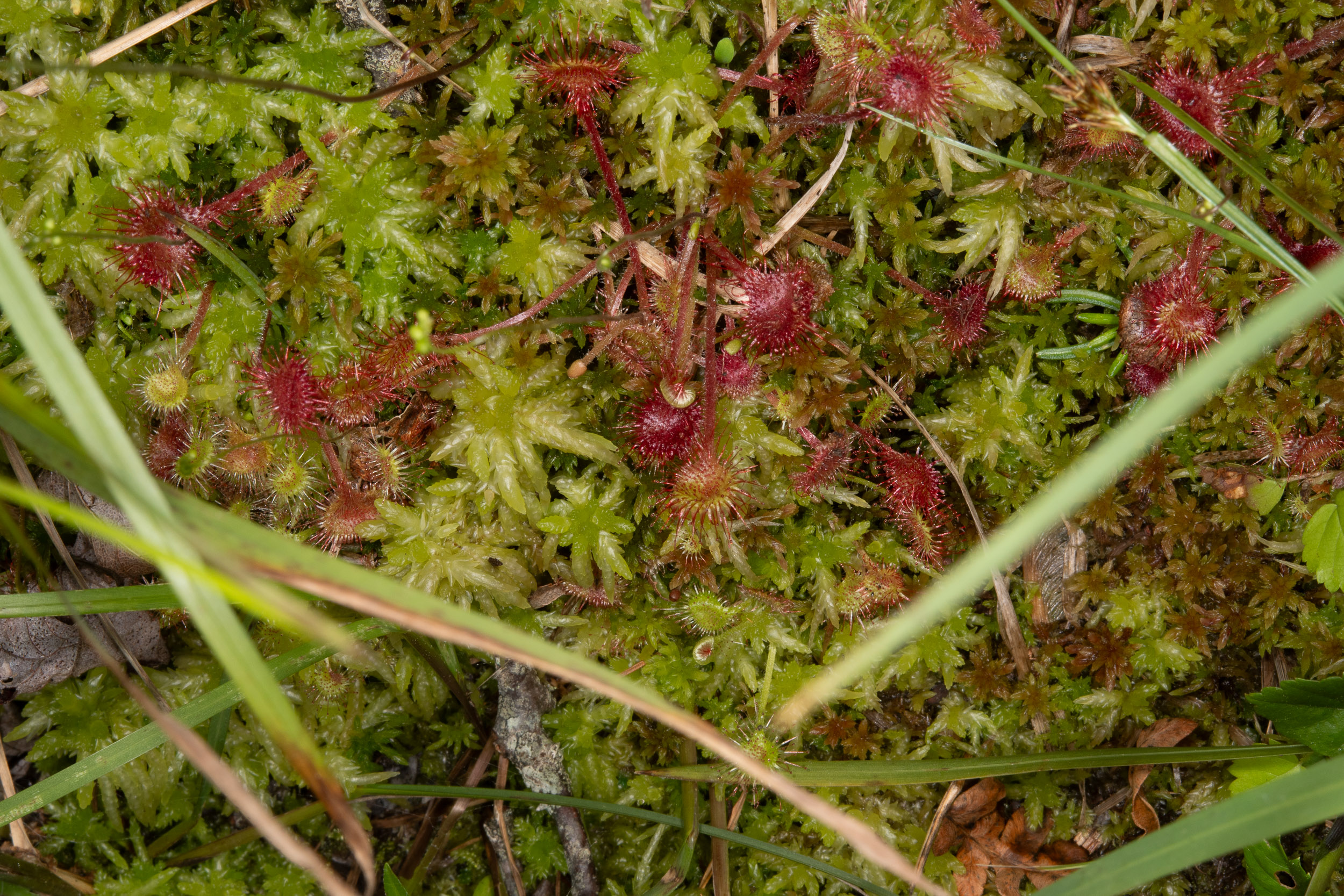
7/15/2020 · Cathance River Nature Preserve, Topsham, Maine · ≈ 7 × 4½″ (18 × 12 cm) 
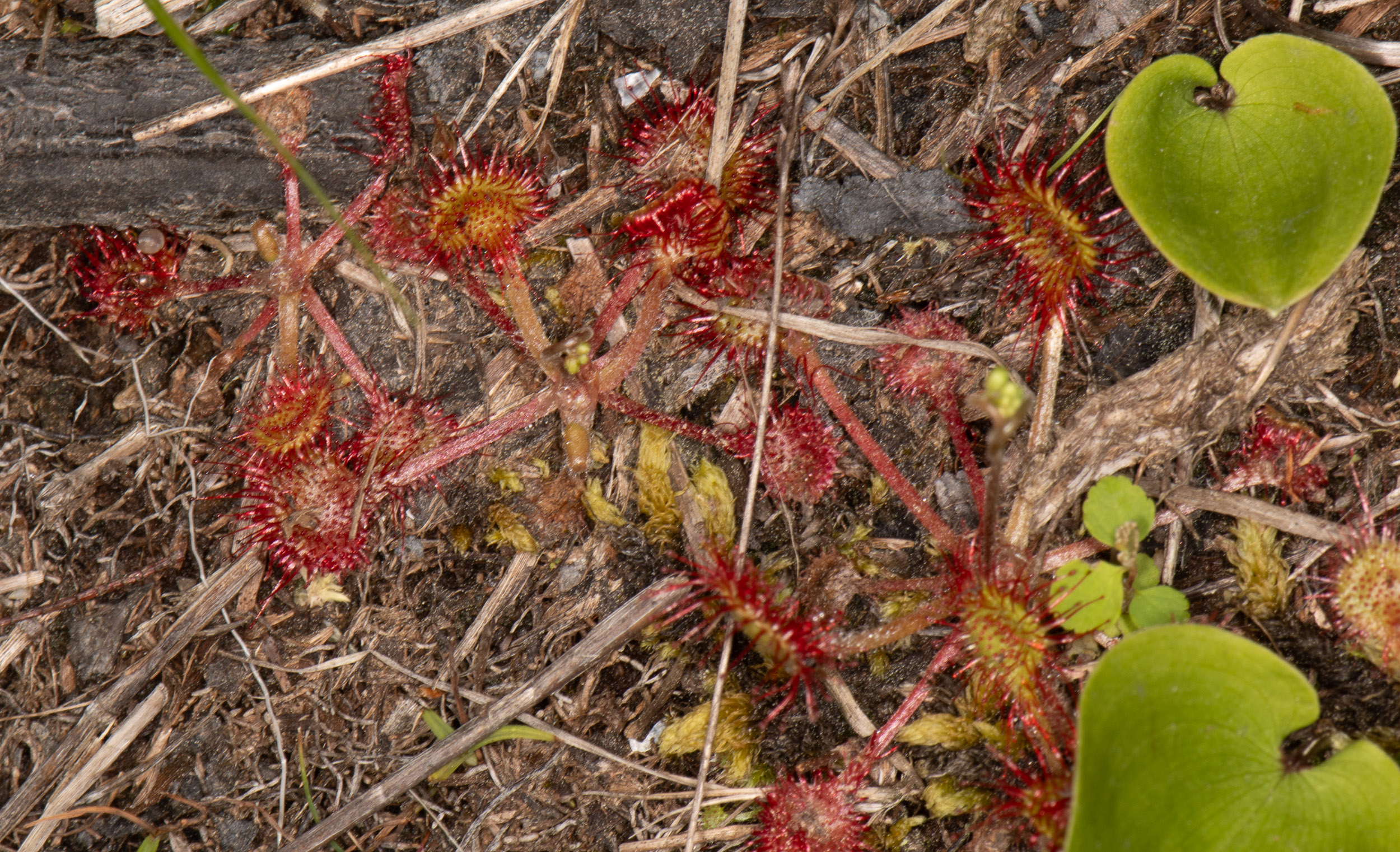
6/20/2021 · Heath, Cathance River Nature Preserve, Highland Green, Topsham, Maine · ≈ 4½ × 3″ (12 × 7.4 cm) 
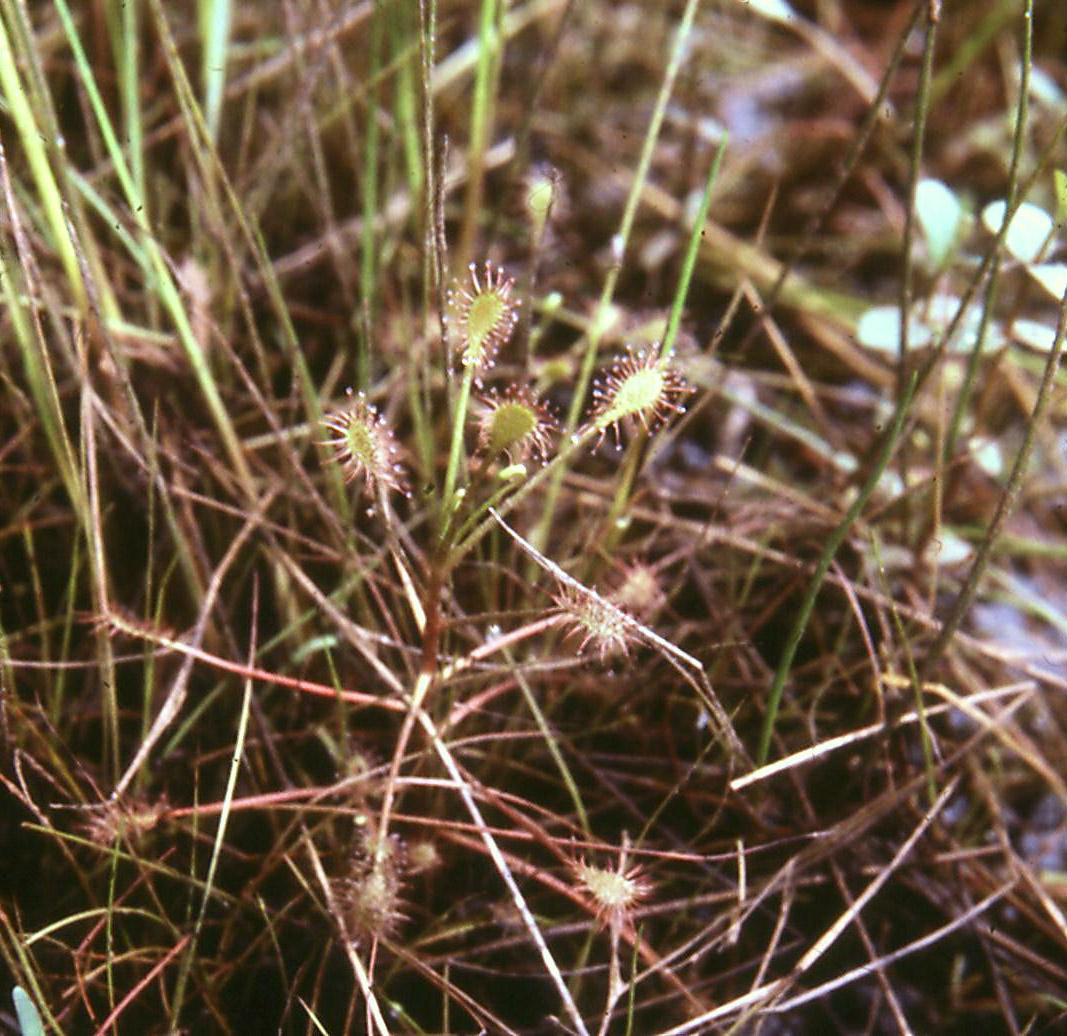
6/15/1979 · New Jersey · By Tim Chandler 
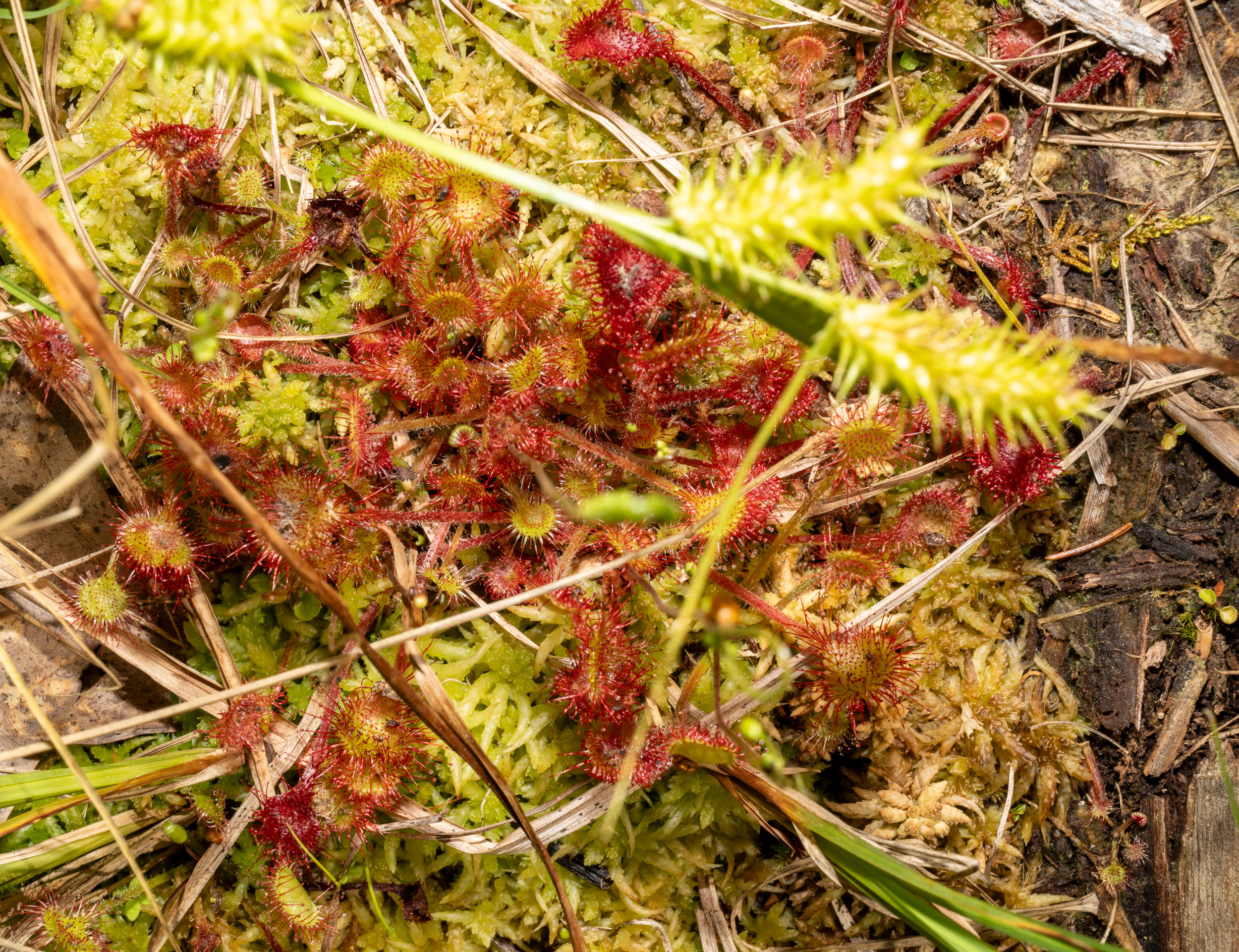
7/5/2025 · Cathance River Nature Preserve, Topsham, Maine · ≈ 7 × 5″ (16 × 12 cm) 
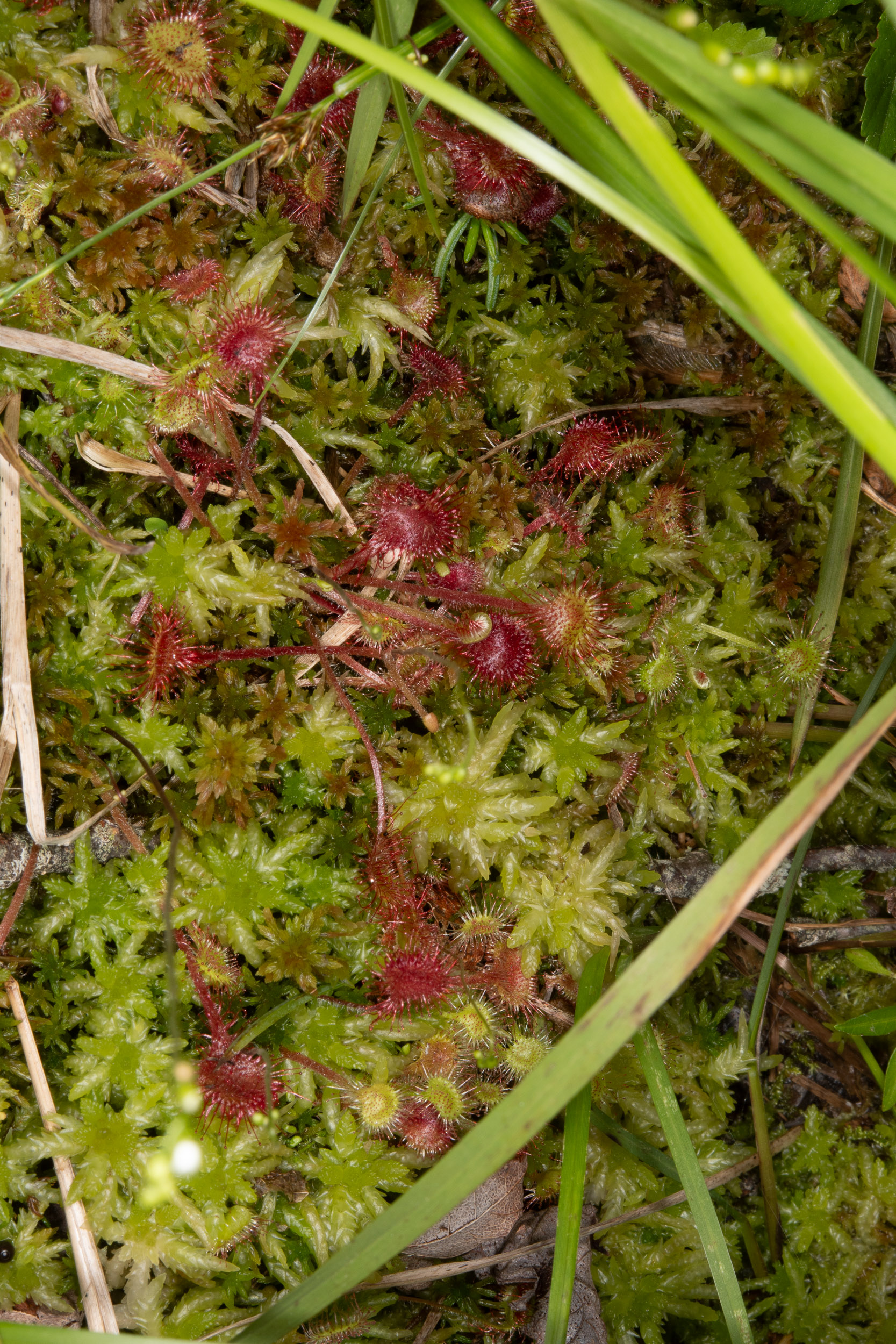
7/15/2020 · Cathance River Nature Preserve, Topsham, Maine · ≈ 5 × 8″ (13 × 20 cm) 
| Kingdom | Plantae | Plants, but not fungi, lichens, or algae (from Stearn's Botanical Latin) |
| Subkingdom | Tracheobionta | Vascular plants—plants with a “circulatory system” for delivering water and nutrients |
| Division | Magnoliophyta | Flowering plants, also known as angiosperms |
| Class | Magnoliopsida | Dicotyledons—plants with two initial seed leaves |
| Subclass | Caryophyllidae | Cacti, many other succulents, carnivorous plants, and leadworts |
| Order | Nepenthales | Carniverous (or more precisely insectiverous) plants |
| Family | Droseraceae | Sundews and related plants |
| Genus | Drosera | From Greek drosus, “dew” |
| Species | rotundifolia | With rounded leaves |
Drosera rotundifolia description by Thomas H. Kent, not updated.

© FloraFinder.org. All rights reserved.