Epimedium × rubrum
Bishop’s caps, red epimedium, red barrenwort
This is a cultivar, introduced (apparently) for better winter tolerance. They are popular as ground covers in shaded areas of gardens, but they are not found in the wild. “Bishops’ caps” refers to the dainty flowers, which resemble a bishop’s mitre (though I don’t see much of a resemblance). The cultivar is a cross of E. alpinum × E. grandiflorum.
Plants: Bishop’s caps are 8–13″ (20–33 cm) in height, and about 1′ (30 cm) around.
Leaves: Rubrum comes from the red-tinted, heart-shaped leaves. Leaves are heart shaped, 1–1½″ (2.5–3.8 cm) long, with serrated edges.
Flowers: Copious, in loose racemes, each flower about ½″ (1.3 cm) around, with four bright pink sepals and pale yellow petals.
Fruits: ?
Online References:
Epimedium rubrum

1/5/2026 · Tom and Susan’s, Pepperell, Massachusetts 
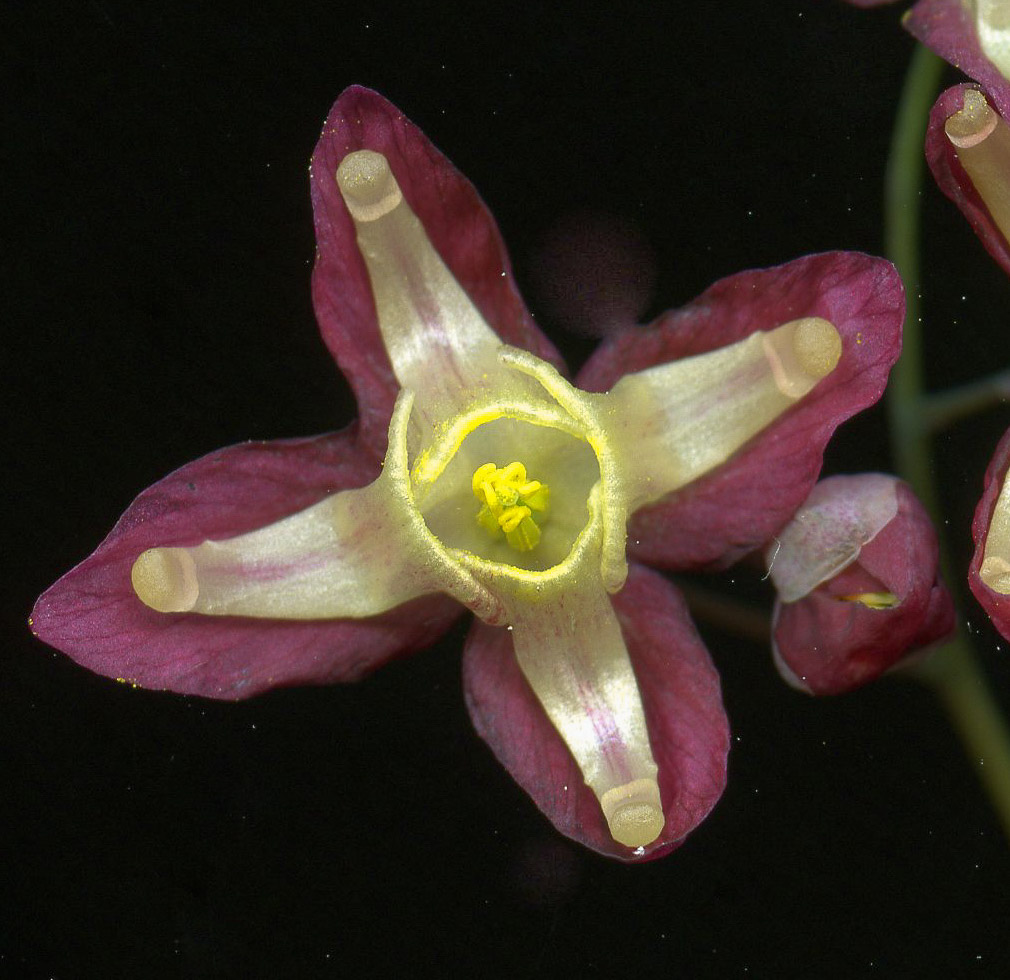
1/5/2026 · Tom and Susan’s, Pepperell, Massachusetts 
| Kingdom | Plantae | Plants, but not fungi, lichens, or algae (from Stearn's Botanical Latin) |
| Subkingdom | Tracheobionta | Vascular plants—plants with a “circulatory system” for delivering water and nutrients |
| Division | Magnoliophyta | Flowering plants, also known as angiosperms |
| Class | Magnoliopsida | Dicotyledons—plants with two initial seed leaves |
| Subclass | Magnoliidae | Includes magnolias, nutmeg, bay laurel, cinnamon, avocado, black pepper, and many others |
| Order | Ranunculales | Basal (evolved earlier) eudicots, also called “true dicots” |
| Family | Berberidaceae | Barberry family |
| Genus | Epimedium | The origin of this name is not known |
| Species | rubrum | From the Latin ruber or rubra meaning “red” |

Epimedium × rubrum description by Thomas H. Kent, not updated.

© FloraFinder.org. All rights reserved.