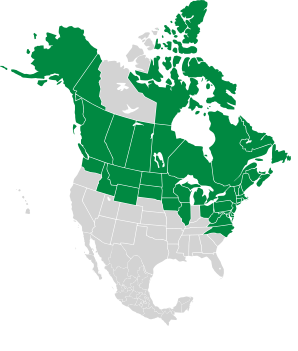
Equisetum sylvaticum L. var. pauciramosum Milde
Equisetum sylvaticum L.
Wood horsetail, woodland horsetail
Wood horsetail is native to the northern hemisphere, both North America and Europe. Like other horsetails (the Equisetum family), these are living fossils, dating all the way back to the Jurassic period, about 140 million to 200 million years ago. So they’re weird. Or actually they are normal: most of the 300,000 species of flowering plants are the new kids in town.
Plants: These perennials are 6–24″ (15–60 cm) in height, with hollow stems 1/32–⅛″ (1–4 mm) around. Stems are circular, but with 10-18 vertical ridges high in silica—horsetails are unusual in their ability to absorb silicic acid from the soil and deposit it as glassy bits that provide rigidity. The ridges have minute silica spines that feel rough to the touch. Drooping whorls of thin compound branches surround sterile stems. Each whorl resembles the ribs of a parasol, and they occur at nodes spaced regularly along the stem, conveying a sense of delicate beauty.
Leaves: Each stem node has a reddish brown sheath with upward-pointing “teeth.” Technically, the lacy “leaves” are really branches, and the sheaths are really leaves.
Fruits: Fertile stems are shorter and unbranched at first. They develop conelike strobili containing spores. Each cone is 1–1½″ (2.5–3.8 cm) long, and pale pink to tan. After the cone dries and releases spores, fertile stems also develop branches.
Habitats: Lowland wet conifer forests, and mixed upland, dry conifer, and deciduous forest habitats. It is also found in meadows, bogs, swamps, and along streambanks.
Online References:

7/19/2020 · Heath Trail, Cathance River Nature Preserve, Topsham, Maine · ≈ 6 × 10″ (16 × 24 cm) 
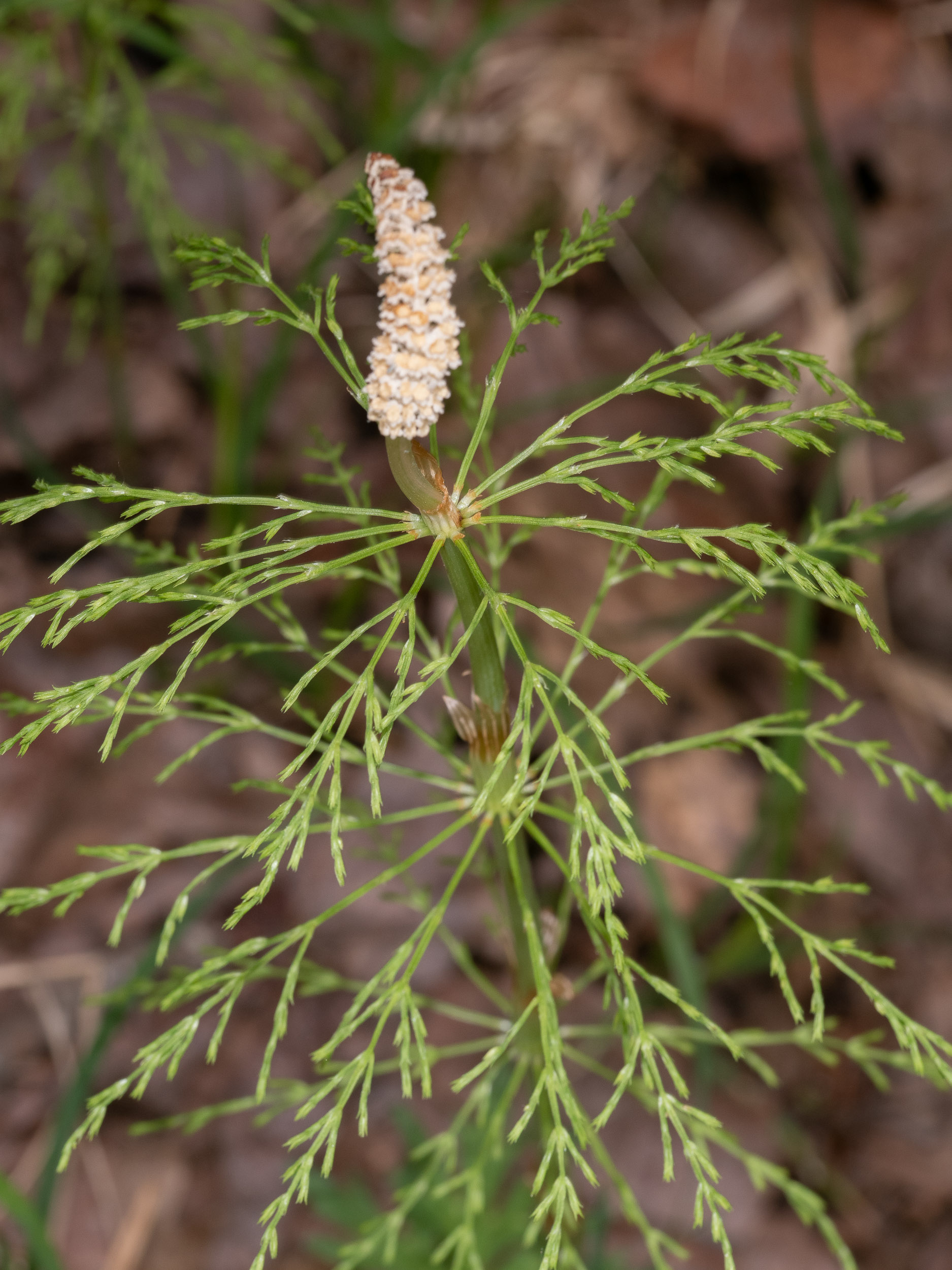
5/16/2023 · Hamilton Audubon Sanctuary, Blue Trail, West Bath, Maine 

5/16/2023 · Hamilton Audubon Sanctuary, Blue Trail, West Bath, Maine 
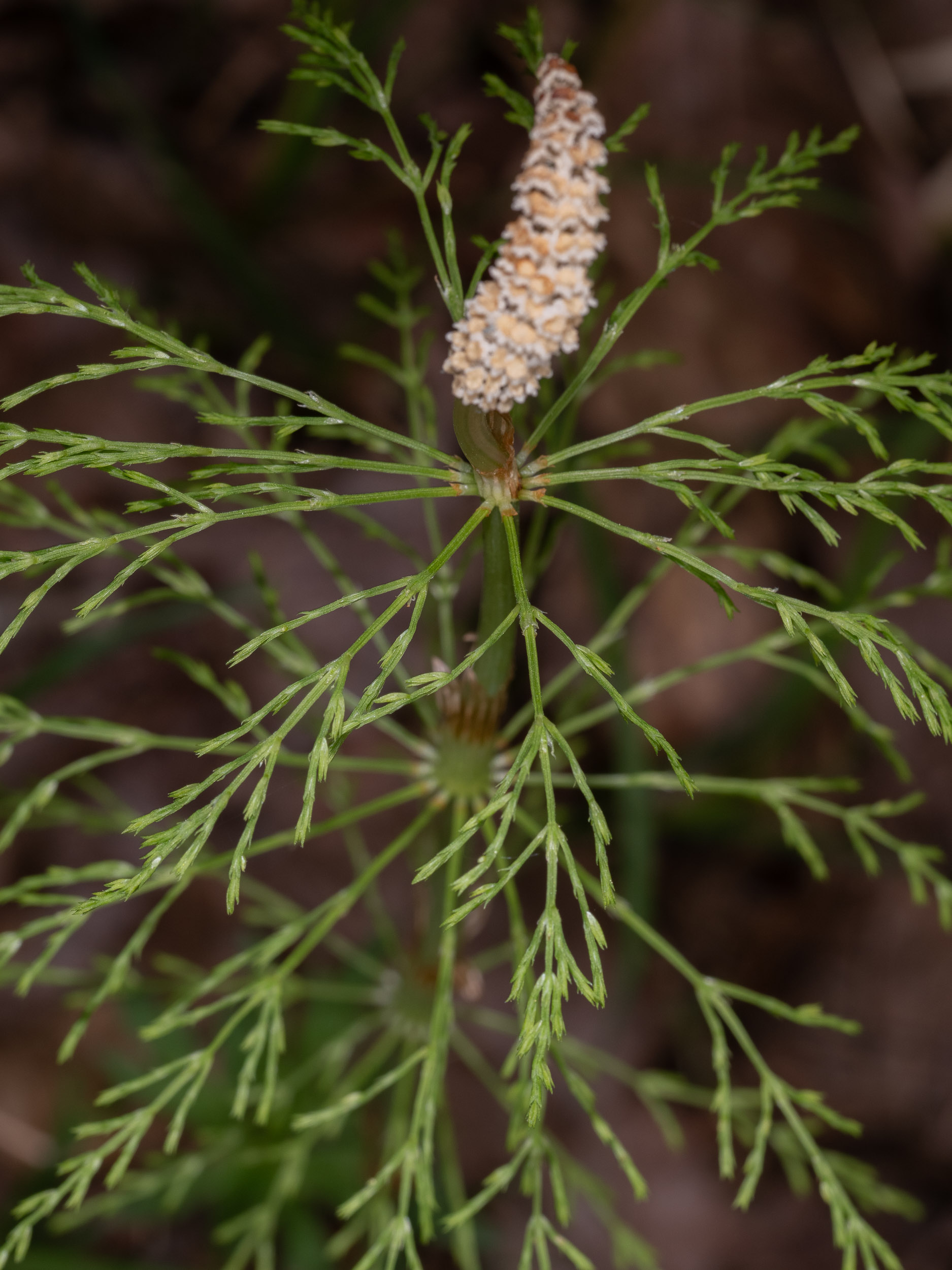
5/16/2023 · Hamilton Audubon Sanctuary, Blue Trail, West Bath, Maine 
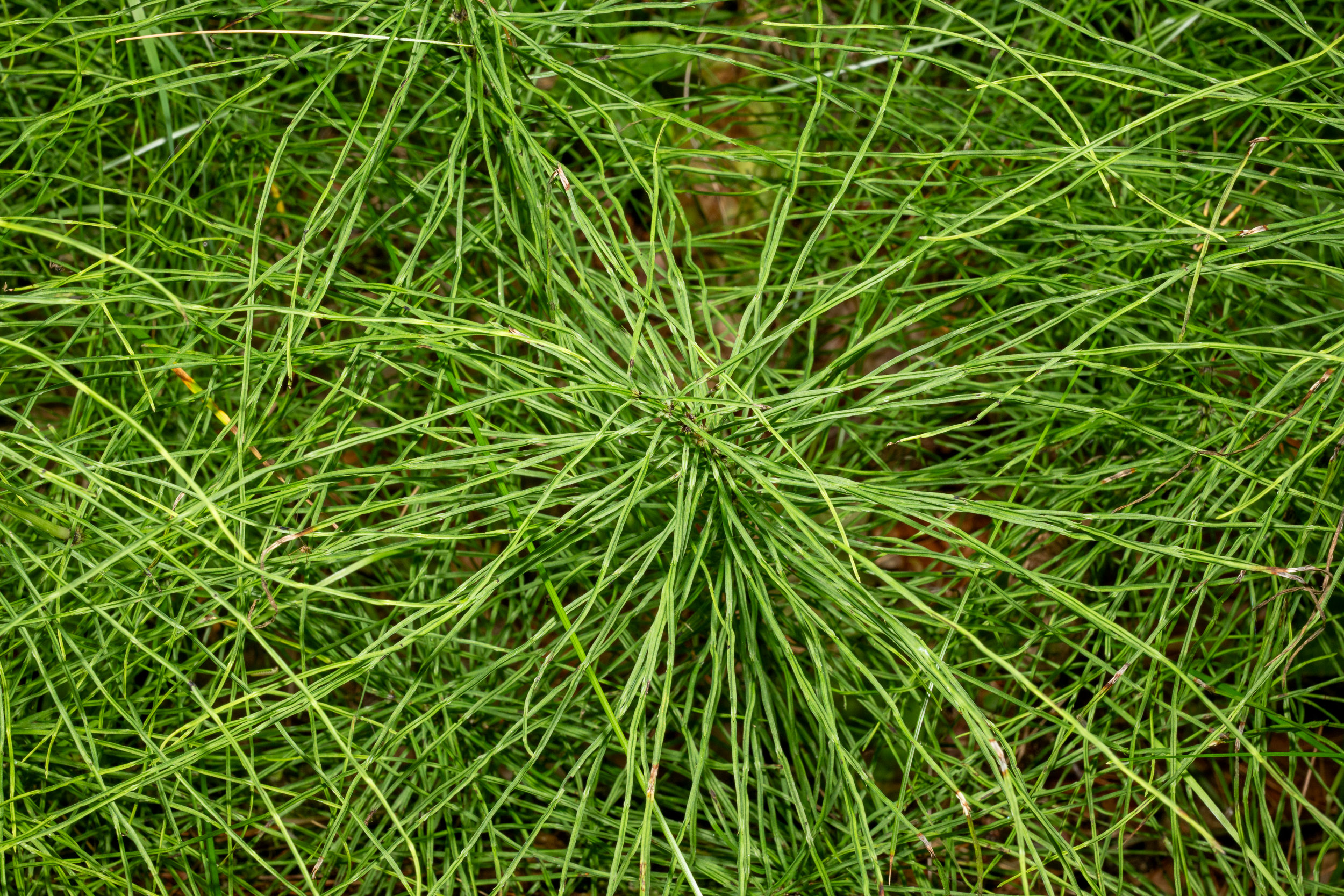
7/4/2025 · Wilson’s Cove, Harpswell, Maine · ≈ 11 × 8″ (28 × 19 cm) 

6/9/2025 · Curtis Farm Preserve, Harpswell, Maine · ≈ 5 × 8″ (13 × 20 cm) 

5/16/2023 · Hamilton Audubon Sanctuary, Blue Trail, West Bath, Maine 
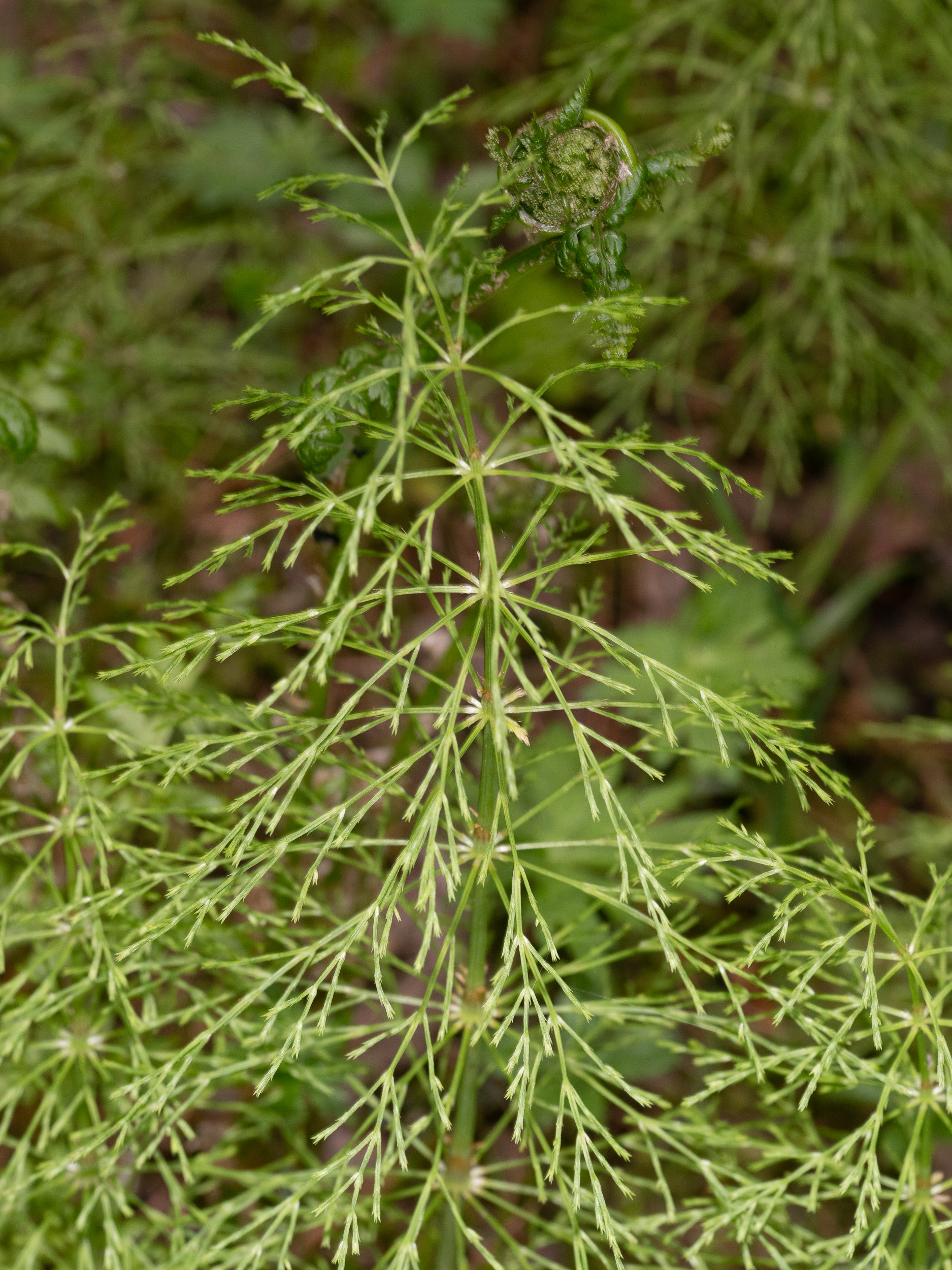
5/16/2023 · Hamilton Audubon Sanctuary, Blue Trail, West Bath, Maine 
| Kingdom | Plantae | Plants, but not fungi, lichens, or algae (from Stearn's Botanical Latin) |
| Subkingdom | Tracheobionta | Vascular plants—plants with a “circulatory system” for delivering water and nutrients |
| Division | Equisetophyta | Horsetails, which date back to the Devonian era |
| Class | Equisetopsida | Horsetails, spore-bearing plants related to ferns |
| Order | Equisetales | Living horsetails (most are extinct) |
| Family | Equisetaceae | Living horsetails |
| Genus | Equisetum | From equus, horse; and seta, bristle |
| Species | sylvaticum | From Latin silva, “woods, forest,” and aticus, pertainiing to |
Equisetum sylvaticum description by Thomas H. Kent, not updated.

© FloraFinder.org. All rights reserved.