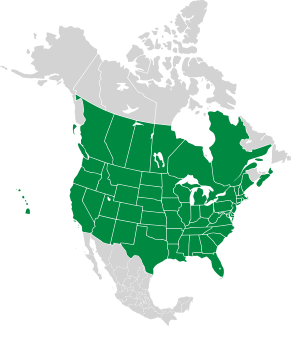
Eragrostis megastachya (Koeler) Link
Poa cilianensis All.
Eragrostis cilianensis (All.) Vign. ex Janchen
Stink grass, candy grass, gray lovegrass
Stink grass is native to Eurasia and Africa, but naturalized in most of North America and much of the rest of the world. The odor of the young grass is responsible for the common name.
Plants: An annual bunchgrass, this forms tufts up to 2′ (60 cm) in height, with multiple hairless stems that emerge from the base.
Leaves: Alternate, flat, and 1¼–4½″ long ⨉ 1/32–⅜″ wide (3.2–11 cm ⨉ 1–10 mm). At the ligule, where the leaf attaches to the stem, there is a band of short hairs. When damp or crushed, the leaves stink.
Flowers: Open, branching, somewhat conical inflorescences are up to 8 ⨉ 3½″ (19 ⨉ 8.9 cm).
Fruits: Spikelets are ¼–⅝″ long ⨉ ⅛″ wide (6.3–16 ⨉ 3.2 mm), and silvery green or purplish, with 10-40 florets.
Habitats: Human-disturbed or human-maintained habitats such as roadsides, cultivated areas, waste places, gravel pits, and railways.
Online References:
References:
McMullen, Conley K., Flowering Plants of the Galápagos, Comstock Publishing Associates, 1999, p. 241
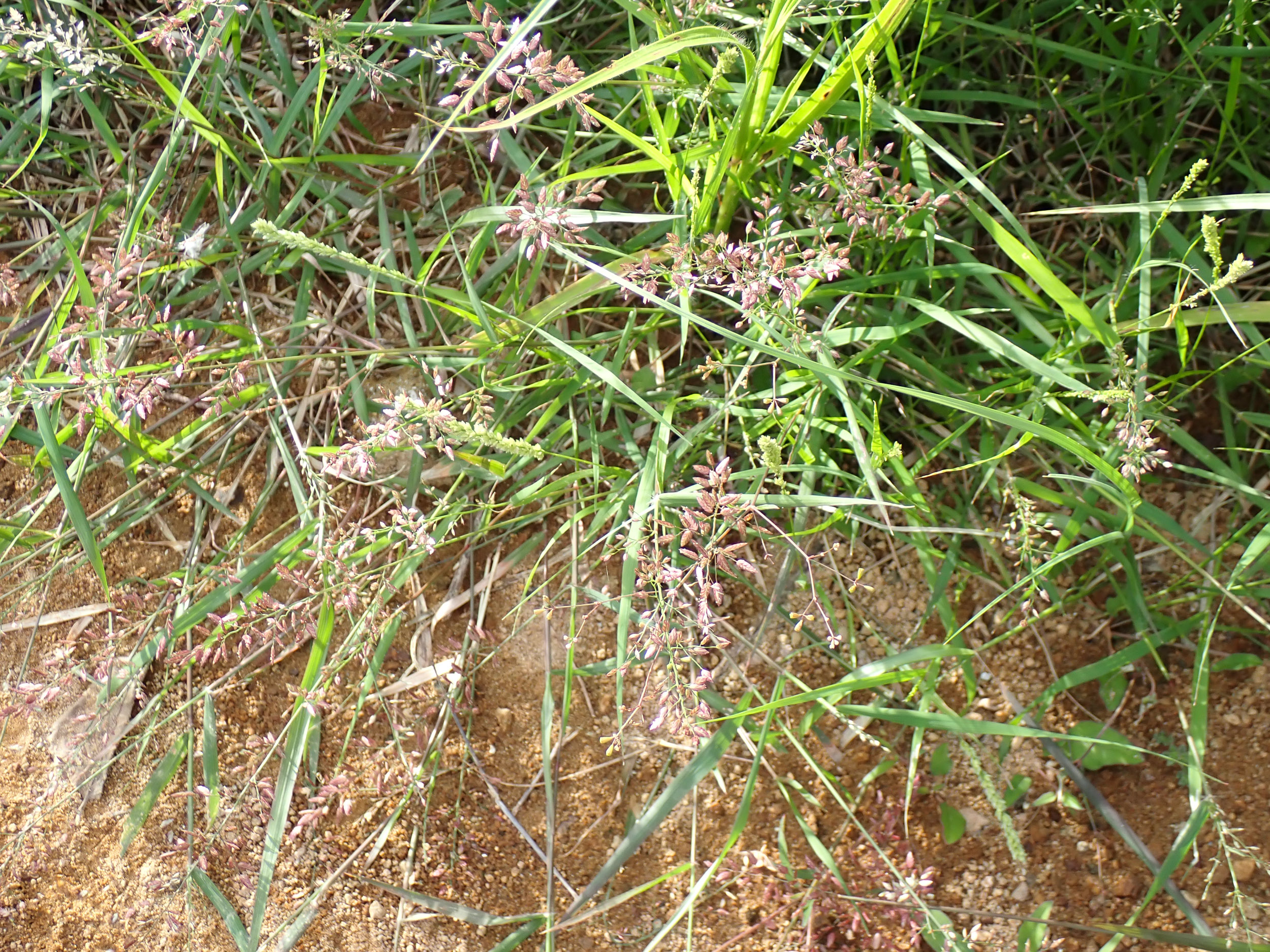
4/4/2025 · Punta Pitt, San Cristóbal, Galápagos Islands · By Heather Kent and Kathryn Morgis 
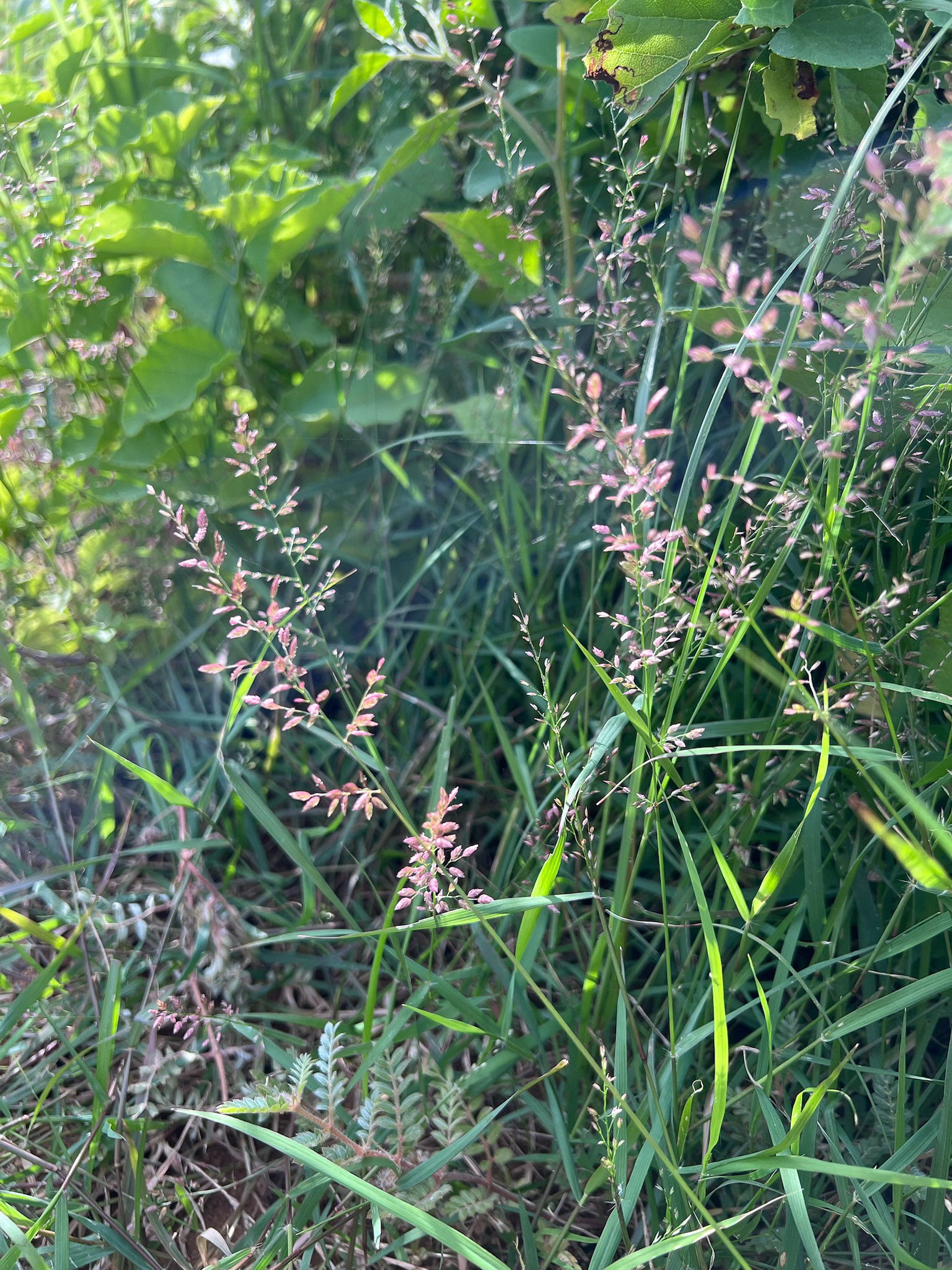
4/4/2025 · Punta Pitt, San Cristóbal, Galápagos Islands, Ecuador · By Heather Kent 

4/4/2025 · Punta Pitt, San Cristóbal, Galápagos Islands · By Heather Kent and Kathryn Morgis 

4/4/2025 · Punta Pitt, San Cristóbal, Galápagos Islands · By Heather Kent and Kathryn Morgis 
| Kingdom | Plantae | Plants, but not fungi, lichens, or algae (from Stearn's Botanical Latin) |
| Subkingdom | Tracheobionta | Vascular plants—plants with a “circulatory system” for delivering water and nutrients |
| Division | Magnoliophyta | Flowering plants, also known as angiosperms |
| Class | Liliopsida | Monocots (plants with a single seed leaf); includes the lily family |
| Subclass | Commelinidae | Dayflowers and spiderworts, and several others |
| Order | Cyperales | Flowering plants including grasses |
| Family | Poaceae | Grasses (but not sedges or rushes) |
| Genus | Eragrostis | The common explanation of this name is that it derives from the Greek eros, “love,” and agrostis, “grass,” of unknown application but giving the genus its common name of “lovegrass.” However, according to Umberto Quattrocchi, others have suggested that it actually derives from the Greek era, “earth.” |
| Species | cilianensis | For the ’Ciliani‘ estate, Italy, where the specimen was collected by Bellardi |
Eragrostis cilianensis description by Thomas H. Kent, not updated.

© FloraFinder.org. All rights reserved.