Eriodictyon californicum (Hook. & Arn.) Torr.
Yerba santa, mountain balm, bear’s weed, gum bush, gum plant, consumptive weed, California yerba santa
Yerba santa, Spanish for “holy weed” or “holy herb,” is so named for its alleged medicinal value.
Plants: Evergreen shrubs 3–8′ (1–2.5 m) in size. They form clonal colonies. Leaves and twigs are covered with a shiny resin.
Leaves: Leathery, dark green, and up to 6″ (15 cm) long. Leaves have short petioles, and are narrow, and oblong to lanceolate. They may have smooth or toothed edges, and may be dusted with black fungi. They have a woolly network on the leaf undersides, distinctive enough to account for the genus name.
Flowers: A cluster of bell-shaped white to purple flowers. Each flower is ⅜–¾″ (1–2 cm) in size. They appear from April to July.
Fruits: A small capsule, 1/16–⅛″ (2–3 mm) long, containing two to eight small seeds.
Habitats: The species grows in chapparal and coast redwood forests, on slopes, in fields, roadsides, and woodlands
Edibility: Sometimes used as a medicinal tea, but not edible to people, and nutritionally poor for livestock.
Medical: From Wikipedia:
The leaves have historically been used to treat asthma, upper respiratory infections and allergic rhinitis. The Concow tribe calls the plant wä-sä-got’-ō (Konkow language). The Chumash used it as a poultice for wounds, insect bites, broken bones, and sores. It was also used in a steam bath to treat hemorrhoids.
The flavonoid sterubin is the main active component of yerba santa and is neuroprotective against multiple toxicities of the aging brain, including possibly Alzheimer’s disease.
Today, some use yerba santa for respiratory infections, fever, obesity, and other conditions, but there is no supporting research.
Online References:

4/29/2018 · Sandstone Quarry, Scenic Loop Road, Red Rock Canyon, Nevada · ≈ 5 × 3½″ (13 × 9.2 cm) 

4/29/2018 · Sandstone Quarry, Scenic Loop Road, Red Rock Canyon, Nevada · ≈ 4 × 5″ (11 × 13 cm) 
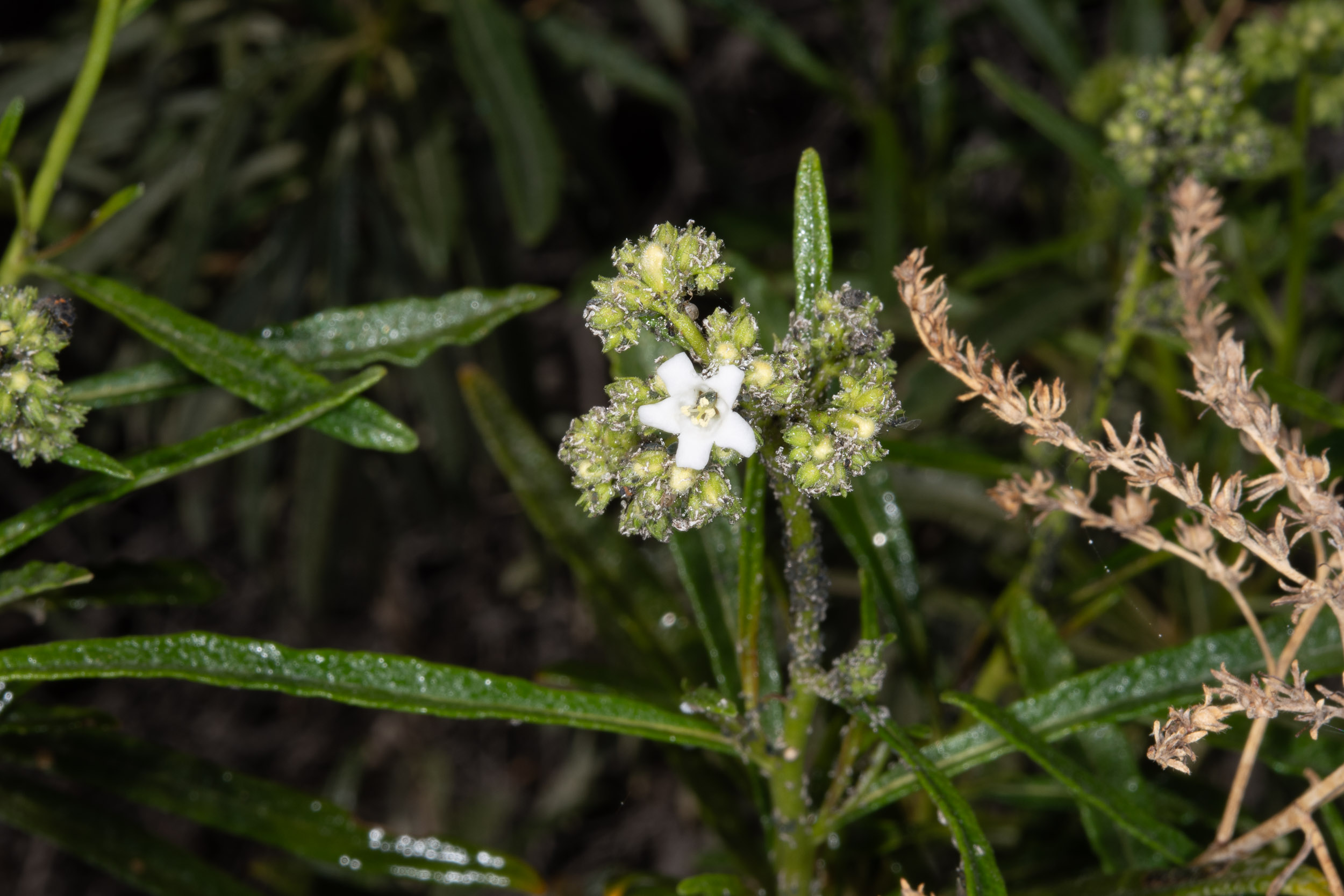
4/29/2018 · Sandstone Quarry, Scenic Loop Road, Red Rock Canyon, Nevada · ≈ 5 × 3½″ (13 × 9.2 cm) 

4/29/2018 · Sandstone Quarry, Scenic Loop Road, Red Rock Canyon, Nevada · ≈ 4½ × 7″ (12 × 18 cm) 

4/29/2018 · Sandstone Quarry, Scenic Loop Road, Red Rock Canyon, Nevada · ≈ 6 × 4″ (15 × 10 cm) 
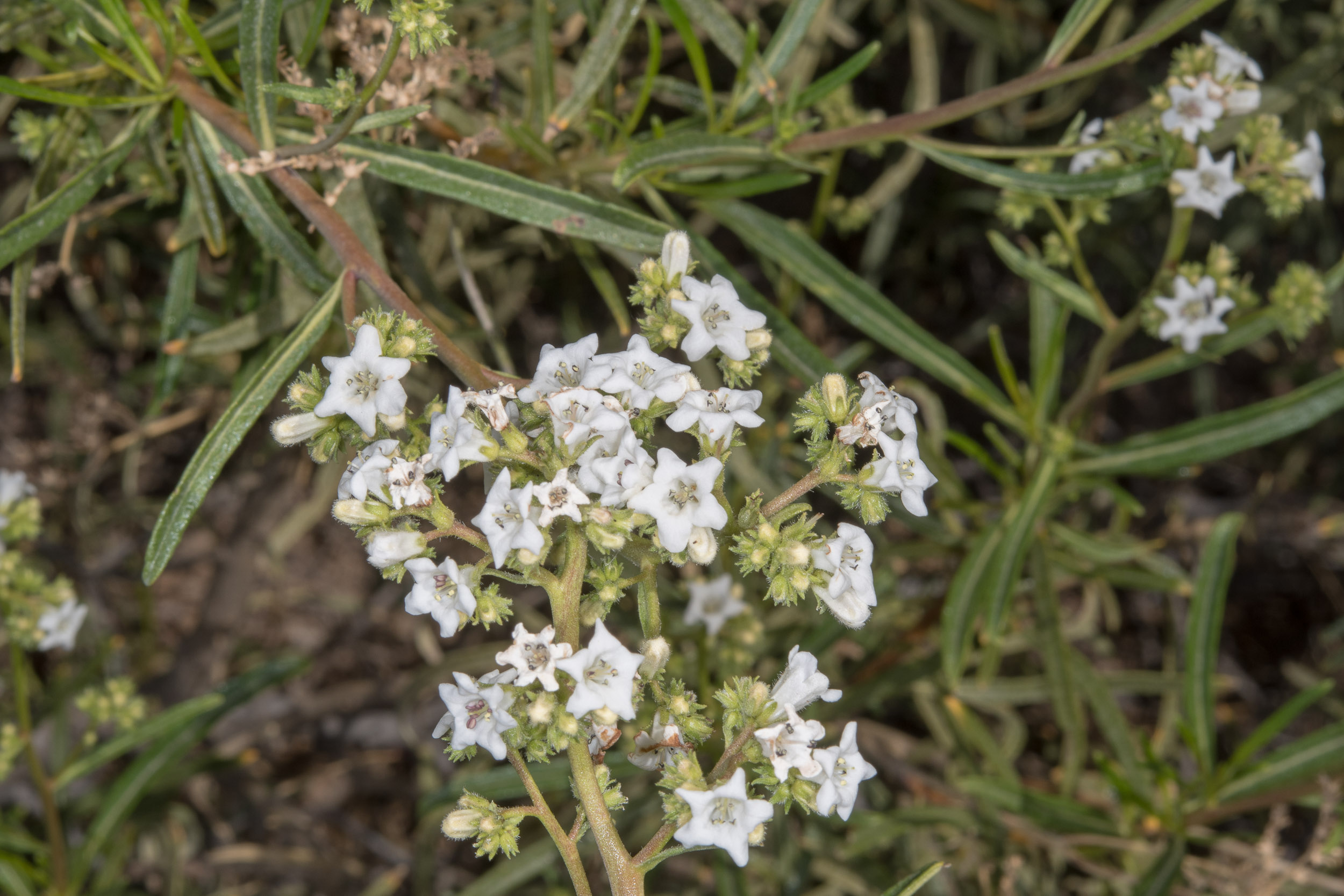
4/29/2018 · Sandstone Quarry, Scenic Loop Road, Red Rock Canyon, Nevada · ≈ 7 × 4½″ (18 × 12 cm) 
| Kingdom | Plantae | Plants, but not fungi, lichens, or algae (from Stearn's Botanical Latin) |
| Subkingdom | Tracheobionta | Vascular plants—plants with a “circulatory system” for delivering water and nutrients |
| Division | Magnoliophyta | Flowering plants, also known as angiosperms |
| Class | Magnoliopsida | Dicotyledons—plants with two initial seed leaves |
| Subclass | Asteridae | A large class that encompasses asters |
| Order | Lamiales | Aromatic herbs and shrubs, including lavender, lilac, olive, jasmine, ash, teak, snapdragon, sesame, psyllium, garden sage, mint, basil, and rosemary |
| Family | Boraginaceae | Borages or forget-me-nots |
| Genus | Eriodictyon | Derived from the Greek erion, “wool,” and diktuon, “net,” and referring to the appearance of the underside of the leaves |
| Species | californicum | Of or from California |

Eriodictyon californicum description by Thomas H. Kent, not updated.

© FloraFinder.org. All rights reserved.