Eriogonum jamesii Benth.
Antelope sage, James’ buckwheat, parsnipflower buckwheat, whorled buckwheat, Wyeth buckwheat
Plants: Low herbacious plants or subshrubs are 1¾–10″ tall ⨉ 12–59″ around (5–25 ⨉ 30–150 cm).
Leaves: Basal, elliptic or lanceolate, entire leaves have petioles ⅛–2″ (5–60 mm) long. Leaves are ⅜–1 ⨉ ⅛–⅜″ (1–3 cm ⨉ 5–10 mm), and tomentose: hairy above, and even more so below, with hairs that are flat and matted.
Flowers: Large umbels are 4–12 ⨉ 4–10″ (10–30 ⨉ 10–25 cm), covering almost all of the plant. Flowers are white to cream-colored, with a patch of pink at the base, and ⅛–¼″ (3–8 mm) in size. Flowers appear from June to October.
Fruits: Achenes are light brown to brown, and ⅛–3/16″ (4–5 mm) in size.
Habitats: Arid grasslands, shrublands, woodlands, meadows, mountainsides, and sand or gravel flats, at elevations of 3000–9000′ (914–2743 m).
Online References:
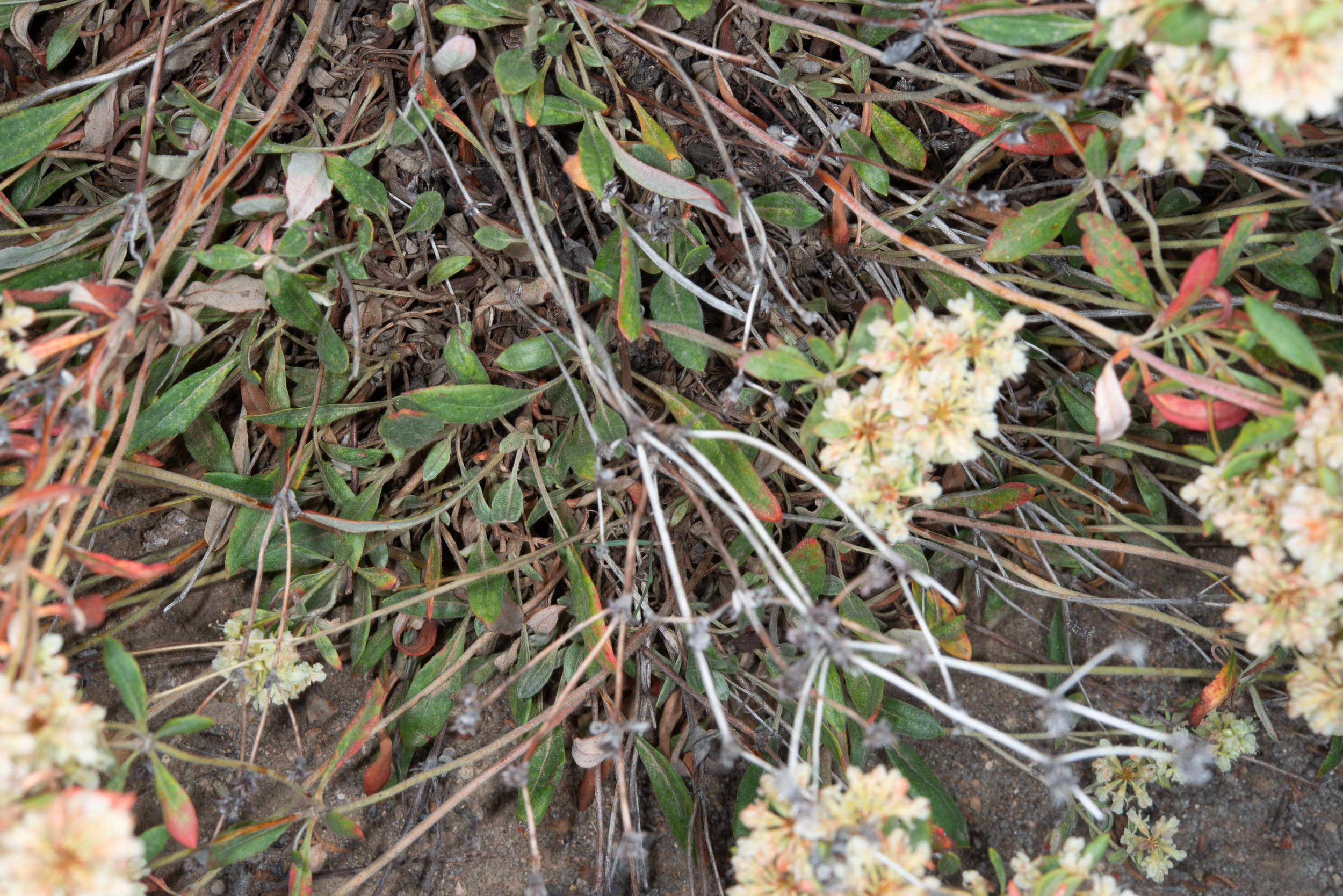
8/28/2014 · New Mexico · ≈ 12 × 8″ (31 × 21 cm) 

8/26/2014 · Lava Falls, Malpais National Monument, El Malpais, New Mexico · ≈ 9 × 6″ (21 × 16 cm) 

8/28/2014 · New Mexico · ≈ 9 × 6″ (22 × 15 cm) 

8/28/2014 · New Mexico · ≈ 10 × 7″ (25 × 16 cm) 
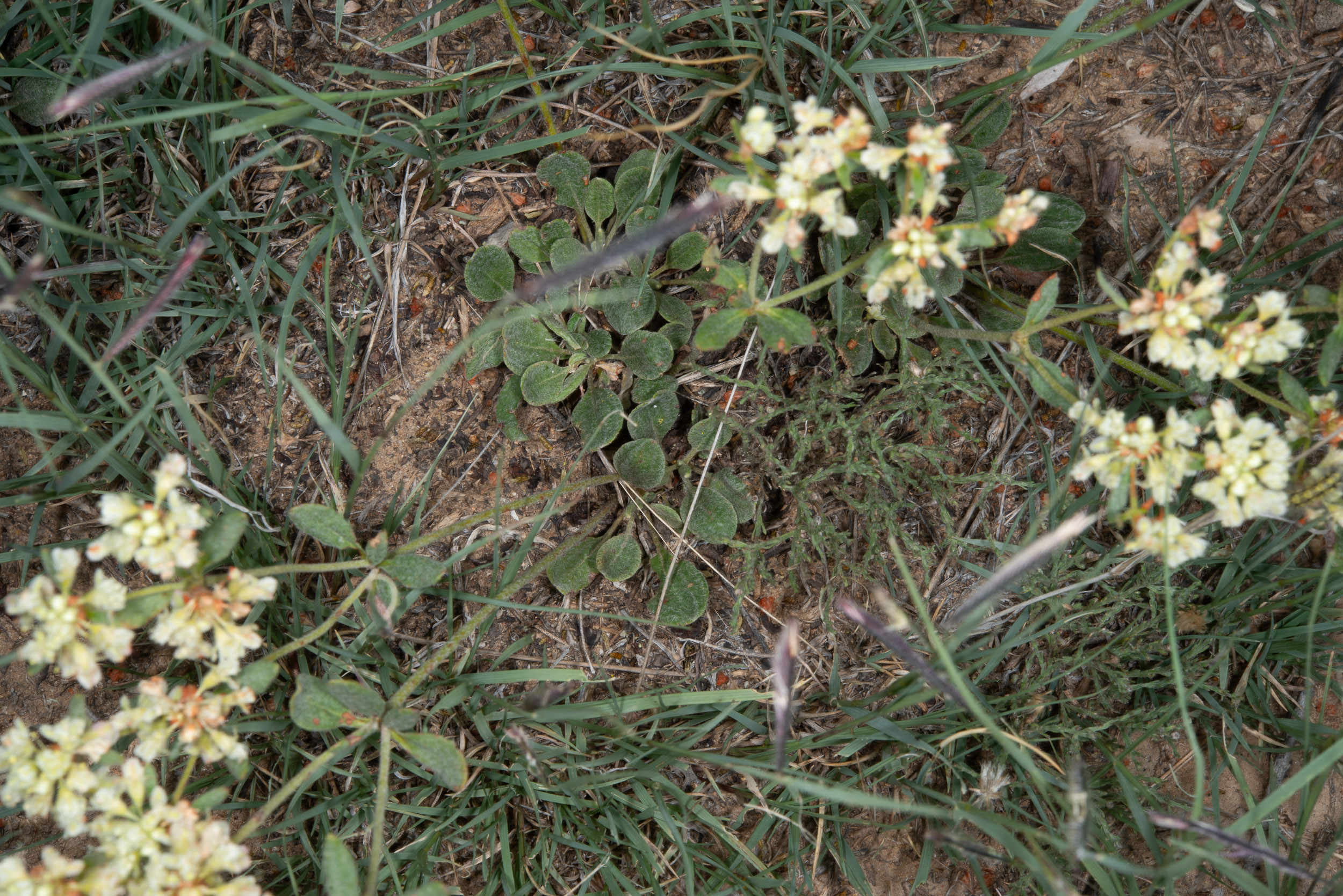
8/26/2014 · Lava Falls, Malpais National Monument, El Malpais, New Mexico · ≈ 11 × 7″ (28 × 18 cm) 

The caterpillar may be Estigmene acrea, or salt marsh moth, but this is unlikely, given the locale · 8/26/2014 · Lava Falls, Malpais National Monument, El Malpais, New Mexico · ≈ 4½ × 6″ (12 × 14 cm) 
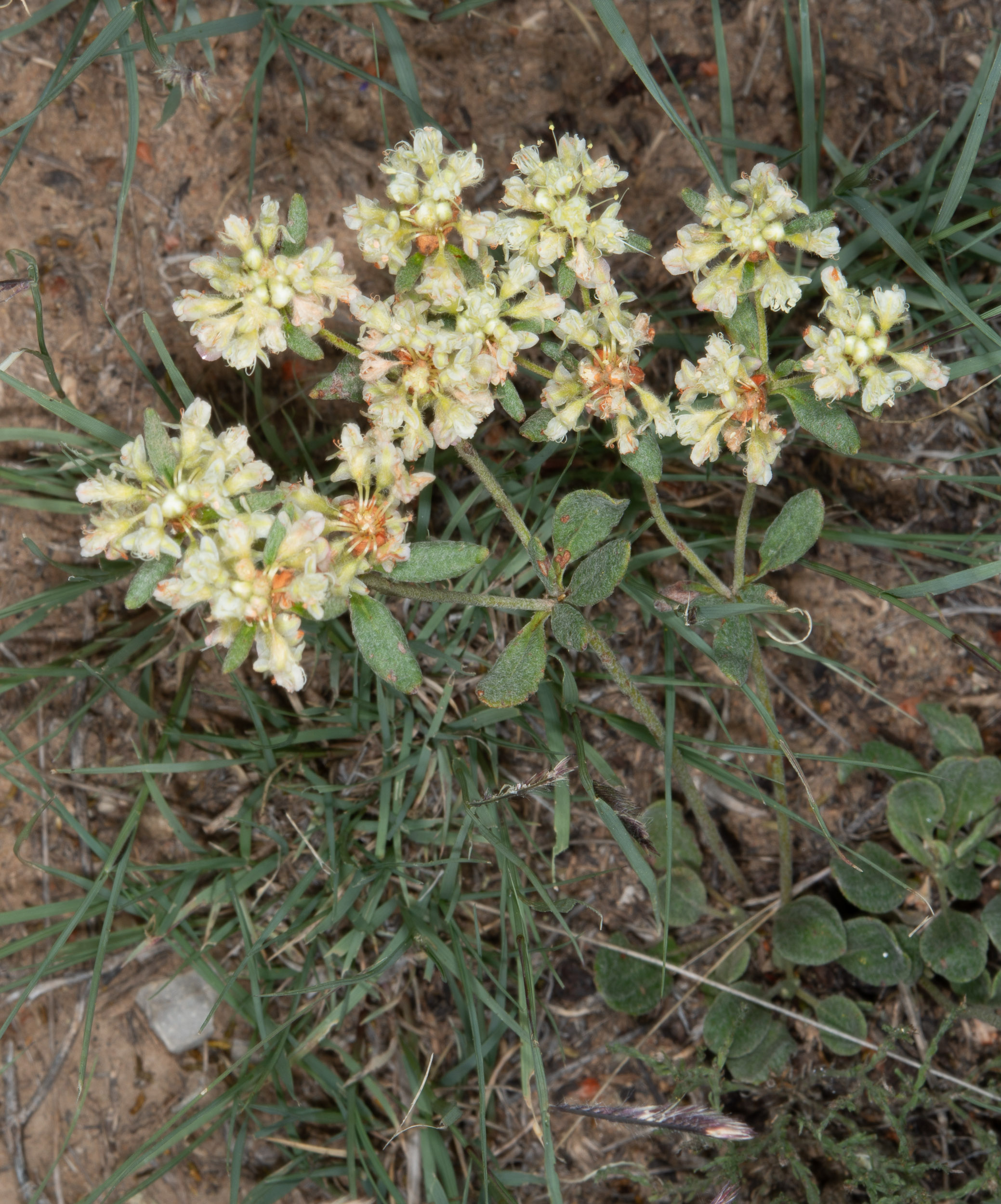
8/26/2014 · Lava Falls, Malpais National Monument, El Malpais, New Mexico · ≈ 6 × 5″ (15 × 12 cm) 
| Kingdom | Plantae | Plants, but not fungi, lichens, or algae (from Stearn's Botanical Latin) |
| Subkingdom | Tracheobionta | Vascular plants—plants with a “circulatory system” for delivering water and nutrients |
| Division | Magnoliophyta | Flowering plants, also known as angiosperms |
| Class | Magnoliopsida | Dicotyledons—plants with two initial seed leaves |
| Subclass | Caryophyllidae | Cacti, many other succulents, carnivorous plants, and leadworts |
| Order | Caryophyllales | Includes cacti, carnations, amaranths, ice plants, and many carnivorous plants |
| Family | Polygonaceae | Knotweed or smartweed family |
| Genus | Eriogonum | From Greek erion, “wool,” and gonu, “joint or knee,” for the hairy or woolly joints in the stems of some of these species |
| Species | jamesii | After Edwin P. James (1797-1861), an American naturalist and botanical explorer in the Rocky Mountains |
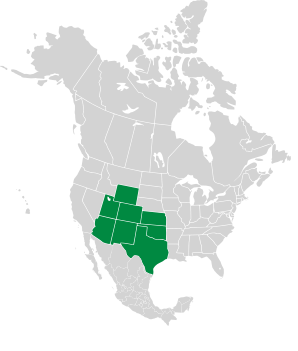
Eriogonum jamesii description by Thomas H. Kent, not updated.

© FloraFinder.org. All rights reserved.