Erysimum capitatum (Douglas ex Hook.) Greene
Western wallflower, sanddune wallflower
Coastal wallflower is native to North America. It is a member of the very large mustard family.
Plants: 1–4′ (30–121 cm) tall, often with a single stem, sometimes with a few branches. Stems are coated with grayish hairs lying parallel against the stem
Leaves: There is a basal rosette of many narrow leaves with variable shape and size, smooth-edged or toothed, 1–4½ ⨉ 1/16–⅜″ (3–12 cm ⨉ 2–10 mm). Narrow leaves also appear sparsely along the stem.
Flowers: Flowers have four flat petals, and are 1–1¾″ (3–5 cm) in diameter. They are yellow to deep orange, sometimes purplish-maroon or white; appearing from March to August.
Fruits: Upward-pointing pods 1–4″ (3–10 cm) long and about 1/32″ (1.5 mm) wide, and four-sided.
Habitats: Dry, sandy sites and grasslands, meadows.
Online References:

5/22/2009 · Slide Rock State Park, Sedona, Arizona · ≈ 8 × 9″ (19 × 24 cm)  ID is uncertain
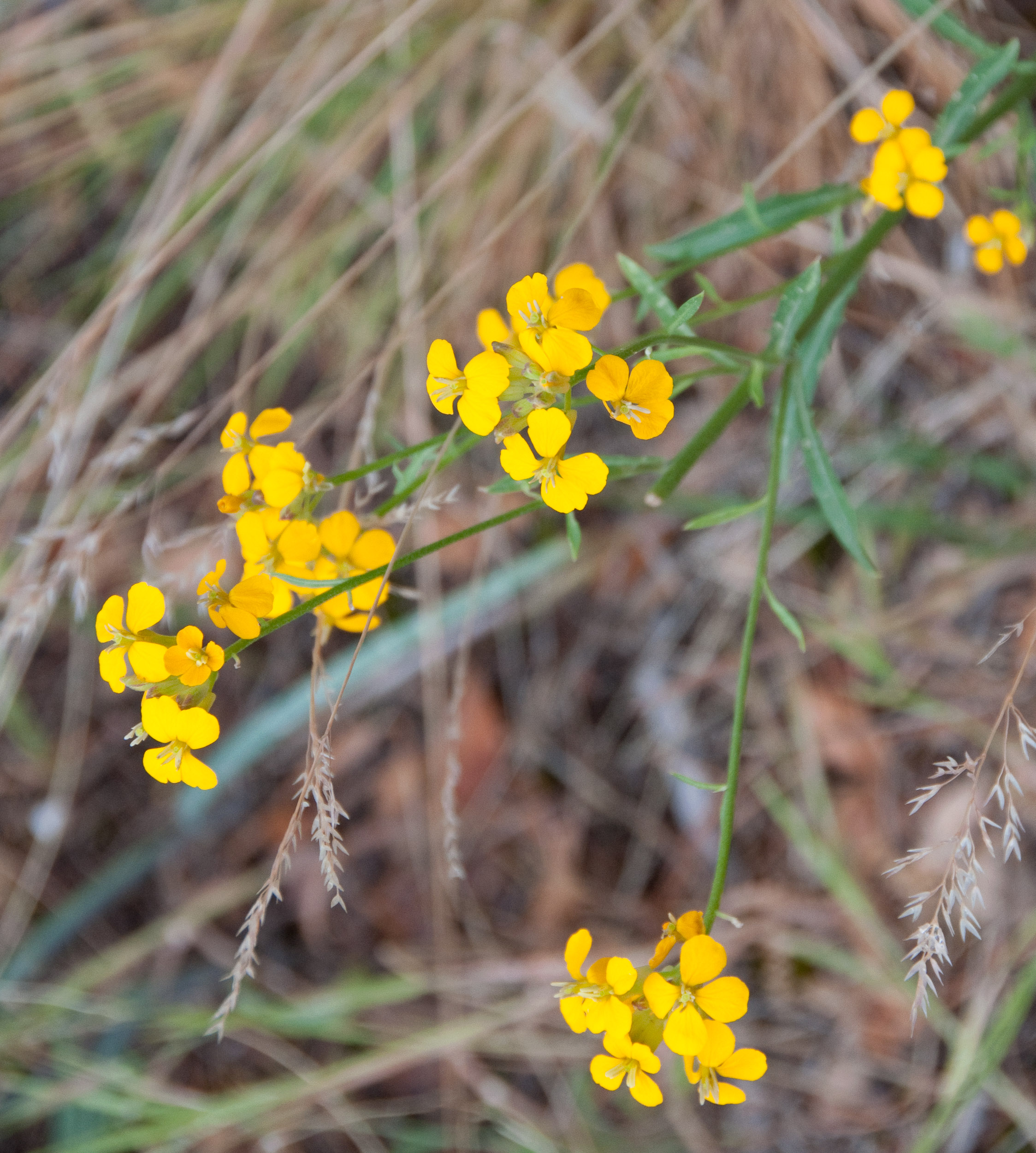
5/22/2009 · Slide Rock State Park, Sedona, Arizona · ≈ 5 × 6″ (13 × 14 cm) ID is uncertain 
| Kingdom | Plantae | Plants, but not fungi, lichens, or algae (from Stearn's Botanical Latin) |
| Subkingdom | Tracheobionta | Vascular plants—plants with a “circulatory system” for delivering water and nutrients |
| Division | Magnoliophyta | Flowering plants, also known as angiosperms |
| Class | Magnoliopsida | Dicotyledons—plants with two initial seed leaves |
| Subclass | Rosidae | Roses, legumes, proteas, dogwoods, hydrangeas, mistletoes, euphorbias, grapes, many more |
| Order | Brassicales | Mustard, cabbage, caper, papaya, nasturtiums, many others; most produce mustard oil |
| Family | Brassicaceae | Mustards, cabbages |
| Genus | Erysimum | From the Greek eryomai, “to help or save,” because some of the species supposedly had a medicinal value |
| Species | capitatum | Capitate, refers to the way the flowers form in a head-like cluster |
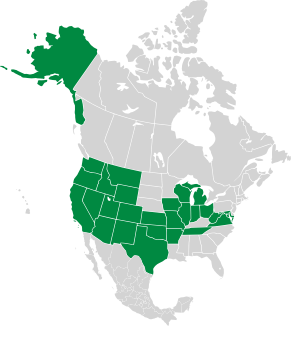
Erysimum capitatum description by Thomas H. Kent, not updated.

© FloraFinder.org. All rights reserved.