Ferocactus cylindraceus (Engelm.) Orcutt
Compass barrel, fishhook cactus, barrel cactus, California barrel cactus, biznaga, cliff barrel cactus, compass cactus, desert barrel cactus, golden-spined barrel cactus, le conte barrel cactus, spiny barrel cactus
Ferocactus means “wild or fierce” cactus, and cylindraceus means cylindrical. These cacti are well protected with fishhook-like spines. They are natives of the southwestern United States and northwestern Mexico.
Plants: Up to 9½′ (3 m) high and 1½′ (50 cm) in diameter, usually found singly, rarely branched. The stem has 20-30 ribs which may be vertical or spirally arranged. Most notable are the central spines, of which there are 4-7 in each group. These large spines are variously colored white, red, yellow, or brown. They have rounded or flat cross-sections, and are often curved. Each central spine is 1¾–6″ (5–15 cm) long. Radial spines resembling the spokes of a wheel appear underneath the central spine clusters. They are much smaller, almost hairlike, often white, in clusters of 15-25.
Flowers: Yellow (rarely orange) funnel-shaped flowers are 1½–2″ (4–6 cm) in diameter and 1–2″ (3–6 cm) long. Rarely, the flowers have a reddish midstripe.
Fruits: Bright yellow 1–1½ ⨉ ½–¾″ (3–4 ⨉ 1.5–2 cm), and leathery.
Habitats: Gravelly, rocky, or sandy soils, in creosote bush scrub and Joshua tree habitats, at elevations of 197–4921′ (60–1500 m).
References:
Online References:

5/25/2009 · Boyce Thompson Arboretum, Superior, Arizona  ID is uncertain
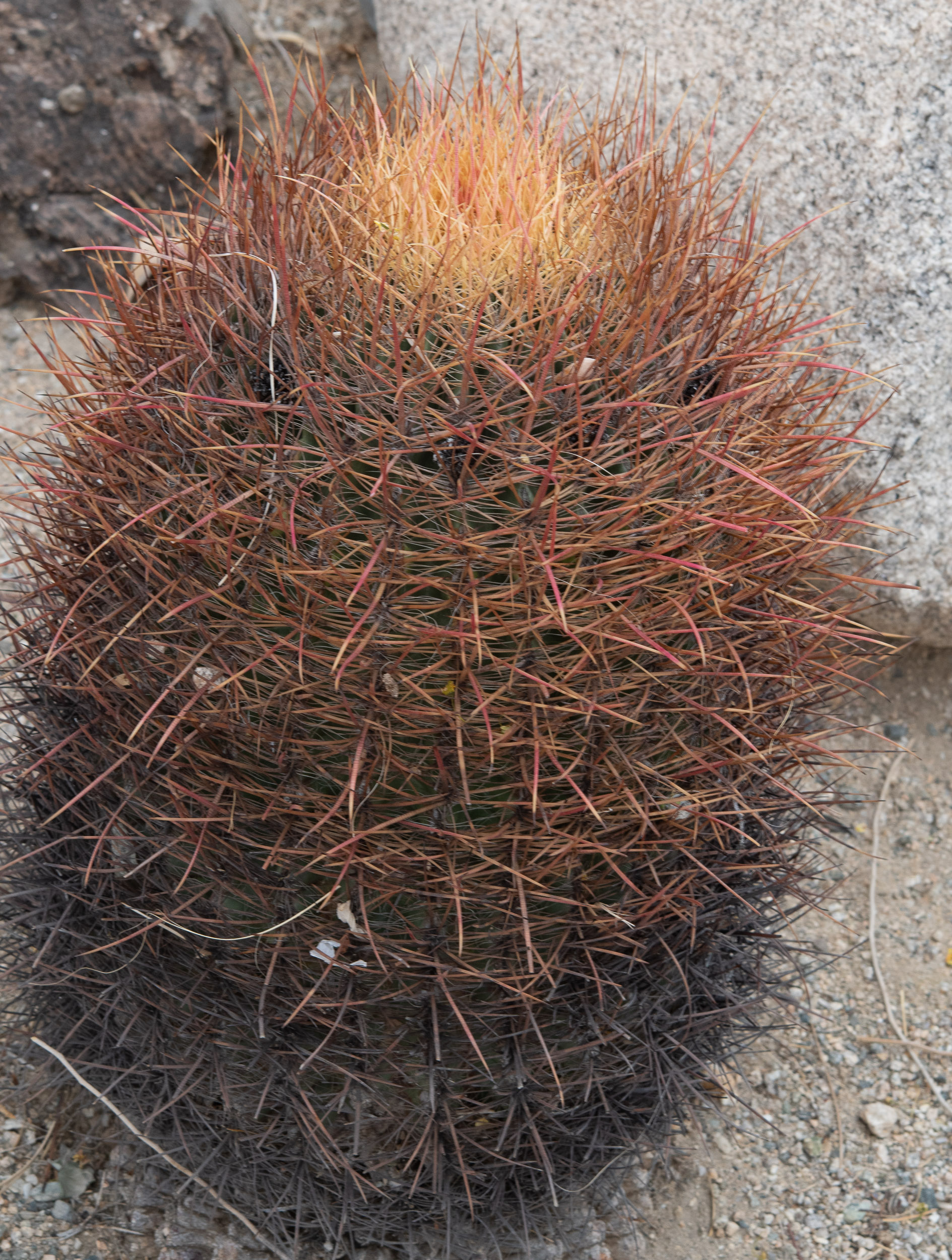
5/1/2018 · Joshua Tree National Park Visitor Center, Twentynine Palms, California · ≈ 1 × 1½′ (34 × 46 cm) 

5/2/2018 · Cottonwood Visitor Center, Joshua Tree National Park, California · ≈ 8 × 10″ (20 × 24 cm) 
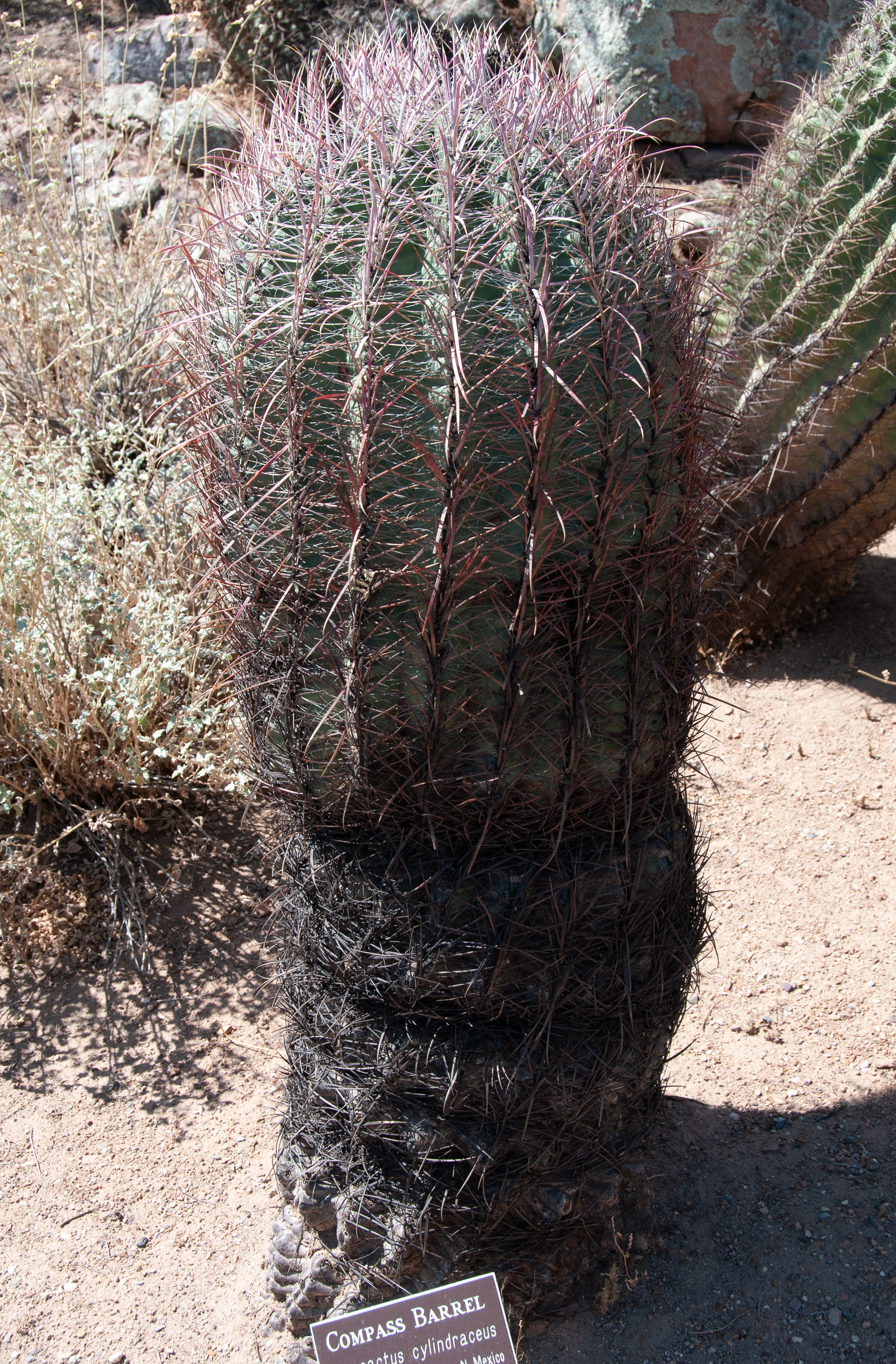
5/25/2009 · Boyce Thompson Arboretum, Superior, Arizona · ≈ 2½ × 4′ (78 × 118 cm) 
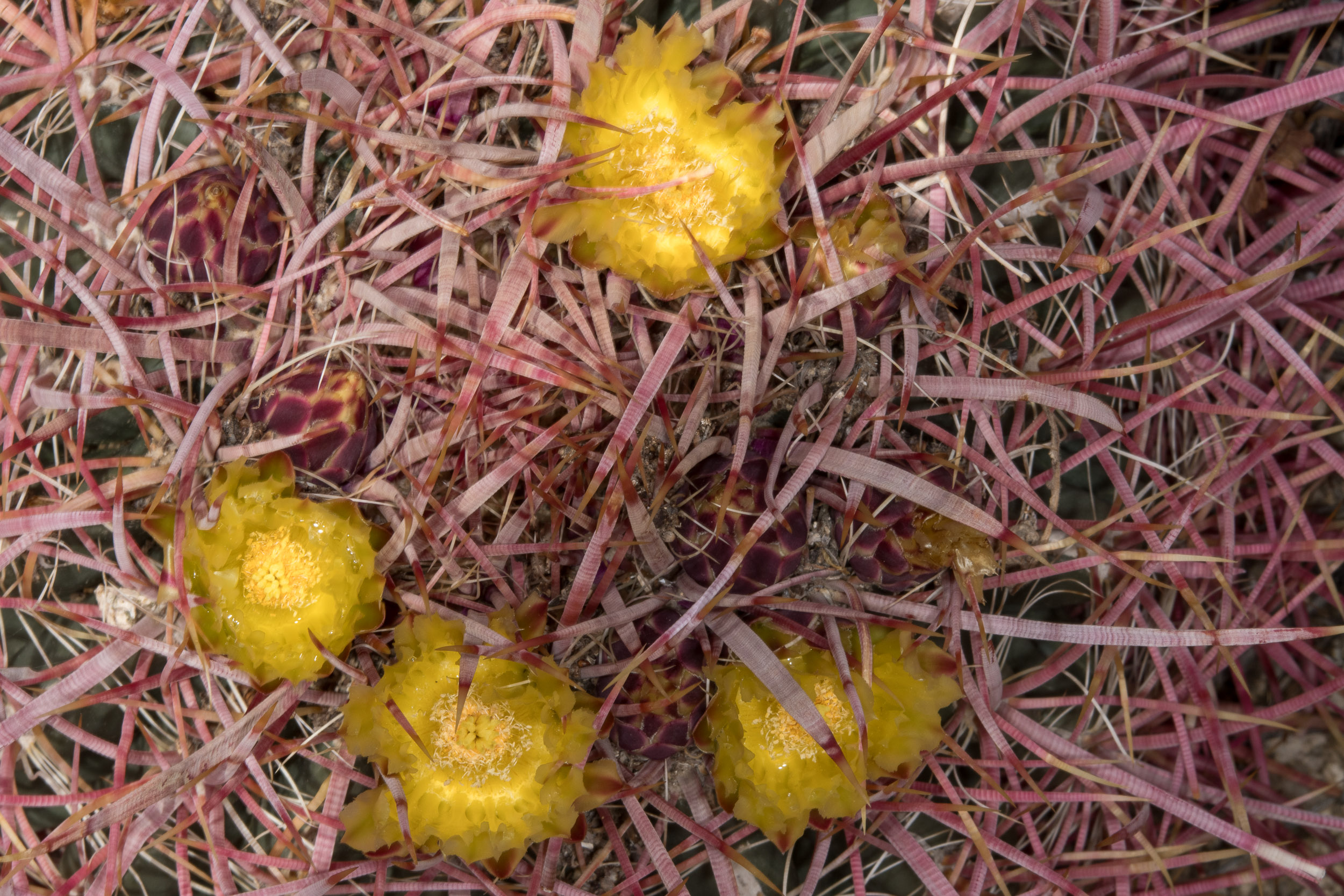
5/2/2018 · Forty-nine Palms Canyon Trail, Forty-nine Palms Oasis, Joshua Tree, California · ≈ 8 × 5″ (20 × 13 cm) 

4/30/2018 · Mojave National Preserve, California 

5/2/2018 · Forty-nine Palms Canyon Trail, Forty-nine Palms Oasis, Joshua Tree, California 
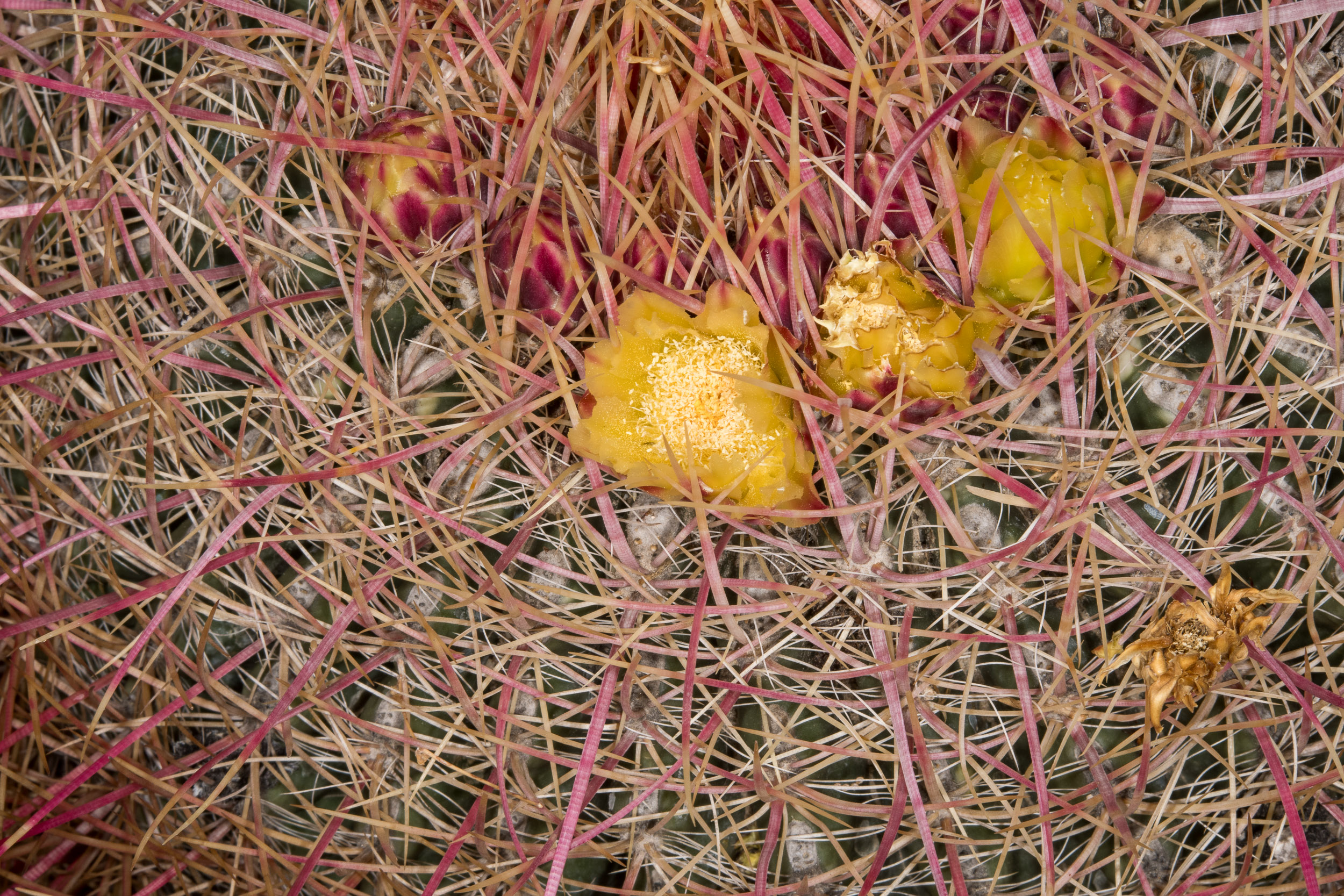
5/2/2018 · Cottonwood Visitor Center, Joshua Tree National Park, California · ≈ 8 × 5″ (20 × 13 cm) 
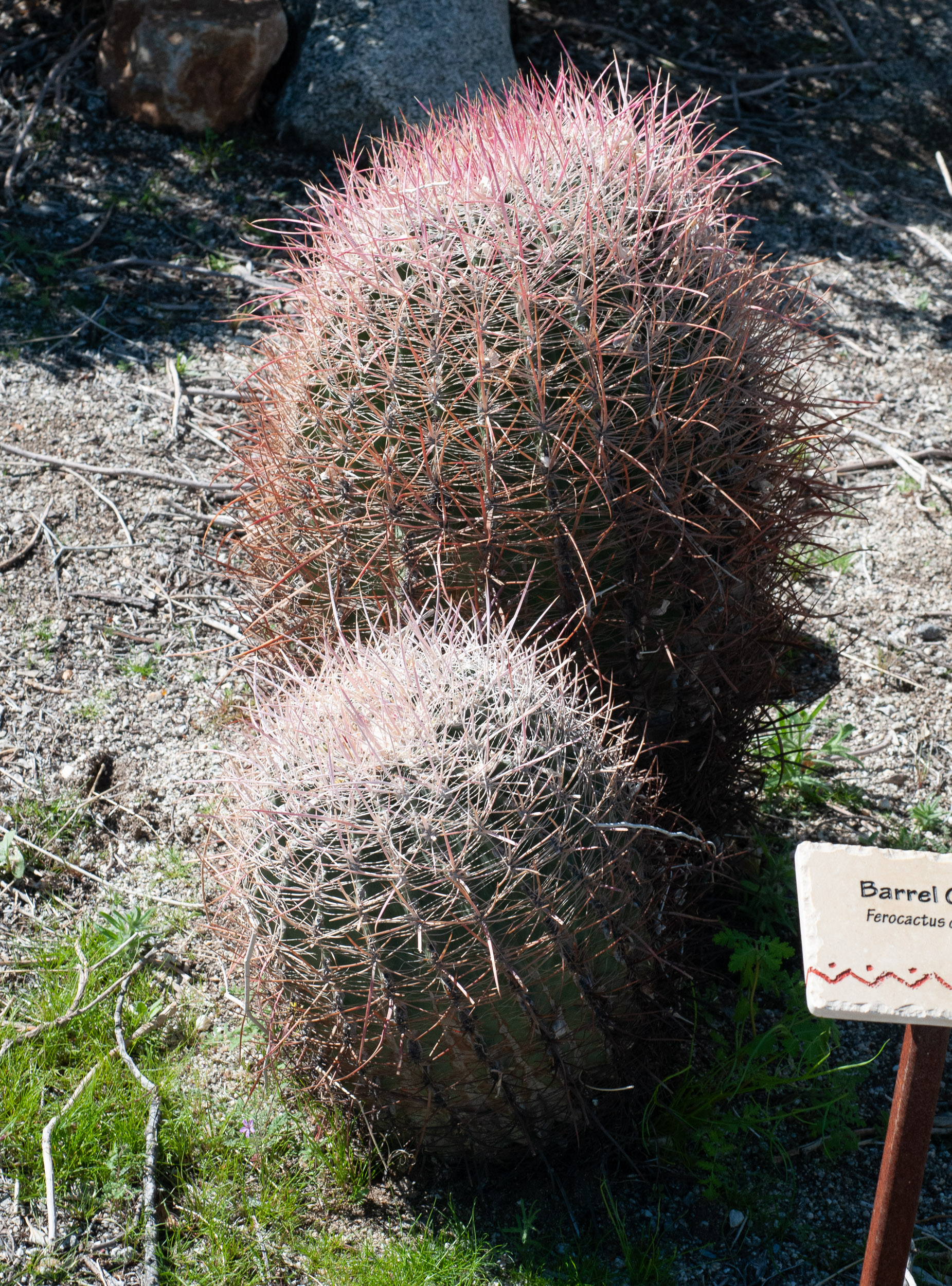
2/28/2010 · Anza-Borrego Desert State Park, California 
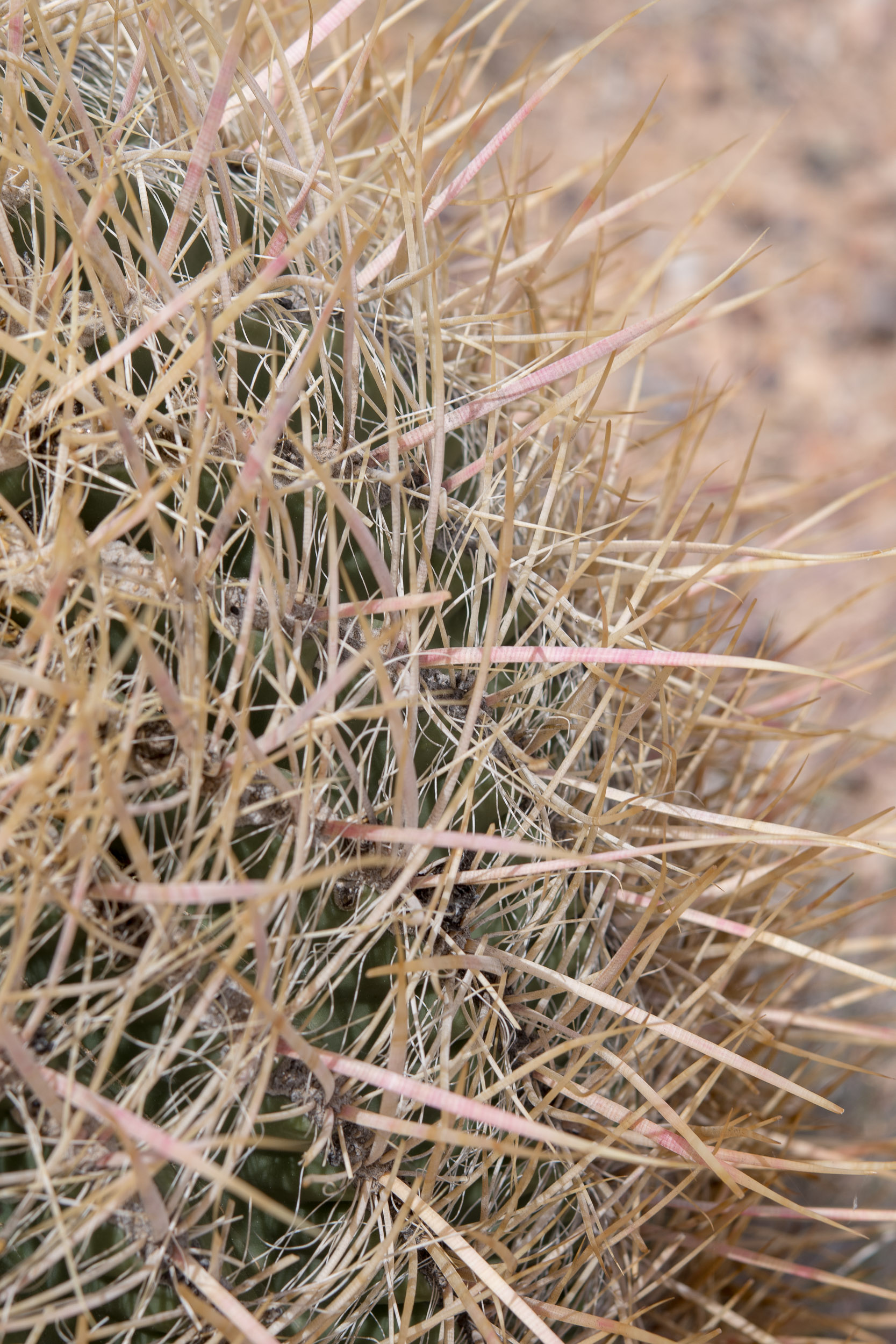
4/30/2018 · Mojave National Preserve, California · ≈ 6 × 10″ (16 × 24 cm) 
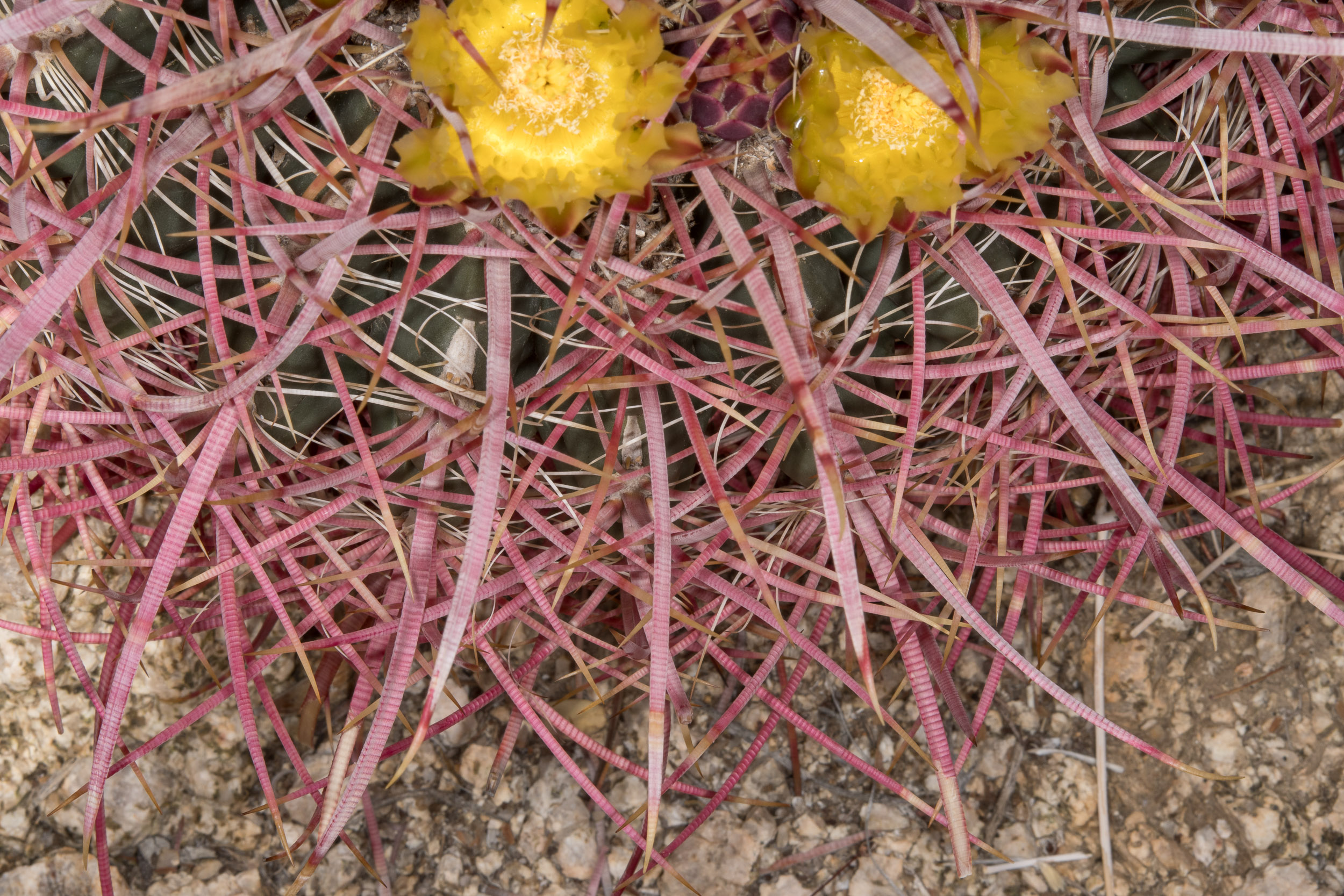
5/2/2018 · Forty-nine Palms Canyon Trail, Forty-nine Palms Oasis, Joshua Tree, California · ≈ 10 × 6″ (24 × 16 cm) 
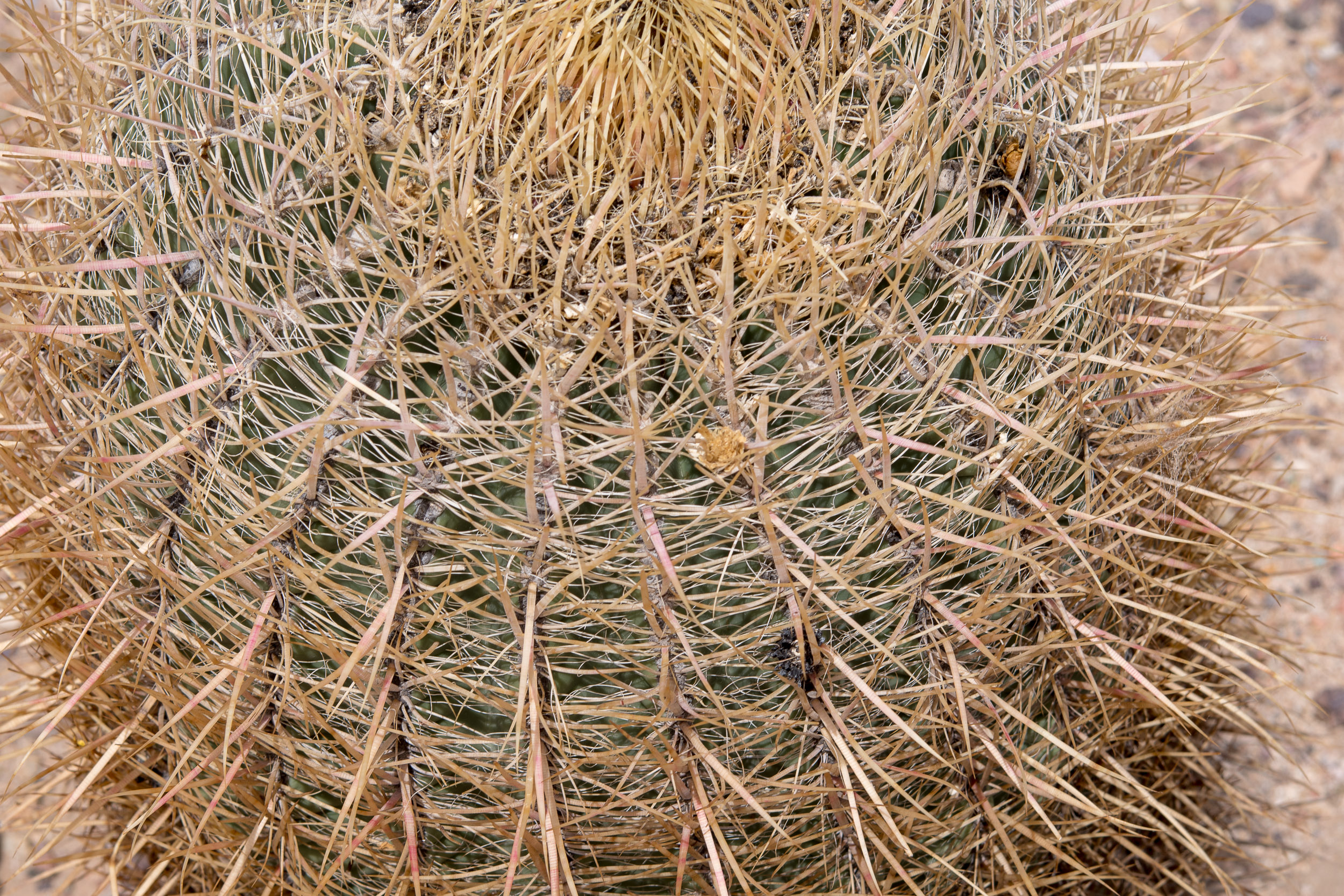
4/30/2018 · Mojave National Preserve, California · ≈ 15 × 10″ (39 × 26 cm) 

5/24/2009 · Arizona Sonora Desert Museum, Tucson, Arizona 
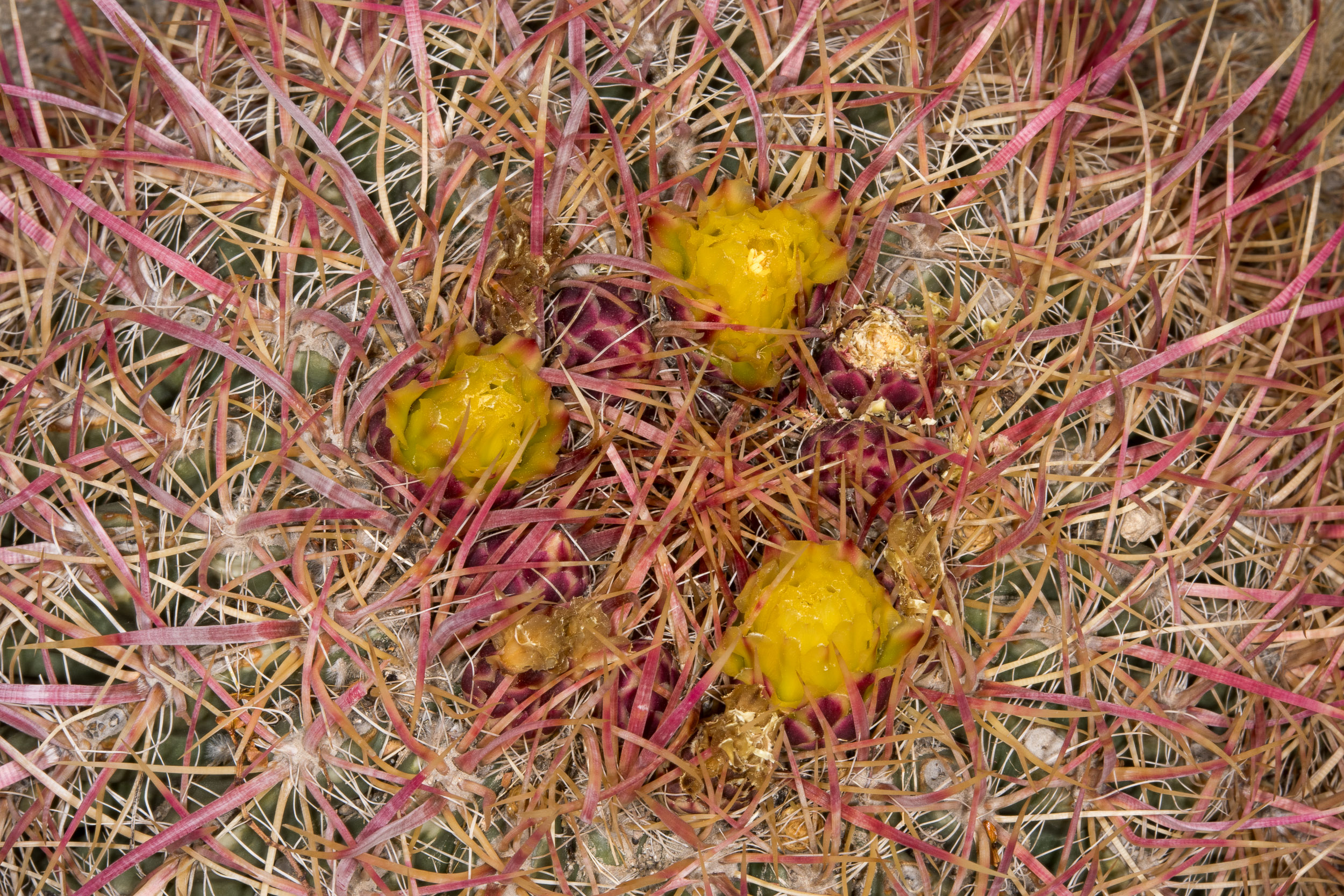
5/2/2018 · Cottonwood Visitor Center, Joshua Tree National Park, California · ≈ 10 × 6″ (24 × 16 cm) 

5/2/2018 · Cottonwood Visitor Center, Joshua Tree National Park, California · ≈ 12 × 8″ (31 × 20 cm) 

5/24/2009 · Arizona Sonora Desert Museum, Tucson, Arizona 

4/30/2018 · Mojave National Preserve, California · ≈ 6 × 10″ (16 × 24 cm) 
| Kingdom | Plantae | Plants, but not fungi, lichens, or algae (from Stearn's Botanical Latin) |
| Subkingdom | Tracheobionta | Vascular plants—plants with a “circulatory system” for delivering water and nutrients |
| Division | Magnoliophyta | Flowering plants, also known as angiosperms |
| Class | Magnoliopsida | Dicotyledons—plants with two initial seed leaves |
| Subclass | Caryophyllidae | Cacti, many other succulents, carnivorous plants, and leadworts |
| Order | Caryophyllales | Includes cacti, carnations, amaranths, ice plants, and many carnivorous plants |
| Family | Cactaceae | Succulent (water-storing) plants, often spiny |
| Genus | Ferocactus | From the Latin ferus, “fierce,” and cactus, referring to its heavy spines |
| Species | cylindraceus | “Long and round, cylindrical” |

Ferocactus cylindraceus description by Thomas H. Kent, not updated.

© FloraFinder.org. All rights reserved.