Fragaria vesca L.
Alpine strawberry, white strawberry, woodland strawberry
Wild strawberries are common worldwide, throughout the northern hemisphere, in a wide range of habitats. They are members of the rose family.
Plants: Plants are low-growing, typically 3–6″ (7.6–15 cm) tall. Wild strawberries have the characteristic shape and outer “seeds” of their cultivated brethren, but they are much smaller: up to ⅜″ (1 cm).
Leaves: Leaves occur in groups of three; each leaflet is ½–2½″ (1.5–6.3 cm) long.
Flowers: White, about ½″ (1.5 cm) across.
Fruits: And they may not be red in color. All strawberries go from green to white before ripening to red, but some wild strawberries lack a protein called Fra a1, which is necessary for them to turn red. White strawberries that look and feel ripe probably are. Regardless of berry color, wild strawberries are dotted with tiny “seeds,” called achenes. The achenes are actually tiny berries, each containing a thin fruity outer pulp and a large seed.
Habitats: Trails and roadsides, embankments, hillsides, stone- and gravel-laid paths and roads, meadows, young woodlands, sparse forest, woodland edges, and clearings.
Wild strawberries are similar to common strawberries, and look a little like distantly related mock strawberries and barren strawberries. If the flowers are light pink or hot pink, you probably have a cultivated variety.
 |
Some similar species. |
Edibility: Wild strawberries were the first variety to be cultivated and sold. They are delicious, much more flavorful than today’s cultivated varieties. Eat them raw, prepare jams, or use them anywhere you would use grocery store strawberries. The dried leaves make a tasty tea.
Online References:
References:
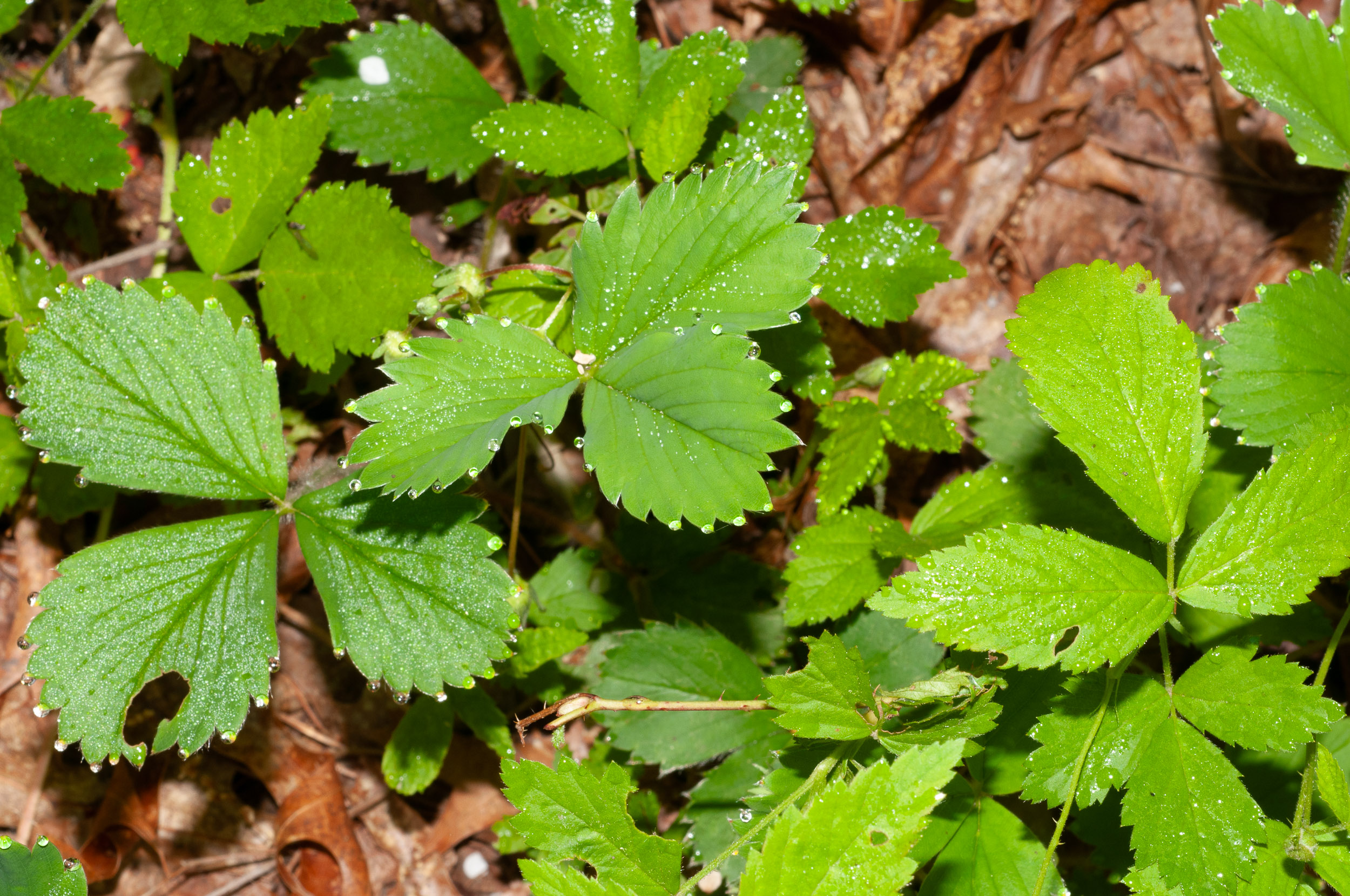
5/21/2010 · Nashua River Rail Trail, Groton, Massachusetts · ≈ 9 × 6″ (23 × 15 cm) 

5/21/2010 · Nashua River Rail Trail, Groton, Massachusetts · ≈ 11 × 7″ (27 × 18 cm) 
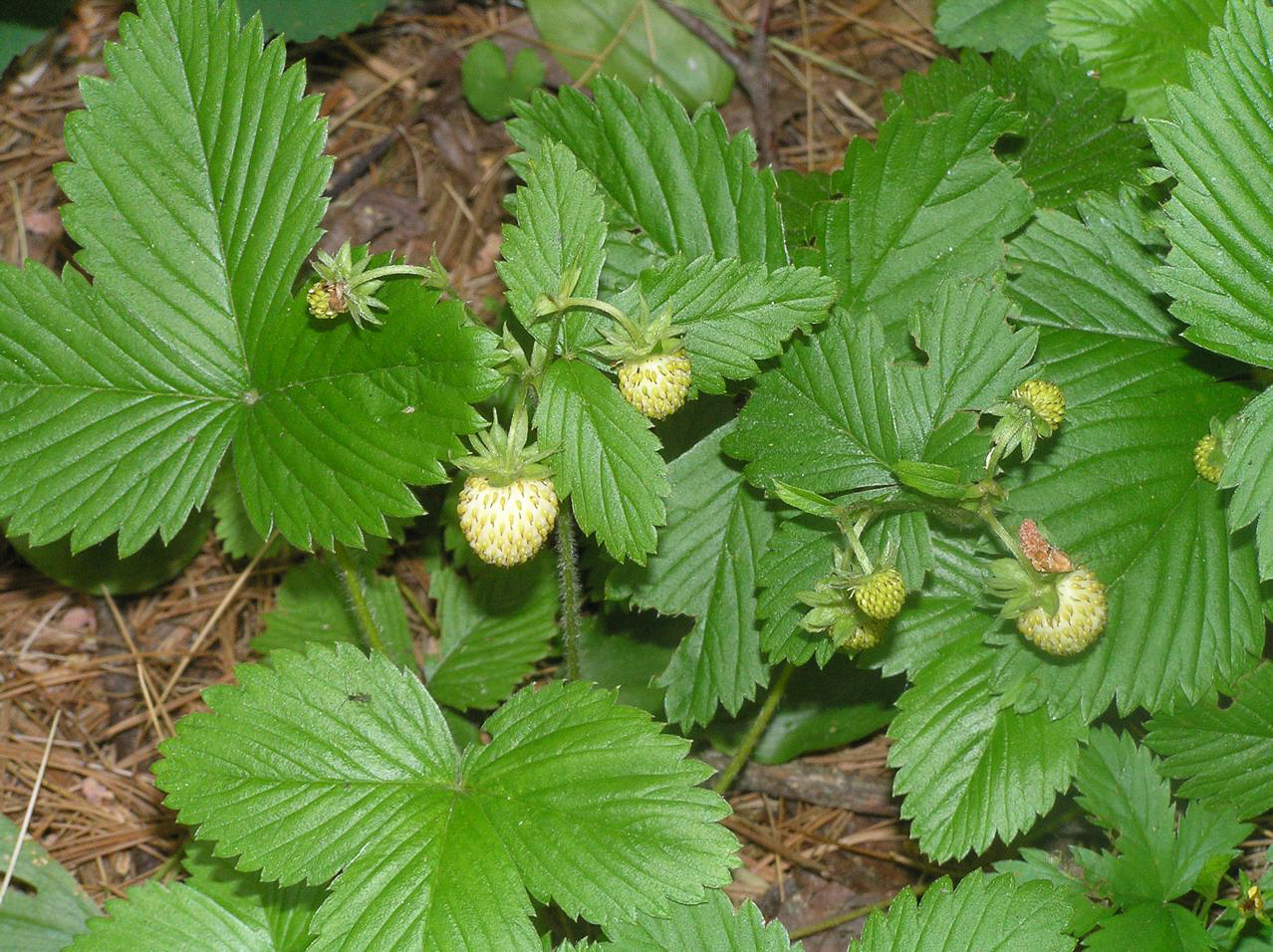
Though usually red, some varieties produce white fruits. · 6/20/2010 · Stan and Connie Kent, Falmouth, Maine · By Constance B. Kent 

6/3/2021 · Widgeon Cove, Harpswell, Maine · ≈ 5 × 4″ (13 × 10 cm) 
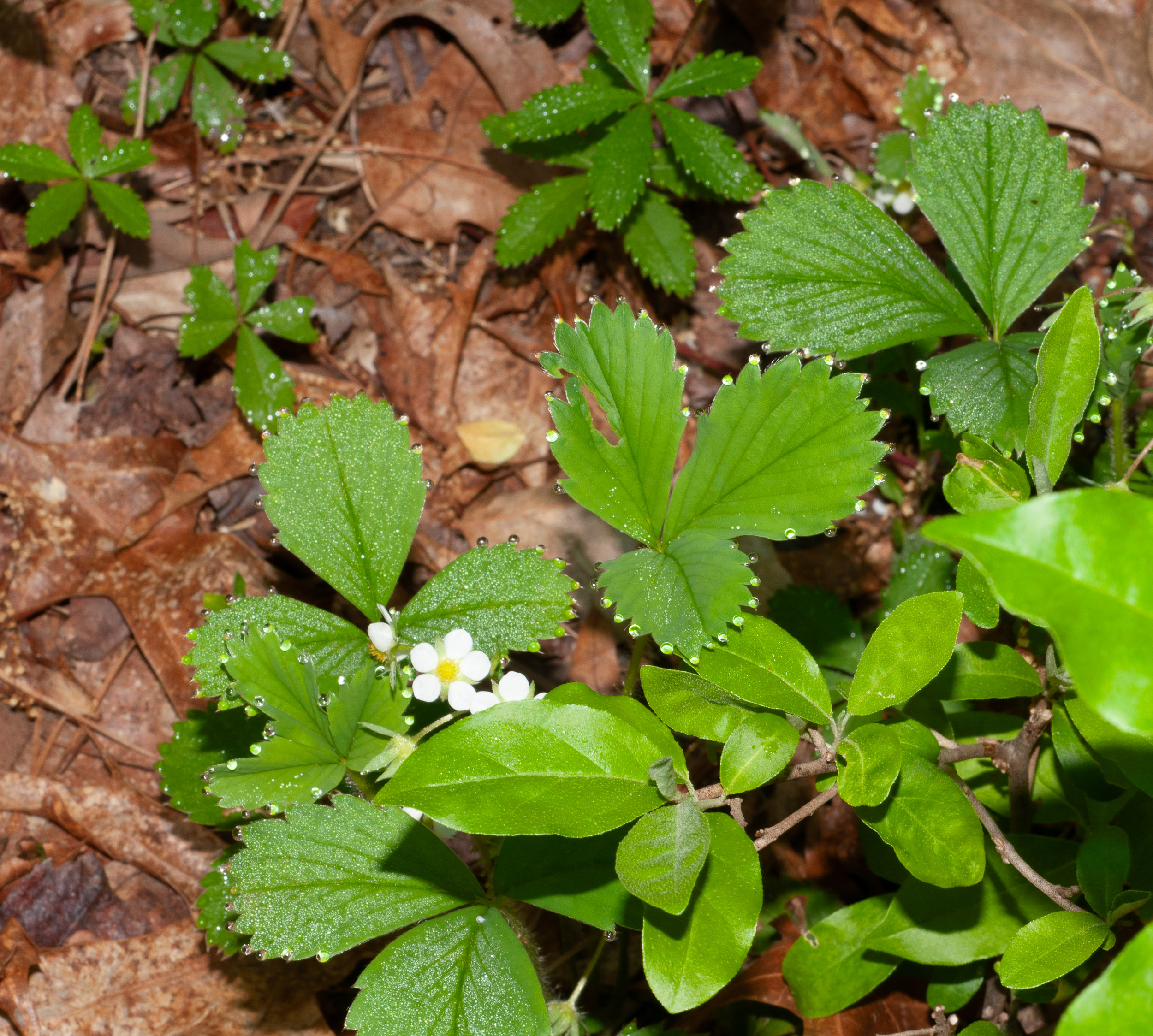
5/21/2010 · Nashua River Rail Trail, Groton, Massachusetts · ≈ 8 × 7″ (20 × 18 cm) 
| Kingdom | Plantae | Plants, but not fungi, lichens, or algae (from Stearn's Botanical Latin) |
| Subkingdom | Tracheobionta | Vascular plants—plants with a “circulatory system” for delivering water and nutrients |
| Division | Magnoliophyta | Flowering plants, also known as angiosperms |
| Class | Magnoliopsida | Dicotyledons—plants with two initial seed leaves |
| Subclass | Rosidae | Roses, legumes, proteas, dogwoods, hydrangeas, mistletoes, euphorbias, grapes, many more |
| Order | Rosales | Rose family and eight others |
| Family | Rosaceae | Includes apples, apricots, plums, cherries, peaches, pears, raspberries, strawberries, almonds, roses, meadowsweets, photinias, firethorns, rowans, and hawthorns; many others |
| Genus | Fragaria | From the Latin fraga, “strawberry,” which derives from fragum, “fragrant,” from the fragrance of the fruit |
| Species | vesca | “Little” |

Fragaria vesca description by Thomas H. Kent, not updated.

© FloraFinder.org. All rights reserved.