Galanthus nivalis L.
Snowdrops
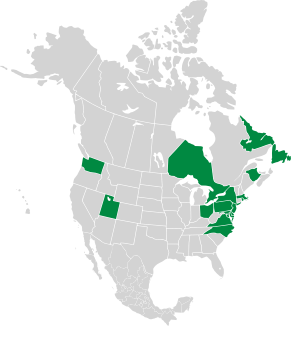
These European natives, later introduced to North America, are popular as garden plants and naturalized in part of North America.
Plants: The single flowering stalk is 2½–6″ (7–15 cm) tall.
Leaves: Two basal, linear to narrowly lanceolate leaves are thick, and grayish-green.
Flowers: Bell-shaped, nodding white flowers. Each flower has three larger tepals alternating with three smaller ones. The smaller tepals typically have a greenish marking. Flowers appear from January to April.
Fruits: Whitish seeds.
Habitats: Damp soils, and full sun early in the season, followed by partial shade, faring well beneath deciduous trees.
Edibility: Not edible.
Medical: Snowdrops contain galantamine (or galanthamine), which shows promise in slowing the progression of Alzheimer’s disease. They also contain specific lectins that show promise as a natural insecticide, and wide variety of alkaloids with potential medicinal properties.
Online References:
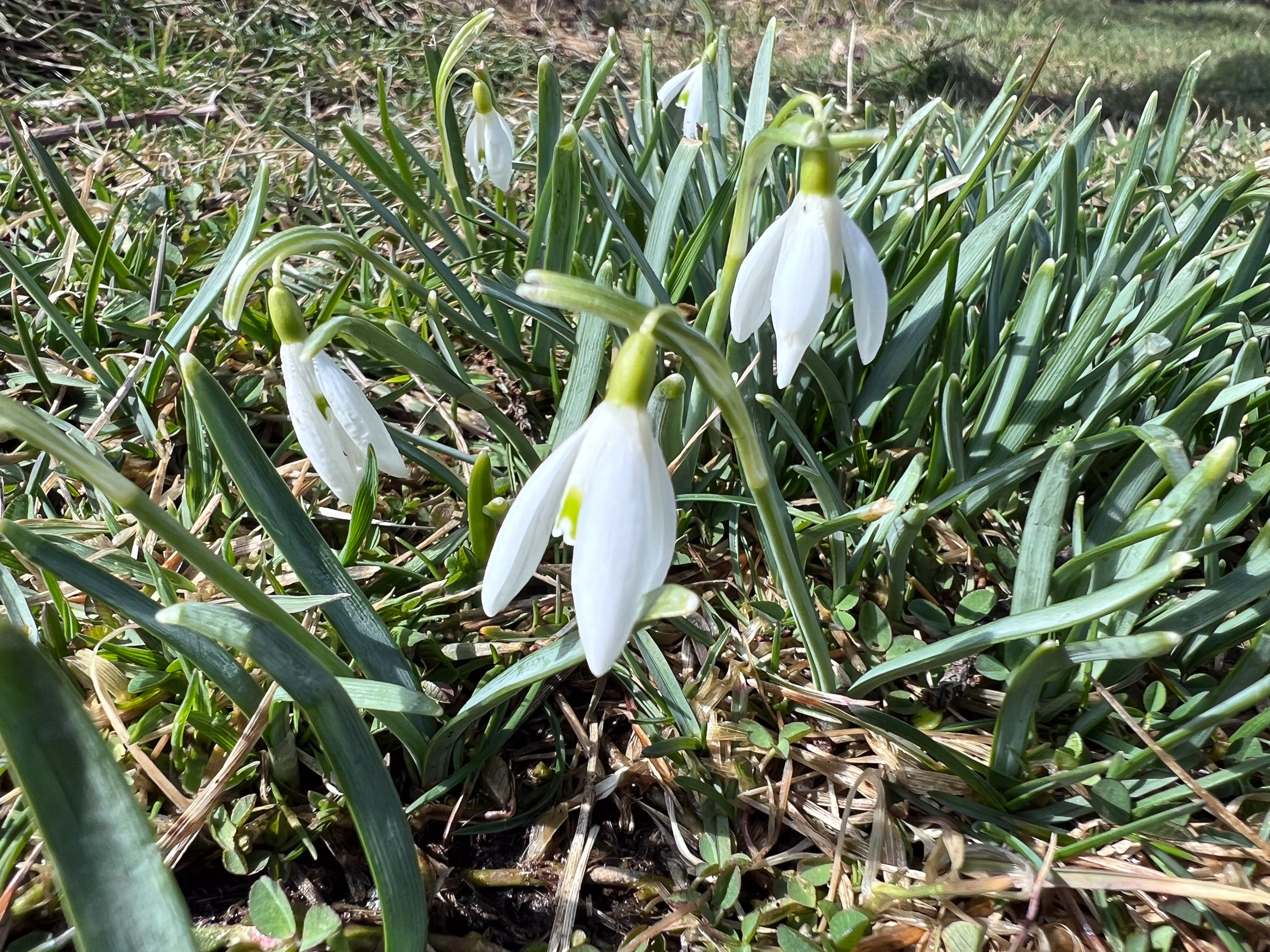
3/10/2024 · Jamestown, Rhode Island · By Heather A. Kent 

3/10/2024 · Jamestown, Rhode Island · By Heather A. Kent 
| Kingdom | Plantae | Plants, but not fungi, lichens, or algae (from Stearn's Botanical Latin) |
| Subkingdom | Tracheobionta | Vascular plants—plants with a “circulatory system” for delivering water and nutrients |
| Division | Magnoliophyta | Flowering plants, also known as angiosperms |
| Class | Liliopsida | Monocots (plants with a single seed leaf); includes the lily family |
| Subclass | Liliidae | Includes lilies, orchids, and many others |
| Order | Asparagales | A diverse group that includes asparagus |
| Family | Amaryllidaceae | Amaryllis family—plants that grow from bulbs. Includes onions and many others |
| Genus | Galanthus | From Greek gala “milk,” and anthos, “flower” |
| Species | nivalis | snow-white, growing near snow |
Galanthus nivalis description by Thomas H. Kent, not updated.

© FloraFinder.org. All rights reserved.