Galax urceolata (Poir.) Brummitt
Wandflower, beetleweed
Wandflower is native to the southeastern United States.
Plants: 8–24″ (20–60 cm) tall, with basal leaves and a tall flowering spike.
Leaves: Heart-shaped, almost round, evergreen, shiny, hairless, toothed, 1½–6″ (3.8–15 cm) across. Leaf petioles (stems) are 3–8″ (8.3–20 cm) long.
Flowers: Very attractive spikes of white flowers, 8–15″ (20–38 cm) tall and 2″ (5 cm) in diameter. The spike is a bare stem that towers over the foliage. It flowers from June to July. Individual flowers have five petals and yellow centers.
Fruits: 1/16–⅛″ (2.5–3 mm) long.
Habitats: In open woodland, in dappled shade and both moist and dry habitats.
Online References:
References:
Clemants, Steven; Gracie, Carol, Wildflowers in the Field and Forest, Oxford University Press, 2006, p. 366
Galax aphylla auct. non L.
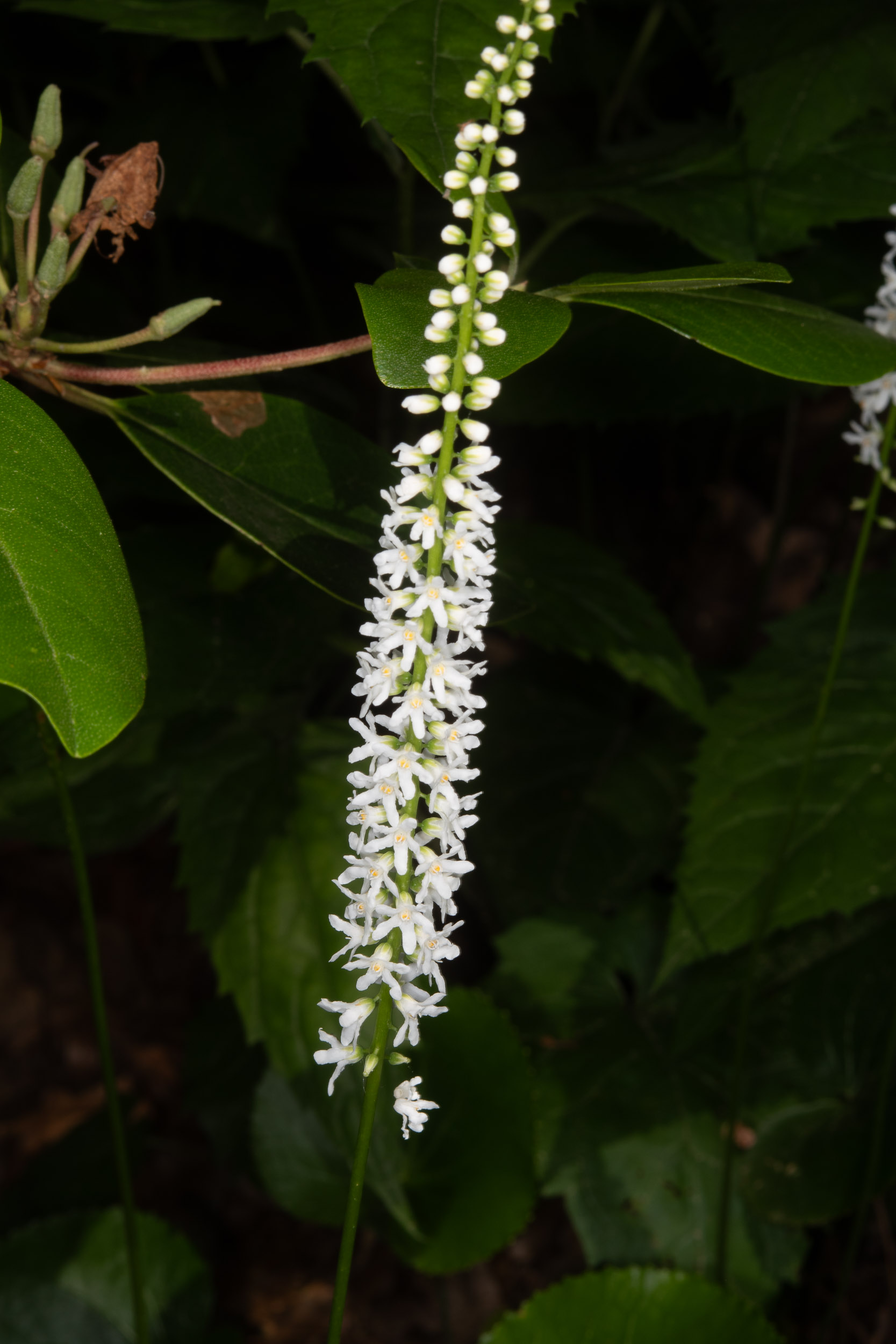
6/22/2017 · Garden in the Woods, Framingham, Massachusetts · ≈ 5 × 8″ (13 × 20 cm) 
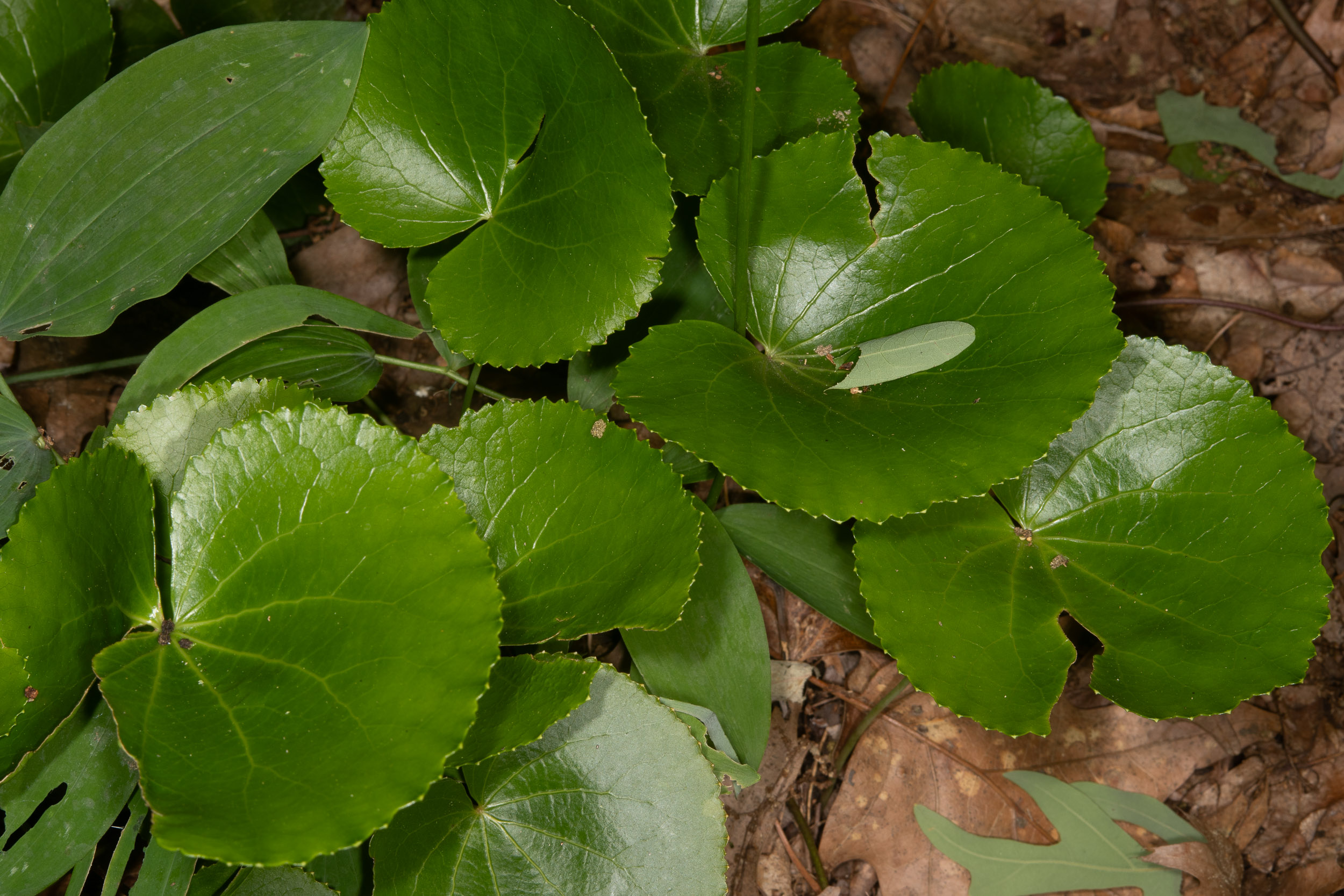
6/22/2017 · Garden in the Woods, Framingham, Massachusetts · ≈ 10 × 6″ (24 × 16 cm) 

9/14/2010 · Garden in the Woods, Framingham, Massachusetts · ≈ 6 × 9″ (15 × 23 cm) 

6/22/2017 · Garden in the Woods, Framingham, Massachusetts · ≈ 4½ × 7″ (12 × 16 cm) 
| Kingdom | Plantae | Plants, but not fungi, lichens, or algae (from Stearn's Botanical Latin) |
| Subkingdom | Tracheobionta | Vascular plants—plants with a “circulatory system” for delivering water and nutrients |
| Division | Magnoliophyta | Flowering plants, also known as angiosperms |
| Class | Magnoliopsida | Dicotyledons—plants with two initial seed leaves |
| Subclass | Asteridae | A large class that encompasses asters |
| Order | Diapensiales | A small group that includes oconee bells and a few others |
| Family | Diapensiaceae | A small group that includes oconee bells and a few others |
| Genus | Galax | This genus name, assigned by Linnaeus, does not obviously stem from Greek gálax, “a kind of shellfish.” But late Latin galaxias, “the Milky Way,” seems like a great incentive for naming a species with a starry flower raceme |
| Species | urceolata | Urn-shaped |

Galax urceolata description by Thomas H. Kent, not updated.

© FloraFinder.org. All rights reserved.