Galium palustre L.
Marsh bedstraw, common marsh bedstraw
Some Gallium species
Galium aparine
Galium asprellum
Galium mollugo



|
Galium palustre L. Marsh bedstraw, common marsh bedstraw Some Gallium species | |||
Galium aparine |
Galium asprellum |
Galium mollugo |
|
|---|---|---|---|
| Common Name | |
|
|
| Plant | Stem is square stem, purplish in the spring, green as the plant matures. All parts of the plant are covered with tiny velcro-like hooks. | Erect, up to 6½′ (2 m) tall; or usually creeping, spreading up to 7′ (2.1 m), clambering over other plants. Stems are 4-angled and rough to the touch, with downward-pointing hairs. | Smooth bedstraw is vine-like, growing to a length of up to 4′ (1.2 m). Lower stems often lie on the ground, with upper portions of the plant clambering over other vegetation. Stems are square in cross-section, and may be purplish in the spring, turning green as the plant matures. Unlike catchweed bedstraw, which feels sandpapery to the touch, smooth bedstraw is smooth. |
| Leaves | Whorls of 6-8 leaves every few inches, each 1–2″ (2.5–5 cm) long. | The main stem contains regular whorls of six rough-textured leaves, while the whorls on branches may have 4 or 5. Leaves are elliptic to lanceolate, ¾ ⨉ ⅛″ (2 cm ⨉ 6 mm) in size, usually wider toward the tips. | In whorls of 6-8, 1–1½″ (2.5–3.8 cm) long, smooth. |
| Flowers | 4-petaled, white, ⅛″ (3.2 mm) around, appearing from May to July. | White, ⅛″ (3 mm) wide, in inflorescences branched up to three times, each up to ¾″ (1.9 cm) wide. Each flower resembles a tiny 4-pointed star, with four sharp-tipped petals, four stamens, and two short styles. Flowers appear from May to August or September. | Hundreds of tiny white 4-petaled flowers ⅛″ (3.2 mm) across, producing white masses. |
| Fruit | Globular fruits are burrs containing 1-3 seeds. Their hooked, velcro-like hairs catch rides on passing animals. | Dry fruits are 1/16″ (2 mm) wide, spherical in shape, and paired. Each fruit contains a seed. | Each carpel contains a seed that is convex on one side and concave on the other. |
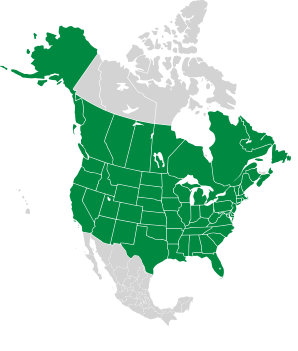
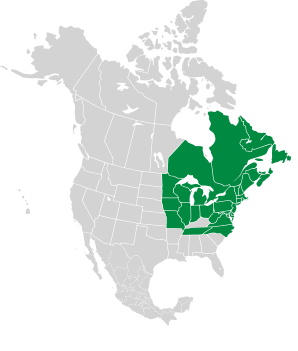
| Range/ Zones |
|
|
|
| Habitats | Forests and woodlands, meadows, prairies, disturbed areas, and cultivated crops. | Moist grounds in meadows, thickets, wet disturbed areas and riparian edges. It prefers at least partial shade. | Hedges, bushes, paths, meadows and slopes at elevations up to 1.3 mi (2.1 km) above sea level. |


Galium palustre description by Thomas H. Kent, not updated.
© FloraFinder.org. All rights reserved.