Helenium autumnale L.
Common sneezeweed
Sneezeweed isn’t called that because it triggers allergies. Some indigenous peoples ground the dried leaves into a snuff, inhaling it to cause sneezing, which, it was believed, would cast out evil spirits. From a USDA article: “According to a 1923 publication by H. Smith of the Milwaukee Public Museum, the name given to the plant by the Menominee Indians of the Wisconsin area is “aiatcia ni'tcîkûn,” which means “sneezing spasmodically.”
Plants: Perennials are up to 4′ (1.2 m) tall. Stems may be slightly hairy.
Leaves: Alternate, dark green, lanceolate to narrowly oval, sessile, and 1½–6″ (4–15 cm) long.
Flowers: Flowers appear on multiply branched flowerheads with up to 100 flowers. Each flower is a composite flower, as are all members of the aster family. It has 11-21 bright yellow ray florets and up to 800 duller yellow disc florets, densely packed into a nearly spherical shape. The ray florets (i.e. the “petals”) are triangular, and wider at the tips, where they are doubly notched. Flowers appear from August to October.
Fruits: The spherical disc florets become a round head of dry, brown achenes. The seeds have fine hairs but no pappus.
Habitats: Moist soils along streams, ponds or ditches and in spring-fed meadows, prairie and wet open ground.
Edibility: Poisonous  Harmful or fatal to humans if
eaten in large quantities.
Harmful or fatal to humans if
eaten in large quantities.
Online References:

9/14/2010 · Garden in the Woods, Framingham, Massachusetts · ≈ 10 × 15″ (26 × 39 cm) 

9/14/2010 · Garden in the Woods, Framingham, Massachusetts · ≈ 4 × 6″ (10 × 15 cm) 
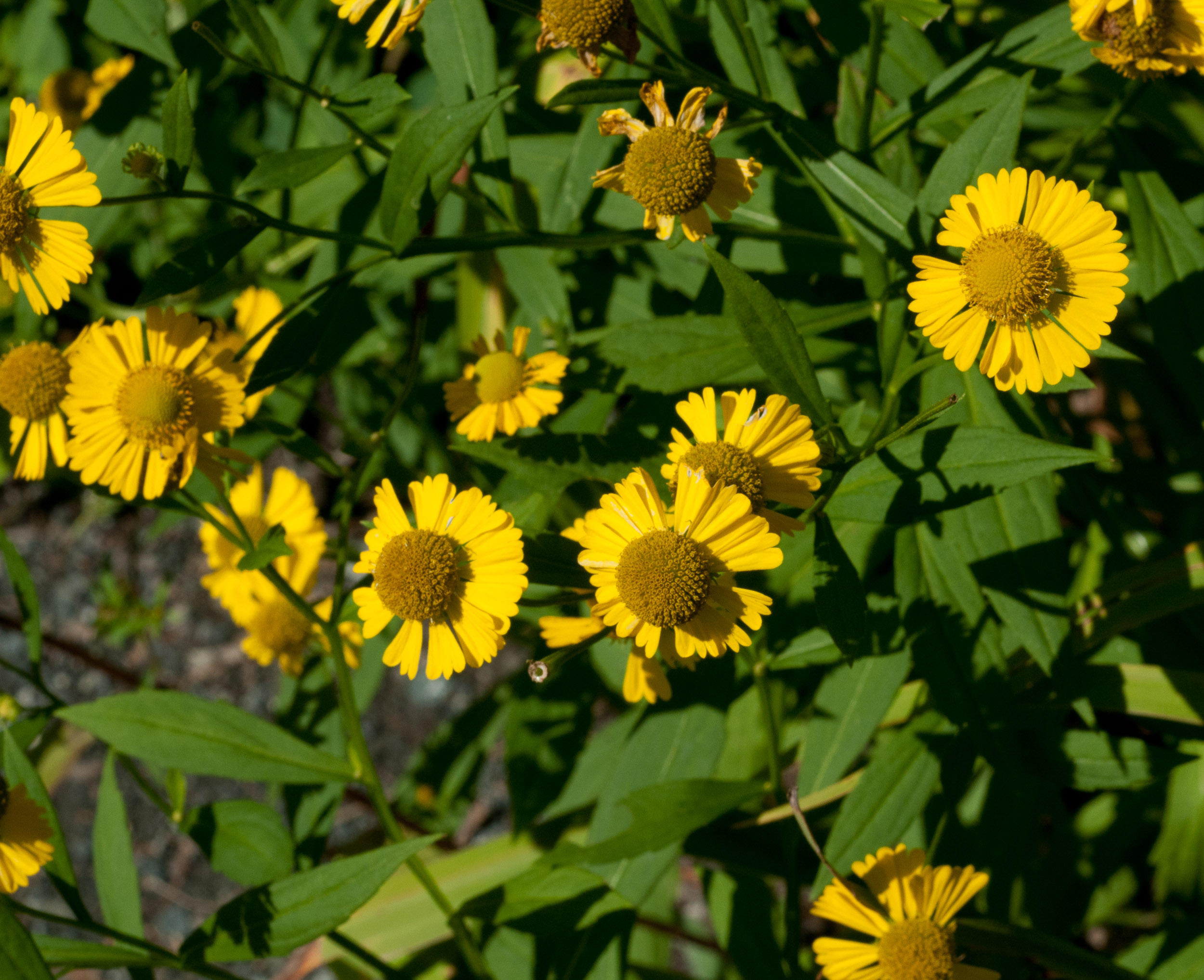
9/14/2010 · Garden in the Woods, Framingham, Massachusetts · ≈ 8 × 6″ (19 × 15 cm) 
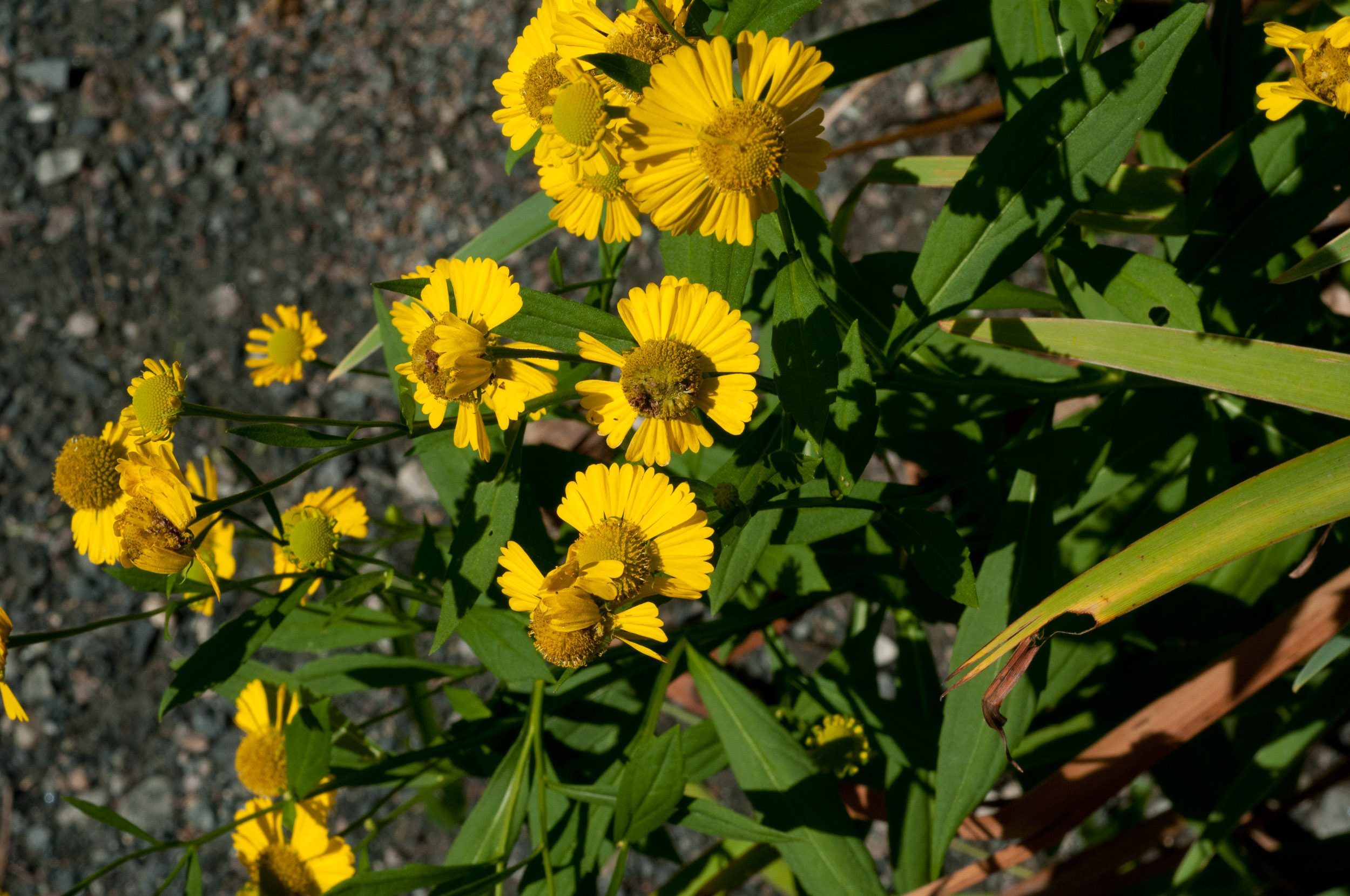
9/14/2010 · Garden in the Woods, Framingham, Massachusetts · ≈ 11 × 7″ (27 × 18 cm) 
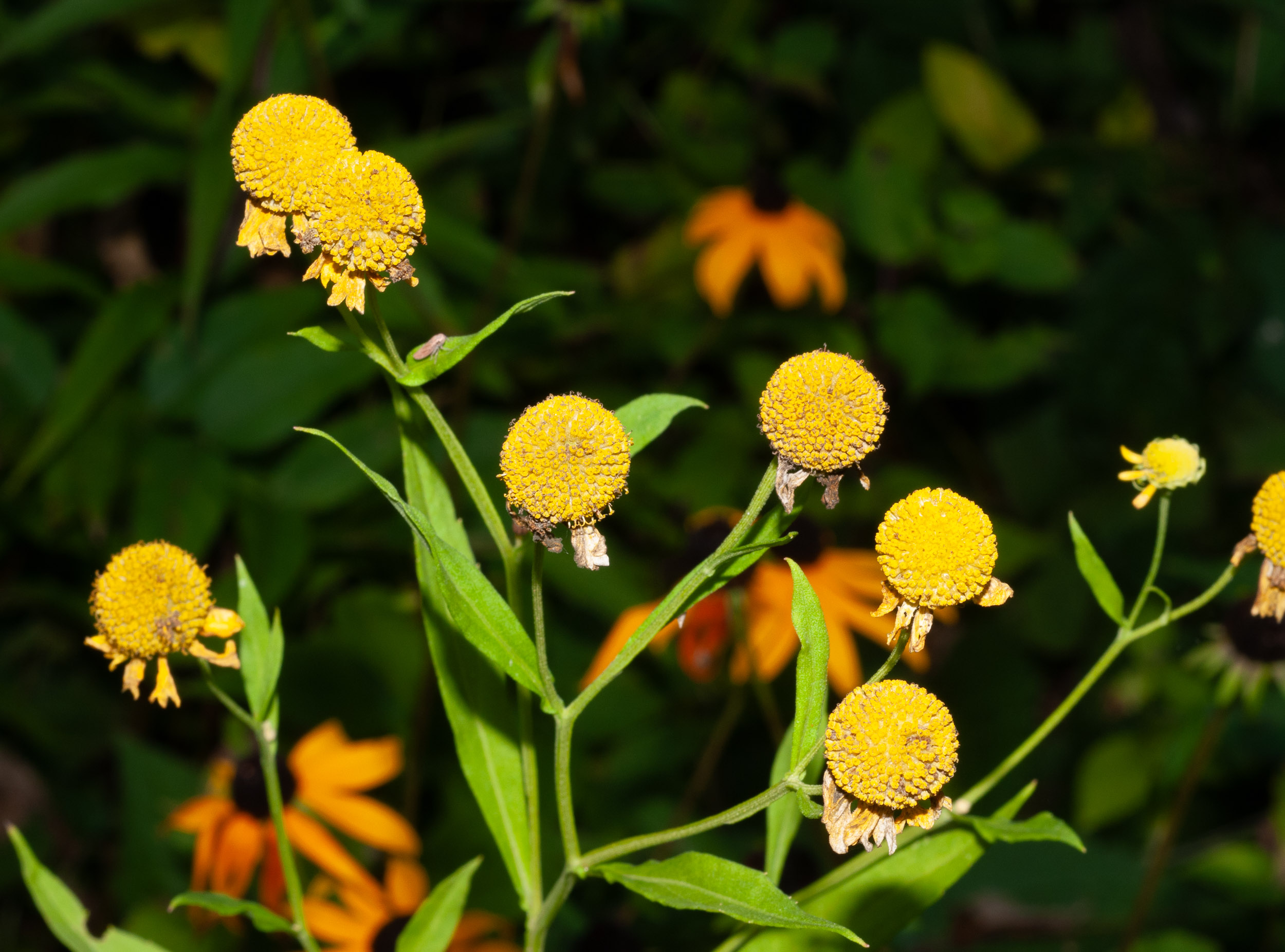
9/14/2010 · Garden in the Woods, Framingham, Massachusetts · ≈ 7 × 5″ (17 × 13 cm) 
| Kingdom | Plantae | Plants, but not fungi, lichens, or algae (from Stearn's Botanical Latin) |
| Subkingdom | Tracheobionta | Vascular plants—plants with a “circulatory system” for delivering water and nutrients |
| Division | Magnoliophyta | Flowering plants, also known as angiosperms |
| Class | Magnoliopsida | Dicotyledons—plants with two initial seed leaves |
| Subclass | Asteridae | A large class that encompasses asters |
| Order | Asterales | Flowering plants with a central disk flower and surrounding petals, like daisies |
| Family | Asteraceae | The aster family, which also includes daisies and sunflowers; from the Greek ἀστήρ, “star,” for the star-shaped flowers |
| Genus | Helenium | Said to be named by Linnaeus after Helen of Troy, according to the legend that these flowers sprang up from the ground where her tears were supposed to have fallen |
| Species | autumnale | From the Latin autumnus and the adjectival suffix -alis meaning “pertaining to,” thus, “of or pertaining to the autumn, usually flowering then” |
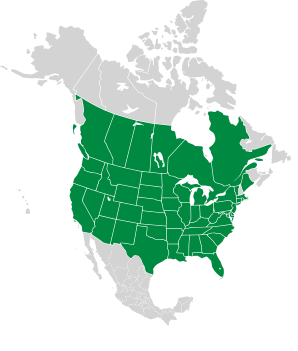
Helenium autumnale description by Thomas H. Kent, not updated.

© FloraFinder.org. All rights reserved.