Heliconia rostrata Ruiz & Pav.
False bird of paradise, hanging lobster claw, painted lobster claw
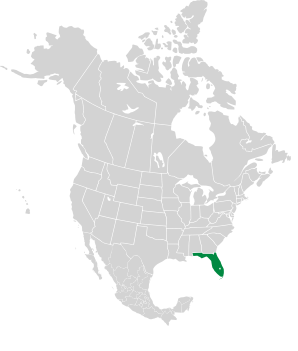
These striking heliconias are native to western South America. They escaped cultivation in Florida.
Plants: Plants are 6½–9½′ (2–3 m) in height.
Leaves: Leathery, on long petioles, 1½–5′ ⨉ 6–16″ (45–150 ⨉ 15–40 cm), green or bluish-green, sometimes tinged with red, ovate, apex tapering abruptly to a tip.
Flowers: Flowerheads—the “lobster claws”—are hanging, 12–24 ⨉ 6″ (30–60 ⨉ 15 cm). Bracts are bright or dull red, orange, or yellow, widely spaced, up to 6″ (15 cm) long. The flowers are pale yellow or greenish yellow, and composed of six fused tepals. (Most heliconias have erect inflorescences, so their bracts can catch and store rainwater, but this one hangs downward.)
Fruits: Broadly three-angled, ⅜″ (1 cm) long, purplish-blue.
Habitats: Nicaragua to Peru, in lowland forest and thickets.
Online References:
References:

2/3/2005 · Costa Rica · By Philip A. Despo 
| Kingdom | Plantae | Plants, but not fungi, lichens, or algae (from Stearn's Botanical Latin) |
| Subkingdom | Tracheobionta | Vascular plants—plants with a “circulatory system” for delivering water and nutrients |
| Division | Magnoliophyta | Flowering plants, also known as angiosperms |
| Class | Liliopsida | Monocots (plants with a single seed leaf); includes the lily family |
| Subclass | Zingiberidae | Gingers and related plants |
| Order | Zingiberales | Ginger, cardamom, turmeric, galangal, myoga, bananas, arrowroot, and others |
| Family | Heliconiaceae | Heliconia family |
| Genus | Heliconia | From the Greek word helikonios, home of a temple of Poseidon |
| Species | rostrata | “Beaked,” from Latin rostrum, “a bill, snout, or beak” |
Heliconia rostrata description by Thomas H. Kent, not updated.

© FloraFinder.org. All rights reserved.