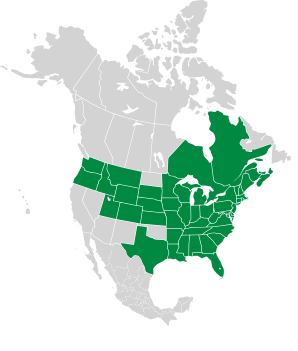
Hemerocallis fulva (L.) L. var. kwanso Regel
Hemerocallis fulva (L.) L. var. rosea Stout
Hemerocallis fulva (L.) L.
Common daylily, orange daylily, tawny daylily, tiger daylily, ditch lily, tiger daylil
Daylilies are Asian natives, unrelated to true lilies, that are often coveted by gardeners in temperate climates. They are among relatively few plants that resemble exotic tropicals but thrive in mild climates, and they are rugged perennials. So rugged, in fact, that they are sometimes considered invasive. Some gardeners consider them déclassé now, though it isn’t clear whether this is a result of horticultural marketing or concern for the environment.
Plants: Daylilies are 1–5′ (40–150 cm) in height. Daylilies are sometimes confused with similar-appearing true lilies, such as wood lily (Lilium philadelphicum). In true lilies, though, the tepals are spotted, the anthers are at right angles to the filaments, and there are leaves along the stem.
Leaves: Linear, straplike leaves, tapering to a point, grow in a cluster from a central base, and are 1½–3′ (50–90 cm) long and ⅜–1″ (1–2.8 cm) wide.
Flowers: Flowers emerge on stiff stalks, facing sideways or somewhat upward. They are brilliant orange or orange-red, and 1¾–4½″ (5–12 cm) in size. Each funnel-shaped flower appears to have six tepals—three are petals and three are sepals. They appear in spikes of 10-20. Each flower opens in succession, lasting a single day. Blooms appear from July to August.
Fruits: A three-valved capsule ¾–⅞″ long ⨉ ⅜–½″ broad (2–2.5 ⨉ 1.2–1.5 cm), which splits open at maturity and releases seeds.
Habitats: Anthropogenic (man-made or disturbed habitats), floodplain (river or stream floodplains), forest edges, forests, meadows and fields.
Edibility: Young leaves and young shoots are edible when cooked, though they quickly become too fibrous for consumption. Flowers are eaten raw or in soups. Tubers are also edible.
Online References:
References:
Clemants, Steven; Gracie, Carol, Wildflowers in the Field and Forest, Oxford University Press, 2006, p. 138

3/5/2001 · Road to Hana, Maui, Hawaii 

7/17/2019 · Oceanview, Falmouth, Maine · ≈ 6 × 4″ (16 × 11 cm) 

7/17/2010 · Mackworth Island, Falmouth, Maine · ≈ 7 × 9″ (18 × 22 cm) 
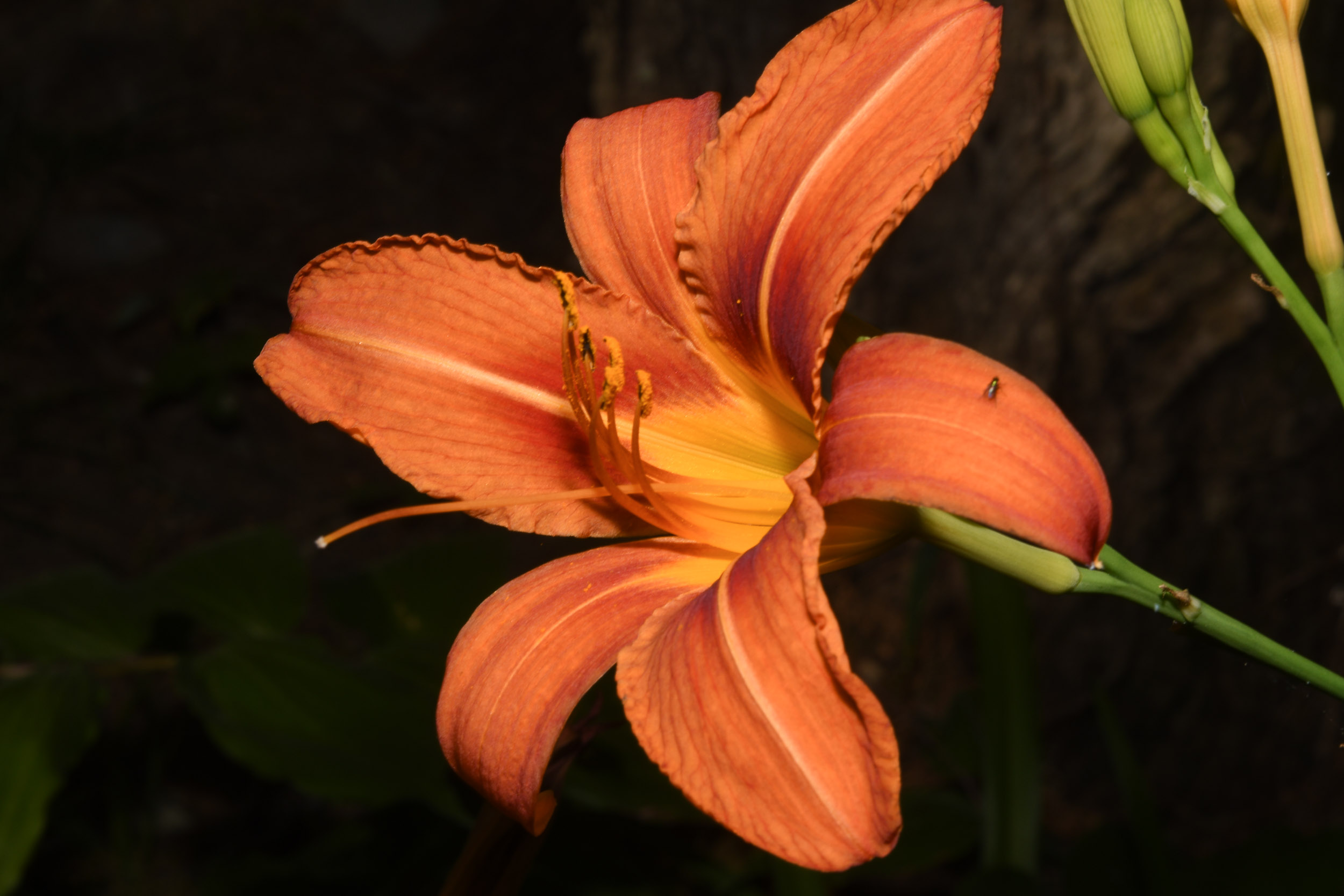
7/1/2016 · Wildflower Trail, Beaver Brook Conservation Area, Hollis, New Hampshire 
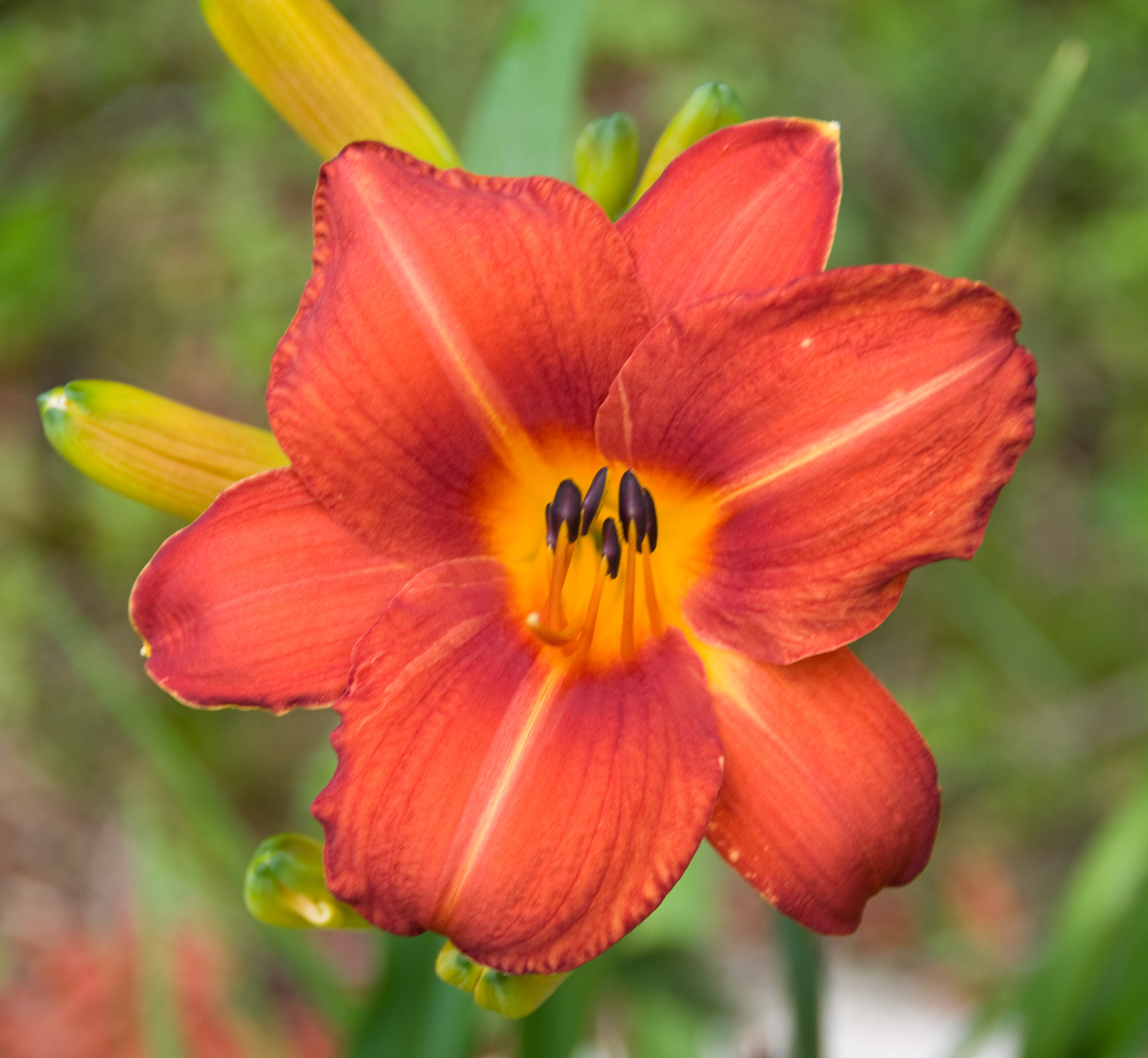
8/3/2008 · Kathy’s Flowers · ≈ 6 × 5″ (14 × 13 cm) 

6/28/2024 · Sawyer Mountain, Limington, Maine · ≈ 12 × 8″ (31 × 20 cm) 

7/6/2013 · Mike and Ellen’s, Shohola, Pennsylvania · ≈ 9 × 7″ (23 × 18 cm) 
| Kingdom | Plantae | Plants, but not fungi, lichens, or algae (from Stearn's Botanical Latin) |
| Subkingdom | Tracheobionta | Vascular plants—plants with a “circulatory system” for delivering water and nutrients |
| Division | Magnoliophyta | Flowering plants, also known as angiosperms |
| Class | Liliopsida | Monocots (plants with a single seed leaf); includes the lily family |
| Subclass | Liliidae | Includes lilies, orchids, and many others |
| Order | Asparagales | A diverse group that includes asparagus |
| Family | Xanthorrhoeaceae | Aloes, many tropical plants, flax lilies, daylilies, many others |
| Genus | Hemerocallis | From the Greek hemera, “day,” and kallos, “beauty,” thus meaning “beauty for a day,” in reference to the fact that the blooms last only a single day |
| Species | fulva | Of a fulvous color, tawny, orange-gray-yellow |
Hemerocallis fulva description by Thomas H. Kent, not updated.

© FloraFinder.org. All rights reserved.