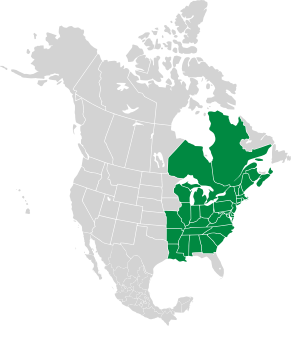
Houstonia caerulea L. var. faxonorum Pease & A.H. Moore
Houstonia caerulea L.
Bluets, quaker ladies, azure bluet
Azure bluets are cheerful natives of central and eastern North America. The name “Quaker ladies” may be a reference to their prim bonnet-like flowers.
Plants: Bluets are virtually invisble when not flowering, at less than 4″ (10 cm) in height, but they make a big impact when they are, appearing in dense, attractive colonies.
Leaves: Leaves at the base of the flowers are relatively large, and oblanceolate to spatulate; while those on the stem are much smaller and similarly shaped, or sometimes linear.
Flowers: You would think bluets would be blue, and usually they are pale or darker blue-violet in color, but sometimes they are so pale they are almost white. They are about ¼″ (6.3 mm) in diameter, and appear from April to early July.
Fruits: Flattened fruits are 1/16–⅛″ (3–4 mm) wide, and much broader than long. Seeds are globular.
Habitats: Moist meadows, lawns, fields, and roadsides, and other disturbed habitats; as well as cliffs, ledges, and freshwater shores.
Online References:

The tiny leaves make even the ¼-inch flower look big. · 5/19/2021 · Heath Trail, Highland Green, Topsham, Maine · ≈ 2½ × 3″ (6.3 × 8.4 cm) 
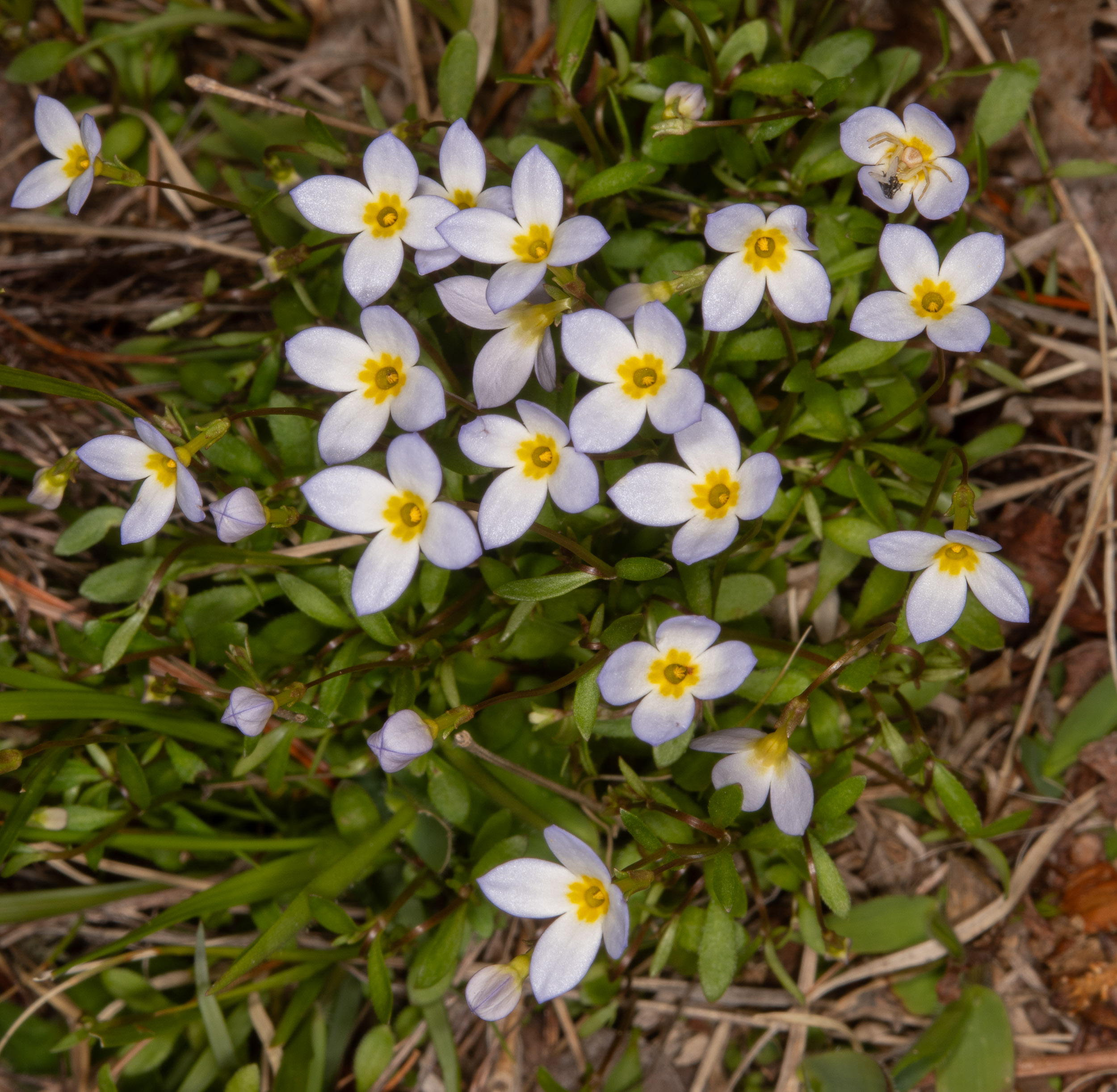
5/6/2021 · Tarbox Preserve, Topsham, Maine · ≈ 3½ × 3½″ (9.7 × 9.5 cm) 

5/17/2021 · Bijhouwer Forest, Phippsburg, Maine · ≈ 5 × 4″ (13 × 10 cm) 
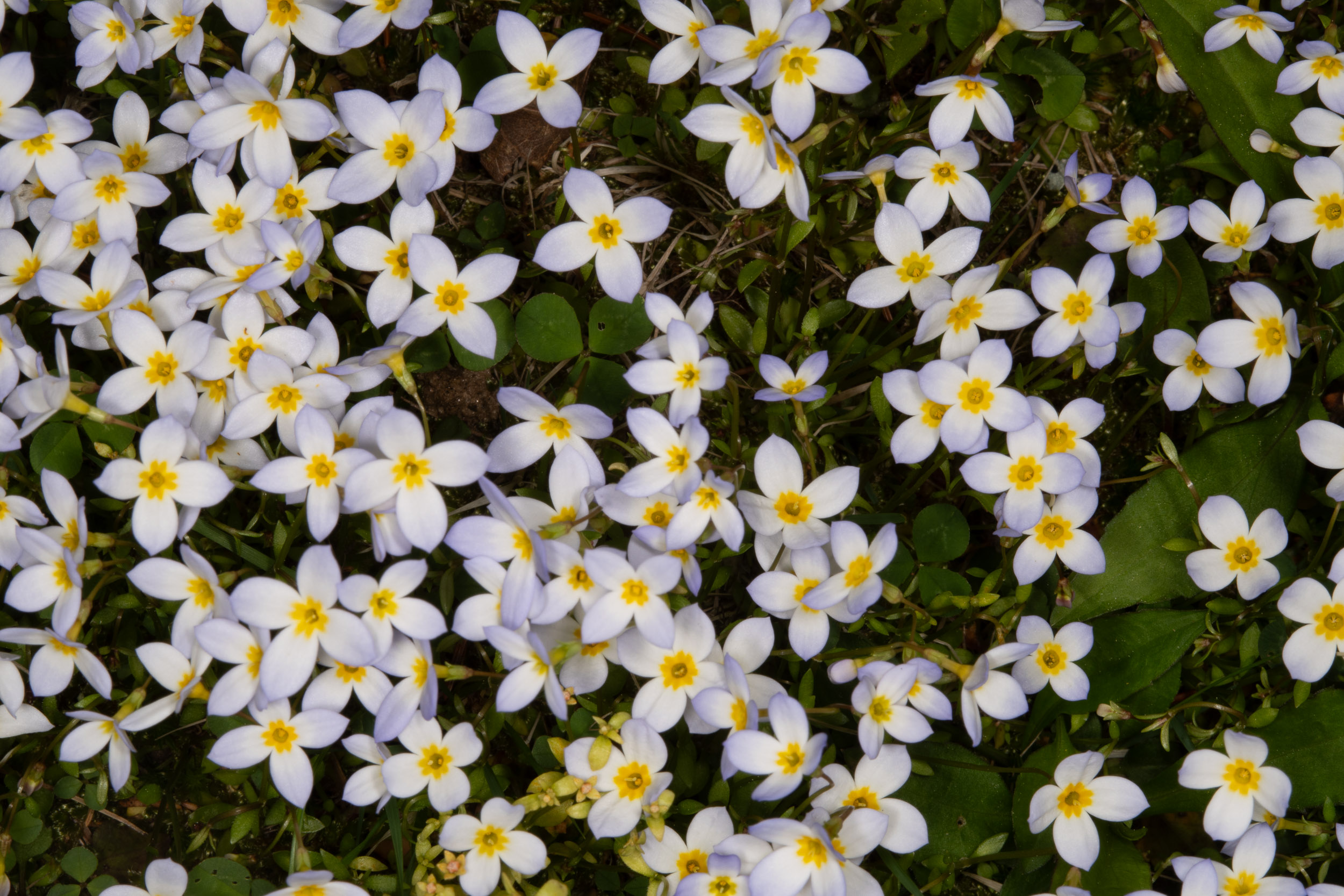
5/11/2021 · Hackett and Minot Trails, Harpswell, Maine · ≈ 7 × 4½″ (18 × 12 cm) 

5/15/2010 · Garden in the Woods, Framingham, Massachusetts · ≈ 8 × 5″ (19 × 13 cm) 
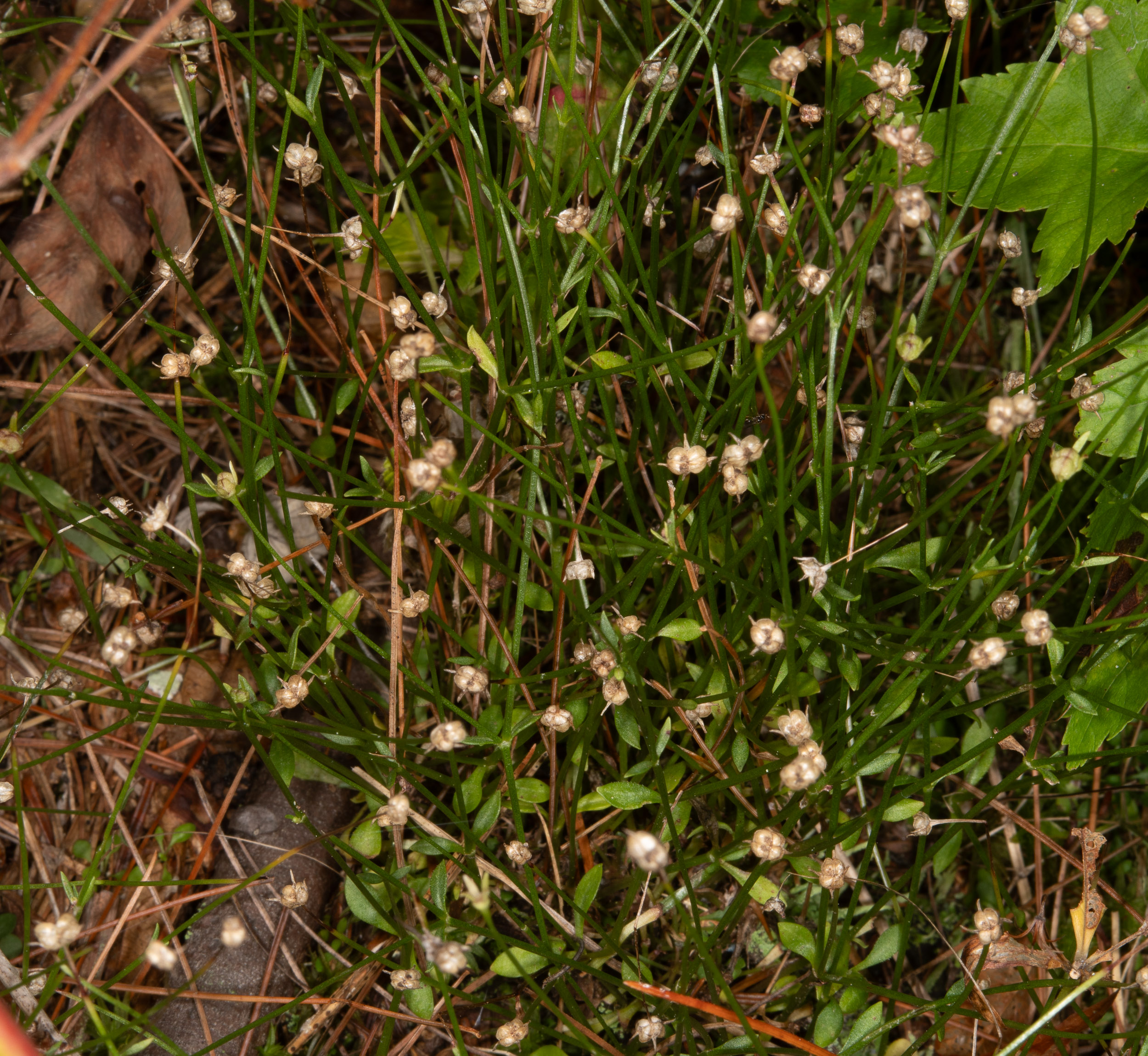
8/28/2020 · Jack’s and Litchfield Trails, Chase Reserve, Brunswick, Maine · ≈ 5 × 4½″ (13 × 12 cm) 

6/6/2026 · Lincoln, New Hampshire · By Heather A. Kent 

5/11/2013 · Townsend Wildlife Management Area, Townsend, Massachusetts · ≈ 4½ × 6″ (12 × 15 cm) 

5/15/2010 · Garden in the Woods, Framingham, Massachusetts · ≈ 6 × 4″ (15 × 10 cm) 

5/30/2014 · Townsend Wildlife Management Area, Townsend, Massachusetts · ≈ 9 × 6″ (22 × 15 cm) 

4/21/2010 · Tom and Susan’s, Pepperell, Massachusetts · ≈ 5 × 3½″ (13 × 9.2 cm) 

5/20/2012 · J. Harry Rich State Forest, Groton, Massachusetts · ≈ 17 × 12″ (44 × 29 cm) 

The flowers are diminutive, at less than 1/4" across, but the leaves, usually hidden, are much smaller. · 5/15/2016 · Mt. Watatic, Ashby, Massachusetts 
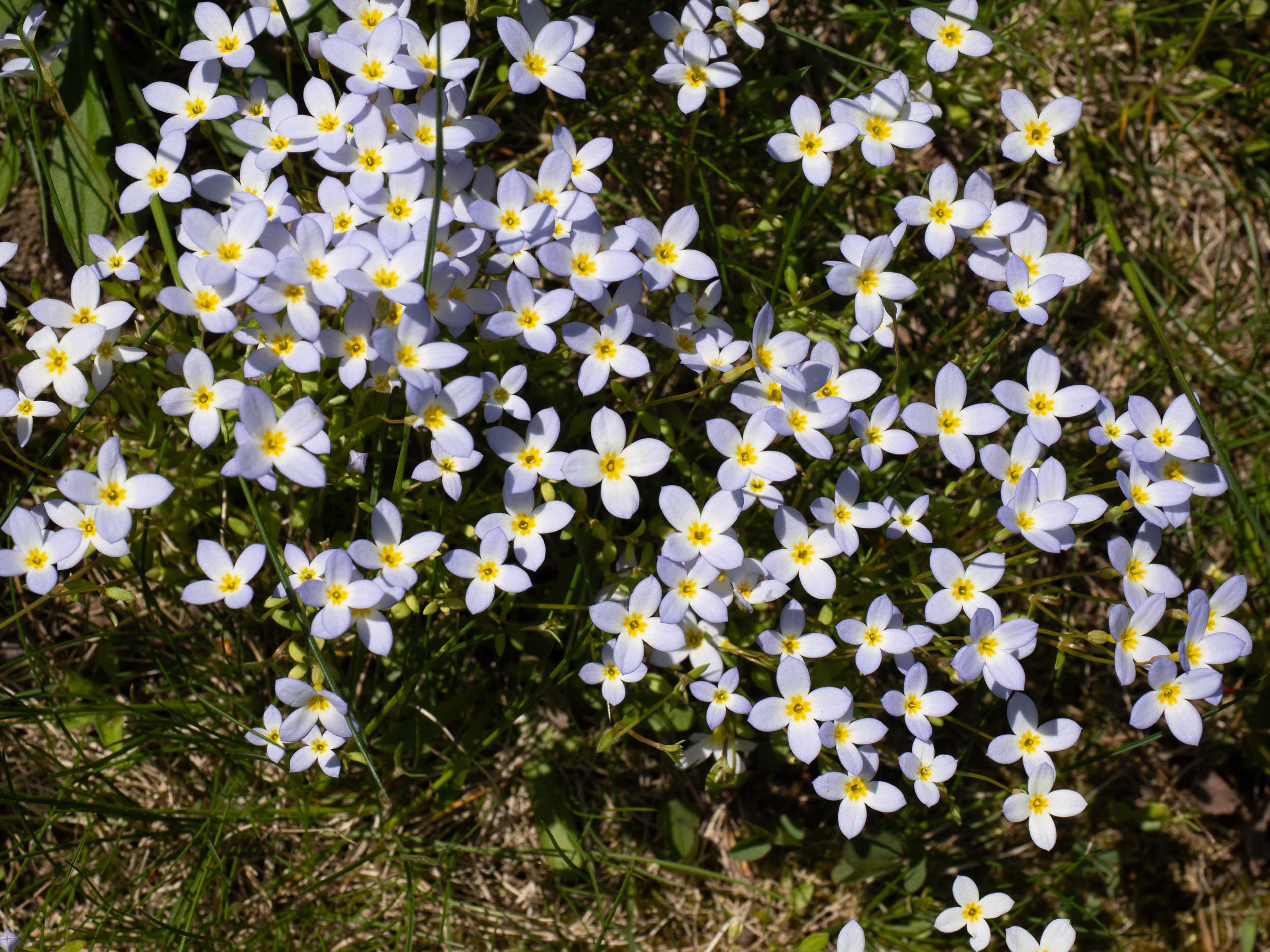
5/14/2023 · Cathance River Nature Preserve, Topsham, Maine 

4/21/2010 · Tom and Susan’s, Pepperell, Massachusetts · ≈ 6 × 5″ (16 × 13 cm) 
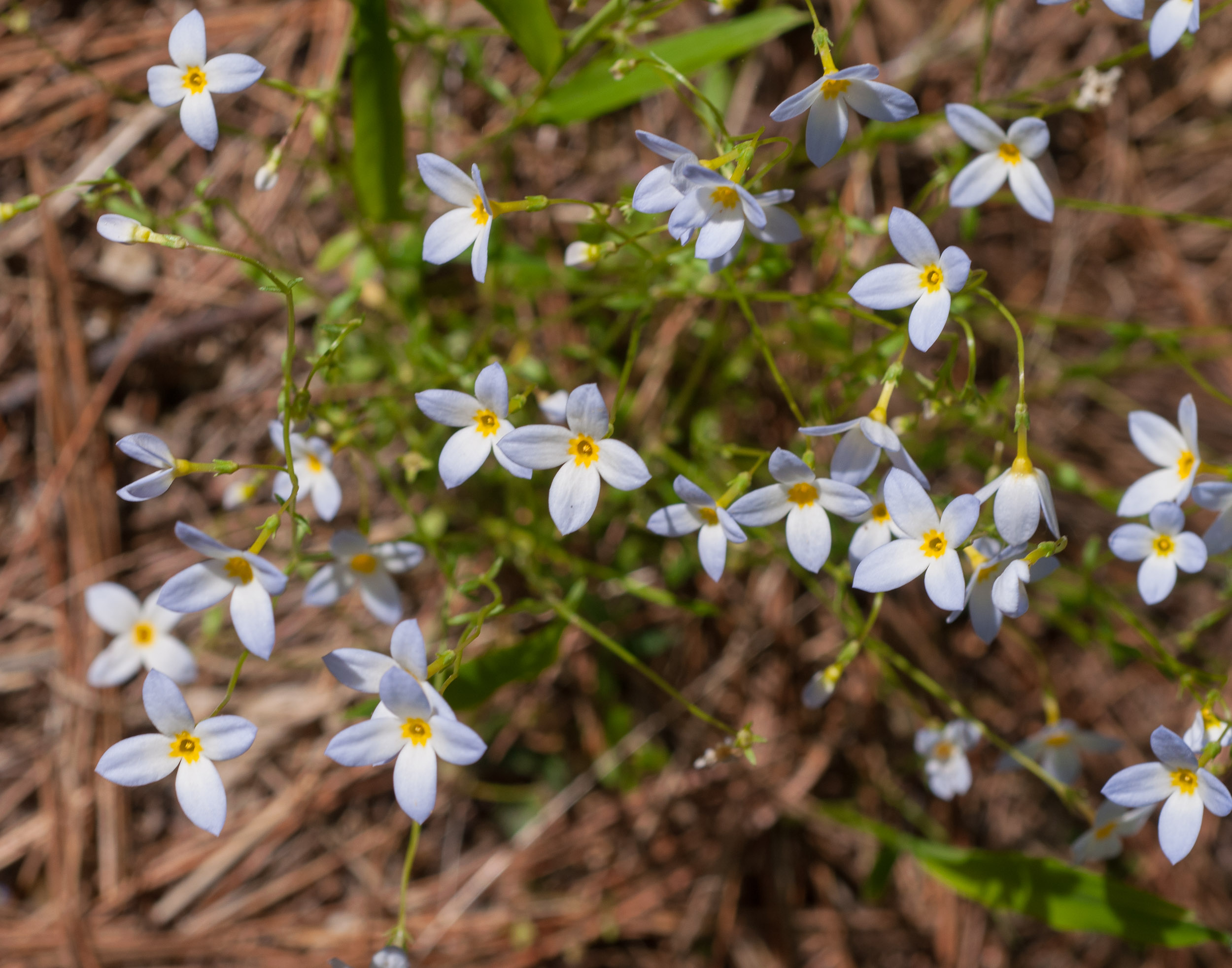
5/20/2012 · J. Harry Rich State Forest, Groton, Massachusetts · ≈ 6 × 4½″ (15 × 11 cm) 
| Kingdom | Plantae | Plants, but not fungi, lichens, or algae (from Stearn's Botanical Latin) |
| Subkingdom | Tracheobionta | Vascular plants—plants with a “circulatory system” for delivering water and nutrients |
| Division | Magnoliophyta | Flowering plants, also known as angiosperms |
| Class | Magnoliopsida | Dicotyledons—plants with two initial seed leaves |
| Subclass | Asteridae | A large class that encompasses asters |
| Order | Gentianales | Gentians, coffee, gardenias, frangipani, many others |
| Family | Rubiaceae | Coffee, madder, and bedstraw family |
| Genus | Houstonia | Named for English botanist Dr. William Houston |
| Species | caerulea | “Blue,” from the same root as the English word “cerulean” |
Houstonia caerulea description by Thomas H. Kent, not updated.

© FloraFinder.org. All rights reserved.