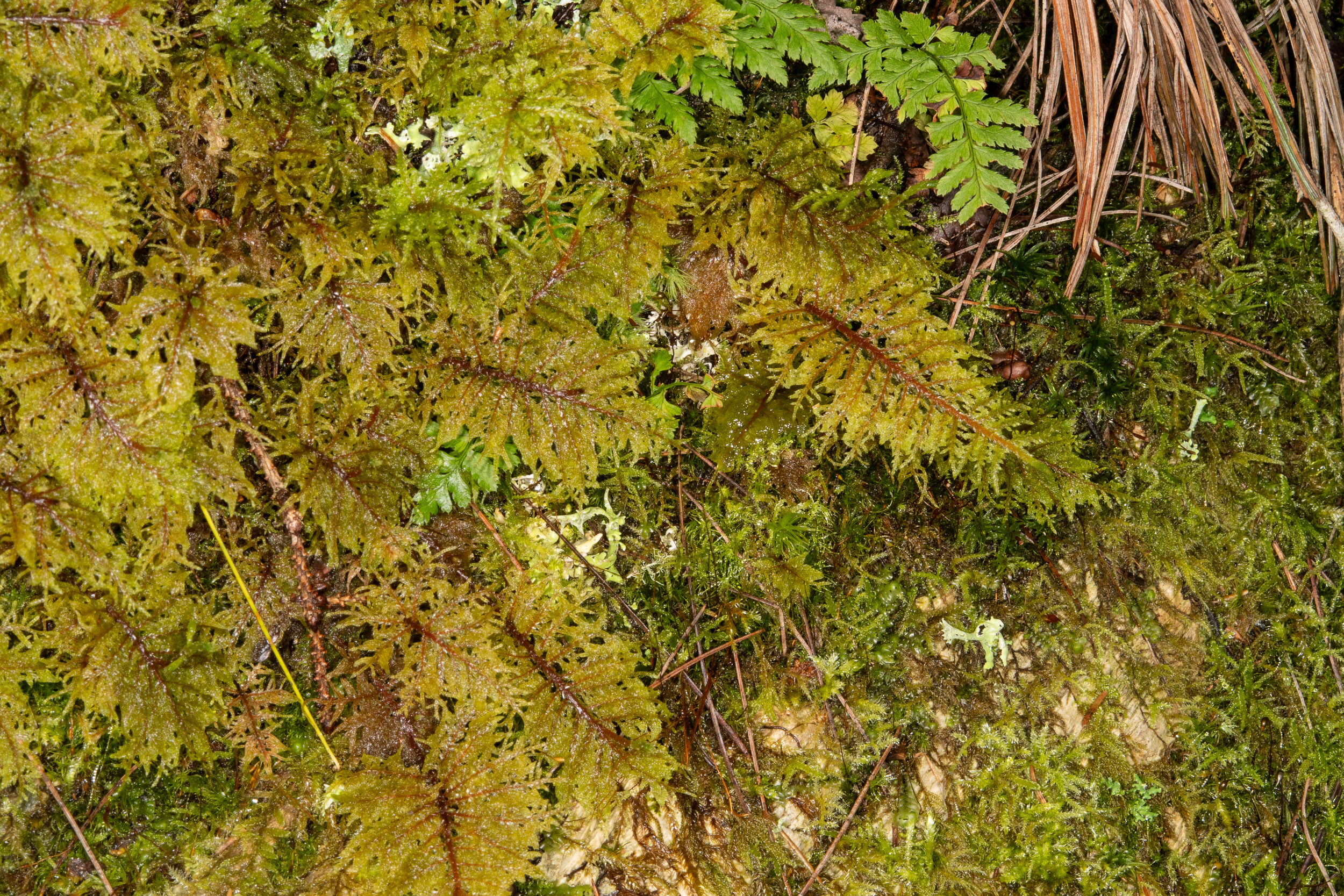
This moss is so cool up close! It is found worldwide, in Northern Hemisphere boreal
forests, from Arctic tundra into the northern US, along with Europe, Russia, Canada, parts of
China, East Africa, Australia, and New Zealand.
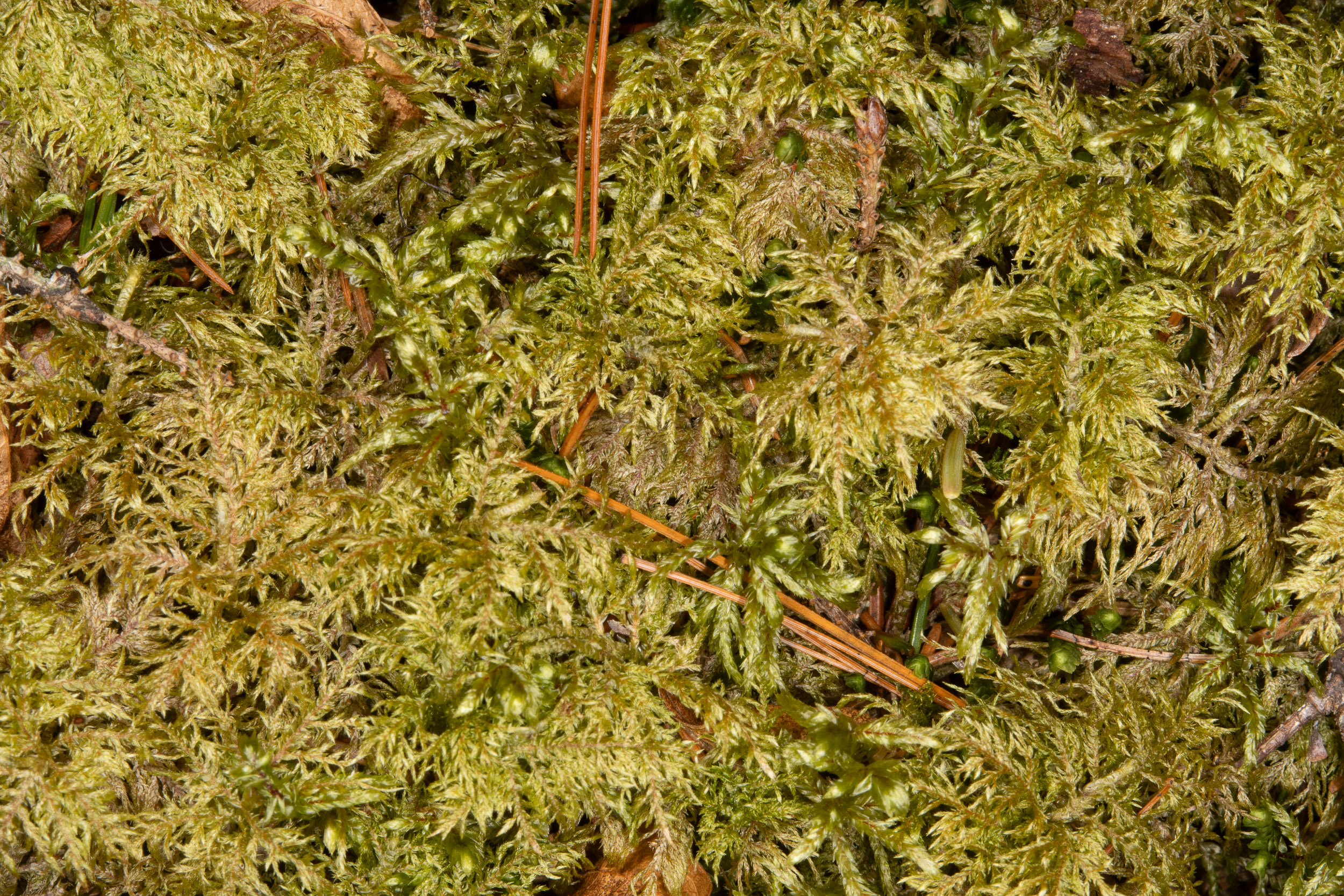
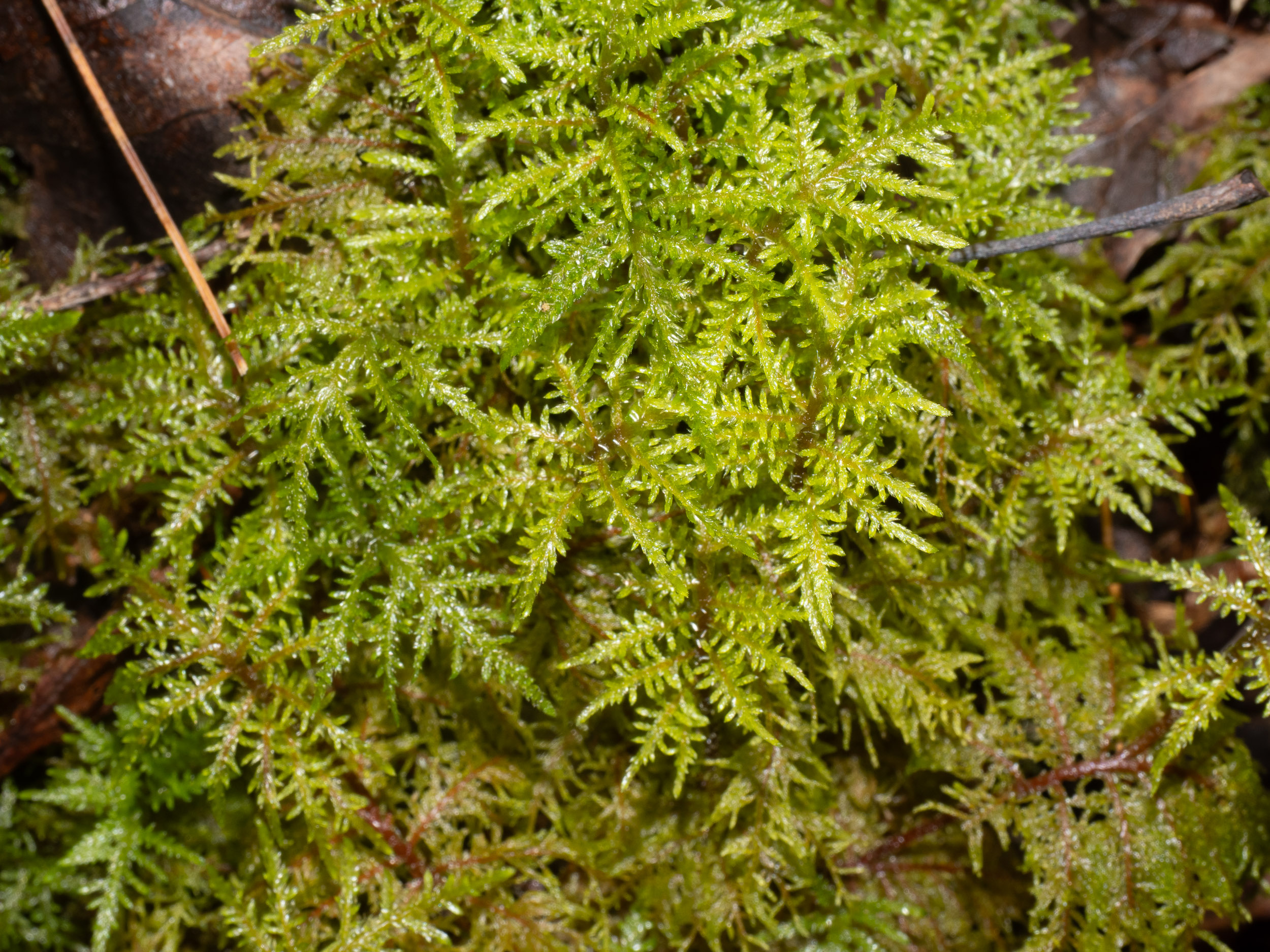
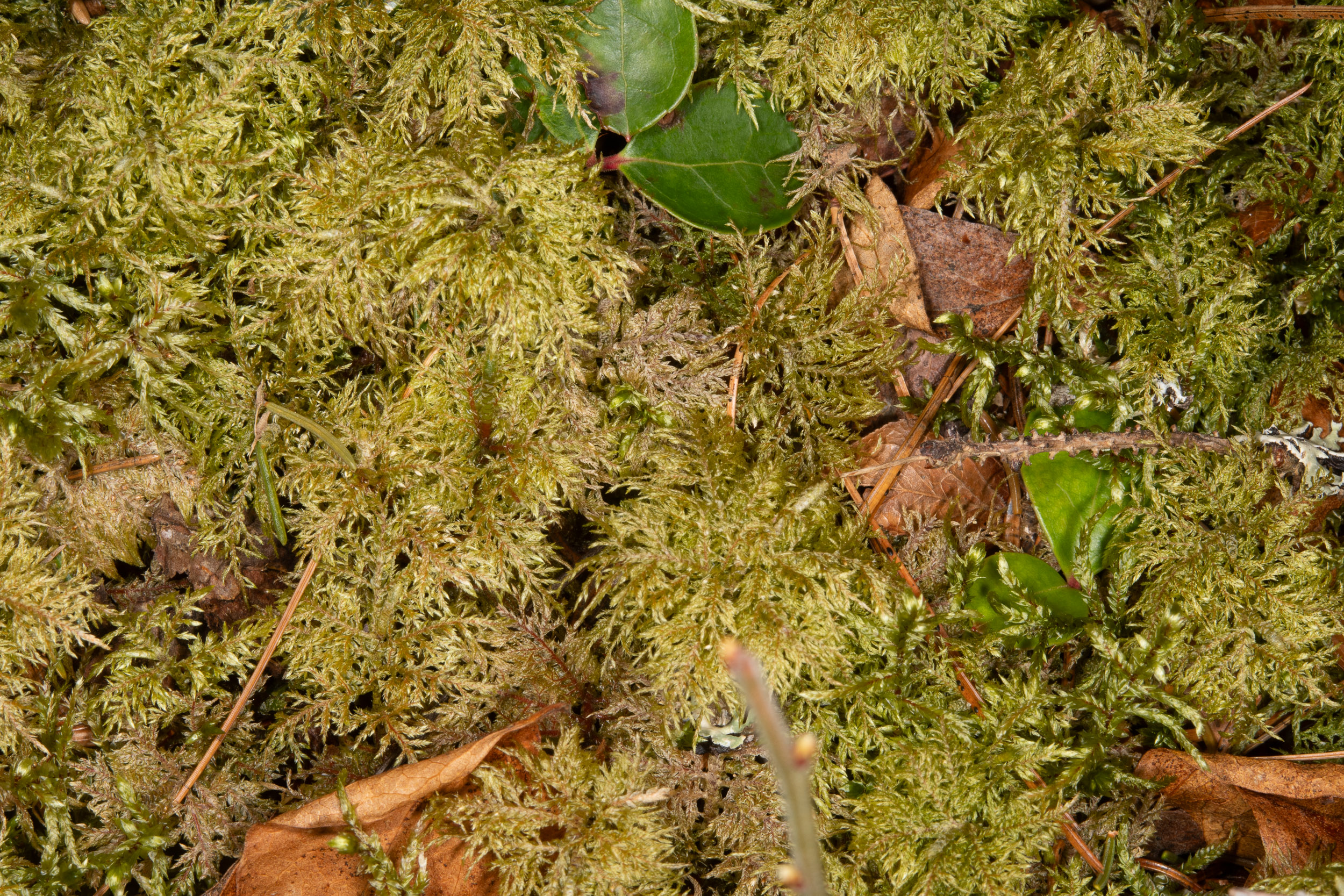
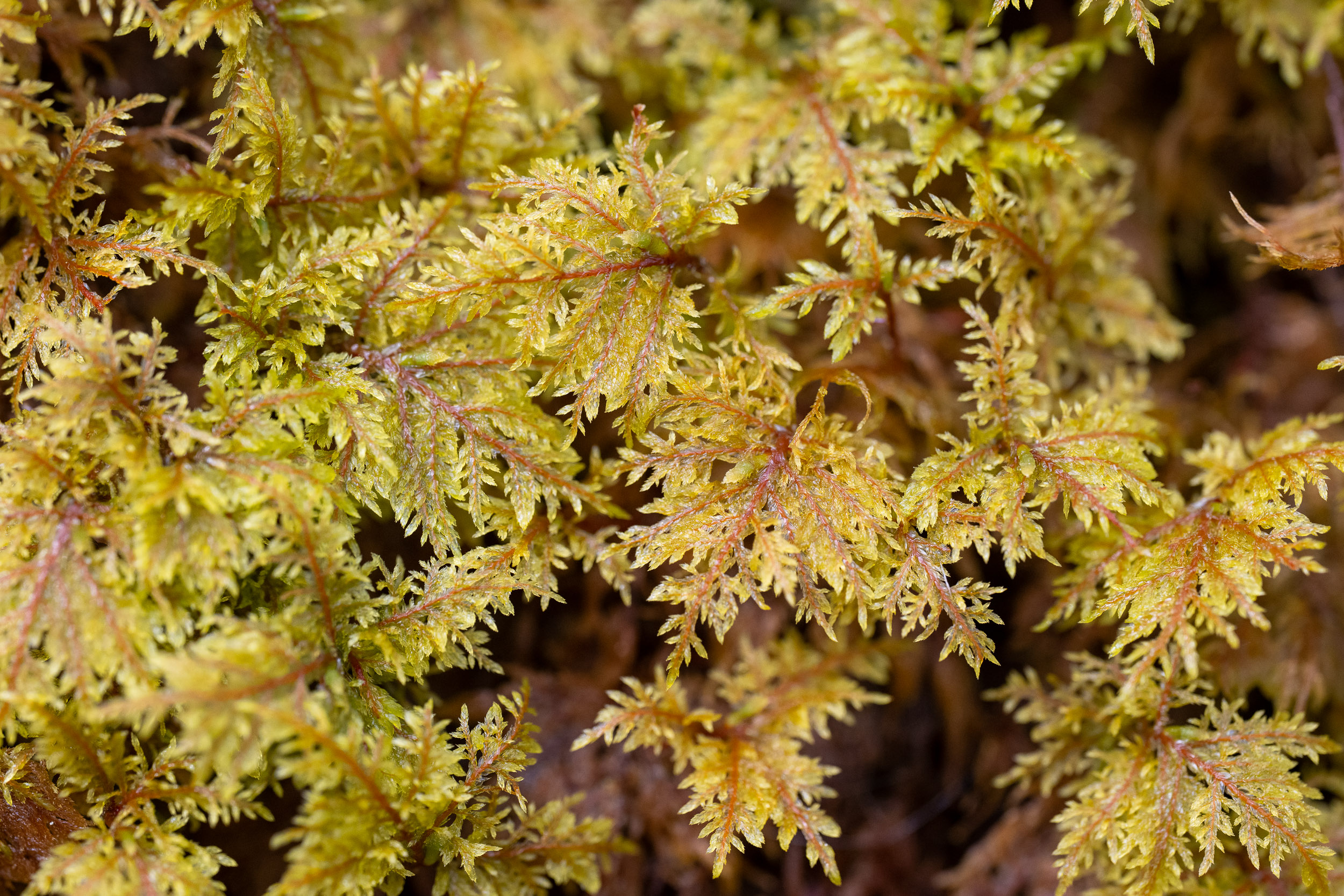
Identification: This is a colorful moss, typically olive green,
yellowish, or yellow green, with reddish stems and branches. The feathery fronds are quite
beautiful.
Branches can reach 8″ (20 cm)
in length. Each year, new growth begins from the approximate center of the prior year’s
branch, clambering slowly over other mosses
or forest detritus, forming large mats. Since the lateral branching occurs annually,
counting the branches yields the age of the moss. Seta, the stalks supporting the
capsules, are ⅛–⅞″ (5–25 mm) long. Capsules are mostly bent horizontally at their necks.
They are ovoid to ellipsoid, with distinct necks,
and ~1/16″ (1.7–2.8 mm) in size.
Habitats: Abundant and often dominant in shaded coniferous forests.
It also occurs on ledges, humus and
decaying wood in cool, moist ravines and mountain woods from sea level
to 1.9 mi (3 km).
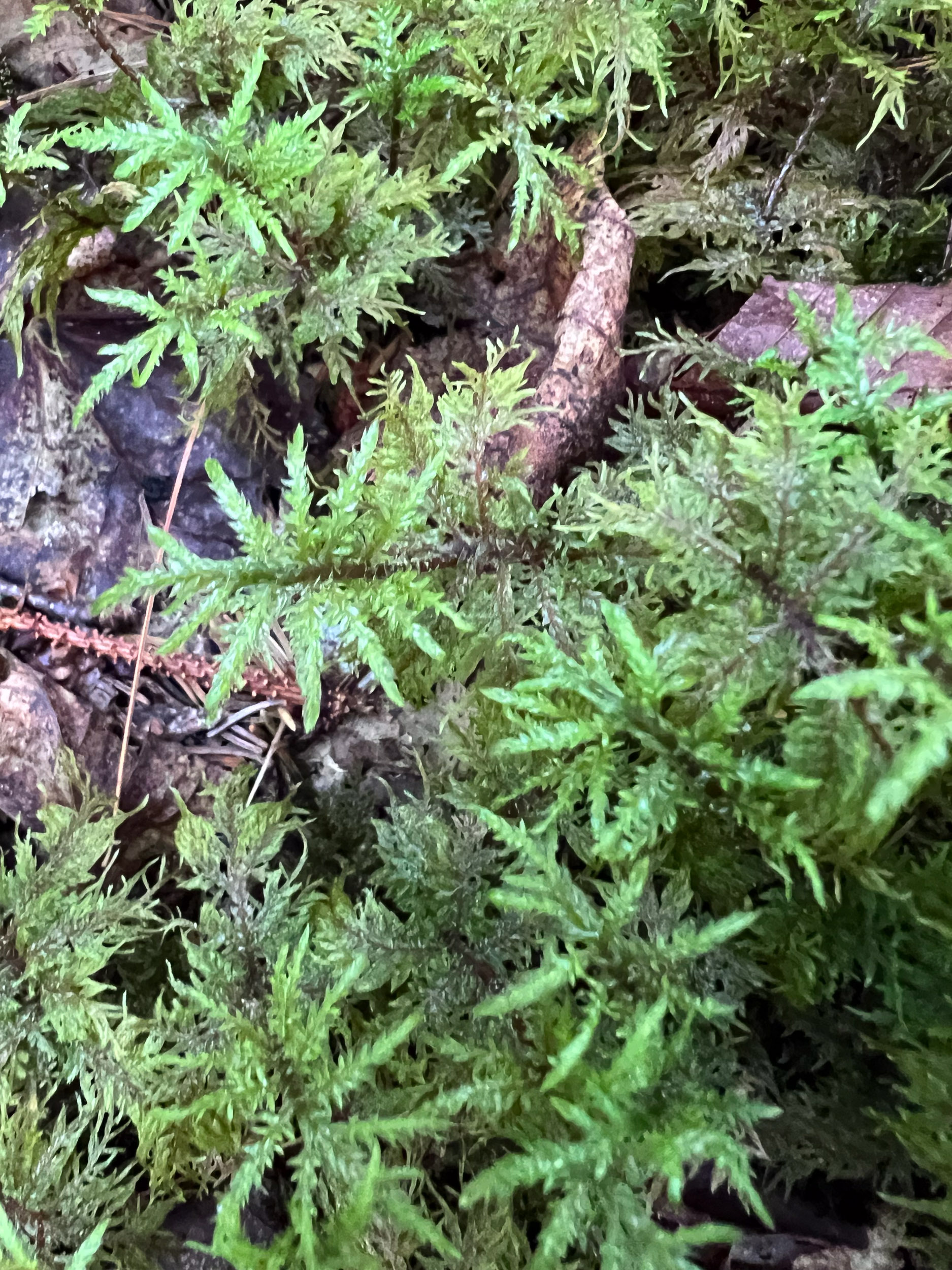
 ID is uncertain