Isatis tinctoria L.
Woad, Dyer’s woad
Woad, pronounced “wood,” is a plant in the mustard family, native to central Asia. Historically it was prized as a source of indigo, once a fabulously valuable blue dye—both of its scientific names alllude to this. Isatis also reflects woads history as a medicinal. And, although synthesis of indigo became possible in the 1930s and woad was abandoned for this purpose, in recent years it is being re-evaluated as an ecologically safer dye source.
Plants: These are biennials, or short-lived perennials, forming dense colonies. They are noxious to invasive in some habitats, such as the southwestern United States. Erect stems are variably hairy, up to 4′ (1.2 m) tall, and branched.
Leaves: Basal leaves are oblong-lanceolate, sometimes toothed, on long petioles. Upper leaves are alternate, to 2″ (5 cm) long, gray-green, becoming narrower and smaller in size, with smooth edges and sagittate shapes. They are sessile, with white midveins. The leaves contain several precursor chemicals that are the basis of the blue dye indigo.
Flowers: Racemes of bright yellow flowers. Each flower has four petals and six stamens.
Fruits: Siliques are highly variable in appearance—oblong-obovate or elliptic-obovate, and hairless or shortly hairy; also in size and shape.
Habitats: Arid habitats: rocky substrates, abandoned crops, open woods, clearings, and roadsides, at elevations up to 1.2 mi (1.9 km). It is widespread, and prefers nitrogen-rich limestone soils.
Edibility: Not edible. Leaves are extremely bitter and mildly toxic.
Medical: Recent studies summarized in 2020 have demonstrated anti-inflammatory, anti-tumour, antimicrobial, antiviral, analgesic, and antioxidant activities. Extensively used by past cultures as medicinals.
Online References:
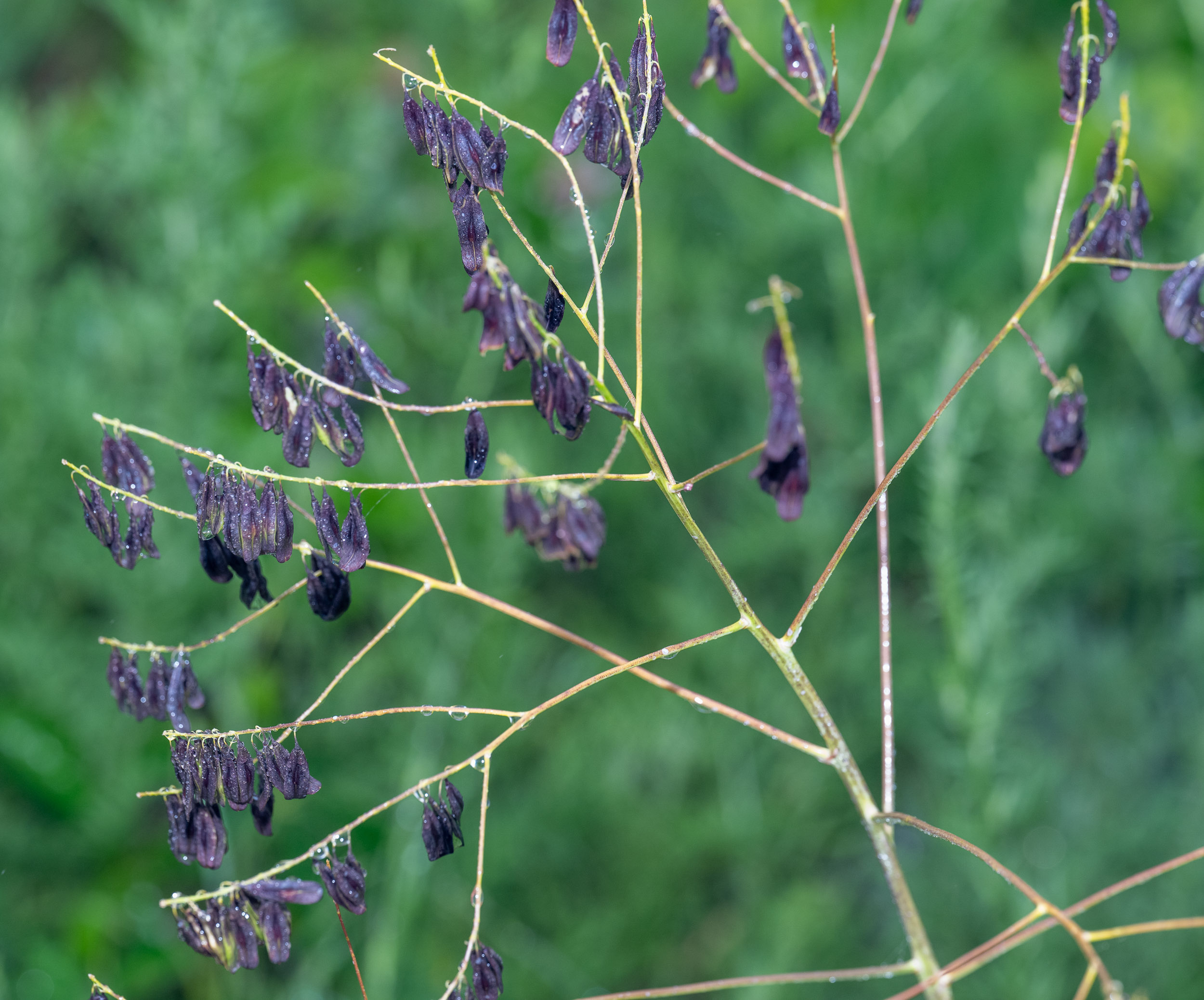
5/21/2026 · Skyline Drive, Shenandoah National Park, Virginia · ≈ 10 × 8″ (24 × 20 cm) 

5/21/2026 · Skyline Drive, Shenandoah National Park, Virginia · ≈ 9 × 6″ (22 × 15 cm) 
| Kingdom | Plantae | Plants, but not fungi, lichens, or algae (from Stearn's Botanical Latin) |
| Subkingdom | Tracheobionta | Vascular plants—plants with a “circulatory system” for delivering water and nutrients |
| Division | Magnoliophyta | Flowering plants, also known as angiosperms |
| Class | Magnoliopsida | Dicotyledons—plants with two initial seed leaves |
| Subclass | Rosidae | Roses, legumes, proteas, dogwoods, hydrangeas, mistletoes, euphorbias, grapes, many more |
| Order | Brassicales | Mustard, cabbage, caper, papaya, nasturtiums, many others; most produce mustard oil |
| Family | Brassicaceae | Mustards, cabbages |
| Genus | Isatis | From the classical Greek names ἰσάτις (isatis) or isatidos applied to this herb which provided the blue dye which ancient Britons used to stain their bodies (another interpretation is that “Isatis” derives from the Latin Isazein and the Greek Isadso, for its use as a medicinal) |
| Species | tinctoria | Used in dyeing, and usually used to refer to a plant that when broken exudes some kind of stain |

Isatis tinctoria description by Thomas H. Kent, not updated.

© FloraFinder.org. All rights reserved.