Lathyrus japonicus Willd.
Beach pea, sea pea, circumpolar pea, sea vetchling
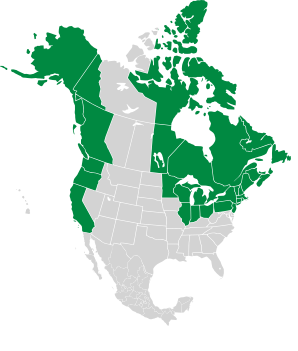
Beach pea inhabits coastal areas in Asia, Europe, and the Americas. It is also found through much of interior Canada and the northern United States.
Plants: 1–2′ (30–60 cm) tall, with multiple angled stems.
Leaves: Alternate, in compound opposite pairs, oval in shape, with a tendril at the tip of each branch. Each leaflet is 1–2 ⨉ ½–1″ (2.5–5 ⨉ 1.3–2.5 cm).
Flowers: ½–¾″ long ⨉ ¼″ across (1.3–1.9 cm ⨉ 8.3 mm), in clusters of 6 to 10 at the end of a long smooth stem. They are an attractive mix of dark and light pink in color. Each flower has a large bright purple-magenta upper petal, called the standard, and a couple of pale purple lateral wings below, around a lavendar keel below. They appear from June to August.
Fruits: Fruits look identical to those of garden sweet peas, in clusters of six to ten pods, each 1½–3½″ (3.8–8.9 cm) long and ½″ (1.3 cm) around. The seeds float on seawater, remaining viable for up to five years, accounting for their circumboreal range.
Habitats: Sandy or stony seashores in temperate climates.
Edibility: Young plants are edible and nutritious, either raw or cooked. However, the peas, which look tempting because they closely resemble garden peas, are not edible. They contain β-oxalyl-L-α,β-diaminopropionic acid, which can cause paralysis.
Online References:
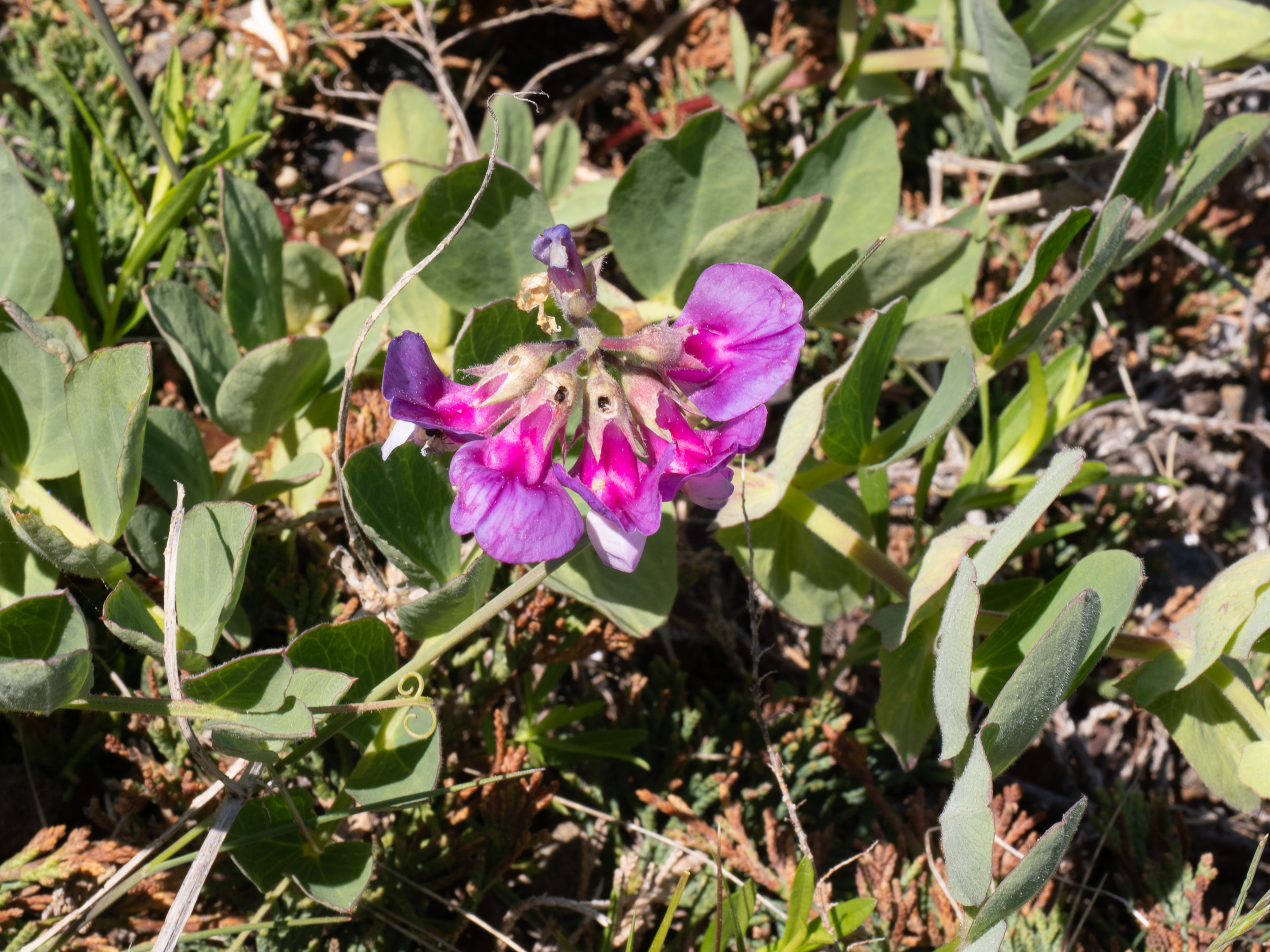
5/24/2024 · Monhegan Island, Maine 

9/21/2021 · Pott’s Point Preserve, Harpswell, Maine 

7/15/2012 · Fort Point State Park, Stockton Springs, Maine · ≈ 17 × 12″ (44 × 29 cm) 

6/15/2025 · Morse Mountain Preserve, Phippsburg, Maine · ≈ 5 × 3½″ (13 × 9.6 cm) 
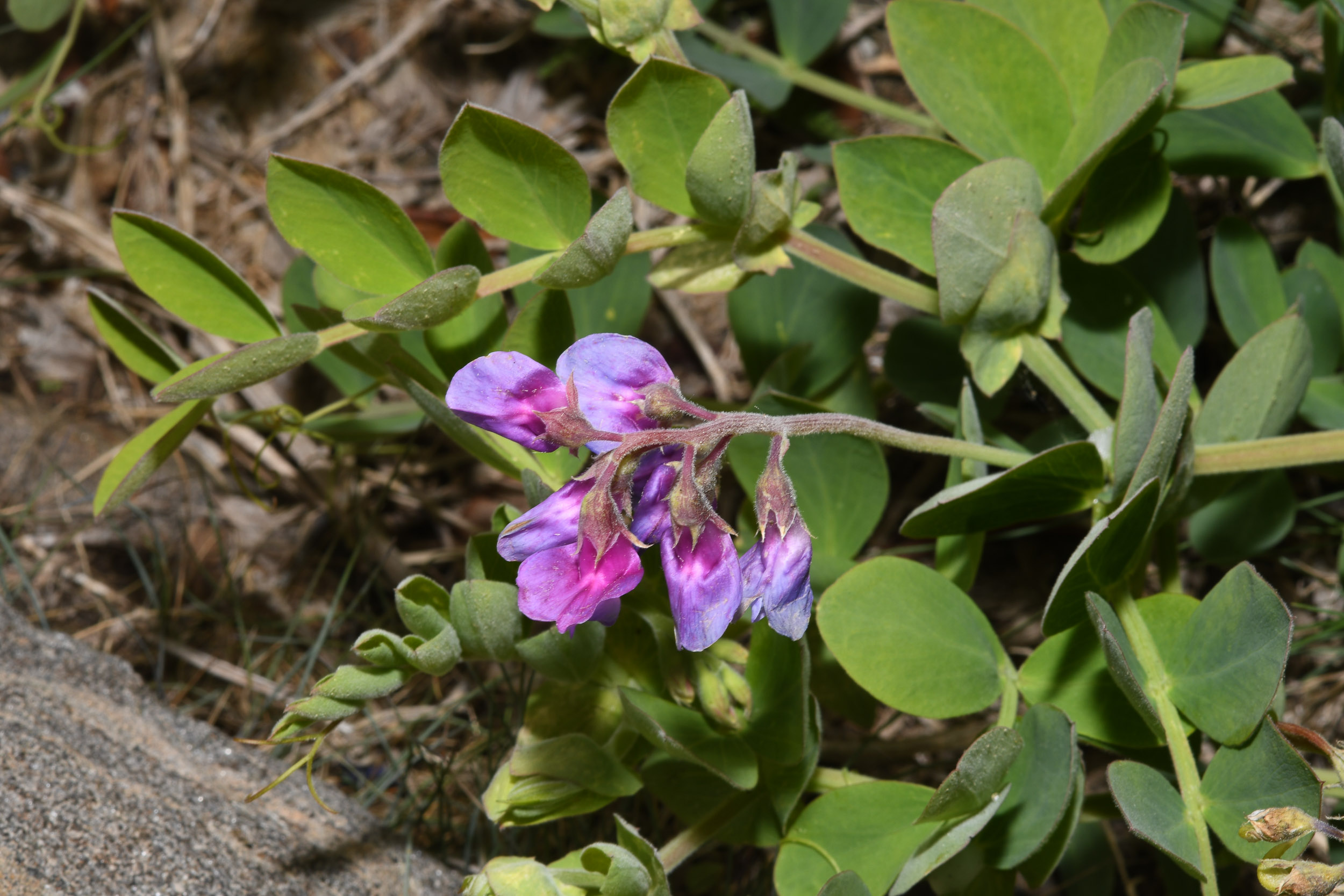
6/10/2016 · Lobster Cove Trail, Monhegan Island, Maine 
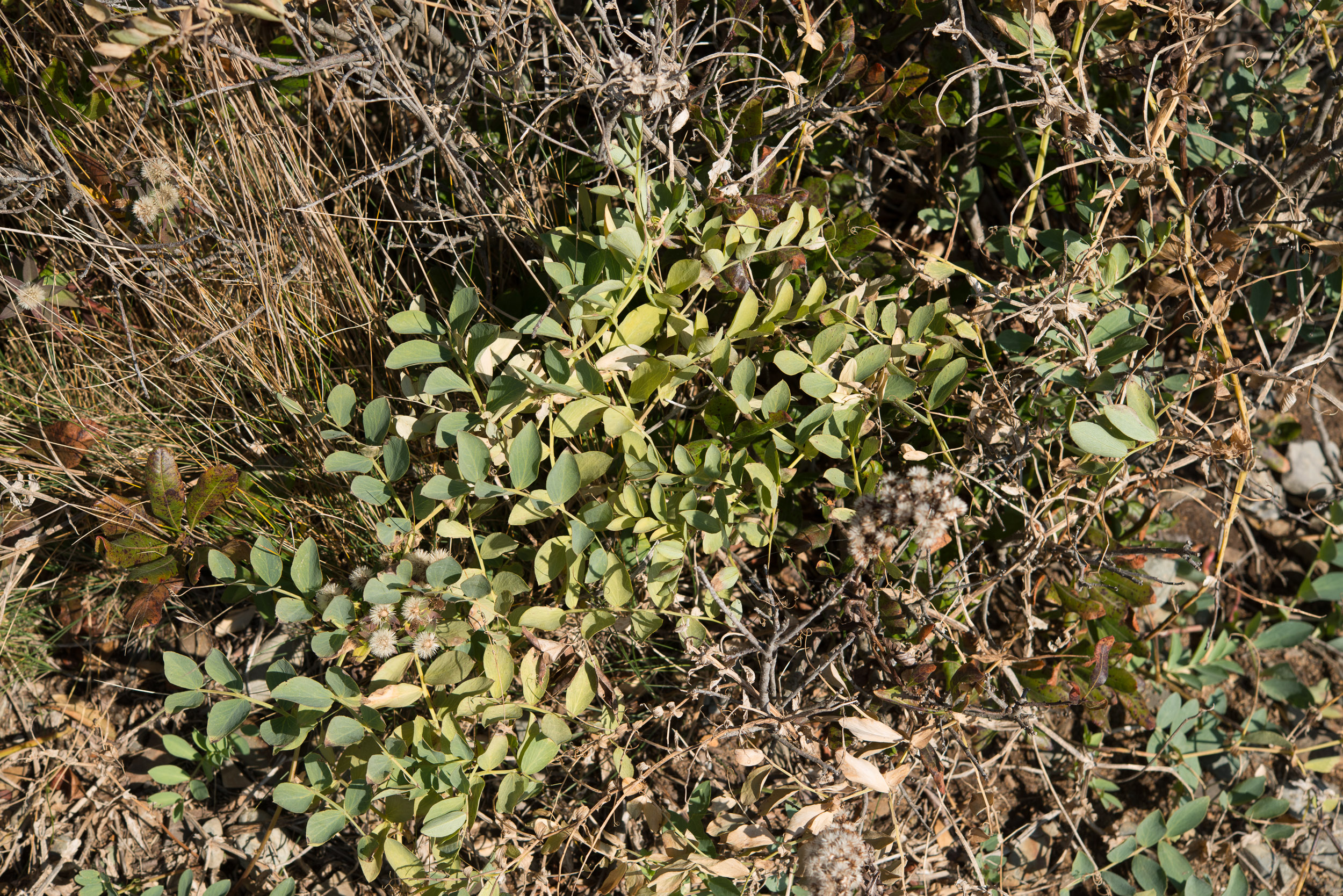
11/2/2013 · East Point Sanctuary, Biddeford Pool, Maine · ≈ 2½ × 1½′ (79 × 53 cm) 
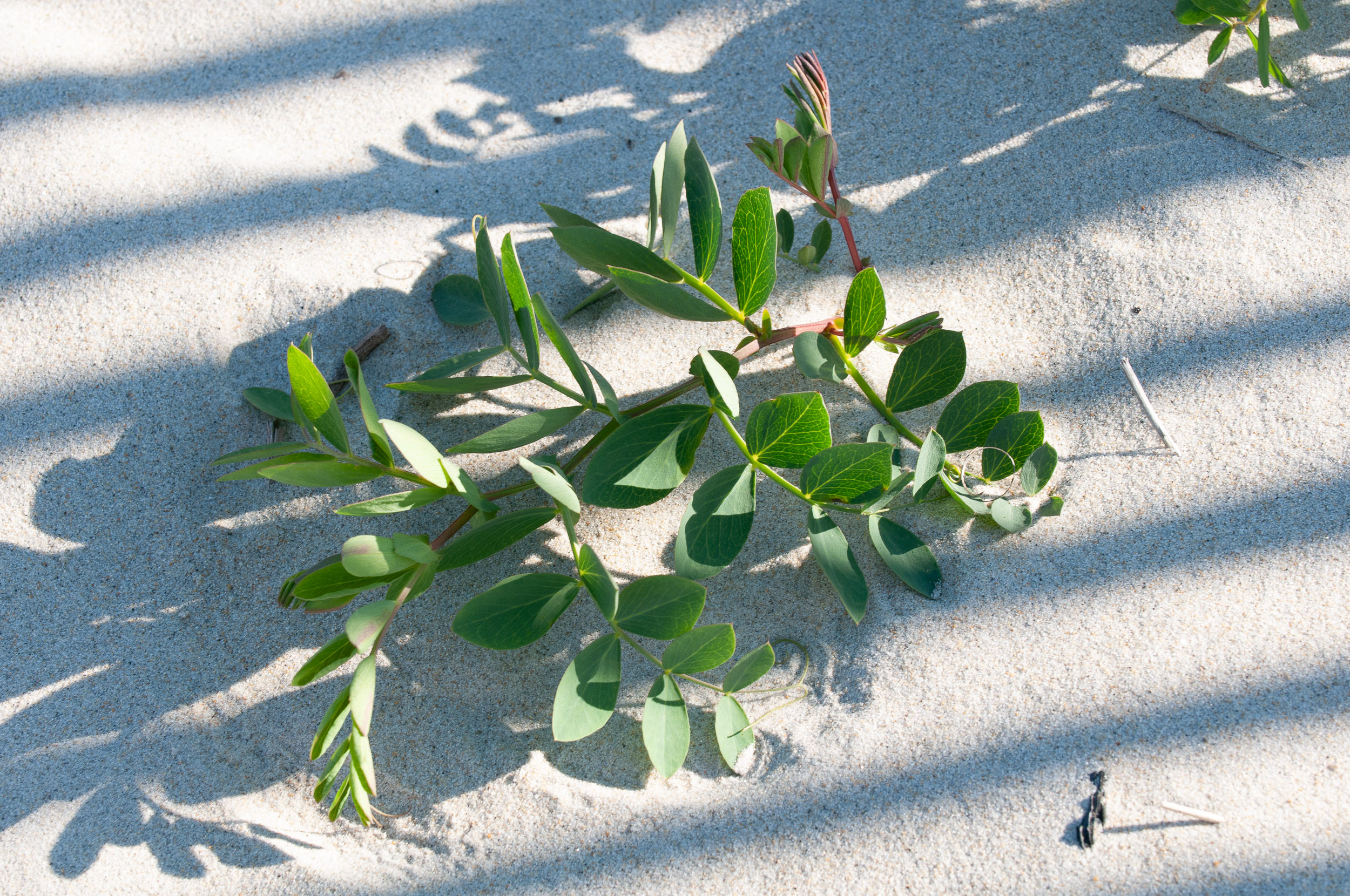
10/4/2008 · Parker River National Wildlife Refuge, Plum Island, Massachusetts · ≈ 1½ × 1′ (46 × 30 cm)  ID is uncertain
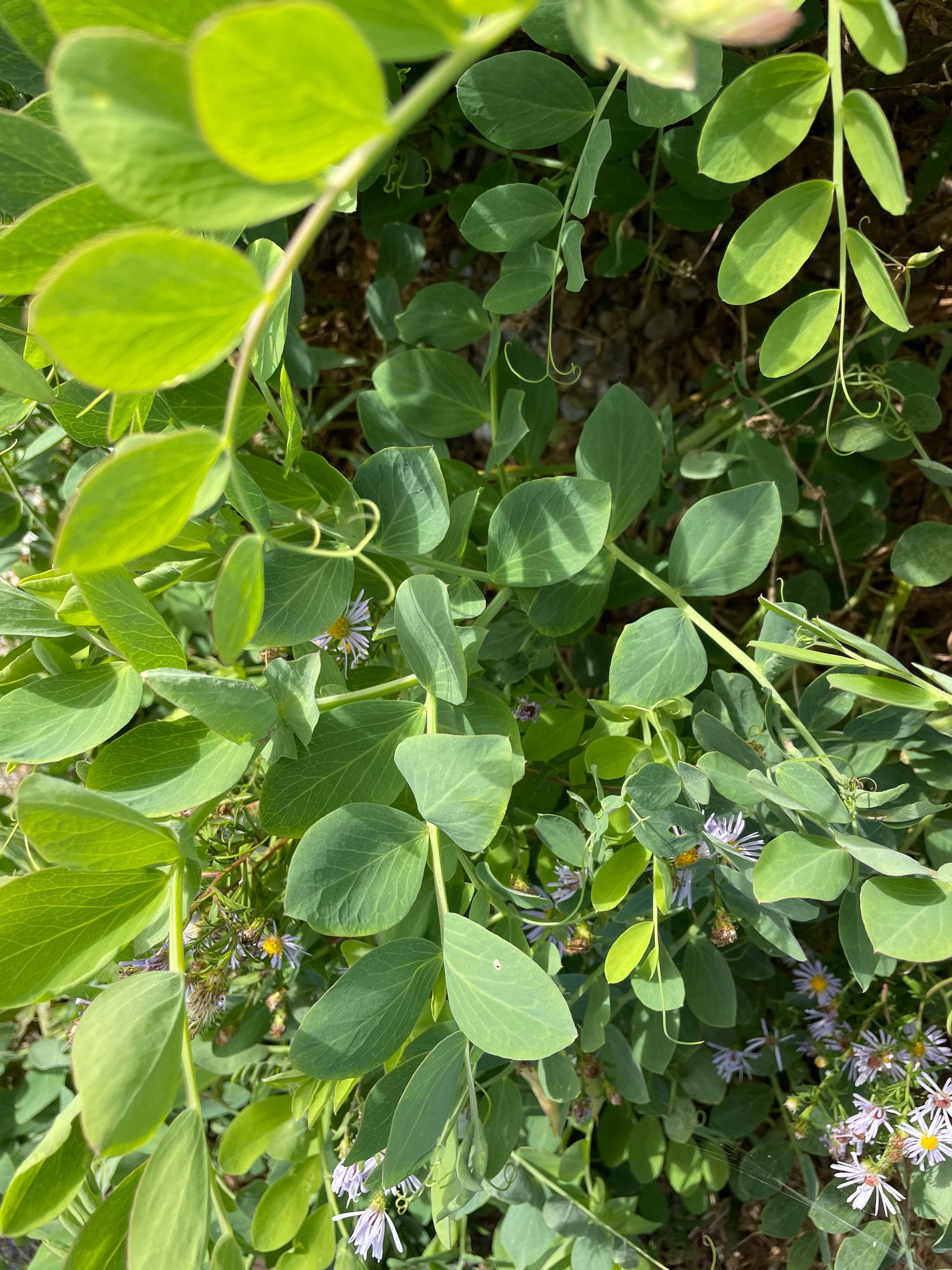
9/21/2021 · Pott’s Point Preserve, Harpswell, Maine 

5/24/2024 · Monhegan Island, Maine 

5/24/2024 · Monhegan Island, Maine 

6/10/2016 · Lobster Cove Trail, Monhegan Island, Maine 
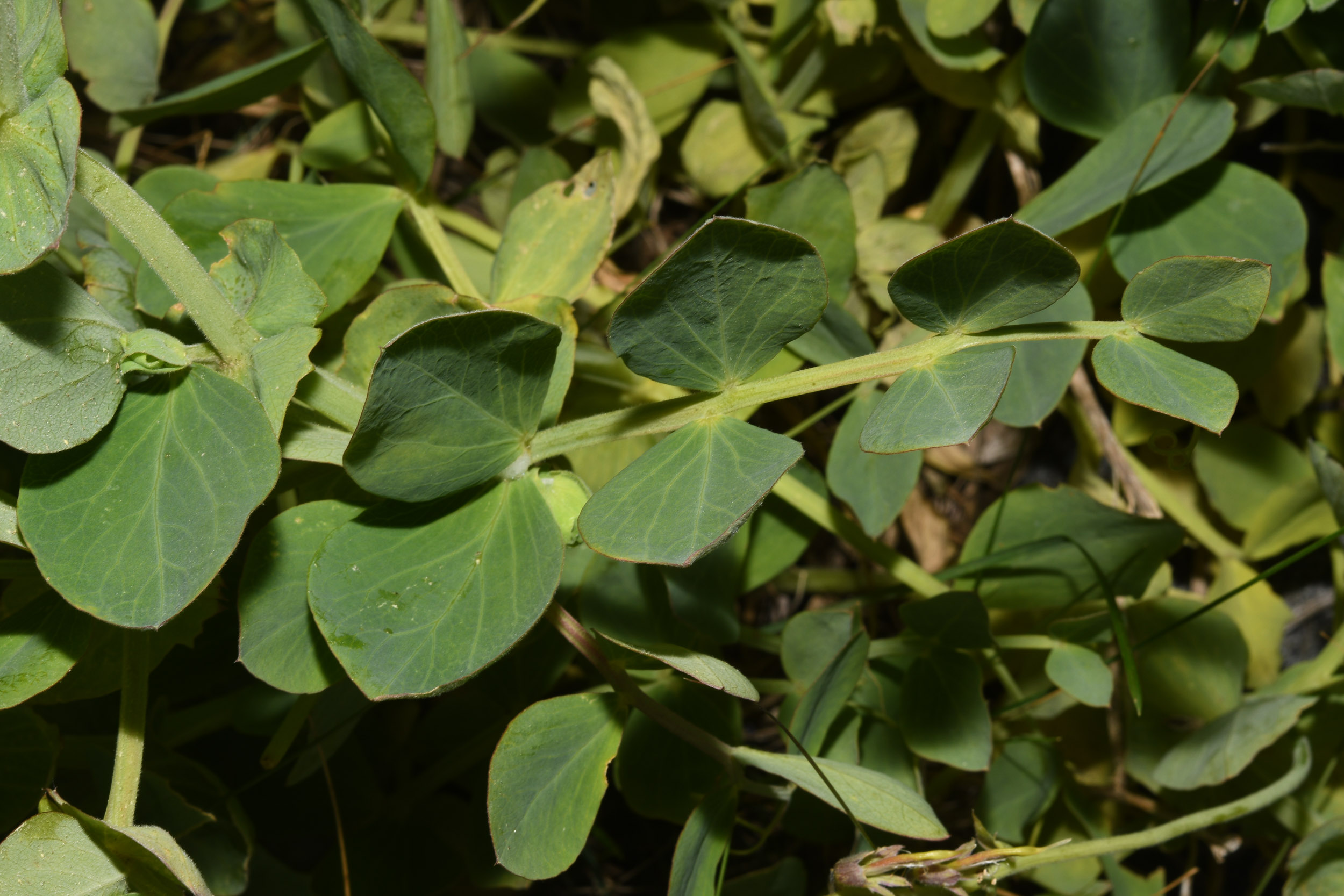
6/10/2016 · Lobster Cove Trail, Monhegan Island, Maine 

6/15/2025 · Morse Mountain Preserve, Phippsburg, Maine · ≈ 1½ × 1½′ (53 × 48 cm) 
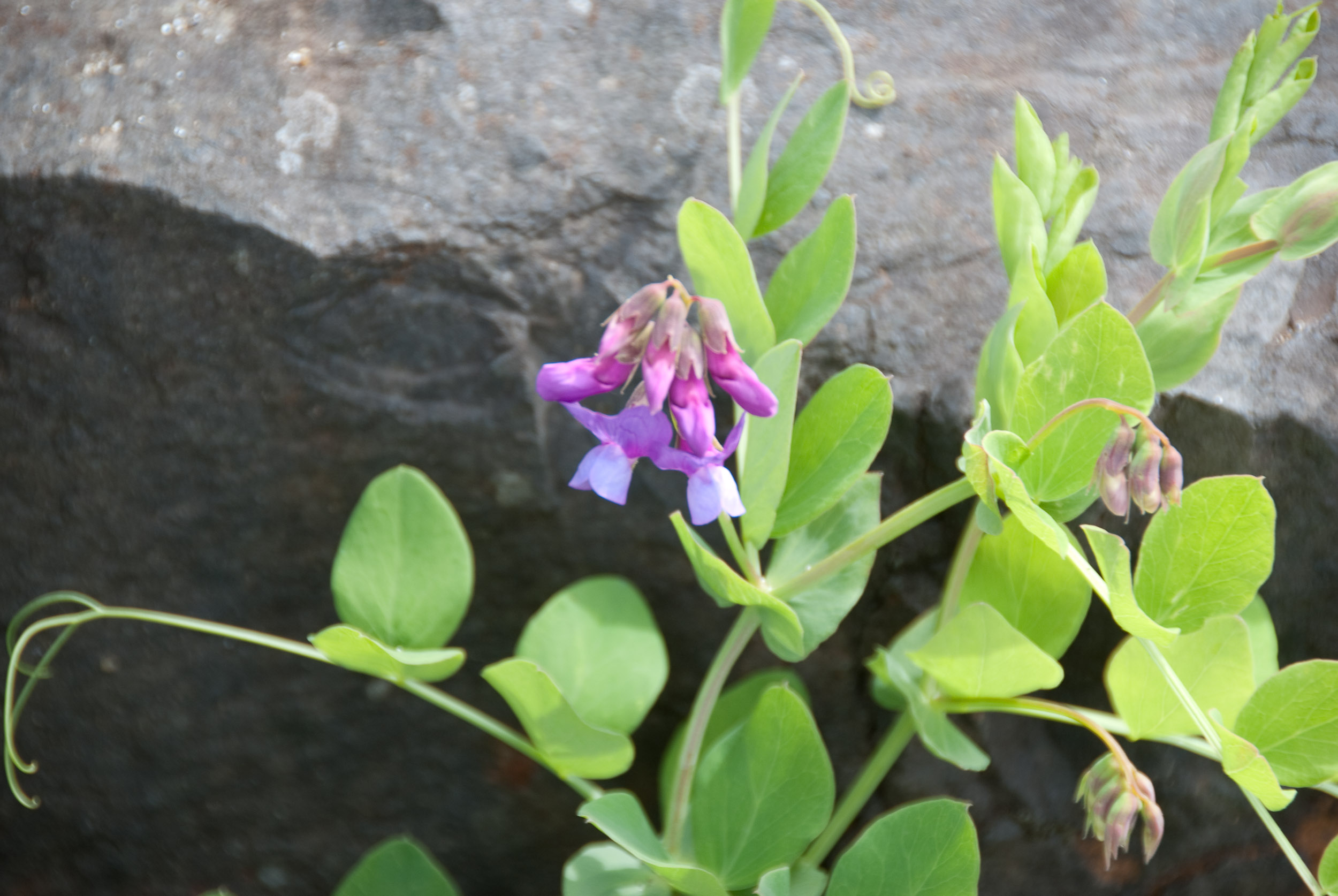
8/26/2007 · Fogarty Creek, Lincoln City, Oregon ID is uncertain 

9/20/2009 · Wild Gardens of Acadia, Acadia National Park, Bar Harbor, Maine · ≈ 1½ × 1′ (52 × 34 cm) 
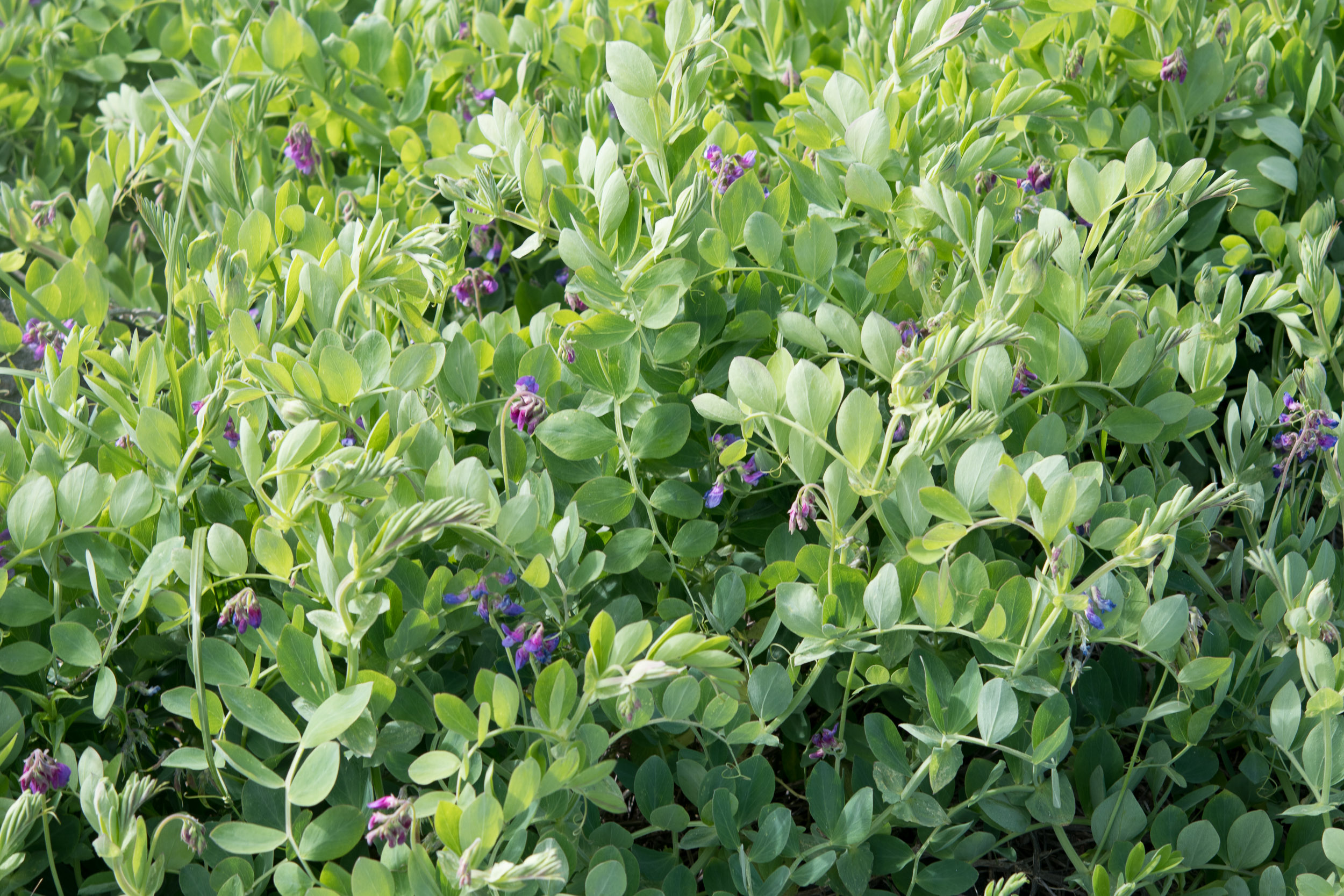
6/10/2016 · Lobster Cove Trail, Monhegan Island, Maine 

6/10/2016 · Lobster Cove Trail, Monhegan Island, Maine 
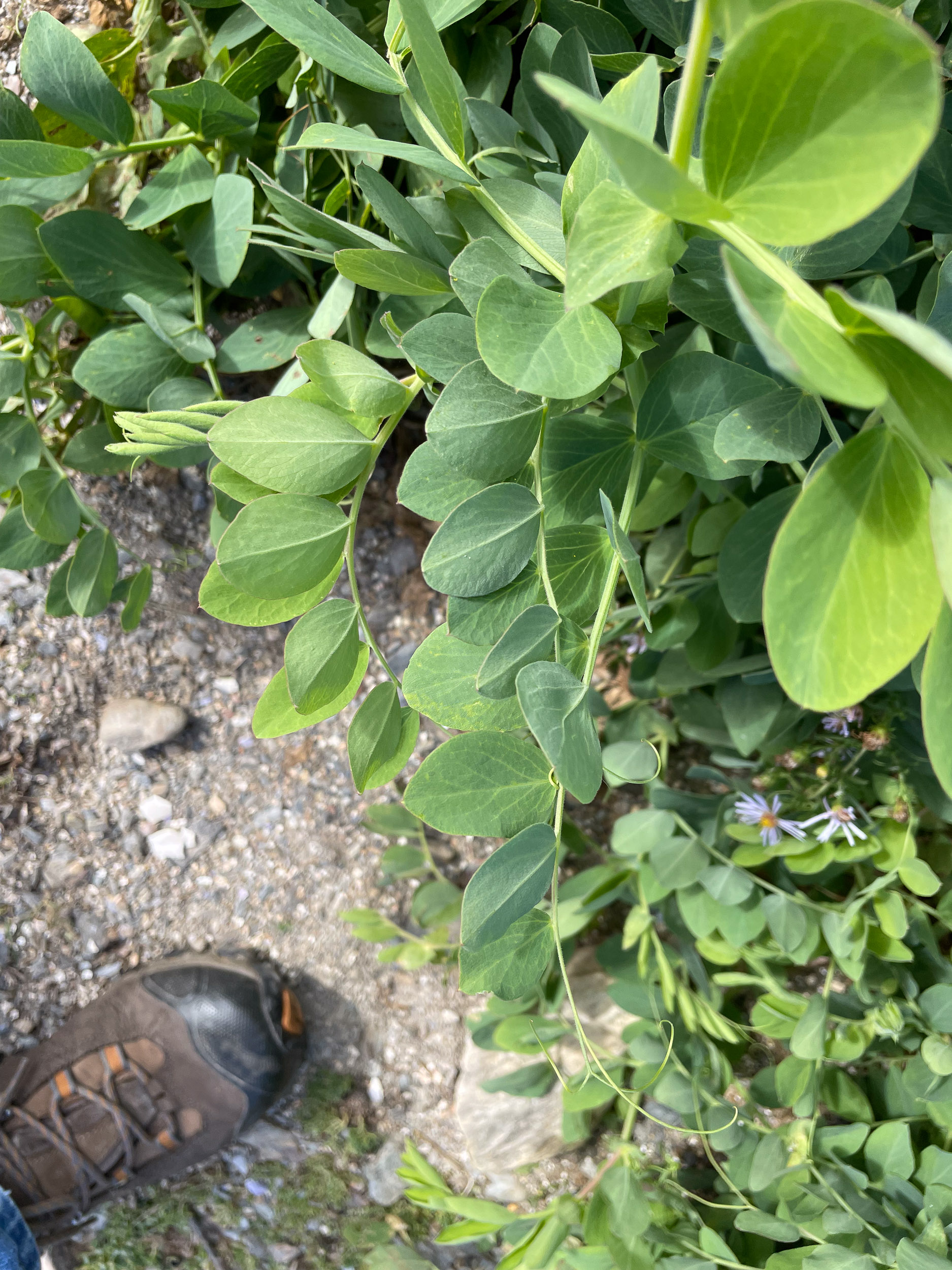
9/21/2021 · Pott’s Point Preserve, Harpswell, Maine 

6/10/2016 · Lobster Cove Trail, Monhegan Island, Maine 
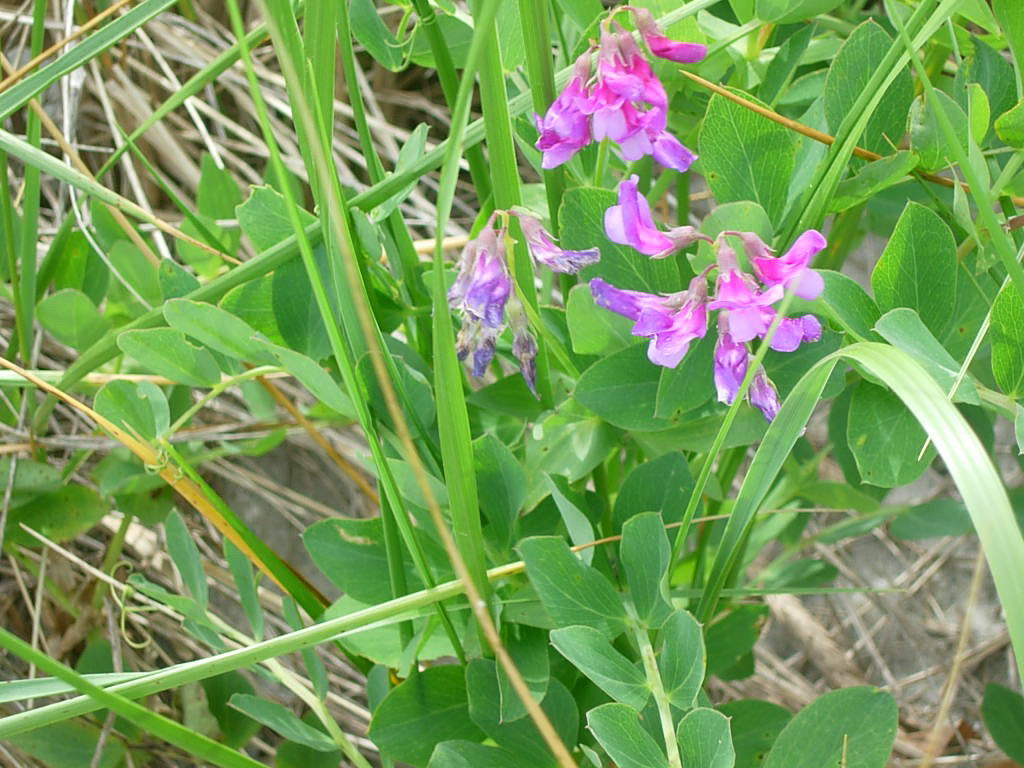
1/5/2026 · Chebeague Island, Maine · By Constance B. Kent ID is uncertain 

6/15/2025 · Morse Mountain Preserve, Phippsburg, Maine · ≈ 6 × 7″ (14 × 18 cm) 
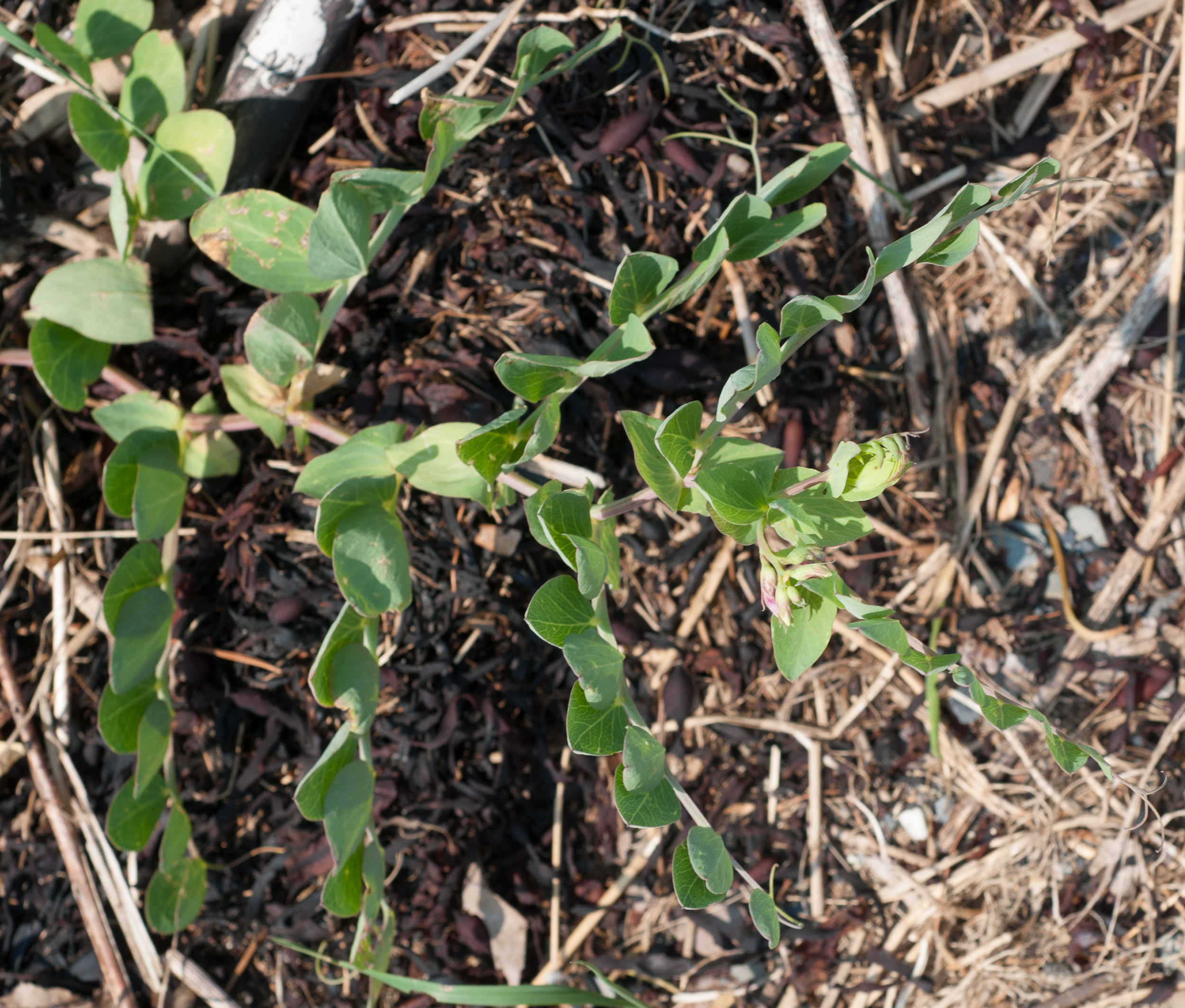
7/15/2012 · Fort Point State Park, Stockton Springs, Maine · ≈ 11 × 9″ (27 × 23 cm) 
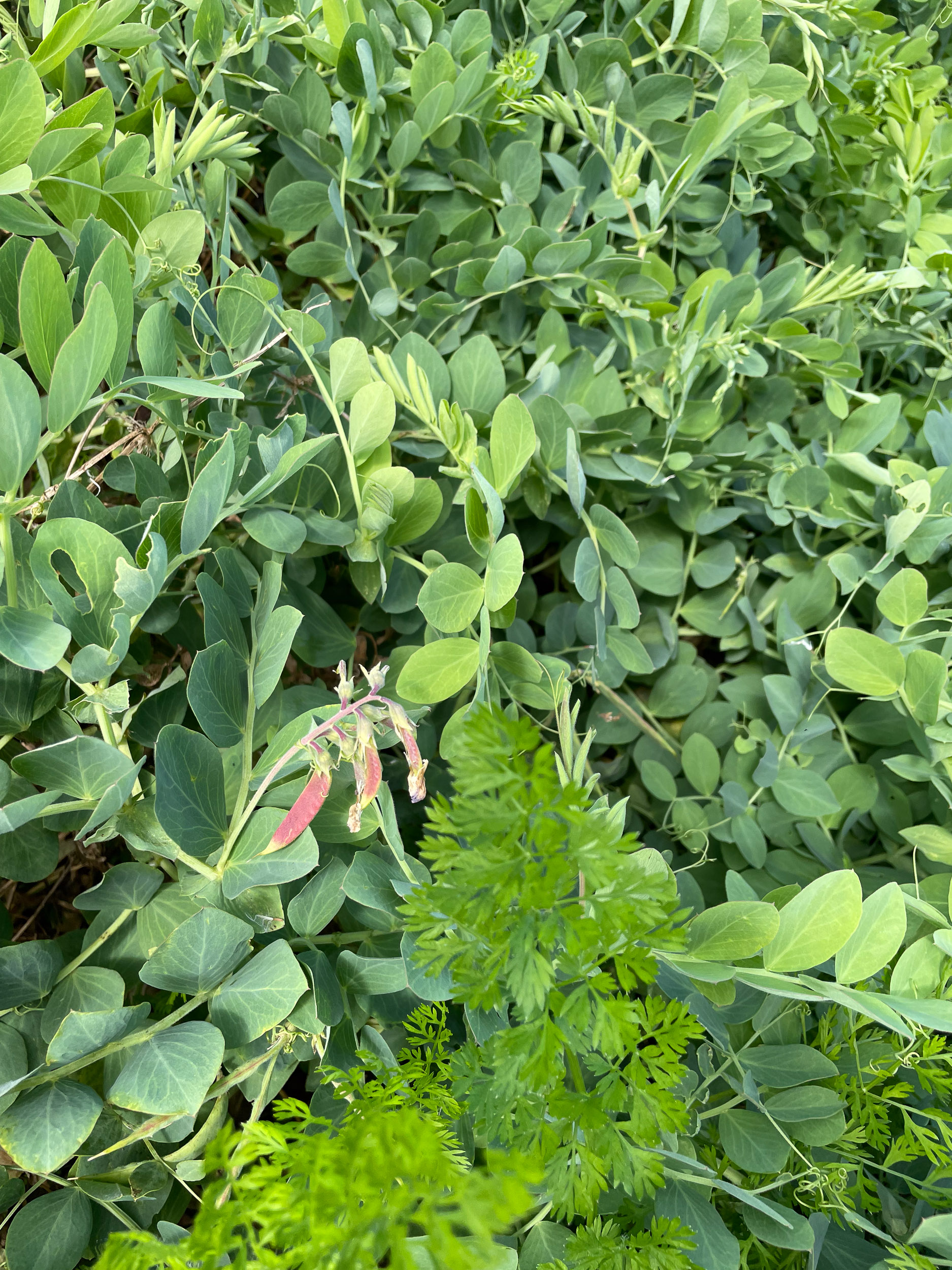
9/21/2021 · Pott’s Point Preserve, Harpswell, Maine 
| Kingdom | Plantae | Plants, but not fungi, lichens, or algae (from Stearn's Botanical Latin) |
| Subkingdom | Tracheobionta | Vascular plants—plants with a “circulatory system” for delivering water and nutrients |
| Division | Magnoliophyta | Flowering plants, also known as angiosperms |
| Class | Magnoliopsida | Dicotyledons—plants with two initial seed leaves |
| Subclass | Rosidae | Roses, legumes, proteas, dogwoods, hydrangeas, mistletoes, euphorbias, grapes, many more |
| Order | Fabales | Legumes (pea and bean families) |
| Family | Fabaceae | Legume family (peas and beans) |
| Genus | Lathyrus | From Greek lathyros, an old name for “pea” |
| Species | japonicus | “Japanese” |
Lathyrus japonicus description by Thomas H. Kent, not updated.

© FloraFinder.org. All rights reserved.