Chrysanthemum leucanthemum L. var. boecheri B. Boivin
Chrysanthemum leucanthemum L. var. pinnatifidum Lecoq & Lamotte
Leucanthemum leucanthemum (L.) Rydb., nom. inval.
Leucanthemum vulgare Lam. var. pinnatifidum (Lecoq & Lamotte) Moldenke
Leucanthemum vulgare Lam.
Oxeye daisy, ox-eye daisy
The oxeye daisy is widespread throughout North America, but not a native—it comes from Europe and Asia. In some locales they border on invasive.
Plants: These daisies are 1–2½′ (30–76 cm) high. Stems are hairy near the bottom.
Leaves: Heavily lobed dark green leaves. Lower leaves are 1½–6 ⨉ ⅜–1¾″ (4–15 ⨉ 1–5 cm) in size, roughly oval, with up to 15 irregular teeth or lobes. Upper leaves are progressively smaller, sessile, and deeply toothed.
Flowers: Like other members of the aster family, daisies are composite flowers, with a yellow central disc composed of disc flowers surrounded by about 20 white “petals,” actually ray flowers. Typically there is a single flowers per stem, 1–2″ (2.5–5 cm) around. The central disc is ¼–½″ (6.3–12 mm) around, and depressed in the middle. Flowers appear from May to October.
Fruits: Achenes are 1/32–⅛″ (1–3 mm) long, with ten ribs.
Habitats: Meadows and fields, under scrub and open-canopy forests, and in disturbed areas.
Online References:
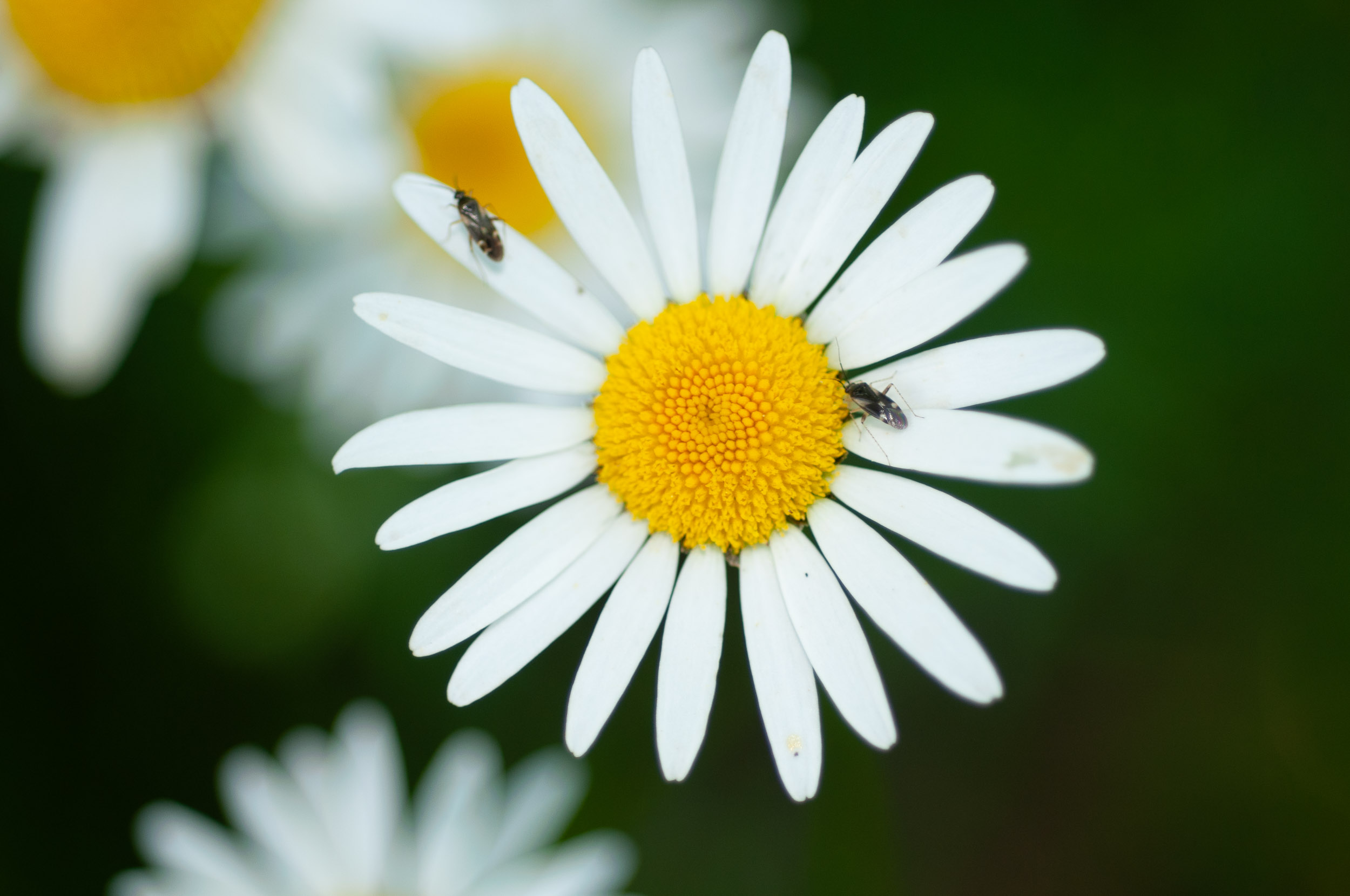
6/21/2010 · Nashua River Rail Trail, Groton Center, Groton, Massachusetts · ≈ 4½ × 3″ (11 × 7.9 cm) 

6/11/2010 · Nashua River Rail Trail, Groton Center, Groton, Massachusetts · ≈ 3 × 2½″ (7.4 × 7 cm) 
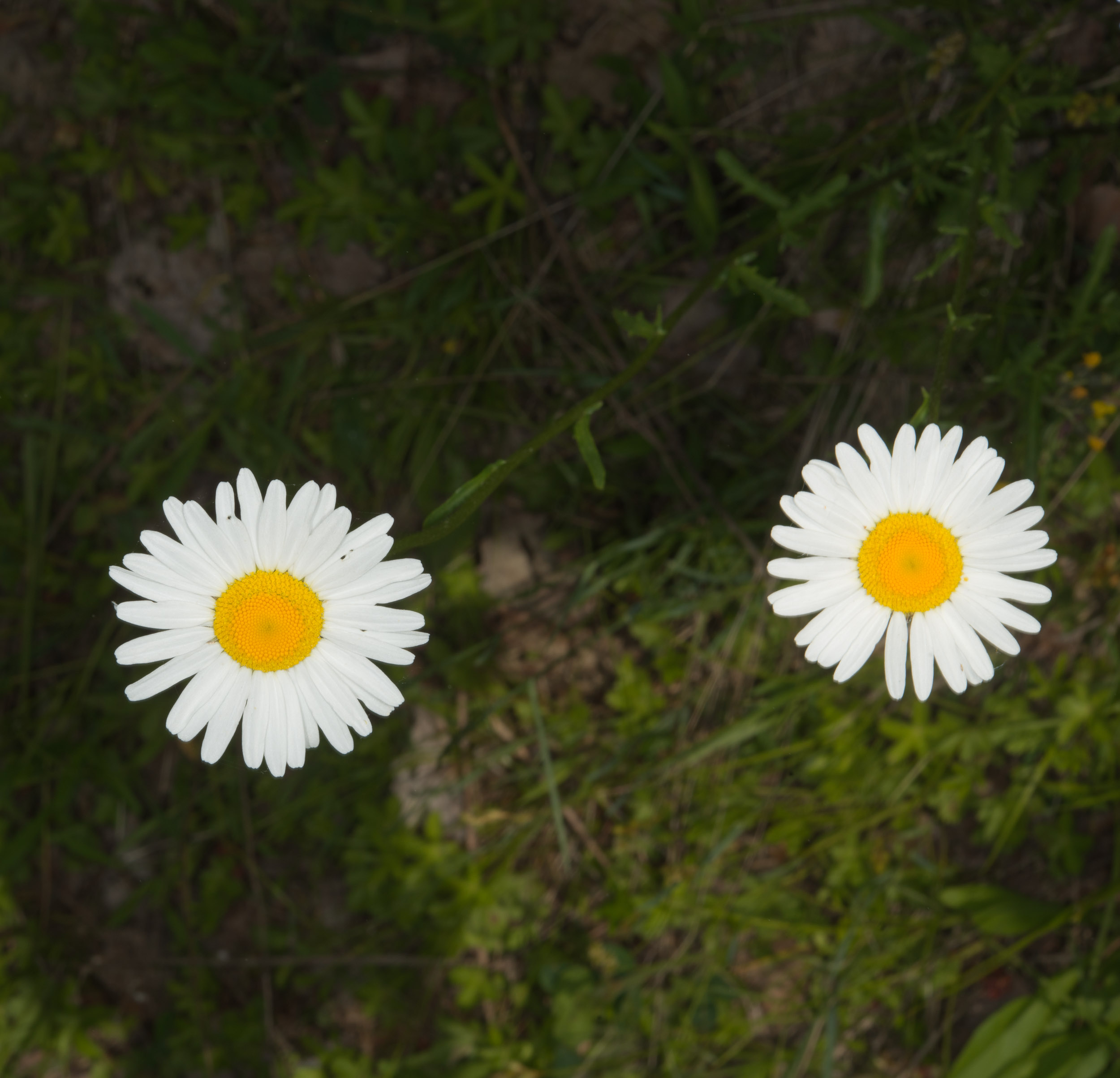
6/8/2014 · Flat Rock Conservation Area, Skytop Lane, Dunstable, Massachusetts · ≈ 8 × 9″ (21 × 22 cm) 

6/23/2025 · Otter Brrok Preserve, Harpswell Heritage Land Trust, Harpswell, Maine · ≈ 7 × 6″ (16 × 15 cm) 
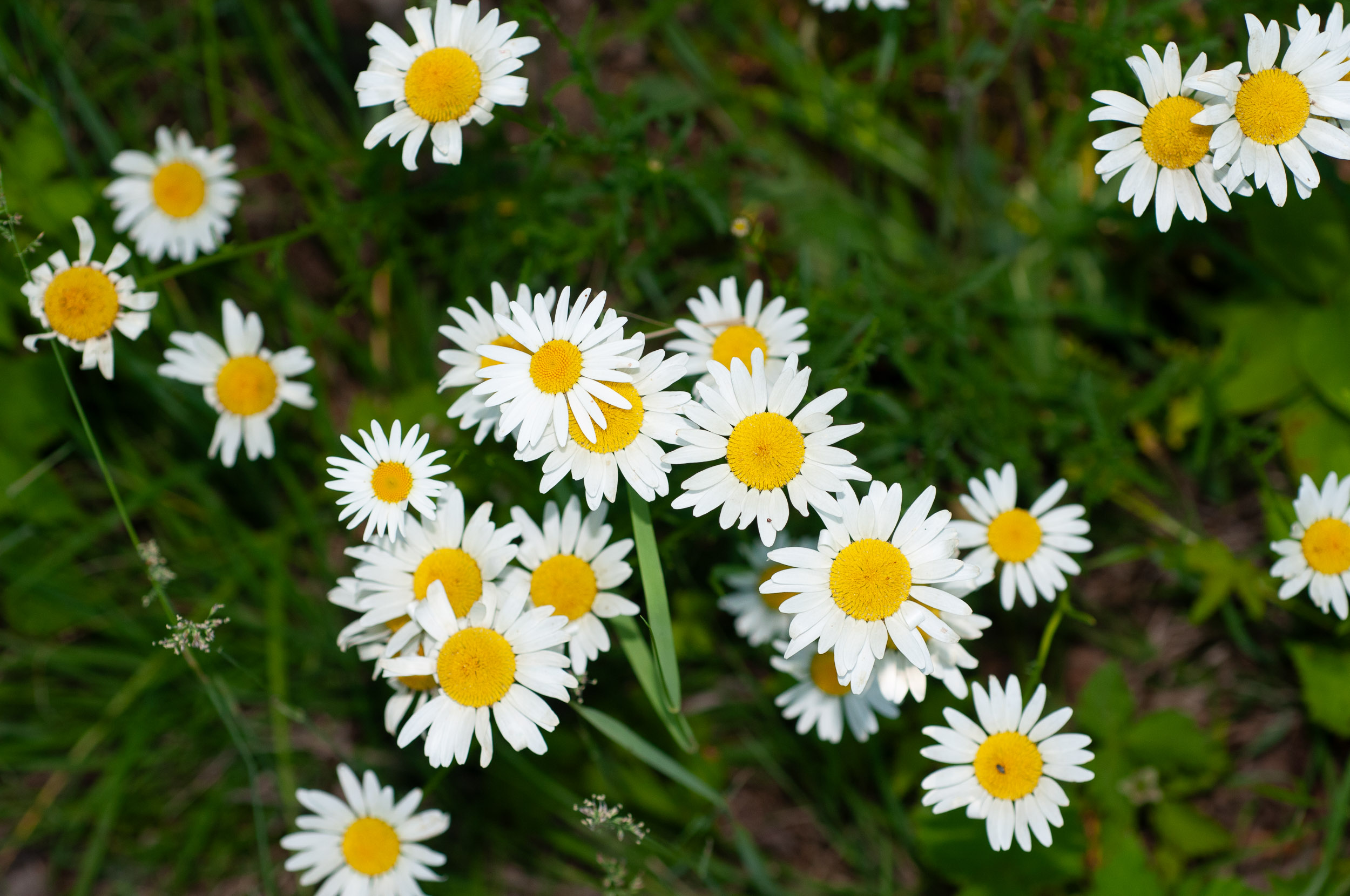
6/21/2010 · Nashua River Rail Trail, Groton Center, Groton, Massachusetts · ≈ 14 × 9″ (35 × 23 cm) 
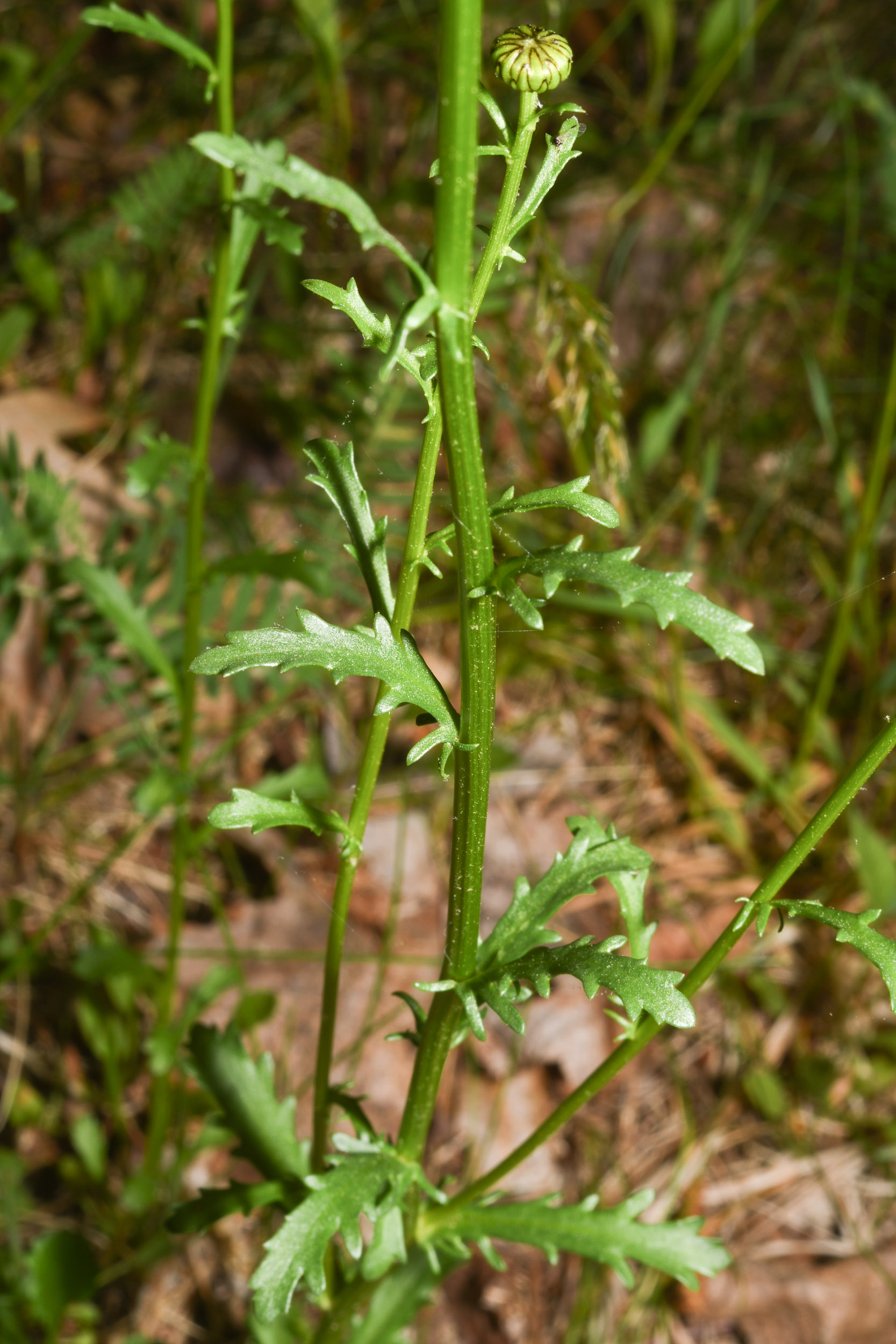
6/2/2016 · Townsend Wildlife Management Are, Townsend, Massachusetts 

6/8/2014 · Flat Rock Conservation Area, Skytop Lane, Dunstable, Massachusetts · ≈ 11 × 7″ (28 × 18 cm) 
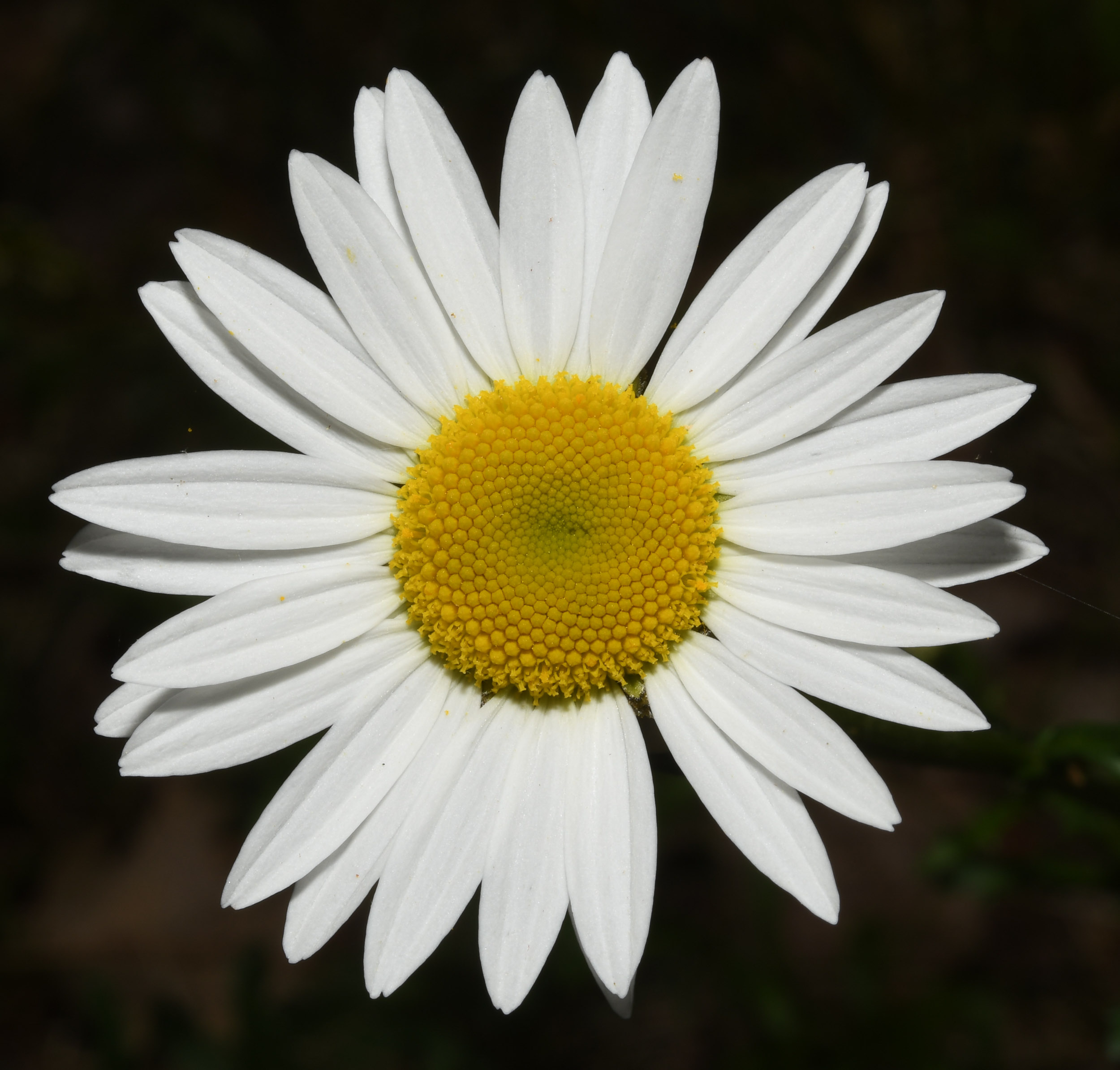
6/2/2016 · Townsend Wildlife Management Are, Townsend, Massachusetts 
| Kingdom | Plantae | Plants, but not fungi, lichens, or algae (from Stearn's Botanical Latin) |
| Subkingdom | Tracheobionta | Vascular plants—plants with a “circulatory system” for delivering water and nutrients |
| Division | Magnoliophyta | Flowering plants, also known as angiosperms |
| Class | Magnoliopsida | Dicotyledons—plants with two initial seed leaves |
| Subclass | Asteridae | A large class that encompasses asters |
| Order | Asterales | Flowering plants with a central disk flower and surrounding petals, like daisies |
| Family | Asteraceae | The aster family, which also includes daisies and sunflowers; from the Greek ἀστήρ, “star,” for the star-shaped flowers |
| Genus | Leucanthemum | From the Greek leukos, “white,” and anthemon, “flower,” C. leucanthemum is the Old World ox-eye daisy now renamed Leucanthemum vulgare |
| Species | vulgare | Latin for “common” |
Leucanthemum vulgare description by Thomas H. Kent, not updated.

© FloraFinder.org. All rights reserved.
