Ligustrum vulgare L.
Privet, common privet, European privet
Common privet is a shrub native to northern Europe, the Mediterranean region, northern Africa, and Asia Minor. It is naturalized in North America, and, in many areas, considered an invasive species. They are often used as hedges.
Plants: Shrubs are evergreen, and reach heights of 10–15′ (3–4.6 m), and nearly the same width.
Leaves: Opposite, oblong to lanceolate, ⅞–2 ⨉ ⅛–½″ (2.5–6 cm ⨉ 5–15 mm), with smooth edges.
Flowers: White or cream-colored panicles of flowers, 1–3″ (2.5–7.6 cm) long, appear in Apr-Jun.
Fruits: Berries are rounded, often copious, ¼–½″ (8–13 mm) around, and ripen from green to dark purple or black.
Habitats: Open woods, often near the ocean, in calcerous (e.g. limestone) soils.
Edibility: Poisonous  . Leaves and berries are mildly poisonous if ingested. The pollen triggers allergies in some people.
Online References:
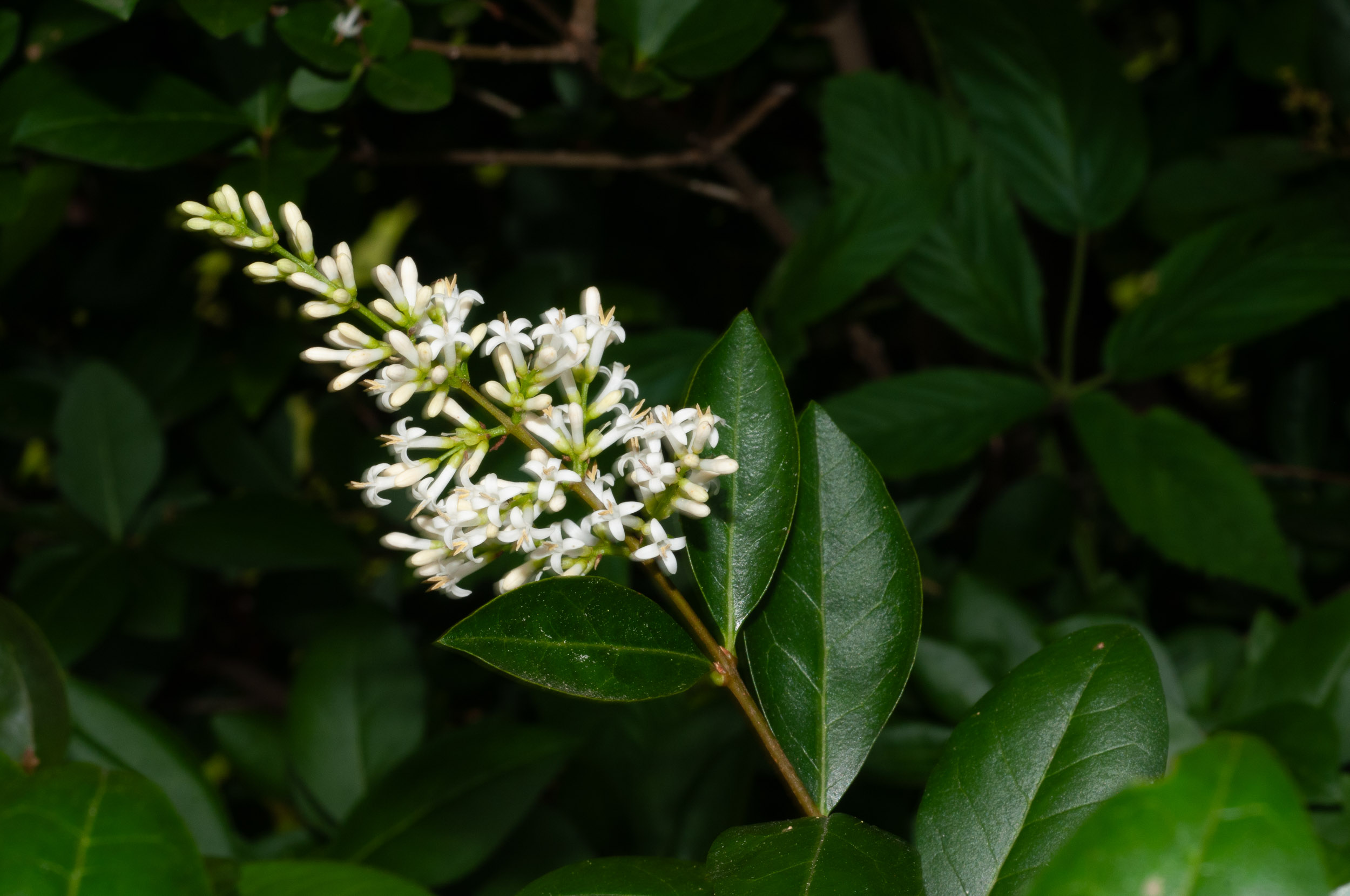
6/18/2011 · Sue and Rai’s, Phoenix, Maryland  ID is uncertain

2/14/2012 · Halibut Point State Park, Rockport, Massachusetts · ≈ 2½ × 2½″ (6.9 × 7 cm) ID is uncertain 

2/14/2012 · Halibut Point State Park, Rockport, Massachusetts · ≈ 5 × 5″ (12 × 13 cm) ID is uncertain 

12/4/2005 · Memphis, Tennessee · By Tim Chandler 
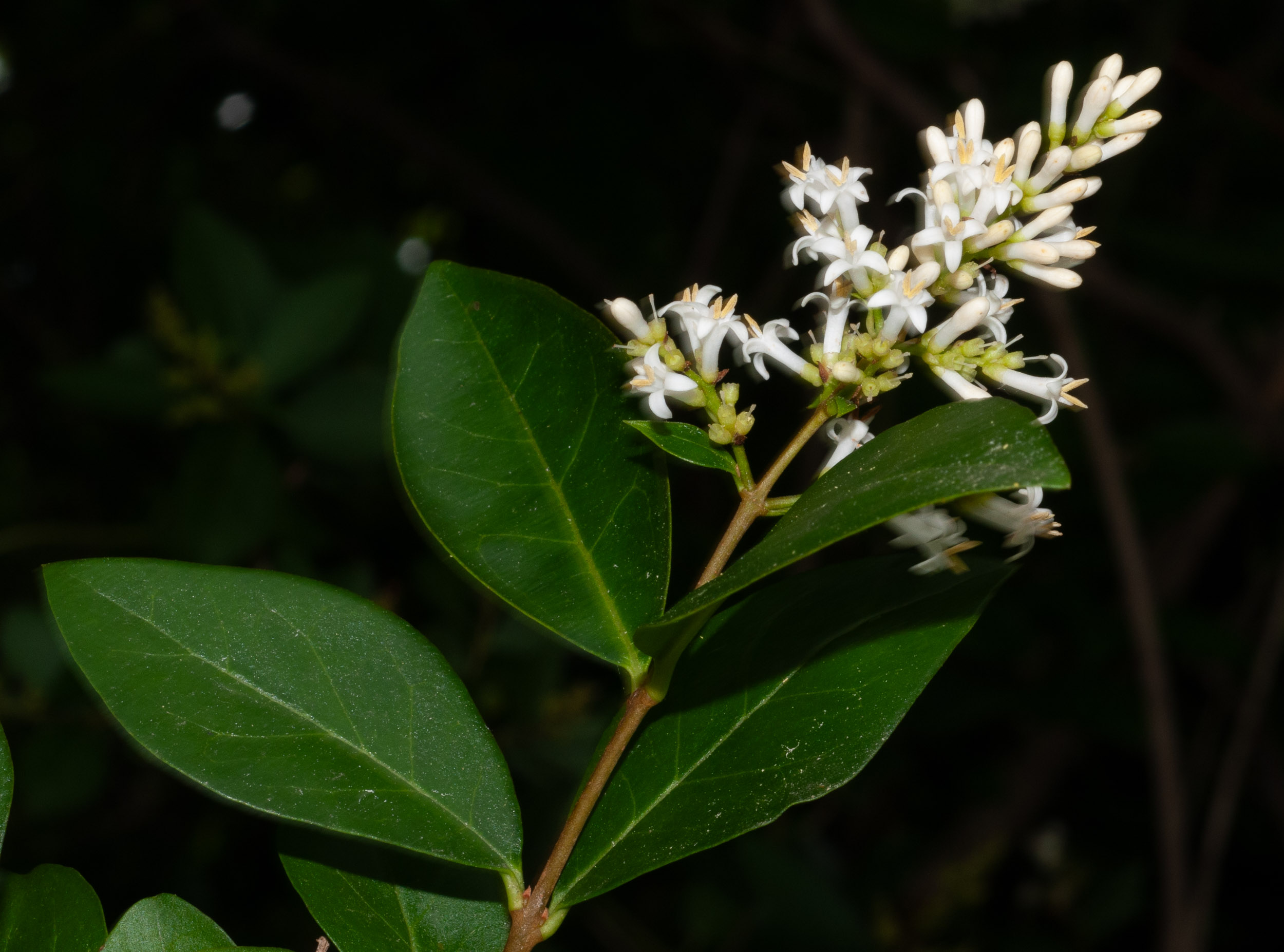
6/18/2011 · Sue and Rai’s, Phoenix, Maryland ID is uncertain 

6/18/2011 · Sue and Rai’s, Phoenix, Maryland ID is uncertain 

3/17/2012 · North Central Railroad Trail, End, Phoenix, Maryland · ≈ 11 × 7″ (27 × 18 cm) ID is uncertain 
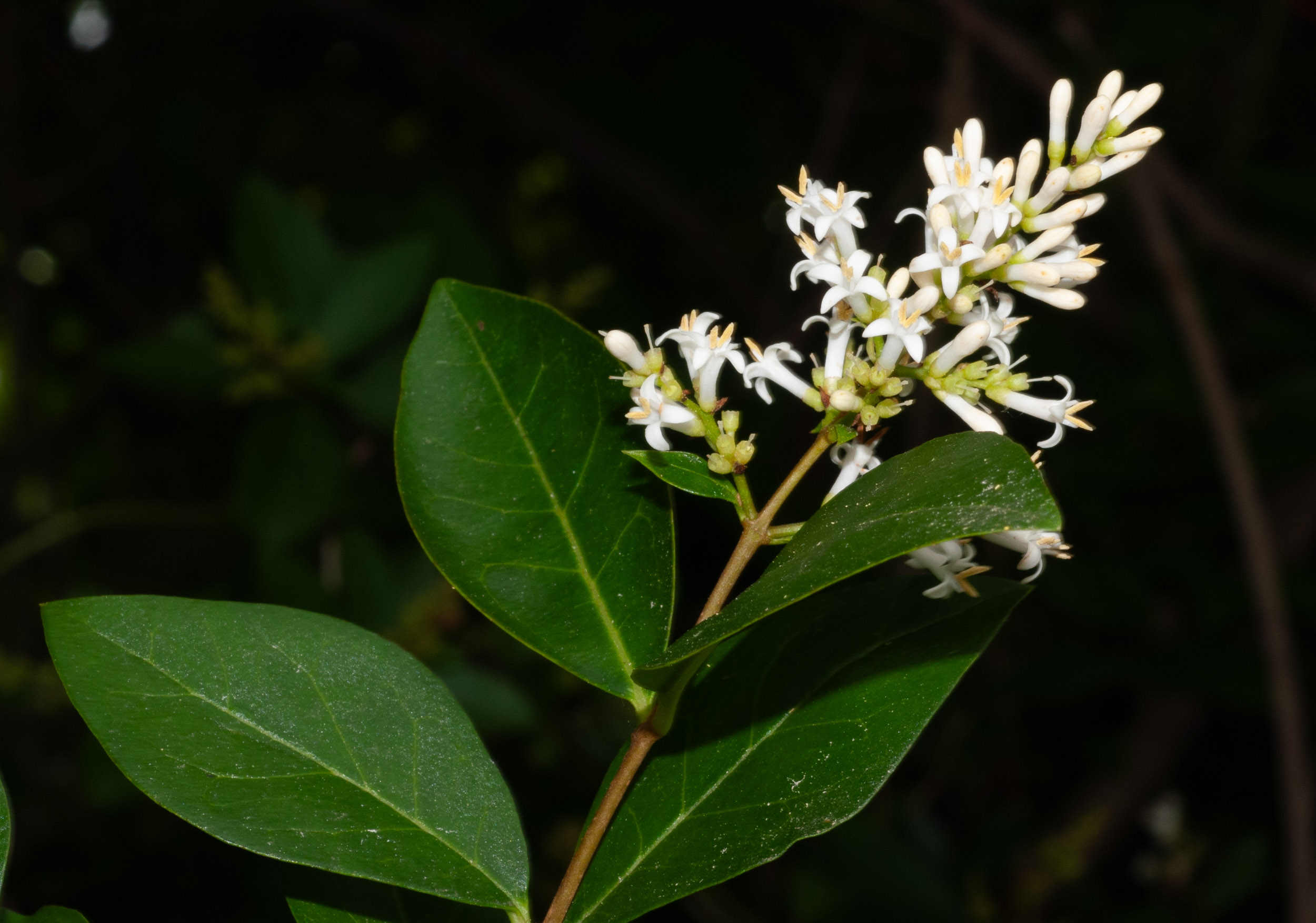
6/18/2011 · Sue and Rai’s, Phoenix, Maryland ID is uncertain 

6/18/2011 · Sue and Rai’s, Phoenix, Maryland ID is uncertain 
| Kingdom | Plantae | Plants, but not fungi, lichens, or algae (from Stearn's Botanical Latin) |
| Subkingdom | Tracheobionta | Vascular plants—plants with a “circulatory system” for delivering water and nutrients |
| Division | Magnoliophyta | Flowering plants, also known as angiosperms |
| Class | Magnoliopsida | Dicotyledons—plants with two initial seed leaves |
| Subclass | Asteridae | A large class that encompasses asters |
| Order | Lamiales | Aromatic herbs and shrubs, including lavender, lilac, olive, jasmine, ash, teak, snapdragon, sesame, psyllium, garden sage, mint, basil, and rosemary |
| Family | Oleaceae | Temperate climate shrubs, trees and a few vines, include forsythia, ash, jasmine, privet, olive, lilac, and many others |
| Genus | Ligustrum | A Latin name for the privet plant |
| Species | vulgare | Latin for “common” |

Ligustrum vulgare description by Thomas H. Kent, not updated.

© FloraFinder.org. All rights reserved.